15.8 Million Witnesses: Spain's World Cup Crown Captivates a Nation
Spain's World Cup final triumph drew 15.8 million peak viewers on BBC, proving women's football now commands prime-stage audiences.
A Nation Held Its Breath
15.8 million people. That is not a typo, not a misprint, and certainly not a figure anyone could have predicted a decade ago. When Spain lifted the World Cup trophy on Sunday, they did not just win a football match; they captured the attention of a British television audience of historic proportions.
The BBC confirmed a peak audience of 15.8 million viewers tuning in across BBC One and BBC iPlayer. That number represents more than just a successful broadcast. It signals a fundamental, irreversible shift in how this country consumes women's sport.
It also asks a very uncomfortable question of the people who have spent years insisting nobody cares about the women's game.
The Stakes Before Kickoff
Let us set the scene properly, because the context matters enormously here.
England's Lionesses had already fractured every ceiling placed above them. They had won the European Championship on home soil. They had reached a World Cup final for the first time in the nation's history. The country was in the grip of a fever that nobody in the broadcasting world saw coming.
The BBC knew they had a significant event on their hands. What they perhaps did not fully anticipate was the sheer scale of the audience that would abandon Sunday traditions, pub gardens, and family barbecues to sit in front of a television screen.
The match was not on a subscription platform hidden behind a paywall. It was free to air, available to anyone with a television license and a working aerial. That accessibility mattered.
The Numbers Behind the Spectacle
Peak viewing figures tell only part of a story. They capture a moment, a single spike in the data. They do not capture the duration of engagement or the breadth of the audience.
The true picture is more staggering.
Viewers did not just tune in for the trophy lift. They watched the buildup, the tactical analysis, the nervous pre-match interviews. They stayed for the drama of 120 minutes of football. They watched the tension, the missed chances, the defensive resilience.
"The audiences we are seeing for women's football right now are not a bubble. They are the new baseline."
That quote, from a senior broadcasting insider, frames the situation perfectly. This was not a novelty spike driven by curiosity. It was a genuine sporting audience engaging with elite-level competition.
What the Figures Represent
When 15.8 million people watch anything in the modern British television landscape, it represents something close to a national event. Consider the fragmentation of modern viewing habits.
- Streaming platforms have fractured audiences into countless niches
- The attention economy competes with social media, gaming, and on-demand entertainment
- Linear television has been in decline for over a decade
- A peak of 15.8 million places this broadcast among the most-watched television moments of the entire year
- The figure rivals audiences for major royal events and blockbuster entertainment finales
To draw that kind of viewership for a women's football match is not just impressive. It is transformative.
How Spain Made Britain Watch
There is a fascinating irony woven into this story. The team that captivated 15.8 million British viewers was not England. Spain broke English hearts.
The Lionesses' journey to the final had been the narrative engine driving domestic interest. Every newspaper, every radio station, every social media conversation had been framed around England's quest for glory. When Lauren James was sent off in the quarter-final, the nation held its breath. When the team rallied without her, the nation celebrated their resilience.
Spain, however, were the architects of their own destiny. They played a brand of football that demanded respect and attention. Possession-based, technically brilliant, and tactically disciplined, La Roja were a team with a clear identity.
When Olga Carmona struck in the 29th minute, the narrative shifted entirely. England were chasing the game. Spain were defending a lead. The tension in British living rooms became almost unbearable.
That tension is what kept viewers locked in.
The Tactical Battle That Held the Audience
It would be reductive to suggest the viewing figures were driven purely by patriotism. The match itself was a compelling tactical contest.
Spain's midfield trio of Aitana Bonmati, Teresa Abelleira, and Alexia Putellas controlled the tempo with a level of technical sophistication that was mesmerising. Bonmati, in particular, produced a performance that announced her to an audience who may not have watched her regularly for Barcelona.
England attempted to press high and disrupt Spain's rhythm. Sarina Wiegman's tactical flexibility had been a hallmark of England's tournament, but Spain's passing accuracy under pressure was exceptional.
The average viewer may not have understood every nuance of the tactical battle unfolding before them. They did, however, understand tension, drama, and stakes. Those elements kept 15.8 million people glued to their screens.
Behind the Deal: What This Means for Women's Sport
The financial and structural implications of this viewership milestone are immense and far-reaching.
When a broadcaster delivers an audience of this magnitude, the commercial mathematics of the sport change overnight. Sponsorship valuations shift. Advertising rates between segments command premiums. Future broadcast rights negotiations begin from a completely different baseline.
The BBC's handling of the tournament has been a masterclass in how to elevate a sport. They did not patronise the women's game with excessive novelty. They provided the same level of analytical depth, the same quality of production, and the same promotional muscle that they would apply to any major men's tournament.
That approach has been rewarded with figures that will be cited in boardrooms for years.
"What we are witnessing is the commercial maturation of women's football. The audiences are there. The engagement is there. The only question now is whether the infrastructure can keep pace."
The pressure now falls on the Football Association and the broader footballing ecosystem. A peak of 15.8 million viewers represents millions of potential new fans. Many of them will be young girls seeing themselves represented on the biggest stage for the first time. The grassroots game must be ready to absorb their enthusiasm.
Funding for facilities, coaching, and pathways from youth football to the professional tier must reflect this new reality. The success of the Lionesses has already triggered a surge in participation. The World Cup final viewership will accelerate that trend exponentially.
The International Perspective
It is worth noting that the viewing figures were not just a British phenomenon. The global audience for this World Cup final was unprecedented.
FIFA reported record-breaking attendance figures throughout the tournament. The final itself drew a capacity crowd in Sydney. Television audiences in Spain, the United States, and across Latin America reached numbers that would have been considered fantasy just a few years prior.
This was not a British story. It was a global broadcast event that happened to be measured meticulously in the UK.
The Morning After
The final whistle in Sydney triggered a wave of celebration in Madrid and heartbreak across England. But in the television studios and production galleries where the broadcast was being managed, there was a quiet recognition that something had changed permanently.
15.8 million is not a ceiling. It is a foundation.
The next World Cup will be larger, broader, and more commercially established. The Women's Super League will begin its new season with a surge of interest driven by this tournament. Television executives will look at these figures and see year-round content, not just a biannual event.
Perhaps the most significant outcome from Sunday is not the trophy Spain lifted or the pain England endured. It is the realisation that women's football no longer needs to justify its existence to anyone.
The audience has spoken. The numbers are irrefutable. The game has arrived, and 15.8 million people were there to witness its coronation.
What happens next will define whether the sport builds on this platform or allows the moment to slip away. The players have done their part. The broadcasters have done theirs. The audience has made its voice heard with overwhelming clarity.
Now the institutions must deliver. The foundations have been laid by 15.8 million witnesses. The structure that rises from here will determine the next decade of women's football.
Spain are world champions. British television has a new benchmark. And the conversation about who cares about women's football has been answered, definitively and permanently.
Editorial Integrity
This is an original SportPulse article written by our editorial team. All content is independently researched, written, and reviewed by our writers and editors before publication. We do not publish copied, aggregated, or syndicated content.
SportPulse is committed to original sports journalism. Read our editorial policy or contact us with any questions.
More Like This
All football
Senegal Sack Thiaw After World Cup Nightmare
Senegal pulled the trigger on Pape Thiaw after a last-32 exit. A bold call that resets the entire project overnight.
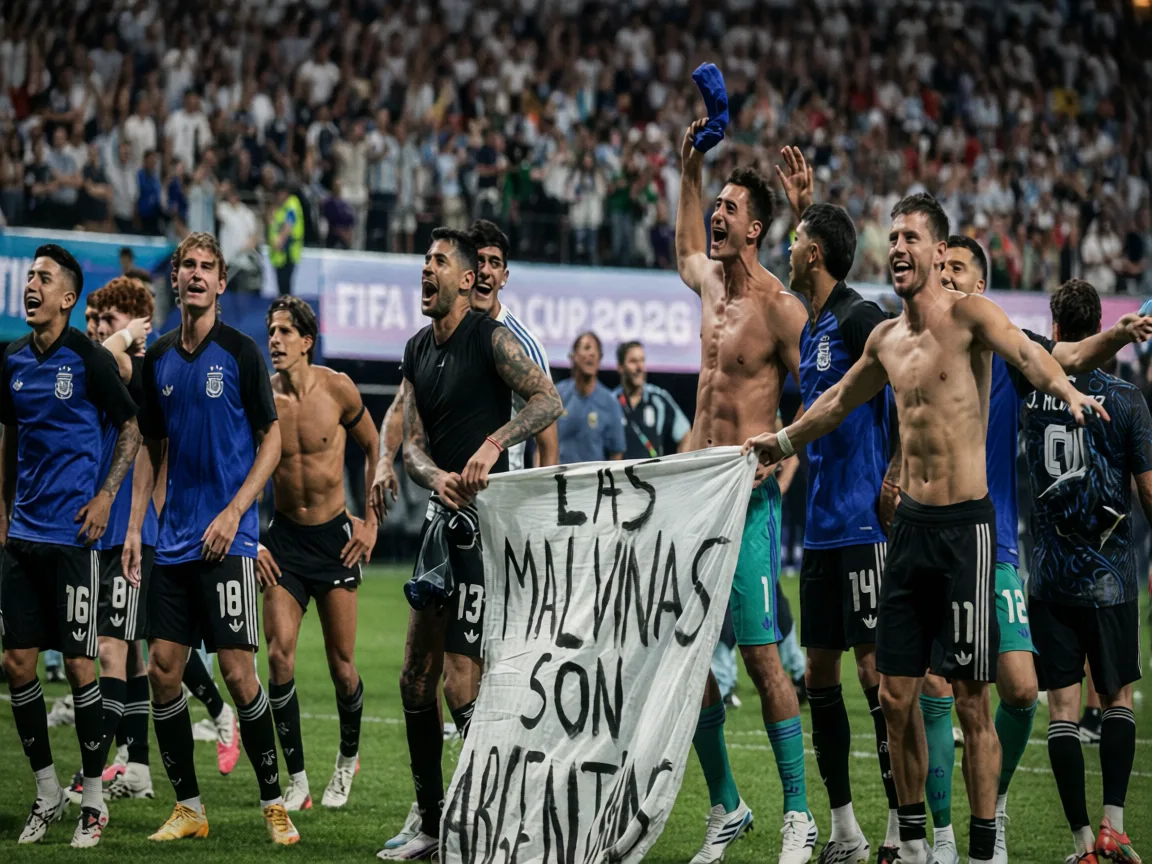
Argentina Face FIFA Fine Over Falklands Banner After England Semi-Final
Argentina players celebrated a World Cup semi-final win over England with a political banner about the Falkland Islands, prompting a likely FIFA fine.

Four-Game Ban: When Telling The Truth Costs You A Month
Elliot Watt called it the worst VAR decision in history. The SFA responded with a four-game ban that speaks volumes.