Red Bull Ring Awaits: Why Round 8 Is a Crucial Test of 2026's Radical Regulations
The Austrian GP at the Red Bull Ring will stress-test every element of F1's sweeping 2026 regulation overhaul.
Round 8 and the Mountain Laboratory
The 2026 Austrian Grand Prix marks the eighth round of a season that has already rewritten Formula 1's technical DNA. After seven races of data-gathering, adaptation, and occasional chaos under the sport's most ambitious regulatory overhaul in decades, the paddock heads to Spielberg's Red Bull Ring — a circuit that will expose every weakness in the new machinery like an X-ray.
At just 4.318 km, the Red Bull Ring is the shortest full-length lap on the calendar. It produces lap times in the region of 65–68 seconds, depending on compound and conditions, meaning mistakes are punished disproportionately. There is no room to recover a botched sector here; a driver who loses two tenths at Turn 3 bleeds that deficit for a larger percentage of the total lap than at any other venue. For teams still fine-tuning their 2026 packages, Spielberg is both a gift and a threat.
The Anatomy of the Red Bull Ring
Strip away the postcard scenery of the Styrian Alps and the Red Bull Ring reveals itself as a ruthless engineering gauntlet. The layout features roughly 10 corners, but the deceptive simplicity hides a deeply technical challenge. Three heavy braking zones at Turns 1, 3, and 4 sit at the end of long straights, demanding peak brake-by-wire performance and precise energy recovery. The circuit's elevation change of approximately 65 meters means cars are climbing and falling through compression zones that load and unload the suspension geometry in rapid succession.
The high-altitude setting, roughly 694 meters above sea level, is the variable that makes Spielberg genuinely unique. Thinner air reduces both aerodynamic drag and downforce, while simultaneously starving the internal combustion engine of oxygen. In previous regulation eras, teams simply ran higher-downforce wings to compensate. Under 2026's new rules, that calculus has fundamentally shifted.
Engineering Insight: The 2026 Power Unit Meets Thin Air
This is where the 2026 power unit regulations become the headline act. The new generation of power units splits output roughly 50/50 between the ICE and the electrical component, with the electrical system delivering a significantly larger share of total power than in the previous hybrid era. The MGU-H has been eliminated, simplifying the turbo architecture but removing the device that previously smoothed turbo lag and harvested energy from exhaust gases.
At altitude, the turbocharger must work harder to compress the thinner atmosphere and feed the combustion chamber enough oxygen. With no MGU-H to assist spool-up, turbo lag becomes a genuine concern during the aggressive throttle applications that Turns 1, 3, and 4 demand. Teams with superior turbocharger efficiency and more refined anti-lag calibration through the electrical motor will find measurable lap time here. Expect engineers to spend FP1 and FP2 obsessing over throttle maps and energy deployment profiles corner by corner.
The electrical side presents a different puzzle. Because the thin air reduces aerodynamic drag, cars reach higher top speeds on the straights for a given power output. That changes the energy deployment strategy entirely. Teams must decide: deploy aggressively on the straights where drag is lower and the speed gain is larger, or conserve energy for the traction zones out of slow corners where the electrical motor's instant torque can compensate for the ICE's altitude penalty? There is no universal answer. It depends on each car's energy recovery efficiency during braking, the state of charge at each point in the lap, and the thermal management of the battery over a race distance.
Active Aerodynamics: A New Dimension at Spielberg
The 2026 regulations introduce active aerodynamic elements — moveable front and rear wings that allow drivers to switch between high-downforce and low-drag configurations. On paper, this is transformative at the Red Bull Ring. The circuit's layout alternates between long acceleration zones where low drag pays dividends and short, technical sections where peak downforce keeps the car planted.
Consider the approach to Turn 1. Cars blast down the main straight in a low-drag configuration, maximising top speed. Under braking, the driver switches to high-downforce mode, loading the front wing to generate the downforce needed to rotate the car through the uphill left-hander. The transition must happen in milliseconds, and the aerodynamic platform must remain stable throughout. Any oscillation or hysteresis in the active elements introduces unpredictability precisely when the driver needs confidence.
The DRS overtaking zone on the run to Turn 3 has historically produced some of the season's most dramatic passes. Under the new active aero framework, the overtaking dynamic has evolved. Instead of a binary DRS open/closed system, drivers now have a spectrum of aerodynamic configurations to exploit. A chasing car can shed drag incrementally on the approach, gaining a speed advantage that is more nuanced but potentially more effective. Defending drivers, meanwhile, can adjust their own aero settings in response, creating a cat-and-mouse game at 300 km/h that rewards real-time data processing and driver instinct in equal measure.
Suspension and Tyre Demands
The Red Bull Ring's kerbs are aggressive. Drivers routinely ride the high sausage kerbs at Turns 1 and 4, transferring massive loads into the suspension pick-ups and the carbon fibre floor. Under 2026's aerodynamic philosophy, which places even greater emphasis on ground effect to generate downforce, the floor's proximity to the tarmac is critical. A car that bottoms out over a kerb doesn't just lose ride comfort — it loses the aerodynamic seal that the entire downforce concept depends on.
Teams must therefore strike a careful balance between mechanical compliance (allowing the suspension to absorb kerb strikes without transmitting damaging loads to the floor) and aerodynamic rigidity (keeping the platform flat and consistent to maintain ground effect). This tension is not new, but the 2026 regulations amplify it because the floor generates a larger proportion of total downforce than in the previous era. At Spielberg, where kerb usage is aggressive and frequent, expect this compromise to be a key differentiator in the midfield battle.
Pirelli's tyre allocation for the Austrian round typically features the softer end of the range, reflecting the short lap and the relatively low energy throughput per corner. But the altitude factor complicates tyre warm-up. Cooler ambient temperatures at nearly 700 metres elevation mean the front-left tyre, which bears the brunt of Spielberg's predominantly right-turning layout, can struggle to reach its optimal operating window. Graining becomes a real risk, particularly in the opening laps and after safety car restarts.
What to Watch For in Practice
The three free practice sessions at the Red Bull Ring will be data-rich, and teams with strong simulation tools will hit the ground running. Key metrics to monitor:
- Energy deployment traces on the straights, particularly the run to Turn 4
- Turbo lag signatures at corner exit of Turns 1 and 3
- Active aero transition smoothness through the fast kink at Turn 6
- Floor contact with the track surface over kerbs at Turns 1, 4, and 9
- Tyre surface temperatures in the opening laps, especially on the front-left
Teams that arrived in Spielberg with a well-calibrated altitude-specific engine map and a stable active aero platform will dominate the session times. Those still chasing baseline correlation will burn precious practice laps on setup work rather than long-run data collection.
The Bigger Picture for Round 8
Eight rounds into the 2026 season, the development race is in full swing. The cost cap constrains how aggressively teams can iterate, meaning every upgrade package must deliver measurable performance. The Red Bull Ring's short lap amplifies small gains: a 0.1-second improvement in sector one translates to a larger percentage of the total lap time here than at, say, Spa or Silverstone. For midfield teams hunting fractions, Spielberg offers a magnifying glass on their progress.
The circuit's history also carries narrative weight. This has been Red Bull's home event since 2011, and the energy of a partisan crowd packed into the natural amphitheatre of the Styrian valley creates an atmosphere that no other venue replicates. Whether that emotional boost translates into a technical advantage is debatable, but it undeniably raises the stakes for the team that bears the circuit's name.
Looking Ahead
The Austrian Grand Prix has always punched above its weight in terms of spectacle. The short lap, the aggressive overtaking zones, the altitude variable, and the unpredictable mountain weather combine to produce races that are rarely processional. Add the 2026 regulation complexity — active aero battles, energy deployment chess matches, and turbo lag management — and Round 8 promises to be one of the most technically fascinating weekends of the season.
For engineers, the Red Bull Ring is a stress test. For drivers, it is a pressure cooker. For anyone who cares about the intersection of cutting-edge technology and raw competition, Spielberg under the new regulations is unmissable.
Editorial Integrity
This is an original SportPulse article written by our editorial team. All content is independently researched, written, and reviewed by our writers and editors before publication. We do not publish copied, aggregated, or syndicated content.
SportPulse is committed to original sports journalism. Read our editorial policy or contact us with any questions.
More Like This
All f1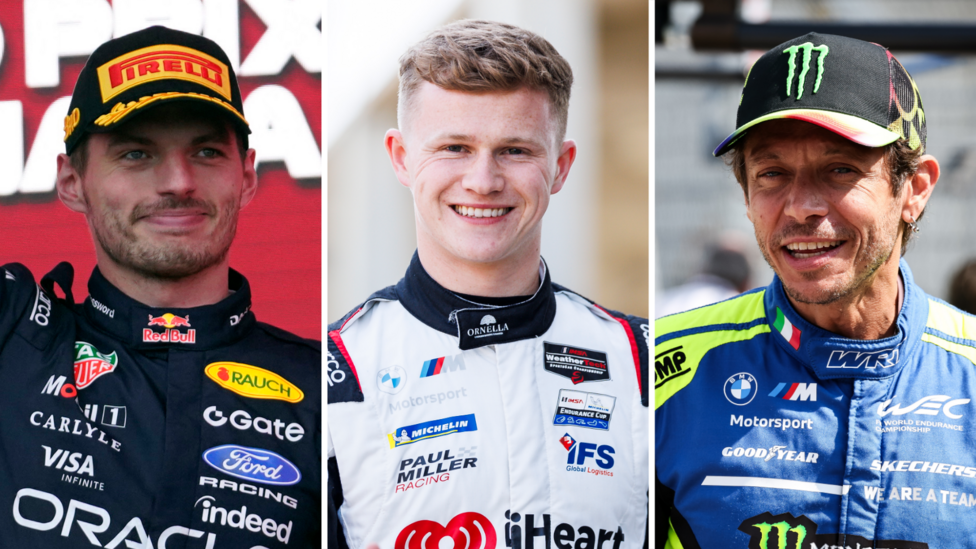
From Verstappen's Rival to Rossi's Teammate: Dan Harper's Extraordinary Path to Le Mans
Northern Irish driver Dan Harper bridges F1 royalty and MotoGP legend as he prepares for his Le Mans 24 Hours debut.
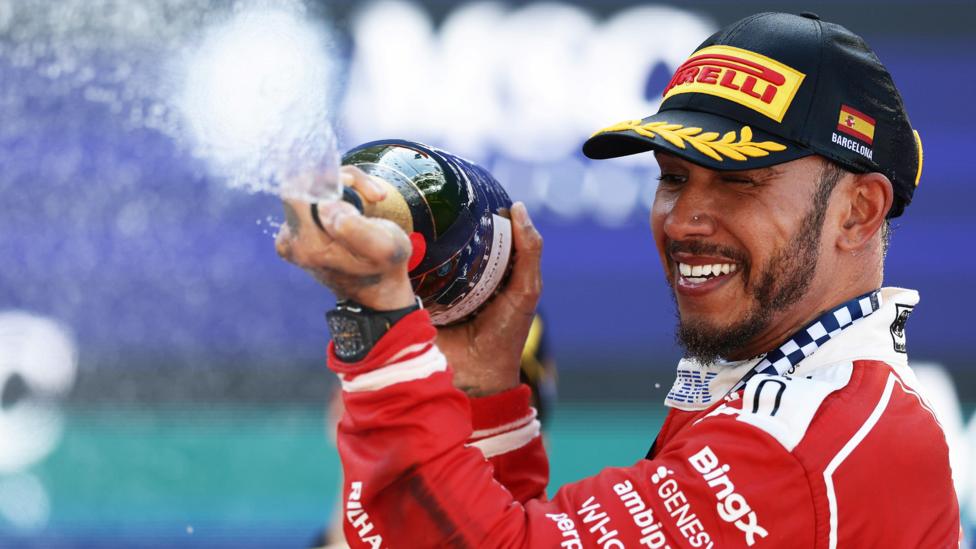
Seven-Time Glory Restored: Hamilton Silences Every Doubt in Barcelona
Lewis Hamilton's Barcelona victory wasn't just a win for Ferrari — it was a reckoning with every voice that said his best days were gone.

Bearman Chases Antonelli: Haas Tech Meets Silverstone Pressure
Ollie Bearman returns to Silverstone chasing Kimi Antonelli, but Haas's **aero platform** upgrades may define his home Grand Prix.