Can 2026's Radical Aero Rewrite Monaco's Overtaking Problem?
Active wings, reduced drag, and manual override modes could finally crack Monaco's gridlock — or make it worse.
The Circuit That Defies Physics
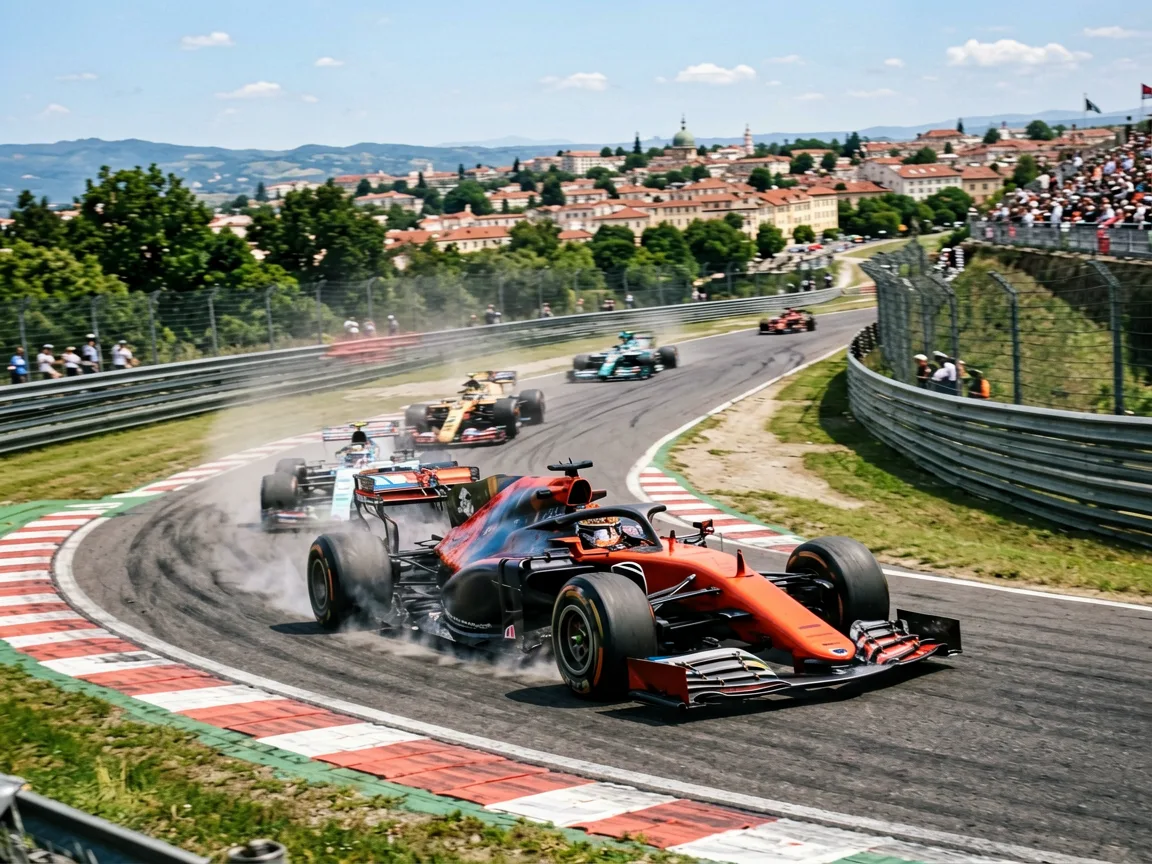
Monaco has always been Formula 1's paradox. The crown jewel of the calendar, the race every driver dreams of winning, and simultaneously the event that produces the most processional racing on the grid. The narrow streets of Monte Carlo have resisted every technical revolution the sport has thrown at them — DRS, KERS, ground-effect revival, 2022's dirty-air reduction — none of it has meaningfully cracked the overtaking problem at a circuit where pole position has converted to victory roughly 70% of the time over the last two decades.
Now the 2026 regulations are looming. And the question Andrew Benson has raised is the right one: will the most radical aerodynamic overhaul in a generation finally change Monaco's character? The short answer is probably not in the way you'd hope. The long answer involves understanding what "yo-yo racing" actually means, why active aerodynamics are a double-edged blade at street circuits, and what the engineering tradeoffs look like at a track where top speeds barely breach 290 km/h.
What 2026 Actually Changes
Let's strip away the hype and look at the technical reality. The 2026 power unit regulations shift the electrical output dramatically, with the MGU-K producing approximately 350 kW — nearly triple the current hybrid deployment. The internal combustion engine component drops from the current 1.6-liter V6 configuration's thermal ceiling, but the net effect is a car that relies far more heavily on electrical energy management. That alone reshapes race dynamics at every circuit.
On the aerodynamic side, the changes are even more consequential. The 2026 cars introduce active aerodynamic surfaces on both the front and rear wings, designed to switch between high-downforce cornering configurations and low-drag straight-line profiles. The rear wing element essentially becomes a permanently adjustable DRS, with the upper flap capable of rotating to a near-flat position on straights and re-engaging full attack mode into braking zones. The front wing features what the FIA has termed a "Manual Override Mode" — an adjustable front flap that a driver can activate to reduce front downforce and drag when running in another car's wake.
The combined aero target is a car that generates roughly 30% less total downforce than the current machines but with significantly reduced sensitivity to dirty air. The floor remains the primary downforce generator, but the wing elements are designed to function as drag-management tools rather than pure load-producing surfaces.
The Yo-Yo Effect Explained
Here's where the concept of "yo-yo racing" enters the conversation. The concern — and it's a legitimate one raised by multiple aerodynamicists within the paddock — is that the new active aero creates a cyclical dynamic. On straights, the following car can shed drag via its active wing elements, closing the gap to the car ahead. But into corners, the reduced overall downforce means both cars are operating on a thinner aerodynamic margin, and the dirty-air penalty — while diminished compared to pre-2022 cars — still exists.
The result is a pattern: close on the straight, lose in the corners, close on the straight again. A perpetual oscillation that looks dramatic on a GPS trace but may not actually produce clean overtaking moves. Think of it like two magnets that attract at distance but repel on contact. The cars bunch up, the gap fluctuates, but the pass never materializes.
At conventional circuits with long braking zones and multiple racing lines — Bahrain, Austin, Spa — this effect might still generate opportunities because the cumulative speed differential over a 700-meter straight plus heavy braking zone can overwhelm the cornering deficit. But Monaco? Monaco changes the math entirely.
Why Monaco Is Different
The fundamental problem at Monaco isn't aerodynamic efficiency. It's geometry. The circuit is 3.337 km of barriers, tight chicanes, and single-lane corners where the racing line is dictated by architecture, not physics. There is essentially one viable overtaking point: the braking zone into the Nouvelle Chicane after the tunnel exit. Everything else — Sainte Devote, Mirabeau, the Hairpin, Rascasse — is follow-the-leader.
The tunnel exit straight is approximately 500 meters from the chicane braking point. At current speeds, that's a two-second window where a following car can deploy DRS and energy harvesting to close a gap. Even with the most optimistic projections for the 2026 active aero system, you're adding perhaps 10-15 km/h of terminal speed advantage at the end of that straight. At a circuit where cars are already running maximum downforce configurations because the corners are too tight for anything else, the drag reduction from active wings has a diminished return.
The dirty-air problem at Monaco is also peculiar. The low-speed nature of most corners means aerodynamic grip is already less critical than mechanical grip — tire compound, suspension compliance, and driver confidence over the bumps. Losing a few percentage points of front downforce in another car's wake matters less at 80 km/h through the Hairpin than at 250 km/h through Copse at Silverstone. The issue at Monaco has always been that there simply isn't enough road to get alongside.
The Energy Deployment Wildcard
One variable that could genuinely disrupt the Monaco status quo is electrical energy management. With the MGU-K producing nearly three times the current deployment, the strategic calculus of when and how to use energy becomes far more complex. A driver running in a train behind the leader could theoretically conserve energy through the lap's twistier sections, then deploy a massive electrical boost through the tunnel and down to Nouvelle.
The problem is that everyone will know this. The defending driver can match deployment levels, neutralizing the advantage. And at Monaco, where track position is king, the pole-sitter can afford to run a defensive energy map from lap one, sacrificing outright pace for the ability to respond to any attack. The chess match becomes electric — literally — but it doesn't necessarily produce more overtakes. It produces more tension, which might be exactly what the sport wants.
Engineering Insight: Active Wing Behavior at Low Speed
The most underappreciated technical challenge for 2026 at Monaco concerns the active wing systems themselves. These surfaces are designed to operate across a wide speed range, rotating from high-downforce positions at 100 km/h to near-flat configurations above 280 km/h. The actuators, control algorithms, and structural loads are all calibrated for that spectrum.
But Monaco compresses the spectrum. With a top speed of roughly 290 km/h in the tunnel and an average lap speed under 160 km/h, the active wings spend most of their time in the high-downforce regime. The drag reduction available on the short straights is minimal compared to a circuit like Jeddah or Baku, where terminal speeds exceed 330 km/h and the wing flap rotation from full load to flat produces a much larger drag coefficient swing.
There's also a weight and complexity penalty. The active aero mechanisms — electric actuators, additional structural reinforcement for the moveable surfaces, control electronics — add an estimated 3-5 kg to the car compared to fixed wings. At a circuit where every millisecond of lap time comes from driver commitment and mechanical grip rather than aerodynamic efficiency, that dead weight is pure disadvantage.
Furthermore, the Manual Override Mode on the front wing, designed to reduce the aero wake penalty for a following car, requires the trailing driver to sacrifice front-end grip at the exact moment they need maximum turn-in precision. At Monaco, where the barriers are centimeters from the racing line and the consequences of a snap of understeer are a red flag rather than a gravel trap, activating that system requires a level of confidence that borders on recklessness.
What the Data Suggests
If we look at historical overtaking data from street circuits that share some of Monaco's characteristics — Singapore, Baku, Jeddah — the pattern is instructive. Baku produces overtaking because of its 2.2-kilometer main straight. Singapore produces almost none despite being a longer lap. Jeddah is somewhere in between, with its high-speed sections creating slipstream opportunities that Monaco simply doesn't offer.
The 2026 regulations will almost certainly increase overtaking at circuits with long straights and heavy braking zones. The active aero drag reduction combined with massive electrical deployment could produce passing zones that don't currently exist — think Monza's Parabolica exit or Barcelona's main straight. But Monaco offers neither the straight length nor the braking severity to exploit these systems.
The most realistic projection is that 2026 Monaco will look broadly similar to 2024 Monaco: a race decided by qualifying, strategy, and Safety Car timing, with the active aero systems creating marginal entertainment value through closer following rather than actual position changes. The yo-yo effect will be visible in the timing screens — gaps will oscillate more dramatically than they do now — but the final pass into the Nouvelle Chicane will remain stubbornly rare.
The Bigger Question
The Monaco overtaking debate is really a proxy for a deeper tension in the 2026 regulations: are these rules designed to produce racing that looks close, or racing that actually is close? Active aerodynamics excel at the former. They allow cars to follow more closely, they create visible gap fluctuations, and they produce the sensation of pressure even when no pass is imminent. For television, that might be enough. The cameras at Monaco will show cars nose-to-tail through the Swimming Pool complex, and commentators will narrate the tension as if a move is always one corner away.
But for those of us who watch racing for the engineering spectacle — for the moment when a driver finds an extra 0.3 seconds of braking confidence and dives to the inside — Monaco will remain Monaco. The 2026 regulations are a genuine step forward for the sport's overall racing product. They just can't solve a problem that's embedded in the concrete and geography of a principality built on a cliff face.
Looking Ahead to 2026
The real test for the new regulations won't come at Monaco. It will come at Bahrain, the season opener, where long straights, heavy braking zones, and multiple racing lines will showcase the full potential of active aerodynamics and hybrid energy strategy. By the time the paddock rolls into Monte Carlo in late May, we'll have a much clearer picture of whether yo-yo racing is a genuine phenomenon or an engineering footnote.
What Monaco will tell us — and this is valuable data — is the floor performance of the new regulations. How much downforce the simplified underbody generates in low-speed, low-Reynolds-number conditions will reveal whether the 2026 formula has any tricks for the tightest circuits on the calendar. If the cars feel more planted through the Swimming Pool and Rascasse than their predecessors, that's a meaningful win even if it doesn't produce overtaking.
Don't expect Monaco to transform. Expect Monaco to reveal truths about how far these regulations can actually go. The barriers haven't moved. The track hasn't widened. And the fundamental truth of 3.337 kilometers of narrow streets remains: qualifying is the race, and everything after lights out is survival, strategy, and the hope that someone else's gearbox gives up before yours does.
Editorial Integrity
This is an original SportPulse article written by our editorial team. All content is independently researched, written, and reviewed by our writers and editors before publication. We do not publish copied, aggregated, or syndicated content.
SportPulse is committed to original sports journalism. Read our editorial policy or contact us with any questions.
More Like This
All f1
Aston Martin Bets Everything on One Big Upgrade
Adrian Newey’s singular focus on a major 2026 upgrade package signals high risk for Aston Martin's rebuilding efforts.

Leclerc Commits to Ferrari: The Technical Architecture Behind the Long-Term Bet
Ferrari locks down Leclerc long-term, betting their 2026 regulation overhaul on his precision and the team's evolving aero philosophy.
Hungarian GP 2026: Budapest Heat and the Tyre Strategy That Decides It
The Hungaroring returns with its tight layout and brutal summer temperatures, placing tyre management and qualifying position above raw straight-line speed.