The Hostage Negotiator, the Cocaine, and the Communist: Unmasking Italy's Most Unlikely Ultra
A year spent chasing the truth about Alessandro Casolari reveals how Italian ultras blur mythology and menace.
A Name That Echoes Through Fog
Ferrara sits in the kind of northern Italian terrain that resists romance. A red-brick city wedged between Bologna and Venice, it has always felt like the quiet middle child of Emilia-Romagna, overshadowed by its louder neighbors, perpetually damp, prone to flooding from the Po River. The medieval walls that once defined its grandeur now encircle a city that many Italians associate with fog, Renaissance court politics, and not much else.
But for anyone who has spent time inside Italian football's most dangerous subcultures, Ferrara carries a different reputation entirely. This is the city that produced Alessandro Casolari. Known simply as "Caso" to those who feared and followed him in equal measure, he led the ultras of SPAL during the late 1980s and early 1990s, a period when Italy's ultra movement was calcifying from loosely organized fan clubs into paramilitary-style factions with political ideologies, territorial codes, and a willingness to use violence as currency.
"He liked that people were scared of him. That was the fuel."
That single observation, shared by someone who spent over a year attempting to separate Caso's mythology from his biography, captures something essential about the man and the movement he embodied. Fear was not a byproduct of the ultra lifestyle. It was the product.
The Cult of the Ultra Leader
To understand why a figure like Casolari matters, you have to understand what Italian ultras actually are. The comparison to English hooligans is convenient but incomplete. English firms were organized around matchday disorder. Italian ultras built entire ecosystems: political identities, criminal enterprises, social hierarchies, and cultural production that extended far beyond the ninety minutes on the pitch.
By the late 1980s, Italy's ultra groups had evolved into something closer to outlaw motorcycle gangs fused with revolutionary cells. They sold drugs, smuggled weapons, laundered money, and negotiated with club directors over ticket allocations, stadium access, and merchandising rights. Some groups aligned with the far right. Others, like Casolari's faction, drew from Marxist-Leninist ideology, a fact that reads like absurdist fiction until you spend any real time in the Italian ultra world, where political radicalism and football tribalism have always existed in a strange, sometimes violent symbiosis.
Caso was not unique because he was violent. Violence was table stakes. He was unique because of the breadth of his biography: a man accused of cocaine smuggling, credited with hostage negotiation, and driven by a coherent political philosophy that placed him in the tradition of Italian far-left movements stretching back to the 1970s Years of Lead.
Ferrara itself shaped this. A city that feels perpetually sidelined breeds a particular kind of defiance. SPAL, the local club, has spent most of its modern history bouncing between Serie B and the lower divisions, with occasional glorious ascents to Serie A that never lasted long enough to change the city's self-image. Supporting SPAL is an act of loyalty to irrelevance, and that loyalty, when it hardens into identity, can become something fierce.
Unpicking the Legend
The journalist who spent a year chasing Casolari's story describes an experience that will be familiar to anyone who has attempted to write honestly about Italy's ultras: the gap between what people say happened and what actually happened is often a chasm.
Ultra leaders cultivate mythology the way medieval lords cultivated lineage. Stories get retold, embellished, weaponized. Did Caso really negotiate the release of hostages? The details shift depending on who is telling the story and what they need the story to accomplish. Did he actually run cocaine through Ferrara's networks? The accusation exists, but in a world where police files and ultra folklore are equally unreliable, certainty is a luxury.
This is not to say the violence was fictional. Italy's ultra movement has a documented body count. From the death of Vincenzo Spagnolo, a Genoa fan stabbed in 1995, to the killing of Gabriele Sandri, a Lazio fan shot by a police officer in 2007, to the death of Filippo Raciti, a police officer killed during the Catania riot in 2007, the toll is real and staggering. Ultra leaders did not merely witness this violence. Many orchestrated it.
What makes Casolari's story compelling is the theatricality layered on top of the brutality. A Marxist-Leninist ultra who smuggled cocaine and negotiated hostage situations is not a character you invent. He is a character you encounter and then spend years trying to believe.
The Psychology of the Charismatic Ultra
There is a reason ultra leaders become objects of fascination beyond the football world. They operate in a space that sits at the intersection of crime, politics, sport, and identity. Psychologists who study extremist group dynamics note that ultra leaders often exhibit traits associated with both organized crime bosses and revolutionary organizers: charisma, ideological coherence, a capacity for strategic violence, and an ability to construct a narrative of persecution that justifies extreme action.
Ferrara's marginalized status within Italian football made this narrative easy to build. SPAL were never going to compete with Juventus, Inter, or Milan. The ultra's response was to redefine what competition meant. If you cannot win on the pitch, you win in the stands, on the streets, in the criminal underworld. You become feared in the spaces where your club cannot be.
Casolari embodied this substitution with unusual intensity. The fact that he operated during the late 1980s and early 1990s is significant. This was the period just before Italy's crackdown on ultra violence intensified following the 1990 World Cup and a series of high-profile stadium disasters. The ultras of that era operated with a freedom that later generations would not enjoy, and the leaders of that era became the foundational legends upon which every subsequent generation built.
Career by Numbers
- Active ultra leadership period: approximately 1987-1994, spanning SPAL's time in Serie B and Serie C
- Ferrara's population during Caso's peak: roughly 135,000, making SPAL's ultra following disproportionately influential for a city of its size
- SPAL's Serie A appearances across the club's entire history: approximately 19 seasons, with the most sustained run ending in 1968 before a brief return in 2017
- Italy's documented ultra-related deaths between 1980 and 2010: over 30 fatalities
- Estimated active ultra members across Italy during the late 1980s: 40,000-50,000, according to Italian interior ministry estimates
The Writer's Dilemma
The journalist who pursued Casolari's story raises an implicit question that every reporter covering ultras eventually faces: how do you write about people who want to be written about, on their terms?
Ultra leaders are not reluctant subjects. Many actively seek the attention, understanding that media coverage amplifies their mythology. The challenge is not access. It is verification. Caso, by all accounts, was generous with his time and his stories. But every story carried a purpose, an angle, a way of reinforcing the legend.
This is why the best ultra reporting reads less like journalism and more like anthropology. You are not simply documenting events. You are decoding a culture that communicates through symbols, codes, and deliberate ambiguity. The cocaine is real but also mythologized. The violence is real but also performed. The politics are real but also instrumental.
"I'm not a person who puts up with rudeness."
That line, attributed to Caso himself, is the kind of statement that reveals more than it intends. It is not about rudeness at all. It is about respect, hierarchy, and the maintenance of power through the threat of consequence. Every ultra leader has a version of this phrase. It is their founding charter.
What Remains
SPAL returned to Serie A in 2017 after a 49-year absence, a moment of genuine euphoria for Ferrara. The club was relegated again after three seasons, a trajectory that felt historically inevitable. But the ultra presence at the Stadio Paolo Mazza never wavered. The groups evolved, as Italian ultras always do, adapting to new policing strategies, new political realities, and new criminal opportunities.
Caso's generation laid the template. The ideologies have shifted. The drugs have changed. The stadium rules are stricter. But the core dynamic remains: a group of men who derive power, identity, and meaning from their proximity to a football club, and who will use any means necessary to maintain that proximity.
Alessandro Casolari may be a footnote in the vast literature on Italian football violence, or he may be one of its more revealing case studies. That depends on whether you believe the mythology or the biography. The answer, as with most things in the ultra world, is probably both.
The fog in Ferrara has a way of making everything look the same. Buildings appear and disappear. Figures emerge and recede. That feels like the right metaphor for a man who spent decades cultivating the space between what is real and what is feared.
In Italian football's shadow economy of identity and violence, that space is where the true power lives.
Editorial Integrity
This is an original SportPulse article written by our editorial team. All content is independently researched, written, and reviewed by our writers and editors before publication. We do not publish copied, aggregated, or syndicated content.
SportPulse is committed to original sports journalism. Read our editorial policy or contact us with any questions.
More Like This
All long-reads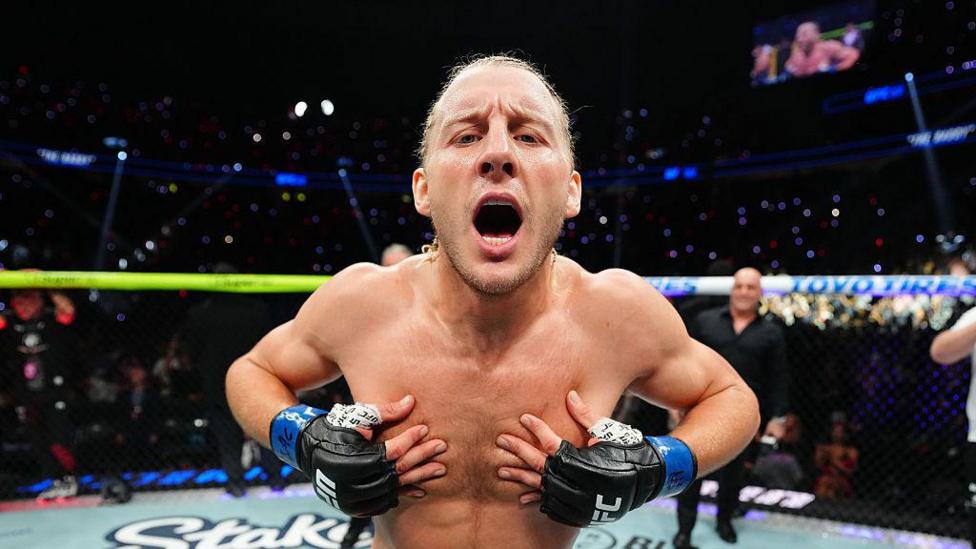
Pimblett's Secret Retirement Ultimatum Behind UFC 329 Win
Paddy Pimblett secretly teetered on the edge of retirement, admitting he would have walked away if he lost to Benoit Saint-Denis at UFC 329.
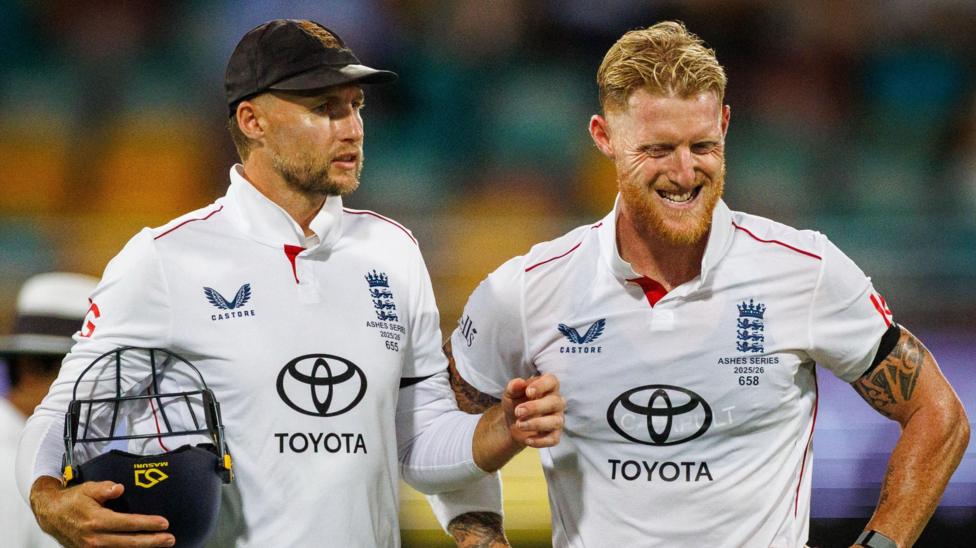
England's Emergency Recall: Why Root Is the Only Logical Choice
With Ben Stokes sidelined, England turn back to their most experienced hand in Joe Root as interim Test captain.
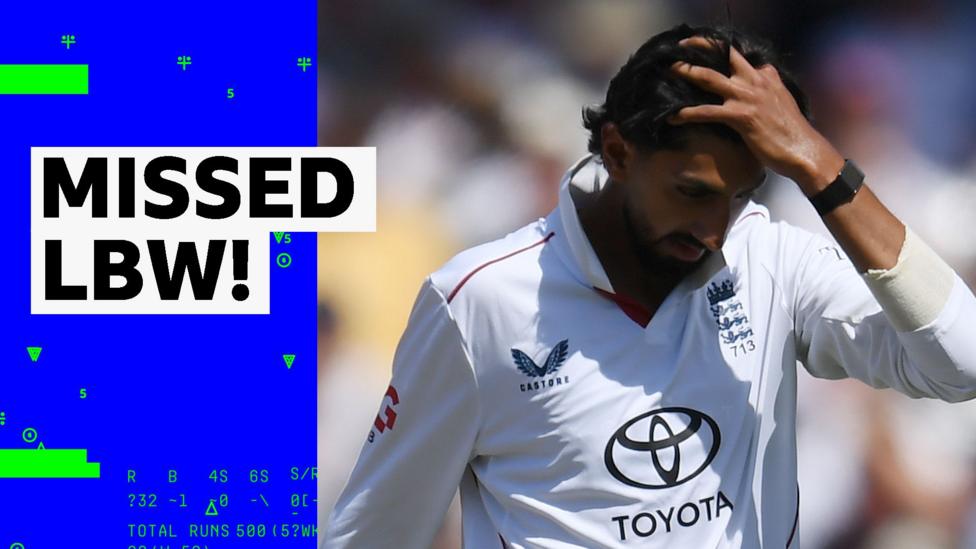
England's DRS Howler Lets Conway Off the Hook
England's failure to review a plumb LBW on Devon Conway handed New Zealand a massive reprieve on a lifeless day of Test cricket.