Antonelli Tops Spa FP2 as Mercedes Flexes Ardennes Muscle
Kimi Antonelli outpaced Norris and Verstappen in Belgian GP FP2, signaling a Mercedes resurgence at the ultimate drivers' circuit.
Ardennes Conditions Set the Stage
The Spa-Francorchamps circuit demands respect from the moment a Formula 1 car leaves the pit lane. 7.004 kilometers of asphalt weave through the Ardennes forest, combining flat-out blasts with precision corners that punish the slightest imbalance. As Free Practice 2 concluded for the Belgian Grand Prix, the timesheets delivered a narrative few anticipated: Kimi Antonelli, Mercedes' rookie sensation, topping the session ahead of championship contenders Lando Norris and Max Verstappen.
Summer conditions at Spa remain notoriously fickle. Friday offered a drier window than the forecast threatened, but track temperatures hovered in a range that made tire extraction difficult. Teams confronted the classic Spa compromise: high downforce for the Sector 2 complexes, but minimal drag for the Kemmel Straight. Getting this configuration wrong by even a few percentage points of downforce efficiency translates to 0.4 to 0.5 seconds lost per lap.
Antonelli's presence at the summit of the timing screens registers as Mercedes' most significant single-session pace statement since the summer break began. The Italian driver navigated 30 laps across the afternoon, building incremental confidence through Eau Rouge and Raidillon. His banker lap on the softest compound demonstrated a front-end response that both George Russell and Lewis Hamilton have struggled to dial in consistently this season.
The Leaders: Separated by Margins
Final Practice 2 classification told a story of truncated running and condensed competition at the front.
- Kimi Antonelli (Mercedes) — Fastest, benchmark time set on soft compound tire
- Lando Norris (McLaren) — Margin of under 0.150s to the summit, strong long-run pace
- Max Verstappen (Red Bull Racing) — Margin of approximately 0.3s, running distinctive aero configuration
Norris circulates 0.120s adrift of Antonelli's benchmark, a gap that falls within the margin of a single gust of wind through the Bus Stop chicane. Verstappen sits third, approximately 0.30s back from the Mercedes. Red Bull's champion enters a weekend trailing neither McLaren nor Mercedes in the title standings, yet Friday's running suggested improvements are needed.
Verstappen's presence in the top three despite an apparent setup deficit typifies his season. He extracts performance from configurations that leave teammates perplexed. His lap time's structure suggests Red Bull Sabbath-day running will return them to the front, regardless of Friday's deficit.
Sector Analysis Reveals the True Story
Antonelli's advantage traces back to specific circuit sectors. The Mercedes W15 has historically thrived in high-speed corner sequences, and Spa's second sector demands exactly that precision. Through Pouhon and Fagnes, where lateral load exceeds 3.5G sustained, the Mercedes platform maintains an aerodynamic platform superior to last season's predecessor.
Norris extracted his fastest time from the first sector. The McLaren's mechanical grip through La Source and the run up the hill to Les Combes demonstrated strong traction. However, the losing margin through Sector 2's sweeping corners flagged an aerodynamic sensitivity issue that team engineers will scrutinize overnight.
Tire Strategy and the Soft Compound Question
Pirelli brought the C1, C2, and C3 compounds to Spa: the hardest three selections in the range. Tire degradation at Spa is distinctive because the layout's length distributes wear across all four corners unusually. The long Kemmel Straight induces severe thermal degradation on the front-left, leading to understeer.
During the long-run simulations in FP2's final thirty minutes, Antonelli's degradation curve on the medium compound suggested Mercedes can target a single-stop strategy on Sunday. If this data holds, Mercedes races one position higher in the strategic order than their raw pace merit suggests.
Verstappen's run on used soft tires revealed blistering on the rear-left, which could force Red Bull toward a more conservative opening stint. At a circuit where overtaking is frequent, tire preservation dictates true strategic flexibility.
Strategy Breakdown
The pit wall decisions during Sunday's race hinge on predicting the weather window. Spa's microclimate can deliver rain on one half of the circuit while the other remains dry, rendering pre-planned strategy boards irrelevant.
- Mercedes: Antonelli's pace on the medium tire suits a one-stop strategy with a pit window around lap 22 to 26.
- McLaren: Norris's degradation profile suggests a two-stop approach, pitting earlier to harness the soft compound's pace in clean air.
- Red Bull: Verstappen's blistering indicates a reactive strategy might render a single stop viable pending the tire data post-FP3.
Engine Mapping and Power Unit Allocation
Spa's layout places extreme thermal load on the power unit. The prolonged full-throttle sections through Eau Rouge and Raidillon stress the internal combustion engine. Mercedes' power unit division has refined thermal efficiency throughout the season. Antonelli's maximum speed through the speed trap data demonstrated thePU delivering strong combustion performance.
Red Bull's Honda-built power unit appeared slightly conservative in comparison. Verstappen's straight-line speed deficit tracks closely to a power unit management mode prioritizing longevity. With power unit allocations tightening as the season enters its second half, preserving mileage on Friday remains an engineering imperative.
The Form Rookie
The accompanying pressure of Antonelli's rookie campaign has followed a predictable arc. Shining qualifying performances contrast with inconsistent Sundays. Spa's flowing layout hides less of a driver's inherent sensitivity, while stop-and-go circuits punish aggressive throttle application.
Antonelli's confidence through Eau Rouge lift-and-the-complex spoke to technical partnership with the team's feedback loop. The flat-floor era of regulations rewards drivers who can articulate how the aerodynamic platform responds under sustained load. Early signs from Antonelli's race engineering channel reflect a productive dialogue.
Yet despite the headline-grabbing timesheet, Antonelli himself struck a measured tone afterward. The Italian believes "there's still a lot of work to do as a team," underscoring that a single practice session topping the times—if impressive—does not translate automatically into a polished weekend. The candor reflects a driver acutely aware that Fridays reward raw pace, but Sundays reward preparation.
Looking Ahead: Qualifying and the Grid Penalty Factor
Saturday's qualifying session will be heavily influenced by ongoing grid penalty deliberations. Power unit allocations exceeding the seasonal limit result in back-of-grid penalties, and whispers from the paddock suggest multiple teams face these penalties. The qualifying result on paper will not reflect reality.
Tactical positioning during qualifying becomes critical. A driver facing a penalty might prioritize tire preservation for Sunday over outright single-lap pace. Their Q1 lap time must grant clear passage through knock-out sessions while minimizing flat-spotting and thermal damage.
Championship Implications
The Drivers' Championship standings remain tense. Verstappen holds a mathematical advantage but recent circuits have eroded the cushion. Norris and McLaren continue to apply pressure, but Mercedes' performance at Spa signals a three-team development war through the season's end.
- Verstappen: Championship lead faces reduction if McLaren's race pace fulfills its promise.
- Norris: Every point holds significance. Closing the gap requires beating Verstappen in clean air.
- Antonelli: Points contribution assumption relates to the Constructors' fight. Mercedes battles Ferrari for P2 in the Constructors' standings, and a single strong Sunday alters the financial calculus.
McLaren's consistent scoring rate has positioned them as the Constructors' leader. Mercedes at Spa holds both straight-line speed and a cornering advantage. This combination presents a threat to both Red Bull and McLaren up front.
The performance spread during practice suggests the championship remains contested, not just between Verstappen and Norris, but between three teams capable of winning on pure pace.
Antonelli atop FP2 matters beyond morale. It demonstrates Mercedes retains an underlying speed that the second half of the season could unlock. Spa tests every technical system simultaneously: aero, power unit, driver confidence, and tire management. Friday confirmed Mercedes passed the first test. Saturday and Sunday will determine whether they passed the exam.
Updated: 2026-07-17 — Added Antonelli's post-session comments calling for more work from Mercedes despite topping FP2.
Editorial Integrity
This is an original SportPulse article written by our editorial team. All content is independently researched, written, and reviewed by our writers and editors before publication. We do not publish copied, aggregated, or syndicated content.
SportPulse is committed to original sports journalism. Read our editorial policy or contact us with any questions.
More Like This
All f1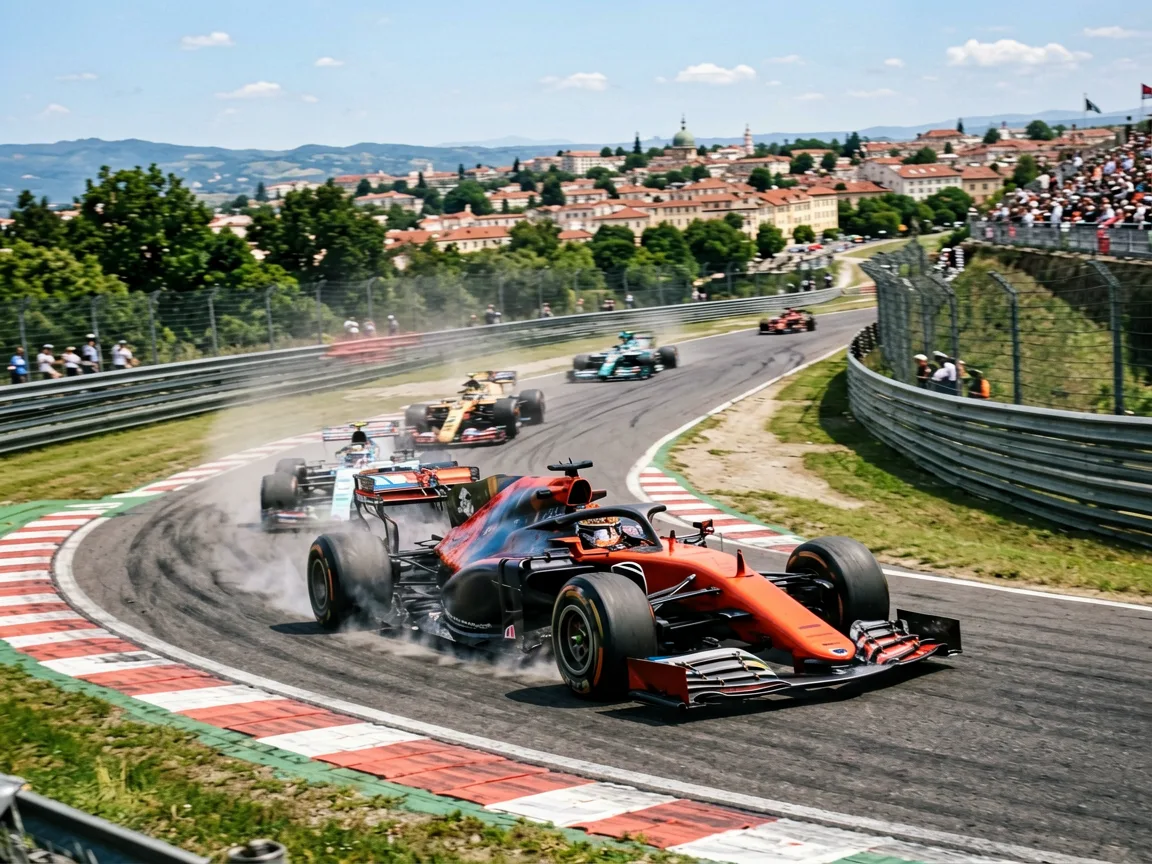
Hungarian GP 2026: Budapest Heat and the Tyre Strategy That Decides It
The Hungaroring returns with its tight layout and brutal summer temperatures, placing tyre management and qualifying position above raw straight-line speed.

Russell's Brutal Honesty: Podium Can't Mask Championship Flaws
George Russell claims his first British GP podium yet issues a championship ultimatum to himself amid late-race deflation.
Ogura Claims Historic First MotoGP Win as Bezzecchi Hospitalized After Crash
Japan's Ai Ogura capitalizes on Bezzecchi's devastating crash to seal a landmark maiden MotoGP victory.