Antonelli Lays Out Mercedes' New Rules of Engagement Ahead of Spielberg
Mercedes' rookie sensation reveals the team's evolving intra-team protocol as the title fight tightens heading into Austria.
The Kid Gloves Are Off
Kimi Antonelli arrived at the Red Bull Ring with the weight of expectation and the clarity of a team briefing. The 19-year-old Italian, who stepped into Lewis Hamilton's vacated seat at Mercedes at the start of 2025, has been one of the season's most compelling storylines. Raw pace, flashes of brilliance, and the occasional rookie error have defined his campaign so far. But as the grid descends on Spielberg for the Austrian Grand Prix, Antonelli is no longer talking like a prodigy learning the ropes. He's talking like a championship contender who understands the political machinery required to stay in the fight.
His admission that claiming this year's title is "not going to be a walk in the park" is hardly a revelation to anyone watching the 2025 season unfold. What matters more is the context in which he said it, and what it reveals about Mercedes' internal calculus as the constructors' and drivers' championships begin to crystallize.
Spielberg's Brutal Geometry
The Red Bull Ring is deceptively simple on paper. At just 4.318 kilometers, it's the shortest lap on the calendar. Only 10 corners, most of them medium-speed sweepers connected by long straights. But Spielberg punishes imprecision with a savagery that belies its compact layout. The high altitude (around 680 meters above sea/null/null) thins the air, reducing both engine power and aerodynamic downforce. Cooling becomes marginal. Tires overheat on the abrasive asphalt. And the three DRS zones create a slipstreaming festival where a single defensive miscalculation can cost three positions in a heartbeat.
For Mercedes, this circuit presents a specific technical challenge. The W16 has shown its strongest form on circuits that reward medium-to-high downforce configurations paired with long straights where the power unit's deployment can shine. Spielberg demands a compromise: enough downforce to survive the fast kinks of Turns 6 through 9, but enough straight-line speed to avoid being a sitting duck on the DRS-heavy straights. Getting the balance right here is one of the season's trickier engineering puzzles, and it places enormous pressure on the team's ability to make split-second strategic calls from the pit wall.
Which brings us to the real headline: Mercedes' intra-team rules.
The Russell-Antonelli Dynamic
George Russell has been the established figure at Mercedes since 2022, and his tenure has oscillated between flashes of genuine championship pace and stretches of inconsistency that left the team unable to fully commit to him as a number one. Hamilton's departure at the end of 2024 was supposed to clear the air, to give Russell the unequivocal top billing he'd craved. Instead, Antonelli's emergence has muddied the waters in the most exhilarating way possible.
The Italian's raw one-lap pace has been startling. He's matched or beaten Russell in qualifying trim at multiple events this season, and his racecraft, while still developing, has shown a maturity that belies his years. The problem for Mercedes' strategists is that both drivers are fast enough to win races but neither has established the kind of commanding points buffer that would make a natural pecking order self-evident.
Antonelli's disclosure that Mercedes has established new intra-team orders heading into Austria is therefore significant. It suggests the team has moved beyond the reactive, race-by-race management that characterized the Hamilton-Rosberg era and is attempting to build a proactive framework. The details of these orders remain opaque, but the logic isn't hard to reconstruct.
Strategy Breakdown: What Mercedes Is Really Saying
When a team announces intra-team protocols, it's rarely about controlling the second driver. It's about protecting the lead driver from friendly fire. The most likely structure involves a set of pre-agreed scenarios: if one driver qualifies ahead, the trailing car doesn't attack in the opening laps unless there's a clear strategic advantage. If both cars are on different tire strategies, the team can issue position swaps with a commitment to reverse them later. If a safety car reshuffles the order, neither driver goes rogue.
Mercedes learned the hard way during the Hamilton-Rosberg wars that ambiguity breeds chaos. The 2016 Spanish Grand Prix, where both drivers collided on the opening lap and gifted Red Bull a one-two finish, remains a cautionary tale etched into the team's institutional memory. Toto Wolff has spoken extensively about never wanting to repeat that dynamic.
What makes the Antonelli-Russell situation different is the power imbalance of experience versus potential. Russell has 49 Grand Prix starts with Mercedes and knows the team's systems inside out. Antonelli has a fraction of that institutional knowledge but possesses a ceiling that the team believes is stratospheric. The intra-team orders likely reflect this asymmetry: protect Russell's position in the short term while giving Antonelli enough room to learn and grow without being shackled.
The Austrian Grand Prix will be the first real stress test of this framework. The Red Bull Ring's short lap and multiple DRS zones mean the two Mercedes cars will inevitably find themselves in close proximity for extended periods. Traffic management, tire offsets, and the timing of pit stops will all become magnified when the margins are this thin.
The Championship Arithmetic
Antonelli's characterization of the title fight as "not a walk in the park" carries the subtext of a driver who has done the math. The 2025 championship is shaping up to be a multi-team affair, with McLaren, Ferrari, and Red Bull all capable of winning on any given Sunday. Mercedes' pace advantage, where it exists, is measured in tenths of a second, not the half-second margins that defined the dominant eras of Hamilton's prime or Verstappen's 2023 campaign.
This reality means every point matters. Every strategic decision carries amplified consequences. A botched team order at Spielberg could cost Mercedes 10 to 15 points in the constructors' standings, margins that have decided championships in the recent past. The 2021 constructors' title, for instance, was decided by just 28 points between Mercedes and Red Bull. Every tenth, every overtake, every pit stop call feeds into an aggregate that rewards discipline as much as speed.
For Antonelli specifically, the Austrian round represents an opportunity to establish himself as a genuine factor. Spielberg has historically rewarded drivers who can manage tire degradation through the high-energy corners while maintaining the aggression needed to capitalize on DRS opportunities. It's a circuit that rewards the kind of all-around competence that separates good rookies from great ones.
What This Changes Going Forward
The revelation of structured intra-team orders at Mercedes signals a philosophical shift. The team is no longer content to let its drivers sort things out on track and hope for the best. It's imposing discipline from above, treating its driver pairing as a strategic asset to be managed rather than a competition to be unleashed.
This approach has risks. If Antonelli continues to outperform Russell on raw pace, the orders will feel like a leash. If Russell dominates and Antonelli is relegated to support duty, the Italian's development could stall. The balance is delicate, and the next few races will reveal whether Mercedes has found the formula or simply delayed an inevitable reckoning.
The Austrian Grand Prix, with its relentless pace and unforgiving margins, will provide the first real data point. Practice begins on Friday, and every session will be scrutinized for clues about how the team deploys its two assets. The pit wall conversations, usually hidden behind coded radio messages, will carry an extra layer of intrigue.
Antonelli came to Spielberg acknowledging the difficulty of the task ahead. That self-awareness, paired with the institutional guardrails Mercedes is putting in place, suggests a team that is thinking long-term while fighting in the present. Whether that's wisdom or a contradiction will be settled one lap at a time, starting this weekend at the foot of the Styrian Alps.
Editorial Integrity
This is an original SportPulse article written by our editorial team. All content is independently researched, written, and reviewed by our writers and editors before publication. We do not publish copied, aggregated, or syndicated content.
SportPulse is committed to original sports journalism. Read our editorial policy or contact us with any questions.
More Like This
All f1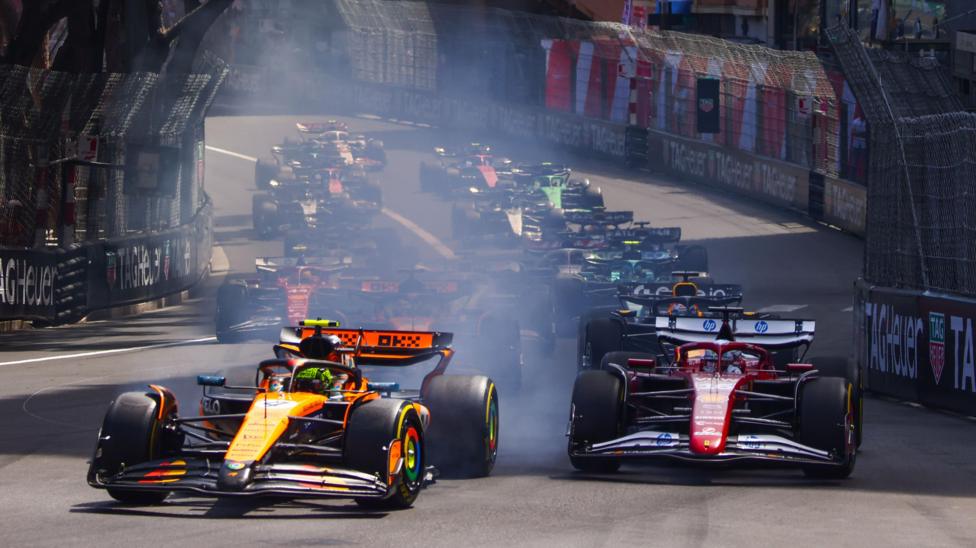
Can 2026's Aero Revolution Finally Crack Monaco's Processional Problem?
New active aero and reduced wake sensitivity could transform F1's most unforgiving circuit — but don't hold your breath.
Spa's Strategist's Playground: Where Qualifying Bets Live or Die
Spa-Francorchamps rewards precision over power, making Belgian GP qualifying bets a high-wire act of tire thermodynamics and weather timing.
Colapinto's Alpine Clock: Inside The 2026 Contract Ultimatum
Alpine chief Nielsen admits everyone wants more from Colapinto as his 2026 contract expiry looms over Enstone.