Owen's Rise, Beckham's Fall: England's 1998 World Cup Heartbreak
A night of genius and madness in Saint-Étienne that defined careers and revealed the beautiful game's cruelest theatre.
A Rivalry Forged in Blood and Malice
Thirty years after the handshake that never happened, the ghosts of 1966 still lingered over every touch between these two nations. By the time the draw placed England and Argentina on a collision course in the Round of 16 at France 1998, the geopolitical subtext had calcified into something visceral and unshakeable. This was never just a football match. It was a grudge match draped in national colours.
The backdrop only sharpened the edge. Four years earlier, Diego Maradona had strutted across the pitch at the 1994 World Cup in the United States, wild-eyed and defiant, his tournament ending in a failed drugs test that stripped Argentina of their talisman. Now, without him, a new generation carried the blue and white stripes into Saint-Étienne with a point to prove and history to reclaim.
England, meanwhile, arrived under the guidance of Glenn Hoddle, a manager whose tactical ambition was matched only by his peculiar man-management decisions. Hoddle had left out Paul Gascoigne, the tortured genius of England's midfield, before the tournament even began. It was a ruthlessness that suggested a man willing to make hard calls. What unfolded at the Stade Geoffroy-Guichard would test that conviction beyond breaking point.
The First Five Minutes: Chaos Descends
The match kicked off at 8:00 PM local time on June 30, 1998. Within moments, the game transcended sport and became theatre.
Gabriel Batistuta, the Argentine executioner, clashed with England's goalkeeper David Seaman in an early challenge that set the tone. Blood, confrontation, and raw nerve. This would not be a match for the faint-hearted.
Then came the opening goal. Alan Shearer, the Newcastle striker whose England career had been built on relentless physicality, burst through to fire home and give England a shock lead. The 5th minute had barely elapsed.
But Argentina responded with chilling poise. Just four minutes later, a penalty won and converted by Javier Zanetti drew the South Americans level. The game was barely a quarter of an hour old and already delivering on its impossible billing.
The Early Chaos in Numbers
- 1-0 England lead in the 5th minute through Shearer
- 1-1 Argentina equaliser via Zanetti penalty in the 9th minute
- 2 yellow cards shown before the 20th minute
- 0 shots on target from open play in the opening exchanges
The Boy Who Became a Man
And then, in the 16th minute, a moment of transcendence that elevated this match from mere spectacle to folklore.
Michael Owen, the fresh-faced 18-year-old from Liverpool, received the ball near the halfway line. What followed was a solo goal that would echo through generations. Owen surged past Roberto Ayala with devastating acceleration, the Argentine defender left grasping at shadows. Then he struck a ferocious, rising finish past Carlos Roa that ignited the stadium and announced England's newest star to the world.
"That goal changed everything for me. One moment you're a promising kid, the next you're carrying a nation's hopes. There was no going back." — Michael Owen recalling the strike years later
It was a goal of breathtaking audacity. Owen became the youngest player to score in a World Cup for England, a record that carried its own weight of expectation. The Boy Wonder had arrived.
Yet Argentina, the team forged in the furnace of South American football, refused to buckle. Daniel Passarella's side possessed a collective resilience that England would ultimately lack. Before halftime, they struck again. A beautifully worked free kick caught England's defence napping, and the teams went into the break level at 2-2.
The Kick That Launched a Thousand Villains
The second half belonged to one man, and not in the way anyone anticipated.
David Beckham, the Manchester United star whose image adorned bedroom walls across the nation and whose relationship with Victoria Adams made him a tabloid obsession, had been a peripheral figure. Then came the 47th minute.
Beckham, frustrated and targeted throughout by Diego Simeone's cynical provocation, was fouled near the touchline. As he lay on the turf, the Argentine captain leaned over him. Beckham's response was instinctive, petulant, and momentous. His left foot flicked out, catching Simeone's shin.
Referee Kim Milton Nielsen saw it immediately. Red card.
"It was a moment of pure madness. I reacted and cost my country. Nothing I ever do will erase that night." — David Beckham on the sending off
The image of Beckham walking alone from the pitch, Ferguson's prodigy banished to the dressing room while his teammates fought on, became one of the defining photographs of the decade. It would launch a vendetta from the English press that made the treatment of recent soccer villains look gentle by comparison.
Ten Men Hold the Line
What followed was a masterclass in defiant rearguard action.
Reduced to ten men, England retreated into their shell and dared Argentina to break them down. Sol Campbell, the Arsenal centre-back, was immense, repelling wave after wave of Argentine attacks with a combination of positioning and raw courage. Paul Ince patrolled the midfield like a man possessed.
Argentina poured forward. They probed, they circled, they prodded. But England's back line held firm, a wall of white shirts refusing to concede.
The match drifted inevitably towards extra time, then penalties. The shootout. The one arena where England's history promised only despair.
The Cruellest Theatre
Penalties. The word alone sends shivers through English football. The method of deciding matches that seem to revel in torturing a nation.
In the shootout that sealed this match's place in infamy, it fell to Paul Ince and David Batty to carry England's hopes. Both failed. Argentina goalkeeper Carlos Roa, who had barely been tested during regular play, saved from Batty to seal a 4-3 shootout victory after the match had ended 2-2.
Transfer Intel: The Beckham Reckoning
The commercial fallout was staggering. Within 48 hours of the sending off, Beckham's sponsorship deals came under immediate threat. The Manchester United hierarchy, including Sir Alex Ferguson, faced questions about whether their prized asset could withstand the psychological barrage ahead of the new season.
- Estimated market value pre-match: £25m
- Replica shirt sales: 40% drop in the immediate aftermath according to industry estimates
- 3 major sponsors requested crisis meetings with Manchester United's commercial team
- Media coverage generated an estimated £4m in advertising revenue for UK tabloids alone
What followed was a campaign of vilification that pushed the boundaries of acceptable journalism even by the standards of the era. One London newspaper printed a dartboard with Beckham's face at its centre. Another ran a headline labelling him "most hated man in England" alongside imagery that drew uncomfortable parallels with mob justice.
The Aftermath: What Changed
England returned home to a nation in mourning. For Hoddle, the tournament had revealed a young squad with genuine potential, but the World Cup had also highlighted the tactical rigidity that would eventually cost the manager his job. He was gone within nine months.
For Argentina, the triumph over England proved to be their high watermark. They fell to the Netherlands in the next round, Dennis Bergkamp's late winner ending their campaign with a crue-inch finish that mirrored the quality of this match.
And Beckham? The redemption arc that followed spanned years, culminating in that free kick against Greece in 2001. But that night in Saint-Étienne, as he slunk down the tunnel leaving his teammates to face the penalty lottery without him, he was simply the villain of a piece that had demanded a sacrifice.
Legacy Etched in Infamy
The 1998 encounter between England and Argentina stands as a testament to football's unique power to compress human emotion into 90 minutes. It contained brilliance and brutality, genius and self-destruction, a boy becoming a man and a man becoming a pariah in the same evening. No discussion of England's World Cup history is complete without it. No neutral who watched that night has ever forgotten the way it ended.
Tactically, the match revealed the direction football was heading. Argentina's fluid front line, their intricate set-piece routines, their refusal to accept inferiority even when trailing to a moment of individual genius. England's muscular response, built on Campbell's defending and Shearer's finishing, spoke of a different footballing culture, one that would soon be forced to modernise.
The Stade Geoffroy-Guichard holds many memories. But on that humid night in June, beneath the lights of a tournament that France would ultimately claim, it witnessed something more profound than a football match.
It witnessed identity, costs, consequence.
And penalties. Always penalties.
Editorial Integrity
This is an original SportPulse article written by our editorial team. All content is independently researched, written, and reviewed by our writers and editors before publication. We do not publish copied, aggregated, or syndicated content.
SportPulse is committed to original sports journalism. Read our editorial policy or contact us with any questions.
More Like This
All football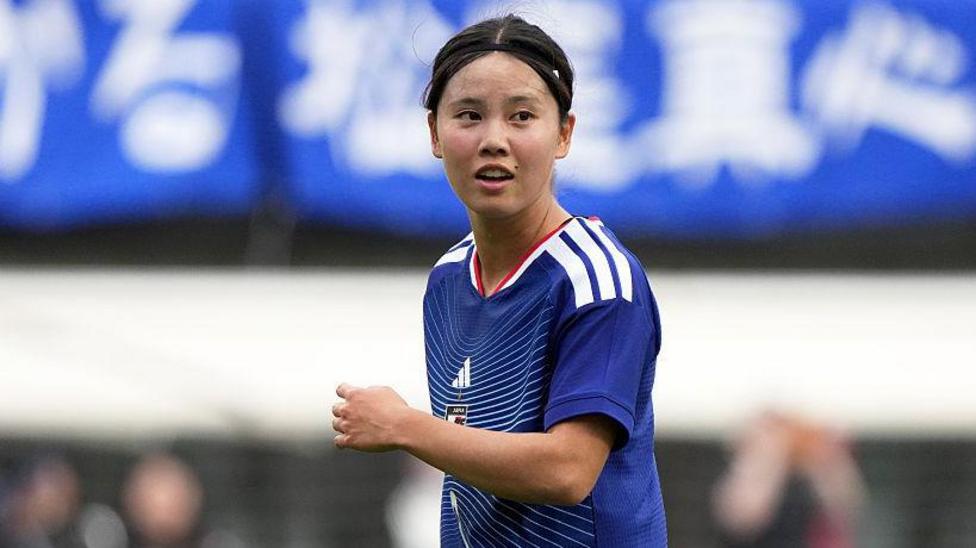
Chelsea Pull Off NWSL Coup: Matsukubo Arrives at Kings Highway
Chelsea lured Japan's Manaka Matsukubo from NWSL’s North Carolina Courage on a five-year deal — a statement WSL signing.
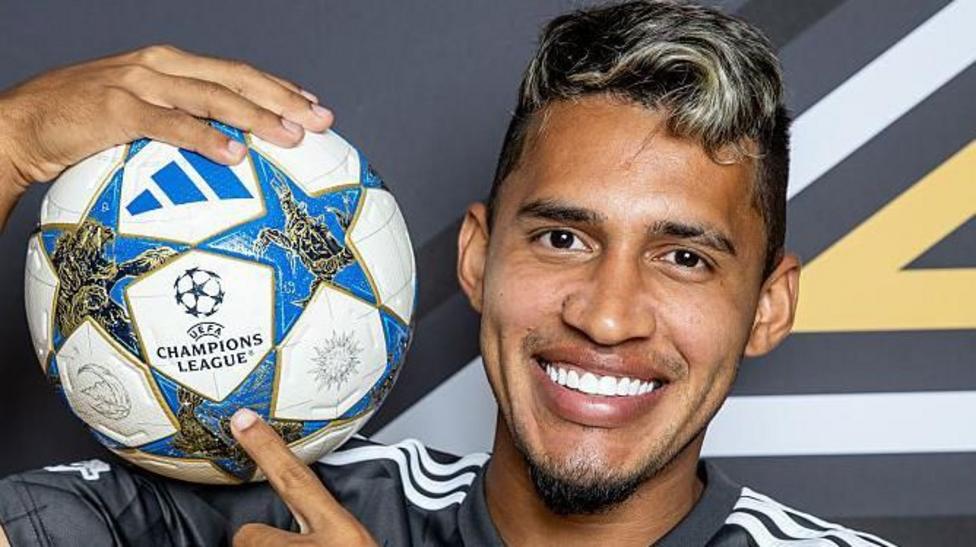
Celtic Bet £5.5m on Camilo Duran: The Qarabag Rebel With a Point to Prove
Celtic's first January window signing is a Colombian forward with talent, temperament, and a £5.5m price tag that raises as many questions as answers.

Hearts Broken, Heads High: Mexico's Bittersweet World Cup Exit
England shattered El Tri's dreams, but Mexico's tournament as co-hosts delivered pride, passion and a football awakening.