Arthur Fery's Wimbledon Miracle Built on Nose Surgery and The Godfather
A secret nose procedure and Coppola's epic turned a bleeding qualifier into a Wimbledon semi-finalist facing Alexander Zverev.
The Canvas of an Improbable Summer
There is a particular brand of English summer light that filters through the ivy of Wimbledon, casting long shadows that seem to whisper of empires risen and fallen on these very lawns. For two weeks, it has illuminated the most unlikely protagonist of the Championships: a young man from nearby who arrived bleeding, both literally and figuratively, and now stands on the precipice of sporting immortality.
Arthur Fery is not supposed to be here. The draw, the seedings, the entire machinery of modern professional tennis dictates that players of his pedigree exist in the margins of the first week, playing their matches on the outer courts before yielding to the established order. Instead, on Friday afternoon, the British player will stride onto one of the sport's grandest stages to contest a semi-final against Alexander Zverev, the French Open champion, in what is unambiguously the most significant collision of his nascent career.
His path to this point is not merely improbable; it borders on the mythological.
The Hemorrhaging Hero
In the early rounds of the Championships, Fery's Aorangi Park practice sessions and championship matches carried an unwelcome and persistent visual motif. Blood. His nosebleeds became a recurring disruption, halting play and forcing the tournament medical staff into regular intervention. Each pause was a fracture in his momentum, a physical reminder that the body resists the demands of elite competition.
The nosebleeds were a vulnerability, an exploitation point. Here was a player trying to find his footing on the sport's most hallowed turf, interrupted by his own capillaries.
The solution came not in the form of a tactical epiphany but through a medical intervention he kept concealed from the public gaze. A procedure on his nose, a minor reconstruction of the internal architecture, stemmed the flow. The bleeding stopped, and his run through the draw transformed from a fragile, stop-start campaign into a relentless forward march.
The Crucible of Five Sets
Once the bleeding ceased, the resistance he faced merely shifted from the internal to the external. To reach the semi-finals, Fery had to navigate consecutive five-set comebacks that tested the absolute limits of his resolve.
First came Zizou Bergs, a formidable opponent capable of devastating power. Fery trailed, his tournament life flickering. He survived, winning in a final-set tie-break.
Then came Grigor Dimitrov, a veteran former top-ten player carrying the weight of a nation's expectations and the residue of a career spent battling the sport's pantheon. Fery trailed again, the Centre Court crowd sensing the end of the dream. He survived once more, again prevailing in a final-set tie-break.
Two consecutive five-set matches. Two final-set tie-breaks won from a trailing position. The statistical probability of such a sequence is staggering. The mental fortitude required to repeatedly haul oneself back from the precipice of defeat defies the conventional understanding of competitive psychology. It demands not just physical endurance but a particular, almost foolhardy, refusal to accept the logical end of a narrative.
The Education of Michael Corleone
The physiological transformation provided by the nose operation gave Fery the tools to compete. But the mental scaffolding required to endure those final-set crucibles required a different kind of preparation. It required Coppola.
Between matches, away from the practice courts and the gym, Fery immersed himself in the Godfather trilogy. He watched Michael Corleone’s calculated ascent, absorbing the lessons of patience, strategic violence, and the cold necessity of eliminating threats. The parallel is imperfect, of course. Fery is not navigating a underworld feud, but the dramatic structure of Coppola’s epic offers a template for survival in a brutal arena.
"It's not personal, Sonny. It's strictly business."
That ethos, the detachment of calculated decision-making from the emotional chaos of the moment is the very currency of a fifth-set tie-break. Fery has been playing out his own cinematic sequence. Down a break, he channels the cold patience of a young Michael Corleone in a Sicilian courtyard, waiting, calculating, refusing to let emotion dictate the next strike. The application of cinematic dramatic structure to athletic performance is a psychological anchor. It provides a narrative framework for chaos, a way to process the unendurable pressure of a Wimbledon fortnight.
The German Colossus
On Friday, the script demands its most challenging scene. Alexander Zverev arrives at the semi-final carrying the momentum of his French Open campaign, a player whose devastating serve and forensic baseline hitting have placed him firmly among the sport's elite. He is not Bergs, an opponent to be outlasted through sheer force of British will. He is not Dimitrov, a player whose brilliance is often interrupted by physical vulnerability.
Zverev is a machine. A relentless, efficient protagonist perfectly suited to the grass if he can manage his own historic frailties in the biggest moments. For Fery, the challenge shifts from survival to imposition. He cannot simply absorb the punishment and wait for a late-round error. Against Zverev, the errors do not arrive in sufficient quantity to bridge the gap in pedigree and raw power.
The Centre Court Awaits
What happens on Friday will either cement Fery’s name in Wimbledon folklore or serve as a painful endpoint to a charmed fortnight. The odds remain against him. Zverev will be the heavier puncher, the more experienced campaigner, the player more accustomed to the Unique atmosphere of a Grand Slam semi-final.
But the story of Arthur Fery has never been about the odds. It has been about defying them, one nosebleed, one five-set comeback, and one cinematic marathon at a time. The summer light at Wimbledon is fading now, the shadows lengthening as the tournament reaches its crescendo. In that diminishing glow, Fery stands, a miracle built on medicine and Michael Corleone, preparing to write the final scene of his own improbable trilogy.
Whatever happens, the tale is already the stuff of legend.
Editorial Integrity
This is an original SportPulse article written by our editorial team. All content is independently researched, written, and reviewed by our writers and editors before publication. We do not publish copied, aggregated, or syndicated content.
SportPulse is committed to original sports journalism. Read our editorial policy or contact us with any questions.
More Like This
All tennis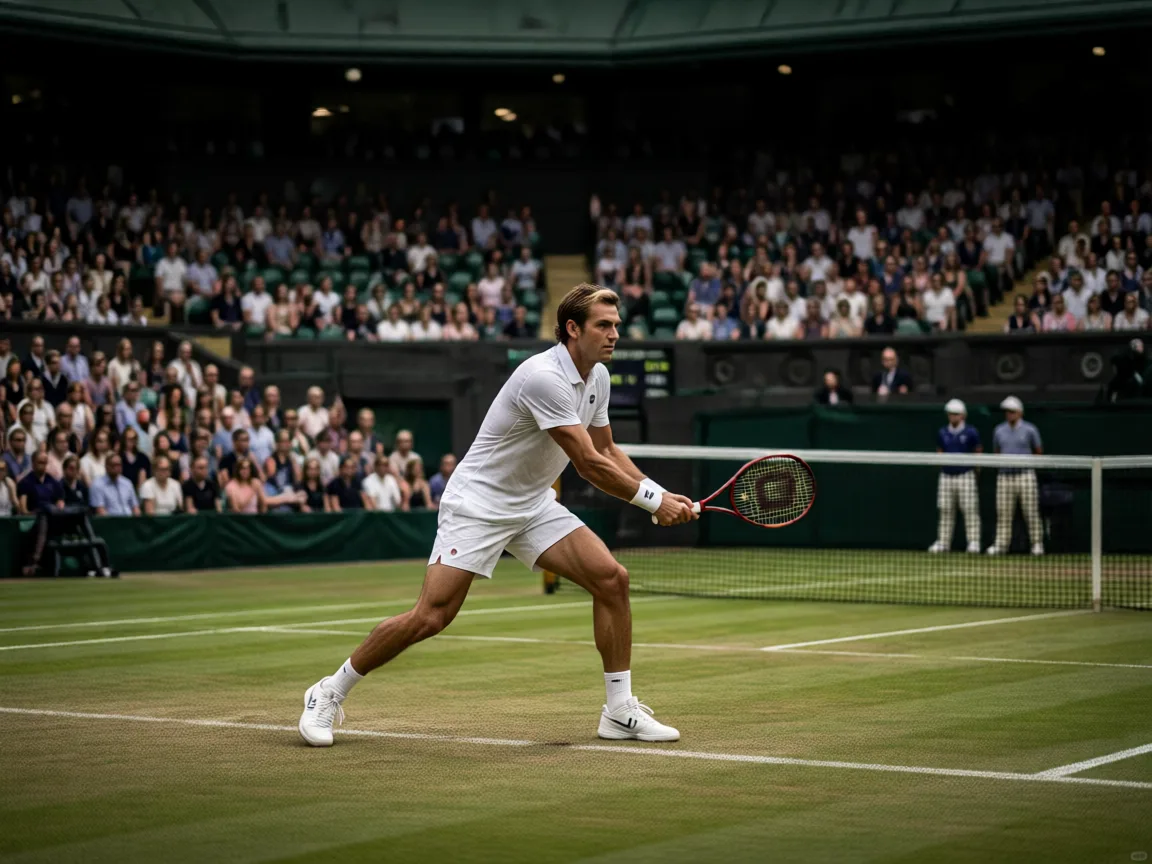
Noskova's First Crown, Sinner Defends, Djokovic's Stubborn Hunt
Wimbledon 2026 delivered a new women's champion, a defending king, and an ageless legend still chasing history.
WTA Finals Cut Saudi Arabia Short, Return to California's Desert Oasis
The WTA's season-ending spectacle abandons Riyadh a year early, seeking redemption in the California sun.
Williams Sisters Accept Wimbledon Doubles Wildcard
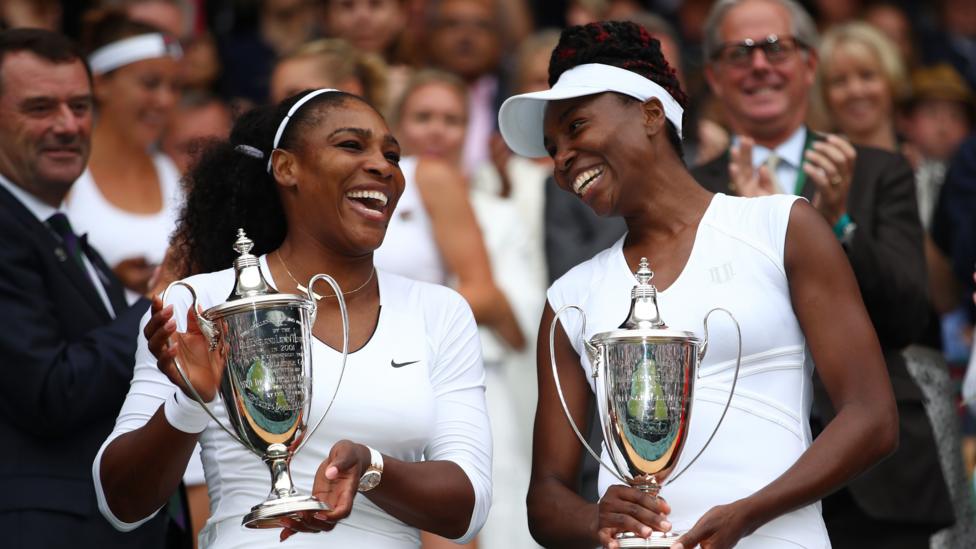
Serena and Venus Williams will reunite at the All England Club after receiving a wildcard into the Wimbledon women's doubles.