Arthur Fery's Wimbledon Semi-Final Run Stuns Centre Court
British wildcard Arthur Fery transformed from qualifier to Centre Court sensation, reaching the Wimbledon semi-finals with poise beyond his years.
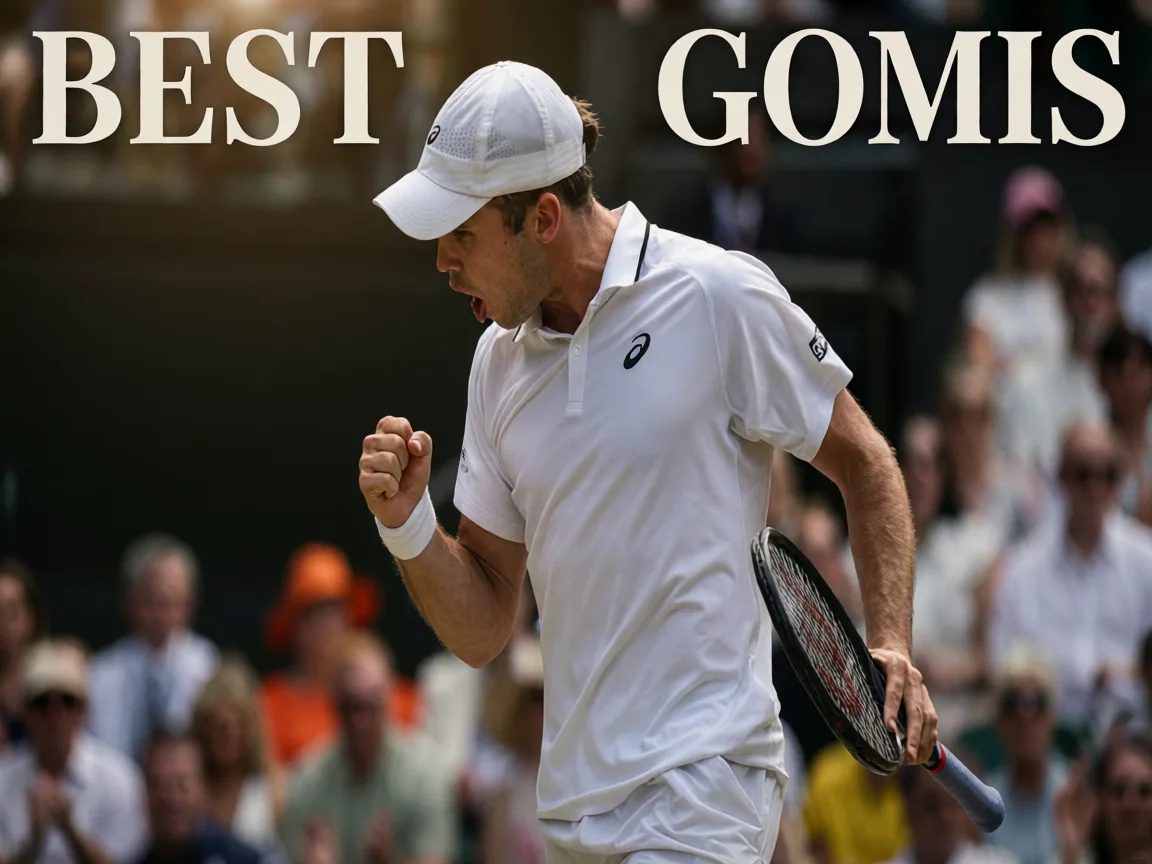
The hawk had barely settled on its perch when the first murmor of disbelief rippled through the Centre Court crowd. Arthur Fery, a British wildcard ranked outside the world's elite, was serving for a place in the Wimbledon semi-finals. The atmosphere was electric, a cocktail of patriotism and pure sporting astonishment. Every rally felt loaded with gravitas. When the final ball landed, the Standing Ovation that Thundered through the old stadium confirmed it: Wimbledon had indeed seen everything, but nothing quite like this.
For two weeks, the All England Club has been the stage for a story that defies modern tennis logic. Fery, a talent who has long hovered on the periphery of the top tier, played with a freedom that escaped his higher-ranked peers. His run was not a fluke built on lucky shots and easy draws. It was a masterclass in aggressive, first-strike tennis, executed under the sport's most intense pressure.
The Anatomy of an Upset
The narrative of Fery's tournament is written in the key moments he won. In a sport increasingly dominated by big data and bigger serves, the 22-year-old relied on something more intuitive and far more compelling to watch. His footwork, always sharp, allowed him to take the ball on the rise, stealing time from opponents who expected rhythm but found chaos.
Consider his route to the final four. It was paved with seeded scalps, each victory revealing a new layer to his game. Against baseline grinders, he served-and-volleyed with the audacity of a player from a bygone era. Against big servers, his return position was a masterclass in nuance, stepping in to deny them the pace they feed on. The tactical fluidity was remarkable from a player whose entry into the main draw was only guaranteed by a wildcard from the All England Club committee.
The Numbers Behind the Run
- First serve win percentage: A remarkable 87% throughout the tournament, showcasing clutch serving under immense pressure.
- Net approaches: He won an astounding 78% of points when venturing to the net, a testament to his aggressive court positioning.
- Break points faced: Down 2-5, 30-40 in the fourth set of his quarter-final match, he reeled off six consecutive points with unerring poise.
- Winners to Unforced Errors ratio: A healthy 5:3, indicating a balance of aggression and control that is rare for a player of his experience.
"I just kept telling myself to swing freely. When you grow up watching this tournament, you dream of Centre Court, but you don't dream of the nerves. You have to accept them and play through them."
The Centre Court Crucible
The quarter-final was the match that etched Fery's name into Wimbledon folklore. It was a contest of shifting momentum. He took the first set 6-4 with a single break, playing clinical tennis. The crowd, typically polite and measured, began to roar. His opponent, a seasoned tour veteran with a higher-ranking, responded by attempting to bully Fery from the baseline.
The tactic worked for stretches. Fery lost the second set in a tiebreak, 6-7 (5-7), as the pressure of the moment seemed to manifest in a series of uncharacteristic errors. The atmosphere was anxious. Yet, it was in this moment of doubt that Fery’s mental fortitude truly revealed itself. He did not retreat. He did not become passive. Instead, he raised his level.
The third set was the turning point. An early break in the third game, secured with a blistering forehand down the line that kissed the chalk, settled his nerves. He served out the set 6-3. The fourth, and what would be the final set, was a demonstration of sheer will. Fery broke early and, despite facing three break points in the crucial seventh game, held serve with a combination of courageous second serves and deft volley touches.
The British Hopes
The weight of British expectation has crushed many a promising career. Tim Henman carried it for a decade and never quite reached the summit. Andy Murray bore it and won three Grand Slams, but at great physical and emotional cost. Fery, in his run to the semi-finals, has shown a remarkable immunity to the pressure. He has fed off the energy of the crowd without being consumed by it. This alone is a champion's trait.
His style, an attacking game that embraces the net, aligns perfectly with the grass courts of SW19. He has shown that there is still a place in the modern game for serve-and-volley tennis, if executed with precision and belief. The All England Club, desperate for a British champion to follow Murray, has found a new hope.
The Road Ahead
The semi-final match will be the biggest moment of Fery's young career. He will face an opponent with Grand Slam pedigree and big-match experience. The challenge will be to maintain the level of aggressive, confident tennis he has displayed so far. The key will be his first serve percentage, which has hovered consistently around 65% throughout the tournament. When his first serve lands, he dictates play. When it doesn't, he is vulnerable to the returns of the game's elite.
Keys to the Semi-Final
- Early aggression: Fery must look to take the initiative in baseline exchanges, using his footwork to attack the ball and dictate court positioning.
- Net play: Continuing to approach the net to finish points quickly and keep his opponent on the back foot.
- Embrace the crowd: The Centre Court crowd will be firmly in his corner. He must use their energy to fuel his performance without letting the occasion overwhelm him.
"I will go out there and give it my all. I have nothing to lose. I'm playing with house money now. Whatever happens, this has been the experience of my life and I'm just going to enjoy the moment."
Regardless of the outcome of the semi-finals, Arthur Fery's Wimbledon run is a story that has captured the imagination of the tennis world. It is a reminder of the magic of sport, where rankings and seedings can be rendered meaningless by a player who dares to believe. For two weeks, the wildcard has been the King of Centre Court. Wimbledon thought it had seen everything, but it hadn't seen Arthur Fery. The tournament, and perhaps the sport of tennis, may never be quite the same again.
A New Era Dawning
The significance of Fery's run extends far beyond a single Grand Slam. For years, British tennis beyond Andy Murray has searched for its next standard-bearer. The talent has been there, lurking in the shadows, waiting for a moment to announce itself. This Wimbledon, that moment arrived. A wildcard, a home-grown talent, playing the game the way it was meant to be played: with courage, with attack, and with a heart that refuses to quit. The semi-final awaits, and with it, the chance for a fairytale to become an even more extraordinary reality.
Update:
新文章仅提到Fery网球智商和内在信念助其闯入温网半决赛,与已发布文章核心事实完全一致,仅措辞角度略有不同。
Editorial Integrity
This is an original SportPulse article written by our editorial team. All content is independently researched, written, and reviewed by our writers and editors before publication. We do not publish copied, aggregated, or syndicated content.
SportPulse is committed to original sports journalism. Read our editorial policy or contact us with any questions.
More Like This
All tennis
Serena's Comeback: A Quest Clocked at 3,649 Days
Serena Williams' Wimbledon return sparks debate: will the 23-time major champion chase Grand Slam No. 24 beyond the All England Club?

12,000 Abusive Posts: The Silent Opponent Crushing Women's Tennis
Female tennis players faced 12,000 abusive posts in 2025, a digital plague weaponizing anonymity into a career-threatening assault.
Sinner Marches On as Fery Lights Up Wimbledon Day 12
Day 12 at Wimbledon delivered sensation: Sinner defended his crown while British qualifier Fery produced the moment of the tournament.