Arthur Fery and the Myth of the Diminutive Tennis Player
A Guardian letter exposing Wimbledon's height bias raises a deeper question: why does tennis still equate greatness with size?
The Centre Court crowd hums with anticipation. A ball boy tosses a yellow sphere to the server, who rocks back, launches, and cracks an ace down the T. The stands erupt. The camera pans to the player's stats flashing on the broadcast overlay: height, weight, age. It is a routine ritual, innocuous to most. Yet in the margins of a recent Wimbledon report, one reader spotted something jarring enough to put pen to paper.
The match in question featured Arthur Fery, the British wildcard making his way through the grass-court season. Fery, listed at 5ft 9in, was described in print as being of "diminutive stature." The phrase nestled into the coverage without much fanfare, the kind of adjective journalists reach for when painting a contrast between epochs: the big-serving giants of today versus the slender artisan of yesteryear. But it caught the eye of Derek Carline, a reader from Chorlton, Manchester, who stands 5ft 4in himself and took exception.
"At 5ft 7in, Lionel Messi is even smaller than Fery, but I have never heard commentators describe him as diminutive. Closer to home, the previous Wimbledon winners Ken Rosewall and Rod Laver were of a similar height. Diminutive? You cannot be serious."
Derek Carline, letter to the editor
The line lands like a well-placed drop shot. You cannot be serious. John McEnroe's famous refrain, borrowed here for a different grievance, cuts through the polite language of a broadsheet correction. But beyond the amusement of a sharp reader letter, there is a genuine question worth unpacking. When did 5ft 9in become "diminutive" in tennis? And what does that label reveal about how the sport has come to frame athleticism, greatness, and the modern prototype of a champion?
The Height Standard
Tennis has undeniably grown taller. The average top-100 ATP player now stands around 6ft 2in to 6ft 3in, a striking contrast to the generations that preceded the graphite era. The shift is not aesthetic. It is biomechanical. A taller frame generates steeper service angles, higher kick on second serves, and greater reach at net. The serve, once an opening shot, has become a point-ending weapon. Players like John Isner at 6ft 10in and Reilly Opelka at 6ft 11in exist at the extreme end, but the mid-range has shifted too. Today, a player listed at 6ft 5in barely draws comment.
This trend has reprogrammed what broadcasters and writers consider normal. The baseline for description has crept upward as surely as the players themselves. A player who would have been considered standard-sized in 1980 now reads as undersized in 2024. The vocabulary has followed the inches. Fery at 5ft 9in is framed as the exception. But the exception to what, exactly?
The history of the game tells a different story.
When Legends Stood Shorter
Ken Rosewall, one of the most complete players to grace a tennis court, stood an estimated 5ft 7in. Rod Laver, the only man to win two calendar Grand Slams, measured roughly 5ft 8in. Bjorn Borg, who dominated Wimbledon in the late 1970s, was 5ft 11in. None were described in their prime as diminutive. They were described as complete, explosive, relentless, graceful. The vocabulary of tennis journalism back then did not default to height as a marker of identity.
That changed as the game professionalised and the serve grew dominant. Pete Sampras at 6ft 1in was tall but not towering. Then came the generation that redefined the physics of the sport.
Wimbledon Champions by Height
- Rod Laver: ~5ft 8in (two calendar Grand Slams, 11 majors)
- Ken Rosewall: ~5ft 7in (8 majors, Wimbledon champion 1956, 1970, 1974)
- Bjorn Borg: 5ft 11in (11 majors, 5 consecutive Wimbledon titles)
- Boris Becker: 6ft 3in (6 majors, Wimbledon champion at age 17)
- Pete Sampras: 6ft 1in (14 majors, 7 Wimbledon titles)
- Roger Federer: 6ft 1in (20 majors, 8 Wimbledon titles)
- Novak Djokovic: 6ft 2in (24 majors, 7 Wimbledon titles)
- Carlos Alcaraz: 6ft 0in (4 majors, 2 Wimbledon titles)
This data tells a story of gradual escalation, not a revolution. Yet the descriptive framework has shifted more dramatically than the bodies themselves. Laver and Rosewall were never "diminutive." They were champions. Full stop.
The Messi Comparison
Carline's invocation of Lionel Messi is the sharpest edge of his argument. Messi stands 5ft 7in, two inches shorter than Fery. In football, his height is occasionally mentioned as a biographical detail, the consequence of a growth hormone deficiency treated in his youth. But it is never deployed as a limiting descriptor. Messi is not called diminutive by serious analysts. He is called the greatest player of all time.
The comparison is not perfect. Football and tennis demand different bodies. Football values low centre of gravity, agility, close control, and balance. Tennis increasingly values reach, leverage, and serve speed. But Carline's point cuts deeper than a cross-sport gotcha. He is asking why the language of one sport treats a 5ft 7in genius as a standard, while another treats a 5ft 9in professional as a curio.
The answer lies partly in how tennis narrates itself. The sport has always loved a prototype. The big-serving American. The baseline Spanish grinder. The all-court Swiss aesthete. These archetypes are useful shorthand, but they calcify into assumptions. When commentators and writers reach for "diminutive" to describe a 5ft 9in player, they are not merely describing a body. They are placing that body outside the expected template of a modern professional.
That template is real, and the data supports its existence. But naming it is different from dismissing anyone who falls outside it.
What Fery Represents
Arthur Fery is not a Davis Cup regular content to play Challengers. He is a 23-year-old with a career-high ranking inside the world's top 400, a former Stanford University standout, and a player who climbed 200 ranking spots in a single season. His trajectory is still ascending. He earned a Wimbledon wildcard and stepped onto the most famous grass in the sport. That should be the story.
Instead, a fragment of coverage zoomed in on his height, framing it as a curiosity rather than a footnote. The instinct was natural for a journalist seeking contrast. Fery does stand shorter than the giants he faces across the net. But the word "diminutive" carries cultural freight. It implies smallness beyond measure, a kind of novelty. It suggests the player is interesting partly because he is small, not because he is excellent.
Fery's actual accomplishments are being forged on court between the lines, not in a comparison between his frame and today's giants. He first picked up a racket at age four. He trained at the academies. He chose the collegiate route in America, a path fewer elite Europeans take. He earned his wildcard through the LTA's singles performance balance. He won his first Davis Cup match.
None of that is diminutive.
The Broader Shift
The sport's relationship with height is evolving in two directions at once. On the men's side, the trend toward taller frames with massive serves continues to shape the ranking landscape. But it is not the whole story of the men's game.
The players who transcend the serve-first paradigm, like Carlos Alcaraz at 6ft 0in and Jannik Sinner at 6ft 2in, prove that above-average height is not a strict prerequisite for dominance. Alcaraz sits a full two inches shorter than Federer and Djokovic. He has won four majors before turning twenty-two.
Their success owes nothing to being exceptions to a height rule and everything to motor genius, speed, anticipation, and shot-making creativity. The giants have not taken over entirely.
On the women's side, where heights have also increased, there is a parallel conversation shaping who gets noticed, how they are written about, and what details surface in scouting reports.
The Language Matters
Derek Carline's letter is a small protest, but a precise one. Words like "diminutive" do not merely describe. They frame expectations. They telegraph to the reader that a player is overcoming something before they have even struck a ball. The question is whether that framing still serves the sport.
Tennis has always been a game of margins, where inches on a line and millimetres on a frame can decide a match. But inside the lines is where the match is won. Across the generations, it has produced the most complete, most resilient, and most complete champions the sport has ever seen.
Standing 5ft 9in on Centre Court is not an act of defiance. It is an act of arrival.
What's Next
The grass-court season rolls on with the hard-court swing approaching and the US Open looming. For Fery, the road ahead is long and unglamorous. Challenger events and qualifying rounds, ranking points banked one tournament at a time.
He may not lift the trophy this year or next. But he has already earned his place in the draw, his wildcard, and the right to be measured by his results rather than his reach.
The next time a broadcaster reaches for "diminutive," they might pause and consider Rod Laver. He stood 5ft 8in, won 11 Grand Slam singles titles, and is the only man in history to complete two calendar Grand Slams. Nobody called him small because he was.
They called him the greatest in the world.
Editorial Integrity
This is an original SportPulse article written by our editorial team. All content is independently researched, written, and reviewed by our writers and editors before publication. We do not publish copied, aggregated, or syndicated content.
SportPulse is committed to original sports journalism. Read our editorial policy or contact us with any questions.
More Like This
All tennis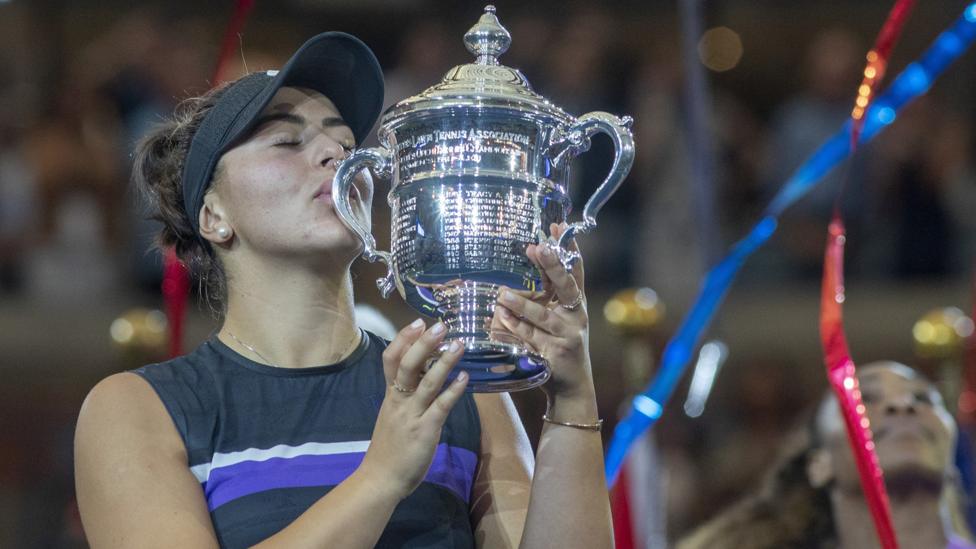
2,300 Days of Pain: How Andreescu Broke the Curse
Bianca Andreescu ended over six years of title drought, finally shaking off the curse that followed her stunning 2019 US Open triumph.

Serena at 44: The Comeback That Defies Era and Expectation
At 44, Serena Williams returns to Wimbledon a decade after the age when champions typically retire.
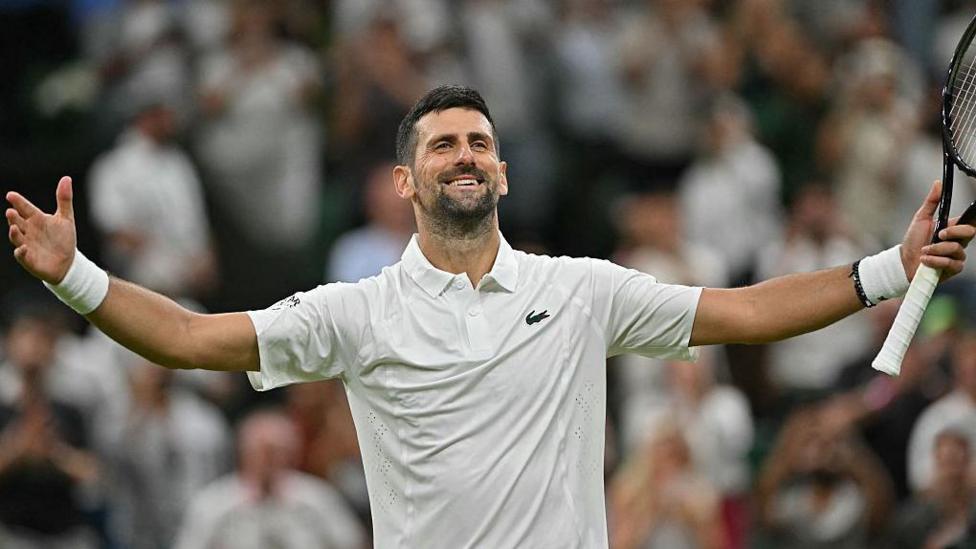
Djokovic Digs Deep Against Wu as 25th Grand Slam Hunt Begins at Wimbledon
Novak Djokovic survives a testing Wimbledon opener against Wu Yibing, but questions linger over his fitness for a record 25th Slam.