Askren's Wrestling Epilogue: A Collegiate Legend Concedes to UFC's Grappling Evolution
Ben Askren's competitive career ends in a pure wrestling loss to Belal Muhammad, exposing how MMA grappling has rewired fundamental mat mechanics.
The final whistle of a competitive wrestling match rarely carries the symbolic weight of a career-ending moment in combat sports. Yet when Ben Askren conceded a points loss to Belal Muhammad, the scoreboard told a story far deeper than a single match result. It marked the definitive conclusion of one of American wrestling's most intellectually sophisticated careers, and simultaneously highlighted a fascinating tactical reality: the grapplers forged in modern mixed martial arts have fundamentally rewired how they approach the pure wrestling discipline.
For those steeped in the technical foundations of grappling sports, the encounter between Askren and Muhammad represented a collision of two distinct philosophical schools. Askren, a product of the NCAA collegiate wrestling pipeline and an Olympic veteran, built his entire identity on a system of relentless forward pressure and unorthodox scrambling. Muhammad, navigating the chaotic environment of the UFC welterweight division, has developed a grappling profile tailored to the holistic demands of cage fighting, where strikes, cage mechanics, and submission threats constantly alter the leverage landscape.
The Deconstruction of the Askren System
To understand why this match mattered, one must first appreciate the tactical architecture that made Askren a phenomenon. During his peak years, Askren operated within a collegiate folkstyle framework that prioritized mat control and riding time above all else. His approach was systemically built around creating uncomfortable physical exchanges where his superior hip positioning and cardio endurance could methodically break opponents down.
The core of the Askren methodology was never aesthetic. It was functionally oppressive. He would willingly sacrifice neutral position to enter scramble situations, trusting his deep understanding of biomechanical leverage to emerge on top. His signature chain of techniques, which often flowed from a cement mixer setup or a sprawled-out front headlock, functioned as an interconnected web designed to suffocate offensive output.
However, the transition from the pristine environment of collegiate wrestling to the cage alters these fundamental mechanics. In the wrestling room, the fundamental objective is deterministic: pin the opponent's back to the mat or accumulate points through controlled exposure and escapes. In MMA grappling, the objective becomes probabilistic and heavily constrained: secure advantageous positions while actively managing the threat of strikes, chokes, and joint attacks. This fundamentally shifts the risk calculus of every positional exchange.
Muhammad's MMA-Adapted Grappling Paradigm
Belal Muhammad entered this match not as a traditional wrestling specialist, but as a product of the modern MMA grapple-strike matrix. His tactical intelligence inside the cage has always been his most underrated technical attribute. Where a pure wrestler is conditioned to chain grapple continuously, Muhammad is systematically trained to create framing structures, use the cage fencing as a secondary defensive boundary, and disrupt the rhythm of takedown entries.
In a pure wrestling ruleset, one might assume the collegiate specialist retains every structural advantage. The reality proved more nuanced. MMA grapplers spend thousands of hours in underhook battles, pummeling for positional dominance against opponents who are simultaneously striking from a completely different mechanical paradigm. This builds a different kind of isometric strength and an acute spatial awareness that translates seamlessly back onto the wrestling mat.
Muhammad's approach to neutralizing Askren's forward pressure relied on what grappling purists would recognize as an anti-wrestling posture. Instead of engaging in the fluid chain wrestling that Askren prefers, Muhammad likely implemented a rigid postural system designed to force reset after reset. By denying the initial wrist control and head positioning that Askren requires to trigger his signature attacks, Muhammad effectively turned the match into a series of stalled, fragmented exchanges.
Tactical Shift: The Neutralization of Offensive Chains
The decisive tactical turn of the match occurred in the battle for hand-fighting supremacy. Askren's entire offensive system is predicated on winning the initial grip exchanges to force opponents into compromised postures. When operating at peak efficiency, this hand-fighting dominance allows him to seamlessly transition from a collar tie into the bodylock entries that defined his international career.
Muhammad's tactical adjustment was rooted in defensive framing. Modern MMA defense teaches a highly specialized elbow discipline that is technically distinct from classic wrestling pummeling. By maintaining a tight inside frame and actively circling away from Askren's dominant power hand, Muhammad forced the two-time NCAA champion out of his scripted offensive combinations.
Without the ability to chain techniques together, Askren was forced into isolated, single-attempt takedown efforts. This is where the stylistic divergence became acutely visible. Pure wrestling rewards the continuous flow of attacks; MMA grappling rewards patience, positional security, and energy conservation. Muhammad won the positional points battle not through superior offensive output, but through structural defensive integrity.
The Cardiovascular and Temporal Reality
A critical tactical element often overlooked in crossover grappling contests is the fundamental difference in cardiovascular demands and pacing. Collegiate wrestling matches are structured around explosive, continuous bursts of energy with clearly defined breaks, fostering a biological rhythm built on recovery windows.
The MMA grappling exchange is characterized by a grinding slower pace, where fighters actively fight for underhooks against the cage for extended periods, draining the lactate system through prolonged isometric tension. This builds a completely different energy system. When a collegiate wrestler, even an Olympic-caliber one like Askren whose prime is behind him, faces an opponent accustomed to the suffocating pressure of the cage, fatigue manifests in the small technical details.
The lateral movement required to maintain mat centers, the hand-fighting volume necessary to establish dominant ties, and the explosive motion required to sprawl and circle away from the chain wrestling sequences all require specialized conditioning. As the match progressed, the physiological toll of attempting to impose a collegiate folkstyle rhythm on an opponent operating with MMA grappling efficiency became apparent.
The philosophy of grappling remains the same across disciplines: control the hips, control the head, and you control the space. But the application of that philosophy shifts entirely when you remove the cage and reintroduce the pure center circle.
The Architectural Legacy of Askren's Career
Askren's retirement from active competition closes a chapter on one of the most analytically fascinating careers in American combat sports. His legacy is not merely defined by the medals or the championship belts he collected. It rests in the systematic way he approached grappling as a conceptual mathematical problem to be solved.
His specific brand of scrambling, which initially appeared chaotic and unrefined to traditionalists, was in reality a highly calculated architectural framework. It proved that orthodox positioning, while fundamentally sound, was merely one solution to the leverage problem. Askren demonstrated that unorthodox biomechanical pathways, if deeply understood and rigorously applied, could systematically dismantle more aesthetically pure technique.
His transition into MMA, while ultimately hindered by physical limitations, still provided a functional blueprints for future wrestlers entering the cage. He proved that fundamental folkstyle control systems could be successfully ported into the cage, provided the athlete adapted to the striking matrix and understood the cage as an active architectural element.
Looking Forward: The Crossover Grappling Era
The result of this contest serves as a fascinating data point in the ongoing evolution of combat sports. We are firmly in an era where the strict boundaries between pure wrestling, submission grappling, and MMA are eroding. The outcomes of these highly specialized crossover events are no longer determined purely by the specialist's technical superiority in their base sport.
For Muhammad, a high-profile wrestling victory over a noted specialist like Askren adds a tangible layer of legitimate grappling credibility to his athletic journey. It proves his defensive wrestling systems and top control mechanics are robust enough to withstand the specific forward pressure of an Olympic athlete. This has immediate tactical implications for his UFC trajectory, where opponents often systematically target grapplers with perceived defensive wrestling vulnerabilities.
As the landscape of professional grappling continues to expand, the tactical convergence between different disciplines will only accelerate. The days of specialists dominating crossover events simply by relying on pure base technique are ending. Success now requires a comprehensive understanding of how different grappling paradigms interact, overlap, and strategically neutralize one another.
Askren walks away from the competitive mat with his legendary status firmly cemented in the history of the sport. But the system he leaves behind, and the fascinating way modern fighters like Muhammad have evolved to counter it, will continue to shape the technical frameworks of grappling for the next generation of competitors.
Editorial Integrity
This is an original SportPulse article written by our editorial team. All content is independently researched, written, and reviewed by our writers and editors before publication. We do not publish copied, aggregated, or syndicated content.
SportPulse is committed to original sports journalism. Read our editorial policy or contact us with any questions.
More Like This
All long-reads
Lutkenhaus Tactical Masterclass Stuns Wanyonyi in Oslo
Cooper Lutkenhaus deployed superior pacing strategy to dismantle Emmanuel Wanyonyi's tactical framework at the Oslo Diamond League.
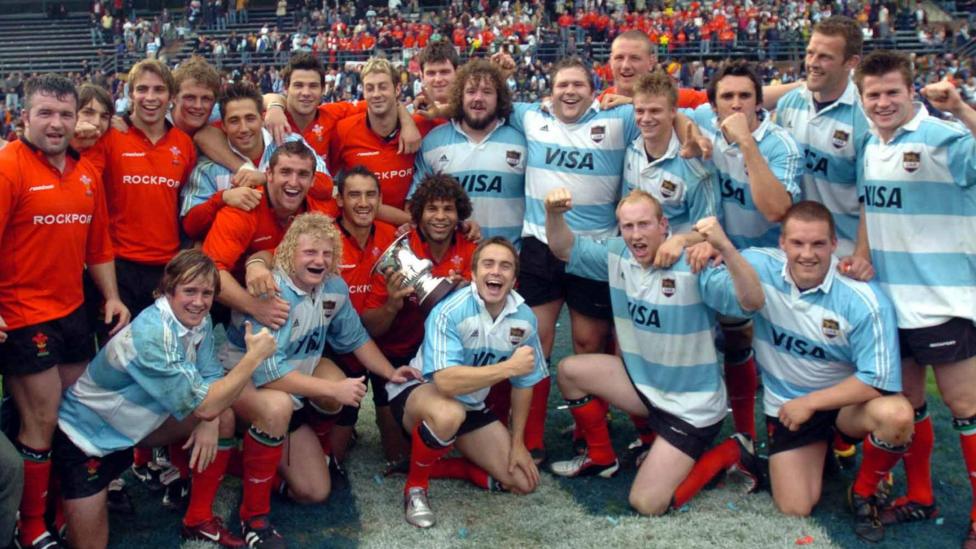
Blood, Sweat, and Rugs: The 58-Year War Between Wales and Argentina
From the 1960s to today, Wales and Argentina’s rugby rivalry is defined by visceral chaos, tactical brilliance, and unforgettable drama.

Bethell Comes of Age: England's Six-Hitting Sensation Conquers India
Jacob Bethell's unbeaten 76 at Old Trafford announced a new star for England. The future has arrived, and it hits sixes.