Only 29 Men Have Touched the Summit: A New Series Explores What Made Them Kings
A new four-part documentary traces the exclusive club of ATP No. 1s, starting with the wild brilliance of Ilie Năstase.
The Rarest Club in Sport
The grass courts of the All England Club are being mown to precisely four millimetres. The white lines are being painted. The strawberries are on order. Wimbledon is almost here, and with it, the familiar ache of sporting anticipation that grips the tennis world every late June.
But before the first serve is struck at SW19, there is time for one more indulgence in the off-court theatre of the game. A new four-part documentary series airing on Channel 5 at 10pm sets out to tell the inside story of the only 29 male players who have ever held the world No. 1 ranking since the ATP introduced its computerised system in 1973. Twenty-nine men across more than half a century. That is fewer people than have walked on the moon.
The series begins where it must: in the electric, chaotic, smoke-filled arenas of the 1970s, with the controversial and irresistible figure of Ilie Năstase.
Nasty Năstase: The Original Bad Boy
To understand why the series starts with Năstase is to understand something fundamental about tennis itself. The Romanian was the first player to officially hold the ATP No. 1 ranking when the system launched in August 1973. But his significance stretches far beyond a technicality of date.
Năstase was the prototype. The blueprint from which every subsequent tennis rebel, showman, and crowd-polariser was cut. He possessed a backhand of silk and a temperament of gunpowder. He could dismantle a baseline rally with geometrical precision, then spend the next changeover berating an umpire in three languages. He won two Grand Slam singles titles — the US Open in 1972 and Roland Garros in 1973 — and reached the Wimbledon final in 1972 and 1976, losing both times.
But it was the way he played, not merely what he won, that seared him into the sport's consciousness. In an era before Hawk-Eye, before shot clocks, before sophisticated sports psychology, Năstase performed his genius and his madness simultaneously and in full public view. Crowbs adored him. Opponents feared him. Officials despaired of him.
"Năstase could do things with a tennis ball that no one had seen before. The problem was, he could also do things with his mouth that no one had seen before either." — A common refrain from those who covered 1970s tennis
The Exclusivity of the Top
The reason 29 feels like such a staggering number is that the men's game has been dominated by so few for so long. Consider this: Roger Federer spent 310 weeks at No. 1. Novak Djokovic has eclipsed that with over 420 weeks at the summit. Rafael Nadal held the top spot for 209 weeks. Those three men alone account for nearly two decades of continuous reign in a ranking system that has existed for roughly five decades.
Strip away the Big Three era, and the list thins dramatically. The documentary's task is to flesh out the names that casual fans might struggle to recall. John Newcombe. Jimmy Connors. Ivan Lendl. Mats Wilander. Jim Courier. Each of them reached No. 1, each of them shaped the sport in their era, and each of them has a story that deserves more than a line in a Wikipedia table.
What the Numbers Reveal
- Only 29 players have held the ATP No. 1 ranking since August 23, 1973
- The United States has produced the most No. 1s, with 8 players reaching the summit
- Novak Djokovic holds the all-time record for most weeks at No. 1 with over 420 weeks
- The shortest reign at No. 1 belongs to players who held it for just a handful of weeks, a reminder of how fiercely contested the top spot once was
- Carlos Alcaraz became the youngest-ever No. 1 at 19 years old in September 2022
The 1970s: Tennis's Wild West
Starting the series in the 1970s is a deliberate and inspired editorial choice. That decade represented something unrepeatable in professional tennis. The sport was transitioning from the genteel amateur circuit to the raw energy of the Open Era. Prize money was rising fast. Television was discovering tennis as spectacle. And the characters who populated the tour were magnificently, often dangerously, larger than life.
Năstase was merely the most flamboyant of a generation that included Björn Borg, the ice-cool Swede who conquered Wimbledon five consecutive times from 1976 to 1980 while barely raising his heart rate publicly. It included Jimmy Connors, the brash left-hander from East St. Louis who treated every match as a personal vendetta. And it included John McEnroe, who arrived at the end of the decade and carried the tradition of volcanic on-court behaviour into the 1980s.
These men did not merely play tennis. They argued with it, raged at it, seduced it, and performed it as theatre. The ATP ranking system, new and untested, became the scoreboard for their rivalries.
Why This Series Matters Now
There is a particular resonance in launching this documentary in the week before Wimbledon 2025. The men's game is navigating a seismic generational shift. The era of Federer, Nadal, and Djokovic — three players who collectively won 66 Grand Slam singles titles — is either over or in its final breaths.
Federer retired in 2022. Nadal stepped away after the 2024 Davis Cup Finals. Djokovic, now 38 years old, continues to compete but no longer dominates as he once did. The throne is vacant in a way it hasn't been in two decades, and a new generation is scrambling to claim it.
Jannik Sinner currently holds the No. 1 ranking, the first Italian man to do so. Carlos Alcaraz, the reigning Wimbledon champion, is his closest pursuer. Behind them, a pack of hungry contenders — Alexander Zverev, Holger Rune, Taylor Fritz — circles.
The documentary offers a timely reminder: reaching No. 1 is hard. Staying there is harder. And the history of the ranking is littered with brilliant players who touched the summit only briefly before being displaced.
The Tennis Documentary Renaissance
This series also arrives within a broader wave of tennis storytelling that has flourished in recent years. Netflix's Break Point brought behind-the-scenes access to the modern tour. HBO's various sports docuseries have raised the bar for production values and narrative ambition. The success of documentaries covering other sports — The Last Dance for basketball, Drive to Survive for Formula 1 — has proven that audiences will invest in athletic stories told with cinematic care.
Tennis, with its individual drama, its global travel, and its deep history, is ripe for exactly this kind of treatment. The sport has always produced characters of extraordinary complexity. The challenge has been presenting them outside the two-week windows of Grand Slam coverage.
A four-part series dedicated exclusively to the men who reached No. 1 has the potential to do something that highlight reels and match summaries cannot: reveal the human architecture behind the ranking points.
Looking Ahead to Wimbledon
As the first episode airs tonight, viewers will be immersing themselves in the chaos and charm of Năstase's era. But the series promises to move through the decades, covering the Borg-McEnroe rivalry of the early 1980s, the Lendl-Courier dominance of the late 1980s and early 1990s, the Sampras-Agassi contrast of the 1990s, and the unprecedented Big Three era that followed.
For tennis fans arriving at the gates of Wimbledon season, this is the ideal appetiser. The grass court Slam has always been the sport's spiritual home, the place where legacies are forged and where the No. 1 ranking is most fiercely contested. From Borg's five titles to Federer's eight, from Nadal's two triumphs to Djokovic's seven, the All England Club has been the theatre where the greatest players proved their supremacy.
The 2025 Championships begin on June 30, and the question hanging over the men's draw is whether Sinner or Alcaraz can begin to write the next chapter of this story. Whoever lifts the golden trophy on the second Sunday in July will take a significant step toward joining that exclusive club of 29.
Until then, the series offers a chance to look back at those who got there first — and to appreciate just how rare and extraordinary the achievement truly is.
Editorial Integrity
This is an original SportPulse article written by our editorial team. All content is independently researched, written, and reviewed by our writers and editors before publication. We do not publish copied, aggregated, or syndicated content.
SportPulse is committed to original sports journalism. Read our editorial policy or contact us with any questions.
More Like This
All tennis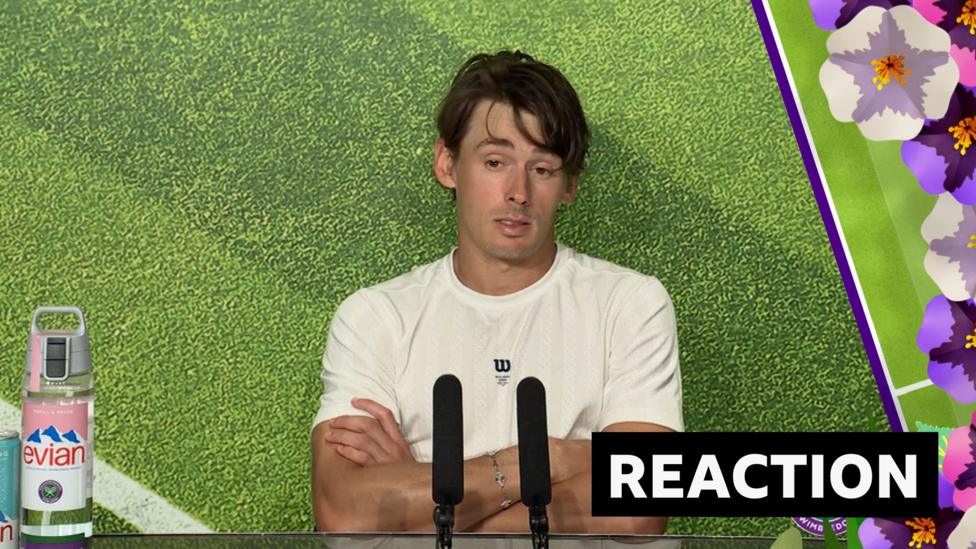
The Weight of Wanting: De Minaur's Wimbledon Confession
Alex de Minaur's brutal self-assessment after his Wimbledon exit reveals a career at a psychological crossroads.

Serena at 44: The Comeback That Defies Era and Expectation
At 44, Serena Williams returns to Wimbledon a decade after the age when champions typically retire.
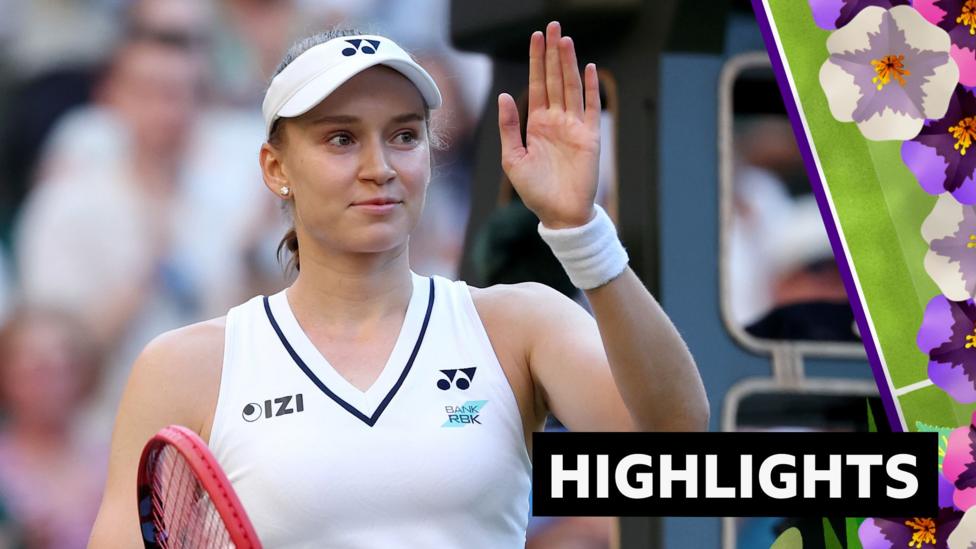
Rybakina's Systemic Dismantling: A Masterclass in Positional Tennis
Elena Rybakina applied relentless tactical pressure, deconstructing Caty McNally's game in a clinical Wimbledon display.