How 27 Seconds of Qualifying Engineered Russell's Austrian GP Win
George Russell's Austrian GP victory was forged 24 hours earlier in a 27-second track evolution window during qualifying.
The 27-Second Window That Won the Race
George Russell's victory at the Austrian Grand Prix wasn't forged on Sunday afternoon. It was engineered exactly 24 hours earlier, during a frantic 27-second window in qualifying. While the race narrative inevitably focused on on-track clashes and tire degradation at the Red Bull Ring, the actual foundation of the win was a masterclass in aerodynamic timing, track evolution modeling, and engine map deployment.
Think of the Spielberg circuit as a giant, open-air wind tunnel. As modern F1 cars negotiate the Red Bull Ring, they depend on a cushion of air pushed through their intricately carved floor edges and over their rear diffusers. When track temperatures shift, the asphalt grip level shifts with them, completely rewriting the aerodynamic operating window of the car. Miss the track evolution peak by a single lap, and you leave seconds on the table. Miss it by 27 seconds, and you lose the race.
The Aerodynamics of Asphalt
To understand why that exact 27-second slice of Saturday action dictated Sunday's result, you have to understand how a contemporary F1 car generates downforce. It is not just about the visible carbon fiber wing profiles. The bulk of the performance comes from the invisible underfloor aerodynamics. The floor edge wings and the aggressive rear diffuser work in tandem to accelerate air underneath the chassis, creating a low-pressure zone that physically sucks the car to the track.
However, this ground-effect paradigm relies heavily on the car's ride height being perfectly calibrated to seal the airflow. If the track is cold and slippery, the car slides, the ride height fluctuates, and the aerodynamic seal is broken. Downforce plummets. When the track rubbers in and surface temperatures rise, grip levels spike. The car remains stable, the floor stays locked to the asphalt, and downforce figures multiply exponentially. The Mercedes W15 is notoriously sensitive to this exact phenomenon. It requires a stable platform to switch its flow structures from unpredictable and diva-like to supremely efficient.
Decoding the Qualifying Delta
During Q3 in Austria, the timing screens told a story of fractions. The track was evolving rapidly as the session reached its crescendo, with each passing minute laying down more rubber on the racing line. Mercedes' trackside strategists were glued to their meteorological and telemetry overlays, calculating the precise intersection of track evolution, tire preparation, and EGT (Exhaust Gas Temperature) margins. The team identified a razor-thin apex of maximum grip.
Russell had to cross the timing beam at the absolute peak of this curve. Too early, and the track lacked the mechanical grip required to nail the critical Turn 1 braking zone. Too late, and the tires would have cooled on the out-lap while waiting in traffic, or the wind direction might have shifted, altering the yaw sensitivity of the front wing. The window was 27 seconds. Get the car out of the garage and onto the track within that(math) mathematical band, and the physics would do the rest.
"You can have the fastest car on the grid, but if you miss the track evolution window by half a minute, you're starting on the dirty side of the grid. That 27-second window was everything," a senior Mercedes engineer explained post-session.
This was not mere intuition. It was algorithmic precision. The team used historical friction coefficient data from the Pirelli tires, cross-referenced with live asphalt thermometers and wind vectors. By the time Russell hit his final flying lap, the track was delivering exactly the load data the simulations had predicted. The resulting lap time placed him exactly where he needed to be, setting up the strategic buffer that kept him out of the chaos ahead.
Engineering Insight: The W15's Flow Architecture
The technical triumph of the Austrian weekend lies in how Mercedes translated that 27-second qualifying window into a race-winning package. The W15's fundamental issue in early 2024 was its aerodynamic mapping under dynamic load. Previous floor specifications suffered from aerodynamic divergence, a condition where a slight drop in ride height at high speed causes the airflow under the car to separate abruptly. It is similar to an aircraft wing stalling. You lose all downforce in a millisecond.
For Austria, Mercedes brought a revised floor fence geometry. These fences are the vertical carbon fiber elements that channel air toward the throat of the diffuser. By altering their cant angle, the team effectively widened the operating window of the floor. Now, when the car pitched forward under braking, the fences were still feeding clean, high-energy air into the diffuser. This meant Russell could attack the Turn 1 braking zone with total confidence that the rear of the car would remain anchored. Without that structural aerodynamic confidence, exploiting that 27-second track evolution window would have been physically impossible.
Furthermore, the power unit side of the equation was critical. Mercedes deployed an aggressive engine map for the qualifying runs. By leaning out the air-fuel ratio slightly beyond their standard safety thresholds for exactly one timed lap, they extracted the maximum combustion efficiency. It is akin to running a server at absolute maximum capacity for a brief, intense calculation before letting the cooling systems recover. This mapping unlocked the necessary straight-line speed to defend and attack on Sunday, but it was only available because the qualifying window put Russell in clean air, avoiding the dirty, overheated wake of rival cars.
From Track Evolution to Race Management
Starting position dictates race strategy in Formula 1. By extracting the maximum from that 27-second window, Russell secured track position that freed Mercedes from the reactive, damage-limitation strategies that plagued their rivals. The dirty air effect at the Red Bull Ring is punishing. Following another car within one second causes the boundary layer of the front wing to separate, reducing front downforce by up to 30 percent. By leading the queue or running in clean air, Russell's W15 operated in its optimal aerodynamic window for the entire afternoon.
This allowed Mercedes to manage the tire thermal degradation with surgical precision. The tires did not overheat because the car was not sliding in turbulent air. The team could execute their planned pit windows without reacting to undercut threats from cars stuck in the tramlines of dirty air. It all cascaded from that qualifying timing. The car's suspension kinematics maintained the optimal tire contact patch consistently, a cascading benefit that stems directly from running in undisturbed airflow.
The Silverstone Aerodynamic Challenge
The technical puzzle now shifts to Silverstone for the British Grand Prix. If the Red Bull Ring was about exploiting short, sharp track evolution windows, Silverstone is an entirely different aerodynamic beast. The former airfield circuit is defined by high-speed corner sequences like Copse, Maggots, and Becketts. The cars spend up to 70 percent of the lap in high-speed corners where downforce consistency and aerodynamic stability matter more than ultimate peak load.
For Mercedes, the challenge will be confirming whether the new floor fence geometry holds up under the extreme lateral G-forces of Silverstone. The high-speed directional changes mean the flow structures will be subjected to violent yaw and roll simultaneously. If the W15's updated aero platform can survive the Maggots-Becketts complex without the aerodynamic divergence that plagued them earlier in the season, Mercedes will have definitively turned the corner on their 2024 architecture.
Additionally, Silverstone's notoriously volatile weather conditions will test the team's engine map strategies. The aggressive EGT (Exhaust Gas Temperature) deployment used in Austria may need to be tempered if ambient temperatures drop and the intercooler efficiency changes. Managing the thermal cycling of the power unit across a potentially wet-to-dry race distance requires a completely different software approach to the one that conquered the Austrian hills. The 27-second window concept will remain vital, but the variables the algorithms must process will multiply exponentially.
Editorial Integrity
This is an original SportPulse article written by our editorial team. All content is independently researched, written, and reviewed by our writers and editors before publication. We do not publish copied, aggregated, or syndicated content.
SportPulse is committed to original sports journalism. Read our editorial policy or contact us with any questions.
More Like This
All f1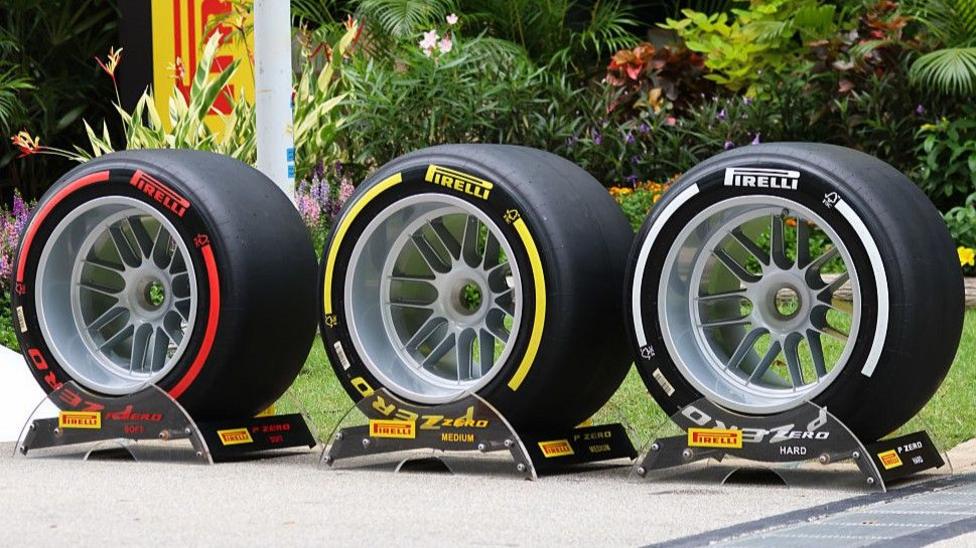
Decoding F1's 2026 Tyre Revolution
F1's 2026 regulations will shrink tyres and ditch blankets, forcing a radical rethink of aero sensitivity and mechanical grip.
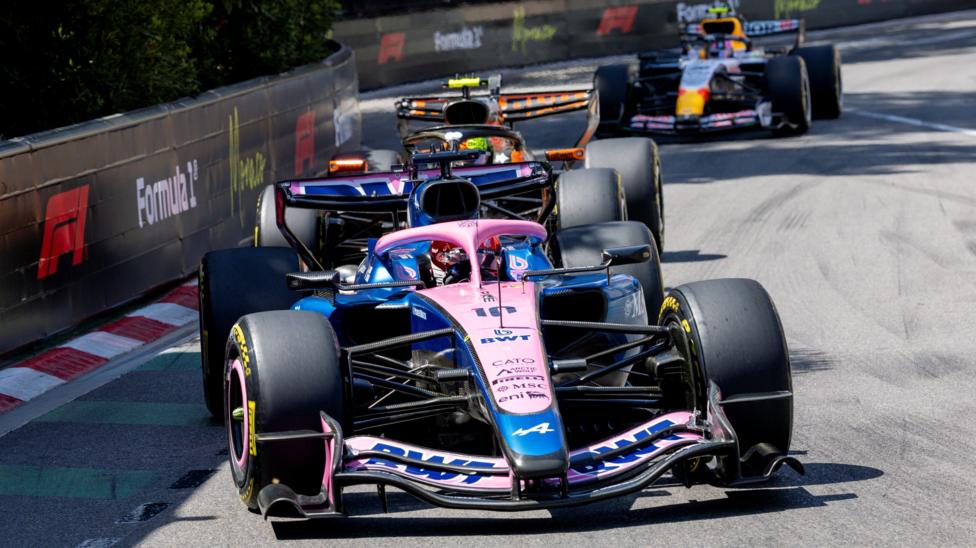
Gasly's Podium: A Moment of Justice or F1's Regulatory Pandora's Box?
A hard-fought podium reignites a fierce debate over F1's sporting regulations and the very definition of a penalty.

Antonelli, Bearman, and Cadillac: F1's Rookie Gamble
F1's rookie class faces a brutal initiation as Antonelli, Bearman, and Cadillac enter the arena with everything on the line.