Altitude and Attitude: The High-Stakes Physics of Spielberg
At 700 meters above sea level, the Austrian GP is where engineering meets psychology.
The thin air at the Red Bull Ring is the first opponent every team faces when they unpack in Spielberg. Sitting at an elevation of approximately 700 meters, the track’s atmospheric pressure is roughly 10% lower than at sea level. This isn’t a trivial footnote; it fundamentally reshapes the engineering challenge. Less dense air means less drag, aiding top speed on the short straights, but it also means less downforce and, critically, less cooling for power units and brakes. Every team arrives with a bespoke low-downforce, high-drag package, a configuration used nowhere else on the calendar. It’s a unique calibration test, and the team that best masters this thin-air equation often finds itself on the top step.
The Red Bull Ring: A Deceptively Simple Beast
On paper, the track is one of the shortest on the calendar at 4.318 kilometers, with only ten corners. In reality, it’s a relentless sequence of hard stops and explosive acceleration. Turn 3, the uphill right-hander, is a particular monster. Cars arrive at over 300 km/h and must brake hard while climbing, shifting the weight balance rearward and putting immense energy through the front tires. Success here is about late, confident braking and trusting the rear of the car won’t snap away under the load transfer. Then comes Turn 4, a long, downhill left-hander that flows onto a straight. Getting the exit of 4 right is everything—it’s the primary DRS zone and the setup for any overtaking move into Turn 5.
The Sprint format, which returns this weekend, adds another layer of strategic complexity. With only a single practice session to nail the setup, teams are flying partially blind into the main qualifying and race. Data from the Sprint Shootout and the Sprint itself becomes gold dust, but it’s a risky way to validate a radical low-downforce concept. The margin for error is zero; a miscalculation in cooling or balance can ruin the entire weekend, as seen in past years where frontrunners have been forced into conservative, engine-preserving modes.
Strategy Breakdown: The Wall’s Calculated Gambles
The Austrian GP is a classic one-stop race on paper, but that simplicity is a mirage. The high-energy corners, particularly the left-front tire’s ordeal through the Turn 6-7 complex, can induce graining and rapid degradation. Pirelli has nominated the C3 (Hard), C4 (Medium), and C5 (Soft) compounds—the softest in its range—anticipating the lower wear rates from the smooth asphalt and lower downforce. However, the high lateral loads in certain corners contradict this expectation.
The strategic dilemma for the pit wall is twofold: track position versus tire performance. Overtaking is possible with DRS, but it’s not guaranteed. The lead car, especially if it’s a Red Bull, can often control the pace and manage the gap to stay out of the critical one-second DRS window. This forces the chasing car to either overwork its tires in turbulent air or attempt an undercut. An undercut is powerful here because the pit lane is one of the shortest on the calendar, losing only about 20 seconds. However, the out-lap on cold tires must be aggressive, and the driver has to immediately nail the tricky uphill braking of Turn 3.
Expect the softest compound to be used aggressively in qualifying and potentially as a short, explosive first stint in the race. The real chess match will be on the medium tire. Teams will be closely monitoring if a medium-hard one-stop is viable or if degradation pushes them towards a more conservative medium-medium strategy. A wildcard is the possibility of a late safety car, which has been a frequent visitor here, often bunching the field and turning a calculated strategy on its head in an instant.
The Home Turf Advantage: More Than Just Noise
For Red Bull Racing, this is more than a home race; it’s a fortress. They have won this event four out of the last five years, leveraging their intimate knowledge of the altitude’s effect on their car’s cooling and aerodynamic package. The psychological boost for Max Verstappen, the hometown hero, is immeasurable. The sea of orange in the grandstands provides a palpable lift. But that pressure can be a double-edged sword. The expectation to dominate here is absolute, and any technical hiccup or strategic misstep is amplified tenfold.
This race often serves as a barometer for the second half of the season. A strong performance for McLaren or Ferrari would validate their mid-season upgrade trajectory and prove they can challenge the energy drink giants on what is effectively their private test track. For Mercedes, who have historically struggled with the combination of high-speed corners and low downforce, a good result would signal a genuine step forward in understanding their 2026 challenger.
What’s Next: The Championship Implications
As the calendar hits the summer break after the next round, Austria is the last pure circuit showdown before the season’s intense finale. A dominant win for Verstappen here could extend his championship lead into a psychologically demoralizing cushion for his rivals. A surprise victory for Lando Norris or Charles Leclerc, however, would inject a massive dose of momentum and belief into their camps, proving that the current pecking order is not as rigid as it sometimes seems.
The thin air of Spielberg strips away excuses. It exposes the purest balance between power unit deployment, aerodynamic efficiency, and driver bravery. As the cars fire up for the Sprint Shootout, every team will be watching the same telemetry data: who has best mastered the rarefied air? The answer won’t just determine the podium here; it will send a clear signal about the technical arms race for the remainder of the 2026 Formula 1 World Championship. The battle at 700 meters above sea level is always a telling one.
Editorial Integrity
This is an original SportPulse article written by our editorial team. All content is independently researched, written, and reviewed by our writers and editors before publication. We do not publish copied, aggregated, or syndicated content.
SportPulse is committed to original sports journalism. Read our editorial policy or contact us with any questions.
More Like This
All f1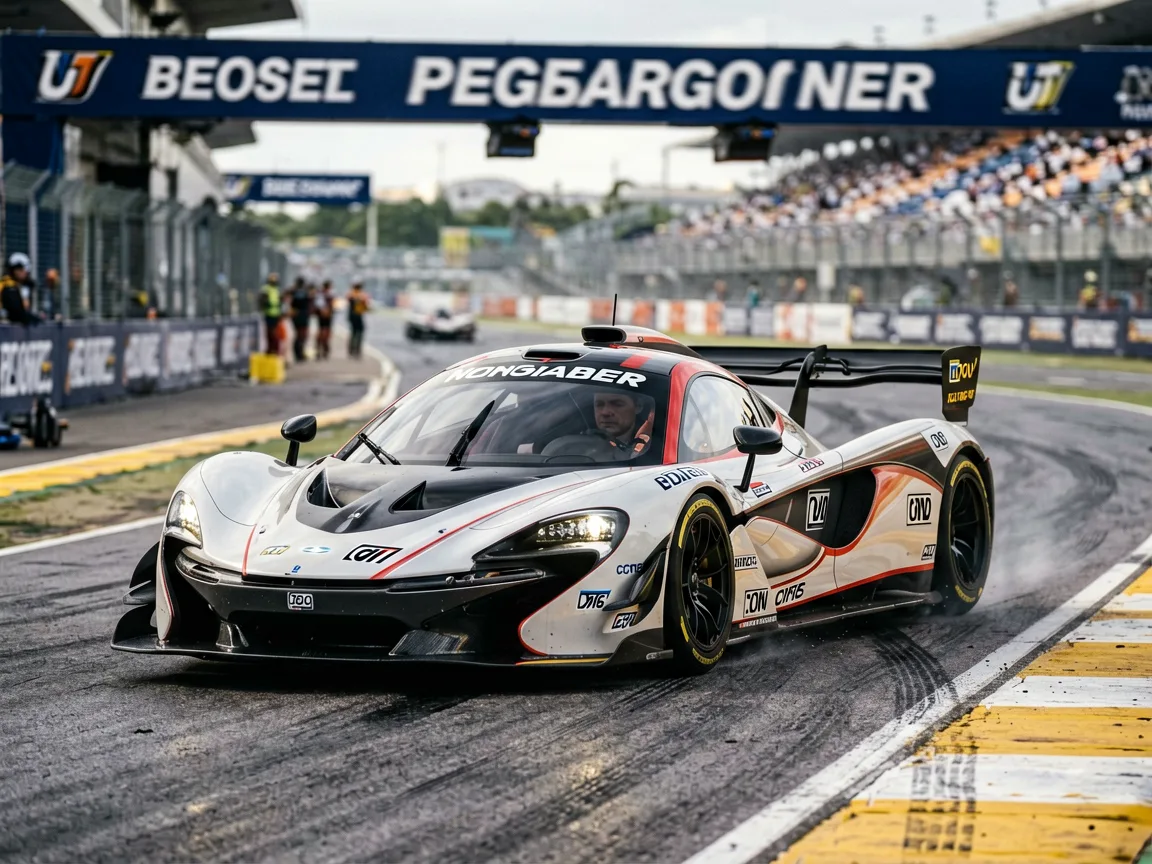
Fornaroli gets second FP1 call as McLaren stack Hungary upgrades
McLaren hand Leonardo Fornaroli another practice outing in Budapest while bringing a batch of new parts for the MCL40.
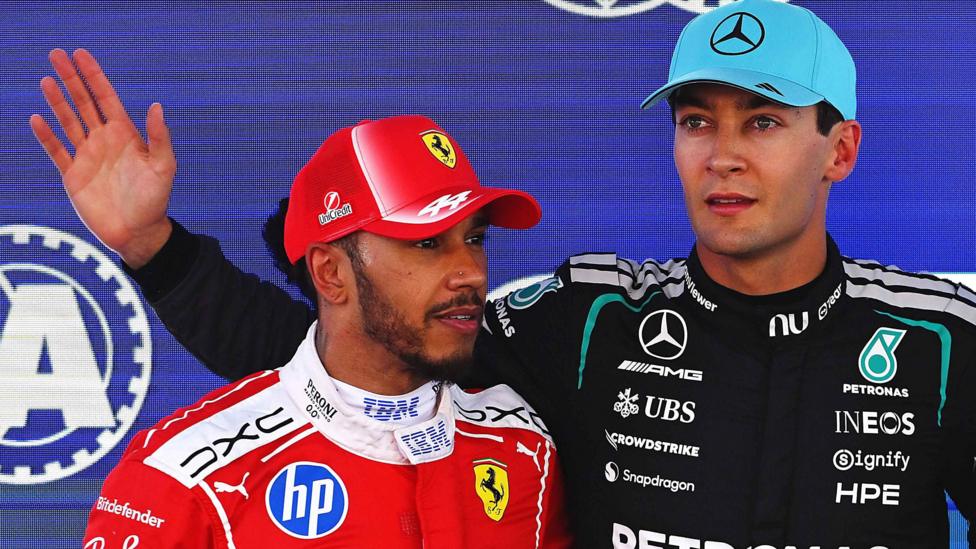
Russell Silences Doubts With Barcelona Pole Over Hamilton
George Russell claws back momentum at Mercedes, outpacing Lewis Hamilton for a defining Barcelona pole that reshapes the intra-team dynamic.

Hungarian GP Bet Builder: Five Legs Built on Pace and Degradation
A five-leg Bet Builder for Budapest balances top-six finish logic with classified finisher and points-scoring picks.