Aymen Hussein: The Striker Forging Iraq's World Cup Dream From Tragedy
Aymen Hussein’s journey from devastating personal loss to firing Iraq toward World Cup qualification is a masterclass in resilience.
Aymen Hussein's trajectory was never supposed to lead here. Strikers who emerge from the crucible of Iraqi football usually face a ceiling defined by domestic instability, fractured developmental pathways, and the constant drain of regional conflict. Yet as Iraq chases a historic berth at the 2026 World Cup, it is Hussein who stands at the vanguard, transforming personal tragedy into the most potent attacking force in Asian qualifying.
The narrative surrounding Iraqi football often leans heavily on sentiment, invoking the 2007 Asian Cup triumph as a unifying balm for a fractured nation. Hussein's story fits that archetype uncomfortably. This is not merely a tale of a player representing a wounded country. It is acold, calculated resurrection of a career and a life that hovered on the brink of oblivion.
The Unforgivable Loss
Before the continental acclaim and the weight of a nation's expectations, Hussein faced the kind of grief that derails careers permanently. The details of his personal tragedy remain a deeply guarded scar, but the impact was seismic enough to force him away from the pitch during his formative years. When a young athlete loses their anchor, the structured discipline of professional football usually collapses alongside it.
Hussein disappeared from the radar of Iraqi scouts precisely when he should have been entering elite developmental setups. The trajectory was painfully familiar: talent squandered, grief unchecked, a name forgotten before it was ever properly recorded. The statistical probability of a player returning from that kind of hiatus to reach international prominence is virtually nonexistent. Iraqi football's infrastructure offers few safety nets for mental and emotional rehabilitation.
Yet Hussein clawed his way back. The return was not cinematic. It was agonizingly gradual, built on grinding lower-league appearances and the sheer, bloody-minded refusal to let tragedy be the final footnote of his story.
The Architect of a Qualification Charge
Fast forward to the current World Cup qualifying cycle, and Hussein is no longer a redemption project. He is the system. Iraq's ascent to the top of their group has been predicated on a tactical setup that maximizes Hussein's specific profile: a classic Target No. 9 who offers far more than aerial dominance.
In the third round of AFC qualifying, Hussein's numbers leap off the page. He has been the decisive blade inJesus Casas's tactical setup.
- 5 goals in the opening four matches of the third qualifying round
- A shot conversion rate hovering around 28%, an elite marker for international strikers
- An average of 4.1 aerial duels won per 90 minutes, anchoring Iraq's transition play
- 2.3 tackles in the final third per 90, reflecting relentless defensive pressing
Casas has engineered a side that absorbs pressure before striking with surgical brutality on the break. Hussein is the fulcrum of this approach. When Iraq sit deep in a mid-block, his physicality allows them to bypass the opponent's counter-press with a single, controlled outlet pass. When the ball arrives at his feet, his ability to hold off multiple defenders buys the crucial seconds required for the likes of Amjad Attwan and Aymen Ghazi to sprint into the final third.
The Tactical Shift
Previously, Iraq relied heavily ontechnical wingers cutting inside to manufacture chances from wide areas. The central spaces were often congested, leading to low-xG shot attempts from distance. The integration of Hussein as the primary focal point shifted the mathematical geometry of Iraq's attack. By demanding double-teams in the box, he has artificially inflated the xG of the players around him. Attwan's output from the edge of the box, for instance, spikes significantly when Hussein occupies both center-backs in the corridor of uncertainty.
"You cannot coach what Aymen provides in the dark spaces of the pitch. He gives us a reference point that simply did not exist before." — Iraq head coach Jesus Casas
The Bottom Line: Hussein does not just score goals. He alters the structural mathematics of how Iraq construct their attacks, turning a side that previously struggled for centralized penetration into one of Asia's most efficient finishing teams.
The Psychology of the Comeback
Analyzing Hussein purely through tactical data strips away the staggering psychological fortitude required to reach this summit. The transition from Iraqi domestic football to the international arena is littered with casualties. The physicality of the domestic league is chaotic, often lacking the systematic coaching found in East Asian setups. To bridge that gap, a player must possess an internal engine that runs entirely on self-reliance.
Hussein's performances in high-stakes qualifiers reveal a striker completely insulated from the moment. When Iraq faced Japan in a critical qualifier, it was Hussein who struck the psychological first blow. His celebration was neither theatrical nor emotional. It was the reaction of a man who had already survived the worst life could deliver, treating a World Cup qualifier as just another problem requiring a blunt solution.
This emotional insulation is a critical weapon. Asian qualifiers are notoriously volatile, often decided by a single moment of panic or composure. Hussein operates in a state of stoic detachment from the stakes, a neurological adaptation likely forged during his darkest years away from the game. Defenders cannot unsettle a striker who has already conquered existential dread.
Verdict: Hussein’s psychological makeup is as valuable as his physical profile. He provides Iraq with an unshakable reference point in fixtures where mental fragility usually dictates the outcome.
What Stands Between Iraq and History
Iraq has qualified for the World Cup only once, in 1986. That ghost looms large over every qualifying campaign, a stubborn reminder of a plateau the national team has refused to surpass for nearly four decades. The expanded 2026 World Cup format offers a larger chute, but the AFC contenders have simultaneously sharpened their arsenals. Japan, South Korea, Iran, and Saudi Arabia remain entrenched in the automatic spots. Australia and Uzbekistan present formidable barriers.
For Iraq to break the drought, Hussein must sustain a scoring rhythm across ten grueling matches. The historical parallel is sobering: Iraqi strikers have frequently ignited early qualifying rounds only to extinguish by the final window. The physical toll of leading the line in Middle Eastern heat, combined with the travel demands of Asian qualifying, has historically degraded even the most robust attackers.
However, Casas's rotation strategy specifically protects his primary asset. Hussein is systematically withdrawn in the final twenty minutes of comfortable fixtures, preserving his explosiveness for the decisive encounters ahead. It is a luxury Iraq has rarely possessed, born of a squad depth that finally stretches beyond the starting eleven.
The Bottom Line: The math is favorable, but the margin for error remains razor-thin. Hussein's fitness and finishing will dictate whether Iraq writes a new chapter or repeats an old lament.
The Inevitable Scramble
The inevitable consequence of Hussein's emergence is the looming transfer speculation. European scouts operating in the Asian market are notoriously late to identify talent outside the established powerhouses, but a striker averaging a goal every other game in World Cup qualifying forces the issue.Iraqi players have historically struggled to secure meaningful moves to top-five European leagues due to visa restrictions and the tactical gulf between the Star League and European football. Hussein's profile, however, is uniquely suited to lower-tier European sides or elite clubs in Turkey and Greece, where physical strikers are heavily utilized.
A move to the Turkish Süper Lig, in particular, represents a logical stepping stone. The style of play mirrors the physicality of the AFC, and the step up in tactical rigor would sharpen Hussein's already impressive link-up play ahead of the 2026 finals.
For now, the focus remains strictly domestic and international. The transfer chatter is background noise for a player who has fought through absolute silence. Aymen Hussein is not just carrying Iraq's World Cup hopes. He is carrying the proof that calculating resilience can outrun even the deepest tragedy.
Editorial Integrity
This is an original SportPulse article written by our editorial team. All content is independently researched, written, and reviewed by our writers and editors before publication. We do not publish copied, aggregated, or syndicated content.
SportPulse is committed to original sports journalism. Read our editorial policy or contact us with any questions.
More Like This
All long-reads
Sciver-Brunt Eyes Semi-Final Comeback After Positive Calf Scan
England captain Nat Sciver-Brunt receives encouraging injury news as she targets a crucial semi-final return.

Korda Six Back as Yoon Seizes Control at Women's PGA
Nelly Korda trails Ina Yoon by six shots at the Women's PGA Championship midway point, putting her major hat-trick bid in serious jeopardy.
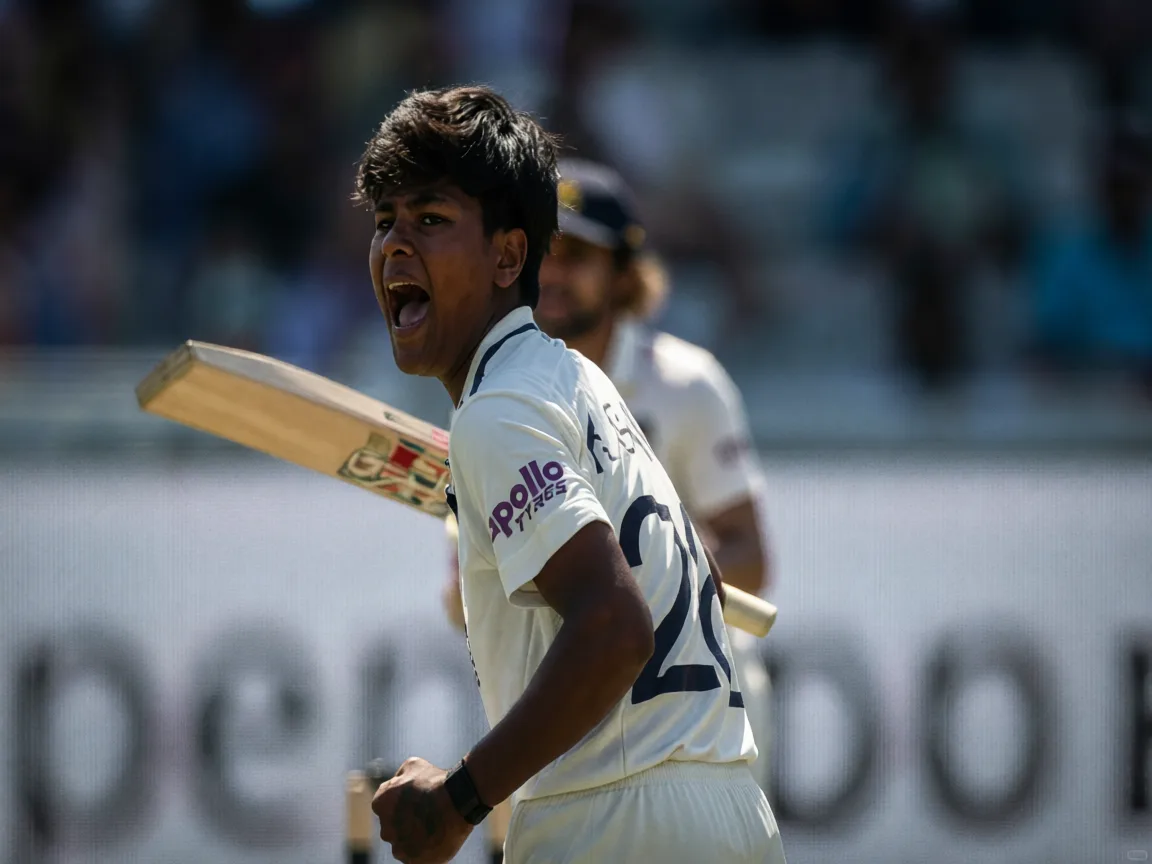
Gaud Engraves Her Name: Lord's First Female Honours Board Entry
India's Kranti Gaud becomes the first woman on Lord's Test honours board with a five-wicket haul that rewrites cricket history.