Balogun Braced for Storm After FIFA Waives World Cup Ban
Folarin Balogun admits FIFA's shock decision to waive his one-game ban brought controversy and nerves to the USMNT camp.
The Phone Call That Changed Everything
Folarin Balogun knew the storm was coming before the notifications started lighting up phones across the American soccer ecosystem.
The United States striker had been sitting on a one-game suspension that was supposed to follow him into the next World Cup cycle. Then FIFA pressed the override button.
"I knew it was going to bring a lot of controversy. I knew it was going to cause a lot of outside noise, and that's hard to avoid."
Those words, delivered with characteristic directness, reveal a player who understood the weight of what was unfolding around him. This was not relief. This was awareness.
Balogun did not celebrate the ruling. He braced for it.
A Suspension Forged in CONCACAF Fire
The backstory matters here. Balogun was sent off with a red card in the United States' round-of-32 meeting with Bosnia and Herzegovina, triggering a one-match ban under FIFA's disciplinary code. Standard procedure. Clear-cut.
Then the governing body intervened.
FIFA's disciplinary committee suspended the one-match ban for a year, allowing Balogun to participate in the Americans' last-16 loss to Belgium. The decision was unprecedented in its timing. The regulatory body effectively reset the slate at a moment when every other nation's suspended players were serving their penalties.
For a USMNT program already navigating the complexities of a new managerial era and heightened expectations on home soil, this was gasoline on a slow-burning fire.
The Ripple Effect Inside the Camp
Balogun's most revealing admission was not about himself. It was about what the decision did to the men around him.
"It brought nerves on my team-mates."
That single sentence carries enormous weight. It tells us the USMNT locker room was not unified in quiet gratitude. There was tension. There was awareness that the outside world was watching with suspicion.
Team-mates who had scrupulously avoided bookings, who had served their own suspensions dutifully, now watched a high-profile colleague receive what looked like special treatment.
The dynamic in international camps is fragile at the best of times. Egos, club rivalries, and playing-time grievances all simmer beneath the surface. A perceived double standard, however unintentional, can fracture that equilibrium.
Why FIFA's Move Raised Eyebrows Across the Globe
The controversy Balogun anticipated stems from a simple, uncomfortable question: why him, and why now?
FIFA's disciplinary regulations contain provisions for appealing suspensions under exceptional circumstances. Injuries, administrative errors, and force majeure events have all been cited historically.
But waiving a ban for a player who is fully fit and available, weeks before the biggest tournament on the planet, invites scrutiny that the governing body has not adequately addressed.
- Precedent concerns: Other federations have had similar requests denied
- Competitive integrity: The optics of a key attacker becoming available are undeniably advantageous
- Transparency gap: FIFA has not publicly detailed the exceptional circumstances
Balogun recognized this immediately. His honesty about the controversy is refreshing in a sport where players typically lean on platitudes and deflection.
He did not pretend the ruling was routine. He named the discomfort.
The Trump Factor and FIFA's Neutrality Problem
The controversy deepened when it emerged that President Trump had directly intervened, pressing FIFA to overturn the suspension. The political weight of a sitting US president leaning on football's global governing body introduced an entirely new dimension to the saga.
Balogun told reporters he had predicted Trump's involvement would "cause a lot of controversy," though he stopped short of criticising the intervention itself. His focus remained on the noise it generated rather than the propriety of the act.
More troubling for FIFA was the allegation that the organisation's president breached neutrality rules by engaging with the political pressure campaign. Football's governing statutes require the FIFA president to maintain strict political impartiality, and accusations that he entertained or facilitated a head of state's request to alter a disciplinary outcome strike at the heart of those obligations.
The optics are damaging. When the president of a World Cup host nation successfully lobbies FIFA's leadership to reverse a sanction against a host nation's player, the line between governance and politics does not blur — it evaporates.
The Striker Who Became the Story
This is a strange position for Balogun to occupy. The 23-year-old forward, on loan at Monaco from Arsenal during the pivotal stretch of his career, has spent the last year fighting to establish himself as the undisputed focal point of the USMNT attack.
His switch of allegiance from England to the United States in 2023 was a landmark moment for American soccer. A London-born academy product choosing the Stars and Stripes over the Three Lions was a statement of ambition from both player and program.
Now, instead of talking about his pressing intensity, his link-up play, or his growing understanding with Christian Pulisic and Timothy Weah, Balogun is answering questions about FIFA bureaucracy and presidential phone calls.
The narrative has shifted from what he does on the grass to what happened off it.
That shift is dangerous for a player who needs rhythm, confidence, and focus. Balogun ultimately featured in the last-16 defeat to Belgium, but the tournament exit only amplified the questions about whether he should have been available at all.
The Nerves Balogun Spoke Of
When Balogun admitted the situation brought nerves to his team-mates, he was signaling something deeper than locker room awkwardness.
The USMNT entered the 2026 World Cup with a generation of players carrying the heaviest expectations in the program's modern history. A home tournament, expanded format, golden generation narrative, and a coaching reset all converged into a pressure cooker.
Adding a disciplinary controversy — compounded by presidential intervention and allegations of governance breaches — was an unnecessary distraction at the worst possible moment.
Players like Tyler Adams, Weston McKennie, and Antonee Robinson carry leadership responsibilities in that camp. They understand that external noise penetrates even the most insulated environments. Media questions, social media discourse, and opposition mind games all feed off perceived unfairness.
Balogun's awareness of this dynamic shows maturity. His willingness to name it publicly, rather than hiding behind a generic statement, suggests a player who would rather confront the elephant in the room than pretend it isn't there.
Behind the Deal: The Regulatory Landscape
FIFA's disciplinary committee operates with significant discretion, and the governing body rarely publicizes the full reasoning behind individual rulings. That opacity is precisely what breeds controversy.
In Balogun's case, the suspension was suspended for a year rather than outright overturned, a nuanced distinction that suggests the disciplinary committee acknowledged mitigating circumstances without fully clearing the player's record.
The Financial and Sporting Stakes
- Player market value: A World Cup without suspension risk preserves and potentially enhances Balogun's valuation, currently estimated in the €25-30 million range
- US Soccer commercial exposure: The federation's sponsors and broadcast partners benefit from maximum star availability on home soil
- Competitive balance: Rivals in Group B and beyond now face a fully available USMNT striker corps
Whether intentional or not, FIFA's ruling aligned with the commercial and promotional interests of a tournament staged across North America. The optics are unavoidable.
What This Means for the Road Ahead
Balogun now faces a dual challenge.
On the pitch, he must justify the faith the governing body showed him by delivering performances worthy of the attention. A suspended player is an abstract talking point. An active one who underperforms becomes a lightning rod.
Off the pitch, the conversation will not disappear. Every press conference, every pre-match interview, every social media post will be filtered through the lens of whether the waiver was justified and whether political pressure played a role.
Balogun's team-mates, the ones he admits felt nerves, will also be asked to weigh in. How they handle those questions, and whether they close ranks or offer measured responses, will reveal the true health of the USMNT camp.
The striker has the talent to make this all fade into irrelevance. A decisive goal in a World Cup match erases more controversy than any press release ever could.
But until that moment arrives, the shadow of FIFA's decision — and the political machinery that helped bring it about — follows Folarin Balogun and the United States into every stadium, every training session, and every tactical meeting.
He knew the storm was coming. The question now is whether he can outrun it.
The Broader Implications for FIFA's Credibility
Beyond Balogun and the USMNT, this episode underscores a persistent problem in football governance: the inconsistency of disciplinary application — and now, the apparent susceptibility of FIFA's leadership to political pressure.
When FIFA waives a suspension without transparent justification, after a host nation's president makes a direct appeal, it does not just affect one player or one nation. It undermines the credibility of the entire regulatory framework.
Every federation that has previously accepted a ban without appeal, every manager who has planned around a player's absence, and every fan who has watched a key suspension derail a campaign, now has reason to ask: why was our case different?
The accusation that the FIFA president breached neutrality rules only deepens the wound. Governance operates on trust. When that trust is broken, the rules themselves become negotiable.
Balogun's honesty about the controversy is a credit to him. FIFA's silence about it is not a credit to them.
The World Cup will eventually answer the footballing questions. The governance questions — and the political ones — may linger far longer.
Updated: July 14, 2026 — Added Balogun's specific response to Trump's intervention, details of the round-of-32 red card and last-16 appearance, and allegations that the FIFA president breached neutrality rules.
Editorial Integrity
This is an original SportPulse article written by our editorial team. All content is independently researched, written, and reviewed by our writers and editors before publication. We do not publish copied, aggregated, or syndicated content.
SportPulse is committed to original sports journalism. Read our editorial policy or contact us with any questions.
More Like This
All football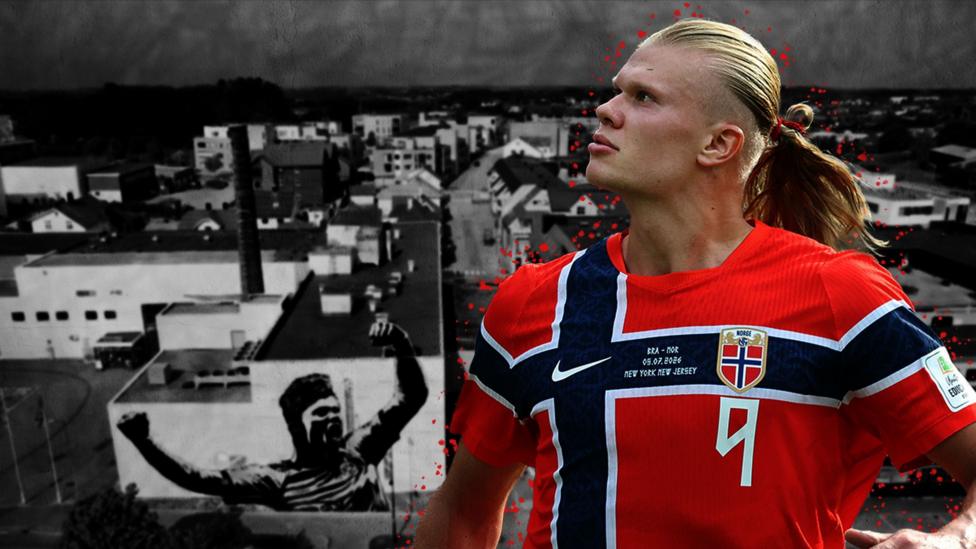
How Bryne Erupted When Haaland Sank Brazil
Erling Haaland's hometown of Bryne witnessed chaos as their native son scored twice to eliminate Brazil and reach the World Cup quarter-finals.
World Cup 2026 Semi-Finals: Football's Heavyweight Week Meets American Reality
Four titans, two cities, one chaotic week as World Cup 2026 semi-finals expose the logistical demands and security realities of hosting football's grandest stage.
Neymar's Career Bookended at MetLife: A Statistical Poetry Few Will Ever Match
Neymar scored his first and last Brazil goals at MetLife Stadium, a symmetry so rare it may never be repeated in international football.