BBC's 2026 World Cup Montage: A Flawed Farewell to Football's Age of Excess
The BBC's closing montage frames 2026 as a tournament of excess. What does the broadcast spectacle reveal about modern football's soul?
The BBC's closing montage for the 2026 FIFA World Cup does not document a tournament. It curates a memory, smoothing the jagged edges of the largest, most commercially saturated World Cup ever staged into a digestible narrative of highs, lows, and color. It is a masterclass in broadcasting, precisely because it obscures the tournament's defining reality. The juxtaposition is audacious: the BBC packaging 104 matches across three nations into a neat, emotional parcel, asking the global audience to cry, laugh, and remember. The montage is the final formal act of the tournament, the last frame on the screen before the screen fades to blackness and the broadcast responsibilities end. The BBC is the curator and the final narrator.
The aesthetic approach is familiar. The license fee-funded BBC has reliably delivered tournament-ending montages that prioritize emotion over analysis. They focus on faces in the crowd, tears on the pitch, rain-slicked surfaces, and the half-smile of a substituted manager. Think of previous tournament conclusions scored by atmospheric, melancholic indie soundtracks. The 2026 World Cup montage adheres to this formula with mechanical precision. It presents a tournament that spanned the United States, Canada, and Mexico as a unified story, traveling across borders and breaking boundaries through the universal language of football. TheBBC has acquired a reputation for these closing segments, and expectations are high by the end of a major tournament.
Manufacturing Narrative from Sprawl
Let us strip the sentimentality and examine the raw material. The 2026 World Cup was inherently, perhaps aggressively, unromantic by structural design. It is the first tournament featuring 48 teams, an expansion driven by FIFA's financial imperatives and political concessions, not sporting logic.
The format, inevitably, produced statistical inflation. A group stage containing a third-tier of nations guaranteed mismatches that skewed the numbers.
- Total matches played: 104, a 40% increase from the traditional 32-team, 64-match format
- Goals scored across the tournament exceeded historical averages, inflated by predictable group-stage blowouts
- Broadcast hours totaled in the thousands across three time zones, creating a fragmented viewing experience
The montage necessarily selects, condenses, and omits. It cannot show the Group C match watched by half-empty NFL stadiums under the afternoon sun. It cannot capture the tactical sterility of a third-place playoff or the logistical nightmare of teams flying four hours between fixtures. Instead, the BBC edits toward the tournament's highest emotional peaks, fast-cutting between a last-minute equalizer and a tearful exit, crafting an arc that the sprawling format itself failed to provide. It imposes order on logistical chaos.
The art of the sports montage is the art of selective memory. It transforms a commercial product into an emotional one encapsulated within a single broadcasting segment.
The Honesty of the Broadcast Medium
There is an honesty in the BBC's montage that lies in its careful construction. The BBC does not editorialize the tournament's structural flaws via voiceover; it simply presents the action and the faces against a musical backdrop. The editorializing happens in the edit suite. The decision to linger on a supporter's face rather than a sponsor's boarding is a choice. The choice to fade out on a losing player rather than focus exclusively on the triumph is a curatorial statement. The 48-team format was derided by purists. The montage is a salvaging operation aimed at convincing you it was worthwhile.
It largely succeeds because football, despite its administrative rot and commercial bloat, still produces moments of unscripted, transcendent drama based on talent and coincidence. The BBC captures these moments because it has the resources to do so, and it packages them a sanitizing balm designed to make the audience forget the tournament's fundamental basis in revenue maximization. The 2026 tournament expanded the World Cup because expansion makes money. Everything else is commentary.
Event vs. Competition: A Final Distinction
A concluding thought emerges on the nature of the World Cup and its presentation. The 2026 World Cup is an event more than it is a competition. A competition values integrity of format. An event values spectacle and reach. The BBC's montage is the perfect artifact of this shift. It does not analyze the efficacy of the 48-team format; it celebrates the event's color and scale.
The Bottom Line: A montage, by definition,afferences reality. It montages together moments across a composite narrative that never truly existed in sequence. It takes the most vibrant, the most heartbreaking, and the most visually arresting frames and stitches them together. The BBC's production is technically flawless. The sequencing is sharp. The soundtrack is inevitably anthemic. But beneath the soaring strings and slow-motion replays lies a more uncomfortable truth about the modern game that no amount of cinematic editing can entirely obscure. The 2026 World Cup was the biggest, and bigness is not necessarily a virtue.
What the Montage Leaves Unsaid
The most striking aspect of the BBC's closing edit is not what it includes, but what it systematically excludes. The montage is a selective archive, and its omissions are as editorially significant as its inclusions.
Consider what is absent from the final cut: the empty seats that plagued early-round matches in cavernous NFL stadiums retrofitted for football. The fan protests against ticket pricing. The grumbling from managers about the travel demands of a tournament spanning three nations. The fatigue of the players, pushed through an already congested calendar, performing on borrowed legs.
The montage cannot accommodate complexity or contradiction. It requires narrative flow. A tournament that featured 16 host cities across three time zones, requiring teams to manage recovery in ways never before seen in international football, is reduced to a three-minute sequence of emotional peaks. The medium, in this case, fundamentally distorts the message.
The BBC's montage operates on the principle that audiences remember feelings, never structural realities. A fan's reaction to 104 matches is ultimately shaped by the 30 seconds they will remember, not the 3,000 minutes of forgettable group-stage football they endured. The montage is the distillation of the memorable.
The Economics of Memory
Here is the uncomfortable arithmetic beneath the sentiment. The 48-team format was sold to federations and the public as a democratization of the World Cup, a chance for smaller nations to compete on the grandest stage. The reality was commercial, not democratic, driven by the expansion of broadcast rights deals and a reliance on corporate hospitality.
The BBC, as a rights-holder and broadcaster, is tacitly complicit in this commercial framework. The corporation pays for the rights to broadcast the World Cup, participates in the promotional apparatus, and, crucially, produces the closing montage that frames the tournament for public consumption. The closing montage is not and has never been neutral. It is an editorial product, a Marketing tool that packages the tournament for maximum audience emotional impact.
These montages serve a dual purpose: they pay tribute to the tournament and they set the emotional stage for the next broadcast cycle. They remind viewers of the value of the BBC's investment, justify the license fee, and entrench the BBC's position as the sentimental chronicler of national sporting moments.
The closing montage is a periodic renewal of a broadcast contract, with emotional resonance, not legal obligation.
The Edit That Defines the Era
clicking on context: A montage is not a record. It is a thesis platform.
The BBC's 2026 World Cup montage offers a specific and revealing thesis: the tournament was a success. Against the evidence of a bloated format, commercial overreach, and questionable sporting integrity, the montage asserts a narrative of triumph, unity, and spectacular football. It asserts the value of the event by curating its best parts, discarding the rest, and setting it to music.
This is not a critique of the BBC. The corporation performs its role with technical excellence and emotional intelligence. But it is a reminder that the stories we are told about sport are shaped by commercial interests and broadcast conventions. The biggest World Cup ever deserves a honest accounting, not just a cinematic farewell.
The Bottom Line: The BBC's montage is a superb piece of broadcasting, but it is a piece of broadcasting. It is not the tournament itself. It is a carefully edited reflection of the tournament, designed to provoke a specific emotional response. To understand the 2026 World Cup, one must look beyond the montage and examine the structural and economic realities that the edit suite, no matter how skilled, cannot entirely smooth over.
The broadcast fades to blackness. The music swells. The montage concludes. The 2026 World Cup ends not with a match, but with an edit.
Editorial Integrity
This is an original SportPulse article written by our editorial team. All content is independently researched, written, and reviewed by our writers and editors before publication. We do not publish copied, aggregated, or syndicated content.
SportPulse is committed to original sports journalism. Read our editorial policy or contact us with any questions.
More Like This
All football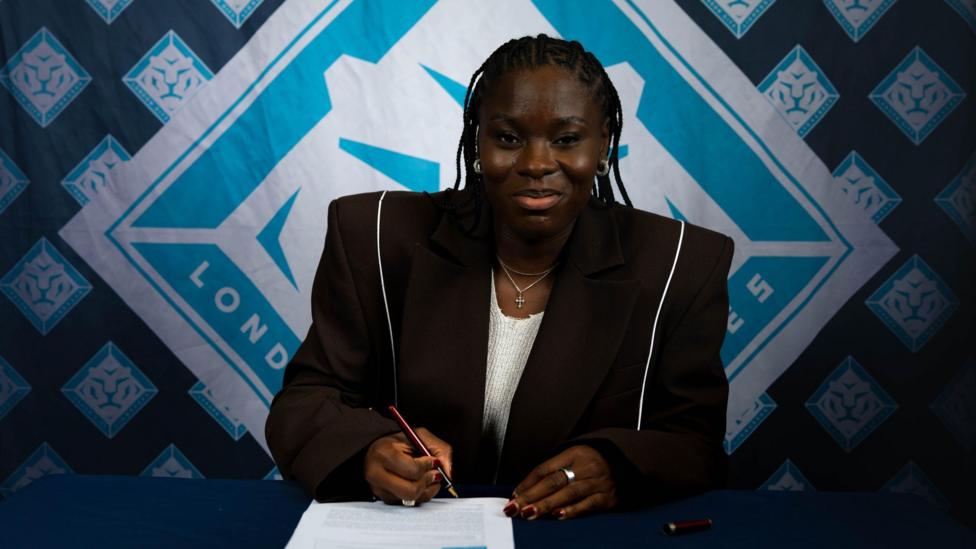
London City Lionesses Land Germany Striker Anyomi in Statement Signing
Nicole Anyomi's three-year move to London City Lionesses signals serious promotion ambitions in the Women's Championship.
Pochettino's USMNT Faces a Reckoning of Identity Against Bosnia
The USMNT's last-32 clash with Bosnia is less about tactics and more about winning America's attention.
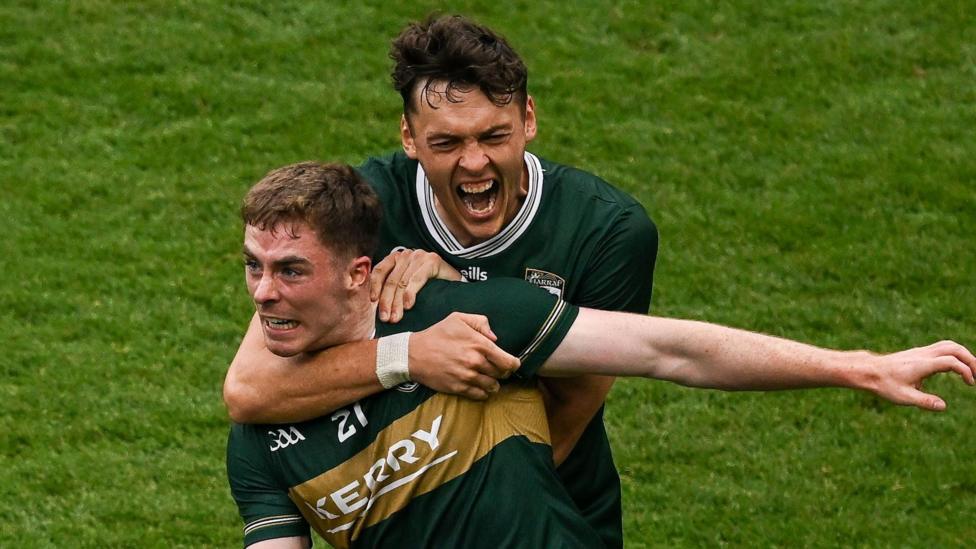
Kerry Survive Tyrone Onslaught to Keep Championship Defence Alive
Defending champions Kerry needed every ounce of steel to see off a ferocious Tyrone challenge in a pulsating Croke Park quarter-final.