Spa Weather Forecast: The Strategist's Nightmare That Defines the Belgian GP
Spa's volatile weather forecast threatens to turn the Belgian Grand Prix into a high-stakes chess match of tire strategy and raw courage.
Spa's Atmospheric Theater: Setting the Scene
The Ardennes forest does not host Formula 1 races. It stages survival exercises with a timing screen. As the paddock assembles at Spa-Francorchamps for the Belgian Grand Prix weekend, the weather forecast is doing what it always does at this circuit: threatening complete chaos.
Spa sits in a microclimate nestled between dense woodland and rolling hills, creating conditions where one sector can be bone-dry while another is soaking wet. The 14-turn, 7.004-kilometer circuit wraps through three distinct weather zones, meaning the conditions a driver faces at La Source might bear zero resemblance to what greets them at the Bus Stop chicane two minutes later. This weekend's forecast suggests that classic Spa variability will be on full display, with fluctuating conditions across all three days of running.
The implications are staggering for both setup and strategy. Twitter is already calling for full wets. But a race engineer's spreadsheet demands far more nuance than a social media reaction. A dry setup optimized for the long blasts through Pouhon and the flat-out run through Blanchimont will leave a driver helplessly stranded if the rain arrives mid-race. Conversely, a wet-biased aero package will hemorrhage entire seconds per lap on a drying track. Finding the compromise is where championships are quietly won.
The Aero and Tire Equation: Reading Spa's Technical Matrix
Formula 1 teams arrive at Spa with a unique aero configuration that looks like a hybrid between Monza's low-drag efficiency and Silverstone's high-downforce cornering stability. The reason is simple: the circuit demands both. The sector from Eau Rouge through Pouhon requires maximum downforce for high-speed cornering grip, but the 1.9-kilometer run from La Source to Les Combs creates an aerodynamic drag penalty that punishes any team that decides to run too much rear wing.
This is where the weather forecast becomes the critical variable. A wet track surface dramatically shifts the optimal downforce level. The grip threshold drops, and the tradeoff between drag and downforce tilts toward the latter. Teams that anticipate a wet race can afford to bolt on a higher-downforce rear wing, trusting that the added cornering speed in the wet sectors will outweigh any top-speed deficit on the Kemmel Straight. But if the forecast shifts and the race runs dry, that same wing becomes a parachute.
Compound Casino: Pirelli's Spa Challenge
Pirelli brings the full spectrum of tire compounds to Spa: the C1, C2, and C3 selections, spanning hard to soft. The compound allocation matters acutely because Spa is one of the most demanding circuits on the calendar for tire energy. The continuous high-speed corners, particularly Pouhon and Blanchimont, generate massive lateral loads that push the rubber to its thermal limits.
In wet conditions, the calculus changes entirely. Pirelli's intermediate tires are designed for a standing water depth between 2 and 5 millimeters, while the extreme wet tires need genuine pooling to justify their use. The forecast uncertainty means teams must prepare for both a standard dry one-stop or two-stop strategy and a full wet-weather combat scenario involving four to six tire changes.
Strategy Breakdown: The Pit Wall's Dilemma
The strategy wall at Spa operates on a fundamentally different plane when the weather is unstable. The standard decision tree, which relies on predictable degradation curves and fixed pit windows, goes out the window. In its place, teams run live simulations that constantly update based on radar imagery and driver feedback about track conditions at specific corners.
The critical decision is always the crossover point. When a drying track reaches a threshold where slick tires become faster than intermediates, the team that calls their driver in first gains a massive advantage. The crossover window at Spa can last as few as two laps. Miss it, and you surrender three to five seconds per lap to a competitor on the correct tire.
"The radar never tells you the whole story at Spa. It tells you where the rain is, but not whether the track surface at Pouhon is already evaporating moisture from the trees. You learn to read the spray off the rear of the car ahead. That is your real weather radar."
The threat of a Safety Car compounds the strategic complexity. Rain at Spa often triggers incidents, particularly at Eau Rouge and Raidillon, where limited visibility in spray can cause chain-reaction crashes. A Safety Car period bunches the field and opens a window to bank cheap pit stops. The best strategists will already have three contingency plans mapped for scenarios involving a Safety Car deployed on laps 10, 20, or 30.
Race Order Projections and Time Deltas
In a dry Spa race, the pole-to-win margin is historically tight. recent seasons have seen winning margins of under 5 seconds, with qualifying gaps between the top three often separated by less than 0.3 seconds. However, throw rain into the equation and volatility skyrockets.
- P1: Potential winning margin of +2.5 to +12.0 seconds in mixed conditions, depending on timing of weather windows.
- P2 to P4: The pack likely within +8 to +15 seconds, if the race settles into a single tire phase.
- P5 to P10: Wild variability, with potential gaps of over +25 seconds for cars caught out by the wrong call at the wrong time.
Constructors' Championship Implications
The championship standings ride on every Spa weather system. The points swing between a podium finish and a non-points result can be as high as 20 to 25 points for a single constructor when accounting for fast-lap bonuses. In a tight championship fight, a single strategic miss at Spa can effectively end a team's title challenge.
For the leading teams, Spa's weather offers a calculated risk. The fastest car on a dry track may only have a 0.2-second advantage per lap over its rivals. In the wet, that advantage can balloon to over a full second as car balance and driver confidence become the differentiating factors. Conversely, a race that starts wet and dries out can equalize the field, erasing outright pace advantages and rewarding strategic boldness.
The midfield faces an even starker calculation. For teams fighting for every championship point, a rain-affected race at Spa is both a threat and an opportunity. A well-timed switch to slicks on a drying track, or a perfectly executed undercut when the rain spots begin to fall, can vault a car from P12 to P5. The forecast is not just a weather report for these teams. It is their entire race plan.
Championship Stakes: The Broader Outlook
As the field rolls out for Friday practice, every team principal will be scanning the sky. The forecast shapes the technical approach to every session. Free Practice 1 might start on intermediates as teams evaluate a green track surface. Conditions could shift by FP2, rendering morning setup data useless. The strategists will be running parallel programs, collecting wet-weather data alongside dry tire evaluations.
The real stress falls on Saturday. A wet qualifying session at Spa is the most chaotic event on the Formula 1 calendar. The lap time delta between a fully wet track and a drying surface in Q1 can be enormous. Drivers have a single window of perhaps three to four minutes to set a banker lap before conditions improve in the final minutes. Getting caught out by a red flag at the wrong moment means starting the Belgian Grand Prix from the back of the grid, a penalty that no amount of Sunday race pace can easily overcome.
The weather forecast is in. Now the real work begins. The team that reads the sky best will stand tall on the podium Sunday afternoon.
Editorial Integrity
This is an original SportPulse article written by our editorial team. All content is independently researched, written, and reviewed by our writers and editors before publication. We do not publish copied, aggregated, or syndicated content.
SportPulse is committed to original sports journalism. Read our editorial policy or contact us with any questions.
More Like This
All f1
Red Bull Ring Awaits: Why the 2026 Austrian GP Could Rewrite the Pecking Order
New regulations, thinner air, and a brutally short lap make Spielberg the ultimate 2026 litmus test for every team on the grid.
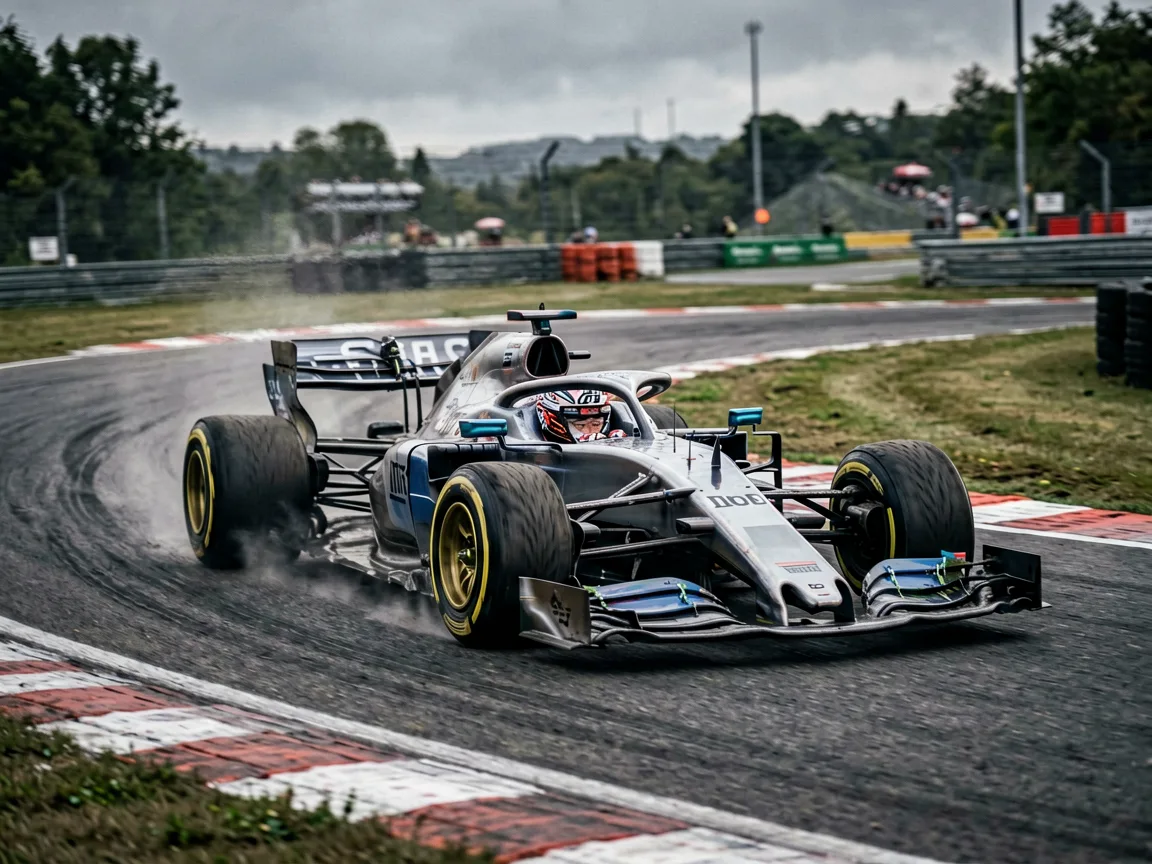
Pirelli Brings the Heat to Spa: 2026 Belgian GP Tyre Compounds Revealed
Spa-Francorchamps demands everything from tyres, and Pirelli's compound selection for the 2026 Belgian GP signals a high-wire strategic challenge.
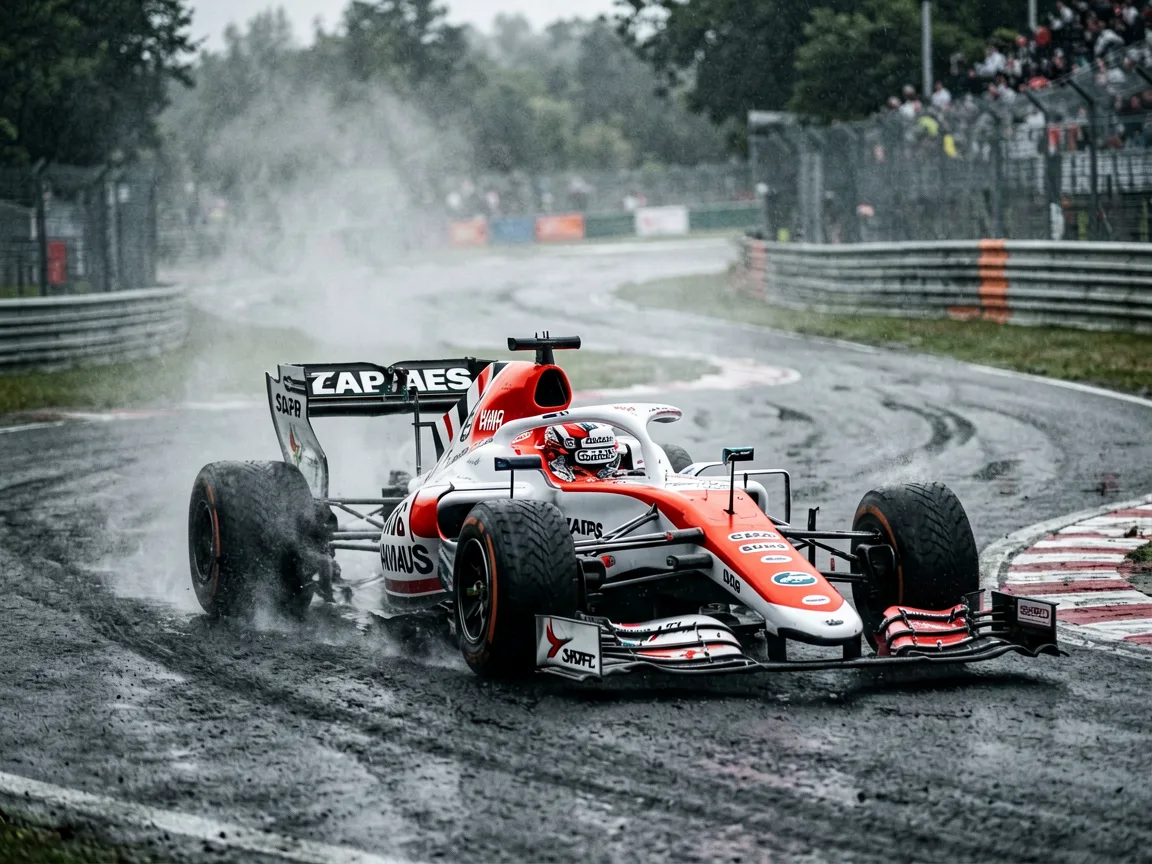
Lindblad's Spa P8 Breakthrough: The Technical Symphony Behind It
Arvid Lindblad's career-best P8 at Spa reveals how mechanical grip, aero efficiency, and engine mapping converge at Formula 1's most demanding circuit.