Bellingham Carries England, But He Can't Do It Alone Forever
Jude Bellingham dragged England past Norway in Miami's brutal heat, but the quarter-final exposed fatal cracks in Sarina Wiegman's system.
Jude Against the Sun
Jude Bellingham stood alone in the Florida heat, carrying the weight of a nation on his shoulders. Around him, teammates wilted. The opposition pressed with intelligence and restraint. The sun beat down with unrelenting cruelty on Miami Gardens.
England survived their World Cup quarter-final against Norway. But survival is not the same as supremacy, and the manner of this performance should set off alarm bells louder than any victory celebration.
"There was a feeling of three separate entities struggling to assert their will in the heavy air of Miami Gardens."
For long stretches, this was not a football match. It was a survival test played out in conditions that bordered on the inhumane. The July Florida heat turned the pitch into a furnace, and England looked less equipped than anyone to handle it.
Norway, appearing in their first World Cup quarter-final, played with heart, skill and patience. Strip Bellingham from the equation and Norway were arguably the better team. They pressed with structure. They recovered possession with discipline. They made England uncomfortable in ways that will not disappear when the temperature drops.
A Talisman Running on Fumes
What Bellingham produced in this match was extraordinary. It was also unsustainable.
The 20-year-old midfielder has become England's everything: creator, scorer, leader, emotional engine. When the team lacks rhythm, he provides it. When the press breaks down, he fills the gaps. When confidence drains from those around him, he grabs the ball and imposes his will on the game.
That dominance is a gift. But it is also a structural failure dressed up as individual brilliance.
"By any Jude-free metric, Norway were probably the better team."
England's over-reliance on Bellingham has been growing tournament by tournament. In Miami, it reached a breaking point. The tactical setup funnelled everything through him, not by design but by default. When Norway neutralised the wide channels and squeezed the space between lines, Bellingham became the only outlet, the sole progressive force in a team that otherwise looked pedestrian.
The numbers tell only part of the story, but they are damning for the collective. Without Bellingham's interventions, England's attacking output flatlined for long periods.
The Heat Factor
The conditions in Miami Gardens cannot be dismissed as a minor inconvenience. The Florida summer humidity creates a unique physiological challenge: air so thick it congeals around you, vision blurring, brain sagging, legs turning to lead.
England appeared uniquely vulnerable to it.
Norway, to their credit, adapted. They managed the temperature through patient possession, conserving energy between pressing triggers and avoiding the frantic, draining sprints that England seemed incapable of resisting. It was intelligent tournament football, the kind Norway have historically struggled to produce on this stage. Their naivety, long the accusation levelled at Scandinavian nations in major competitions, was nowhere to be seen.
England, by contrast, looked like a team that had underestimated the furnace.
Behind the Performance: What Went Wrong
Tactical Imbalance
England's system failed to protect Bellingham from carrying the entire creative burden. The wide players did not stretch the pitch enough. The midfield partnership behind him lacked the progressive passing range to relieve pressure. When Norway's midfield compacted the centre, England had no alternative route to goal.
Pressing Inefficiency
England's press misfired repeatedly. Norway played through the first line with composure, turning England's aggressive triggers into wasted energy. In conditions where every sprint costs double, this was catastrophic management of physical resources.
Mental Fragility
When Norway imposed their will, England's body language deteriorated. Shoulders dropped. Passes became rushed. The clinical edge that defined earlier tournament outings vanished, replaced by a frantic urgency that only Norway benefited from.
What Norway Revealed
This Norwegian team exposed something tactical analysts have whispered about for months: England have a Plan A dependent on Bellingham, and no credible Plan B.
Without their talisman finding moments of magic, they looked ordinary. Against an opponent making their first quarter-final appearance, that ordinariness should raise serious concerns about what happens when they face a more battle-hardened, tactically sophisticated opposition in the semi-finals and beyond.
Transfer Intel: The Bellingham Economy
The Market Impact
- Bellingham's individual performance metrics in this tournament will only accelerate the commercial juggernaut surrounding him
- Sponsors desperate for a face of the tournament will pour additional investment into his personal brand
- His Real Madrid valuation, already astronomical, continues to rise with every match-winning display
- England's failure to build a functioning system around him increases the likelihood that his long-term future lies away from the national team's tactical limitations
The irony is brutal. England's inability to function as a collective enhances Bellingham's individual mythology. But it also deepens the structural problem at the heart of the national team.
The Bigger Picture
England advanced. That is the tournament truism. In knockout football, beauty matters less than progression.
But hidden beneath the relief of a quarter-final victory is a truth that Sarina Wiegman and her coaching staff must confront before a semi-final against a genuinely elite opponent. Against Norway, England's weaknesses were exposed across ninety minutes of suffocating heat against opponents who should have been there for the taking.
They were not there for the taking. And the reason they were not is the reason England's tournament hopes remain fragile despite Bellingham's heroics.
"Jude against the sun. For much of this game there was a feeling of three separate entities struggling to assert their will."
That feeling is the story of England's tournament. One player imposing his will. One opposition exposing collective flaws. One environment punishing tactical naivety.
Bellingham is England's sun. But even suns burn out when everything depends on them.
What Comes Next
The semi-final will demand more than Bellingham can provide alone. England need their wide threats to rediscover their cutting edge. They need the midfield to control possession with intelligence, not just industry. They need a pressing structure that conserves energy rather than wasting it on hopeless chases.
Most of all, they need someone besides Bellingham to take responsibility when the temperature rises and the game turns ugly.
Norway showed England who they really are without their talisman at full throttle. The semi-final opponent will not be as forgiving.
Editorial Integrity
This is an original SportPulse article written by our editorial team. All content is independently researched, written, and reviewed by our writers and editors before publication. We do not publish copied, aggregated, or syndicated content.
SportPulse is committed to original sports journalism. Read our editorial policy or contact us with any questions.
More Like This
All football
Beggan Breaks Down Where All-Ireland Semi-Finals Will Be Won
Monaghan's Rory Beggan dissects the tactical battlegrounds set to decide this weekend's All-Ireland SFC semi-finals.

Inside the World Cup Machine: Rodrygo Reveals the Relentless Routine Behind Brazil's Campaign
Rodrygo pulls back the curtain on the grueling daily grind that powered Brazil's 2022 World Cup squad.
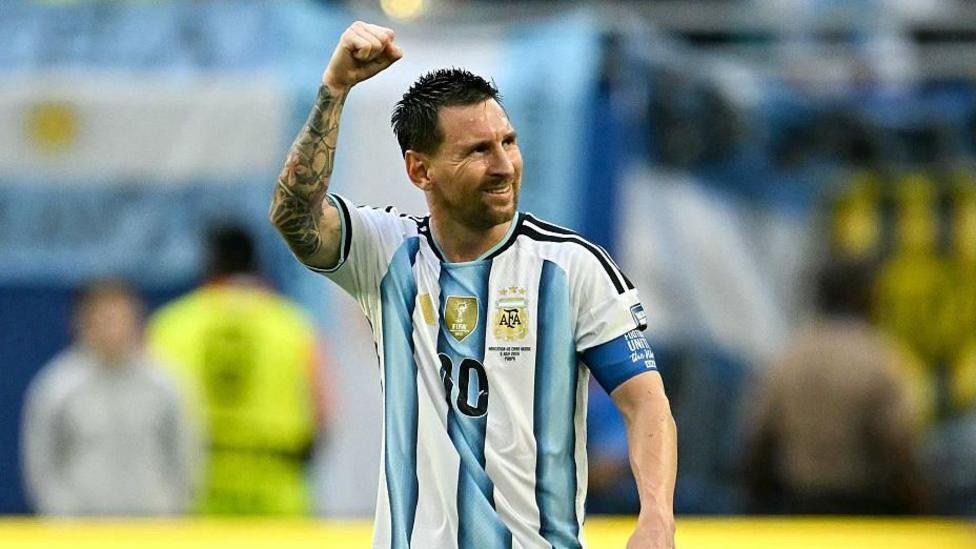
Messi Mania Grips Miami as Argentina's World Cup Roadshow Rolls On
Lionel Messi's seventh tournament goal against Cape Verde turned Miami into a Buenos Aires outpost of devotion and spectacle.