The Day Football Replaced Cruelty With Chaos: Inside the Birth of the Penalty Shootout
Before the drama of shootouts, football decided knockout ties with coin tosses and drawing of lots — until 1970 changed everything.
When Coin Tosses Decided Destiny
Here is a truth modern football fans would find almost incomprehensible: for decades, the sport's greatest knockout matches were routinely decided by a flipped coin. Not by skill, not by nerve, not by any quality the game supposedly celebrates. A coin. Flipped by a referee on a center circle, watched by tens of thousands of people who had just endured 120 minutes of football for the privilege of witnessing something closer to a casino than a sporting contest.
The penalty shootout did not emerge from some grand philosophical debate about the nature of competition. It was born out of sheer, accumulated embarrassment. Football kept producing moments so absurd, so antithetical to its own mythology, that the sport had no choice but to invent something better. And when the first official penalty shootout arrived in 1970, no one knew the rules of the game they were about to play. Not the players, not the managers, not the referees. They were walking into football's great unknown.
The Cruelty Before the Chaos
To understand why the penalty shootout was necessary, you have to understand what it replaced. The alternatives were, by any rational standard, grotesque.
The coin toss was the most infamous method. In the 1968 European Championship semifinal, Italy faced the Soviet Union in Naples. After 120 goalless minutes, the match went not to a replay, not to some tiebreaking mechanism involving actual football, but to referee Kurt Tschenscher flipping a coin in the center circle. Italy captain Giacinto Facchetti called correctly. Italy advanced to the final. The Soviet Union went home.
Read that again. A European Championship semifinal, one of the most prestigious matches on the continent, was decided by the same method a schoolchild might use to pick teams in a playground. The Soviets, who had every right to feel they were the better side, had no recourse. The sport simply shrugged.
And that was not an isolated incident. Drawing of lots produced similarly farcical outcomes. In the 1968 World Cup qualifying stages, various federations endured ties settled by names pulled from bowls, as if the tournament were a village raffle. Multiple replays were another option, but they created logistical nightmares: congested fixture lists, travel costs, and diminishing returns in quality as exhausted players ground through third and fourth matches.
The system was not merely imperfect. It was actively hostile to the idea that sporting outcomes should reflect sporting merit.
The Invention Nobody Wanted to Claim
The concept of a penalty shootout did not spring from a single eureka moment. Several figures across different countries independently proposed variations on the theme throughout the 1960s. The most commonly credited are Karl Wald, a Bavarian referee, and Yosef Dagan, an Israeli former player and official, who argued that sequential penalty kicks offered a fairer, more dramatic, and more football-appropriate resolution.
The idea was elegant in its simplicity: five penalties per side, alternating, with sudden death if the scores remained level. It kept the decisive act within the framework of the sport itself. A goalkeeper versus a striker. Skill against skill. Nerve against nerve.
Not everyone was convinced. Traditionalists argued that penalties reduced a complex team sport to an individual lottery. Others worried it would incentivize negative, defensive football in extra time, with teams playing not to win but simply to reach the shootout. Both concerns were legitimate. Both would prove partially prophetic.
IFAB (the International Football Association Board) officially sanctioned the penalty shootout in 1970, and competitive football was never the same.
Walking Into the Unknown: The First Shootout
Imagine the psychology. You are a professional footballer in 1970. You have taken penalties before, but always in the context of a foul in the box during a match. This is different. This is you, walking from the halfway line, alone, with nothing but the weight of history pressing on your shoulders. And here is the critical detail: no one who went first had any idea what the pressure would feel like.
There was no tape to study, no precedent to learn from, no mental conditioning program tailored to shootout scenarios. Every player stepping up was, in a very real sense, pioneering an entirely new dimension of the sport. The psychological landscape was blank. Would the crowd noise matter more? Would the goalkeeper's positioning distract you? Would your legs betray you in a way they never had before?
The fear of being the first to miss in an official penalty shootout carried a unique historical weight. Miss, and your name would be etched into trivia books forever. There was no hiding. No teammate to share the burden. Just you, the ball, and twelve yards of grass that might as well have been a mile.
The Shootout's First World Cup Appearance
While penalty shootouts became standard in domestic and continental competitions through the 1970s, the World Cup held out longer. The 1978 tournament in Argentina passed without a single shootout. It was the 1982 World Cup in Spain that finally delivered the format to the sport's grandest stage, and it delivered spectacularly.
The 1982 semifinal between West Germany and France in Seville remains one of the most dramatic matches ever played. The game finished 3-3 after extra time, a breathless contest featuring a brutal challenge by German goalkeeper Harald Schumacher on Patrick Battiston that went unpunished, France surrendering a 3-1 lead, and momentum swinging like a pendulum in a hurricane.
The shootout that followed was the world's introduction to the format at its most intense. West Germany won 5-4 on penalties, but the spectacle permanently altered how fans, players, and coaches understood knockout football. The shootout was no longer an experimental tiebreaker. It was theater. It was agony. It was appointment television.
The Panenka: The Shot That Defined an Era
No history of the penalty shootout is complete without Antonin Panenka. The Czech midfielder's audacious chip in the 1976 European Championship final against West Germany transcended the shootout itself. With the score level at 4-4 in the shootout, Panenka jogged up and dinked the ball gently down the center of the goal as goalkeeper Sepp Maier dove to his left.
It was either the bravest or the most reckless penalty ever taken. It was certainly the most memorable. The shot entered the lexicon of football itself; to this day, any chipped penalty is called a "Panenka." But beyond the artistry, the moment crystallized something essential about the shootout format: it rewarded not just accuracy and power, but audacity. It created a stage where individual personality could be expressed in a single, irreversible act.
Panenka later admitted he had practiced the technique extensively, scoring with it in training and even in friendly matches. He calculated that goalkeepers almost always dived. The data, even if informal, supported his hypothesis. It was, in a sense, football's first data-driven penalty decision.
What the Shootout Changed Forever
The penalty shootout did not merely provide a tiebreaker. It reshaped how the sport was coached, consumed, and narratively structured.
Defensive football gained new strategic purpose. If a weaker team could survive 120 minutes at 0-0, the shootout became an equalizer, a mechanism through which an underdog could topple a favorite on the strength of five individual nerve tests. This incentivized organized, low-block defending in a way the coin toss never could have.
Goalkeepers became penalty specialists. The rise of the shootout created an entire sub-discipline of goalkeeping. Analysis of penalty takers' tendencies, body language, and historical placement became a cottage industry. By the 2000s and 2010s, keepers carried detailed dossiers on opponents, stored in water bottles and gloves. Jens Lehmann's notes on Argentina's penalty takers during the 2006 World Cup quarterfinal became iconic. He saved two kicks as Germany won 4-2 on penalties.
The narrative weight of knockout football increased exponentially. Every tied knockout match now carried a ticking clock toward the shootout's drama. Extra time became a prologue, not an epilogue. Fans began to feel the psychological pressure even before the final whistle, knowing what awaited.
The Persistent Criticism
For all its drama, the penalty shootout has never silenced its critics. The argument that it is a lottery, not a test of footballing ability, persists. Since the World Cup adopted shootouts in 1982, roughly 30% of knockout matches that reach extra time have been decided by penalties, and the data reveals some uncomfortable truths: the team taking the first penalty wins approximately 60% of shootouts, a statistically significant advantage that suggests the format carries a structural bias.
UEFA's experiment with the ABBA format in youth competitions between 2017 and 2018 attempted to address this by alternating the order (ABBA instead of ABAB), mirroring a tennis tiebreak. The idea was to eliminate the psychological advantage of going second, where the trailing team feels the pressure of a must-score situation. The format was quietly shelved, though the underlying research remains relevant.
"The shootout is the worst way to decide a football match, except for all the others that have been tried." — A sentiment widely paraphrased across football commentary, echoing a certain political maxim.
The Bottom Line
The penalty shootout was never designed to be fair in the way a full match is fair. It was designed to be less unfair than a coin toss. In that narrow, pragmatic mission, it succeeded beyond anyone's expectations. It gave football a resolution mechanism that, however flawed, at least involves the skills the sport purports to value: striking a ball, reading an opponent, performing under pressure.
Fifty-plus years after IFAB's adoption, the shootout remains one of the most emotionally charged sequences in all of sport. It has decided World Cups, European Championships, Champions League finals, and countless domestic cup ties. It has made heroes and villains out of players who were neither for the preceding 120 minutes. It has produced moments that live in collective memory far longer than any coin toss ever could.
Was it the perfect solution? No. Was it a necessary one? Absolutely. Football in 1970 looked at its own absurdity and chose to evolve. Not every sport can say the same.
Verdict: The penalty shootout did not eliminate cruelty from football. It simply replaced mechanical cruelty with emotional cruelty. And somehow, that was an improvement.
Editorial Integrity
This is an original SportPulse article written by our editorial team. All content is independently researched, written, and reviewed by our writers and editors before publication. We do not publish copied, aggregated, or syndicated content.
SportPulse is committed to original sports journalism. Read our editorial policy or contact us with any questions.
More Like This
All football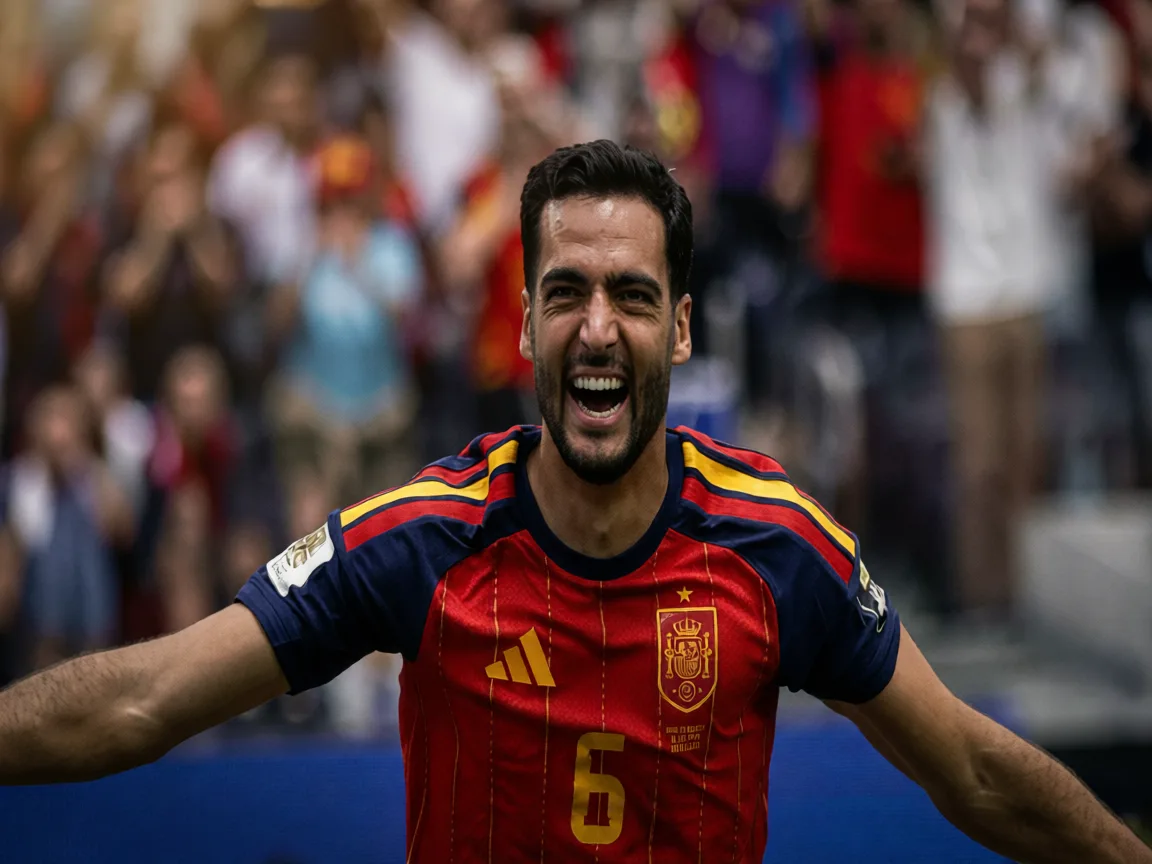
Spain's Goal-by-Goal Roar to the World Cup Semi-Finals
Spain have fired their way to a Dallas semi-final clash with France. Here is every goal that defined their 2026 World Cup march.

Spaceship Stadiums, $5 Water and a Nation Falling in Love
America's first World Cup week delivered spectacle, sticker shock, and a sporting culture shift no poll could predict.
Palace and Sunderland Top Premier League World Cup Chart
Crystal Palace and Sunderland shocking Arsenal and Liverpool atop the Premier League World Cup scoring chart rewrites assumptions about elite production.