Brazil Bets Big on 2027 Women's World Cup Legacy
Brazil's 2027 Women's World Cup is not just a tournament; it is Aline Pellegrino's fight to cement a permanent structural legacy for the women's game.
The One-Year Warning Shot
On Wednesday, the clock struck 365 days. In exactly one year, the 2027 FIFA Women's World Cup will kick off across Brazil, marking a monumental shift for a nation that has historically treated its female footballers as an afterthought. The tournament, scheduled to run from 24 June to 25 July, will sprawl across eight host cities. But the real battle isn't just about putting on a six-week spectacle. It is about whether Brazil can convert a month of global attention into a permanent structural paradigm shift for the women's game.
History tells us major tournaments in Brazil leave complicated legacies. The 2014 Men's World Cup delivered sparkling arenas that quickly turned into financial albatrosses. The 2016 Rio Olympics left behind a trail of deferred promises. Now, the 2027 Women's World Cup arrives with a different mandate and a familiar urgency.
The Architect of the Aftermath
Appointing a former international to oversee the tournament's aftermath is a calculated move by the local organizing committee. Aline Pellegrino, the former defender and playing captain of Brazil’s 2007 Pan American Games squad, has beeninstalled as the executive director of legacy and stakeholder affairs. This is not a ceremonial role. Pellegrino is tasked with ensuring the 2027 World Cup does not simply vanish from the Brazilian sporting consciousness the moment the final whistle blows.
Pellegrino’s immersion in the women's game gives her a unique vantage point. She understands the systemic hurdles Brazilian female footballers face, from chronic underfunding at the grassroots level to the lack of professional domestic league structures that force top talent abroad. Her mandate is explicit: the World Cup must serve as an accelerant for the domestic game, not merely a showcase for exported talent.
"We are working for future generations. This tournament belongs to them."
The symbolism is impossible to ignore. The World Cup final will be staged at the Maracanã, coinciding precisely with the 20th anniversary of Brazil’s Pan American football gold. That 2007 victory was a watershed moment for women's football in South America. Replicating that triumph on the sport's grandest stage, on the same sacred turf, would write a poetic coda to two decades of struggle for visibility and respect.
The Weight of Historical Precedent
Brazil has hosted three major women's football tournaments in the past two decades. The 2007 Pan American Games in Rio offered an early glimpse of the nation's potential as a host. The 2016 Rio Olympics raised the profile further, culminating in a dramatic gold-medal match against Sweden. Yet, between those landmark events, the domestic women's league remained critically under-resourced.
To understand the scale of the 2027 challenge, consider the trajectory of previous hosts. The 2019 World Cup in France saw a reported 1.12 billion viewers tune in across the competition, a figure that dwarfed prior editions. The subsequent 2023 World Cup in Australia and New Zealand shattered attendance records, drawing over 1.97 million fans through the gates. The commercial and sporting benchmarks have been aggressively recalibrated. Brazil is not merely inheriting a tournament; it is inheriting a rapidly expanding commercial behemoth that demands infrastructure broadcast capabilities and grassroots alignment far beyond what any previous South American host has attempted.
Comparing the Brazilian Host Landscape
- 2007 Pan American Games: Regional multi-sport event, early proof of Brazil's capacity to host women's football at scale
- 2016 Rio Olympics: Global multi-sport spotlight, heightened commercial exposure, but limited structural legacy for standalone women's football
- 2027 Women's World Cup: Standalone global football spectacle requiring sustained investment and targeted institutional change over 30 days of competition
The Infrastructure and Tactical Challenge
Distributing the tournament across eight cities is both a strategic masterstroke and a logistical headache. Unlike compact European hosts, Brazil's vast geography demands extensive travel coordination. For the national team, this means navigating vastly different climatic conditions, from the humid north to the temperate south, a factor that will heavily influence tactical preparation.
Tactically, the Brazilian national team—currently undergoing a generational transition—must capitalize on home advantage. Historically, host nations enjoy a measurable uptick in performance. The 2019 hosts, France, dominated their group stage before a quarter-final exit. The 2023 co-hosts, Australia, rode a wave of national momentum to a historic semi-final run. For Brazil, advancing beyond the quarter-final stage for the first time since 1999 is not just a sporting objective; it is a commercial imperative. A deep run sustains domestic interest and drives the commercial metrics necessary to justify post-tournament private investment.
The Bottom Line: Brazil's tactical preparation must align with the geographical realities of an eight-city spread. Conditioning, travel logistics, and acclimatization protocols will dictate whether the hosts can physically sustain a deep tournament run.
Legacy Over Gloss
Aline Pellegrino's title includes the word 'legacy' prominently, and for good reason. The greatest threat to the 2027 Women's World Cup is the illusion of success. A beautiful opening ceremony, packed Maracanã, and a competitive quarter-final run will generate glowing headlines. But if the domestic league remains a patchwork of underfunded semi-professional outfits in 12 months' time, the tournament will have failed its core mission.
Angelina Constantino, alongside Pellegrino in the organizing structure, has emphasized sustainable growth. The focus is on translating World Cup infrastructure investments into permanent training facilities and professional staff positions for women's clubs. FIFA's legacy fund, historically allocated post-tournament, must be ring-fenced to prevent municipal budget cannibalization.
The key metrics for success won't be found in the 25 July television ratings. They will be found in the 2028 domestic season. Will the eight host cities maintain professional-level pitches for women's club matches? Will corporate sponsors who activate during the World Cup extend their partnerships into the domestic calendar? Will grassroots academies see a measurable spike in registered female players? These are the uncomfortable questions Pellegrino and her team must answer before the opening kickoff.
Verdict: The true test of Brazil's 2027 World Cup is a delayed one. The legacy of this tournament will ultimately be written after the confetti settles, measured by the structural health of the domestic game rather than the brilliance of a month of football.
The Countdown Clock_is Ticking
A 365-day countdown is a marketing tool, but it is also a deadline. The next 12 months represent the most critical window for the local organizing committee. Stadium certifications, security protocols, volunteer recruitment, and—most importantly—corporate partnerships must be finalized. The global women's game has never been more commercially viable or more scrutinized. Brazil has the passion and the playing history to deliver an unforgettable World Cup. Delivering a permanent foundation for future generations, however, requires a discipline that supersedes celebration. The stage is set. The hard work begins now.
Editorial Integrity
This is an original SportPulse article written by our editorial team. All content is independently researched, written, and reviewed by our writers and editors before publication. We do not publish copied, aggregated, or syndicated content.
SportPulse is committed to original sports journalism. Read our editorial policy or contact us with any questions.
More Like This
All football
World Cup Group Stage Reaches Boiling Point: Your Questions Answered
The biggest World Cup ever hits the group stage finale, and SportPulse correspondents break down the chaos.

Rees-Zammit Back Where He Belongs: Wales Ring Changes for Fiji Opener
Steve Tandy shuffles his Wales deck as Rees-Zammit returns to the wing for a pivotal Nations Championship clash with Fiji.
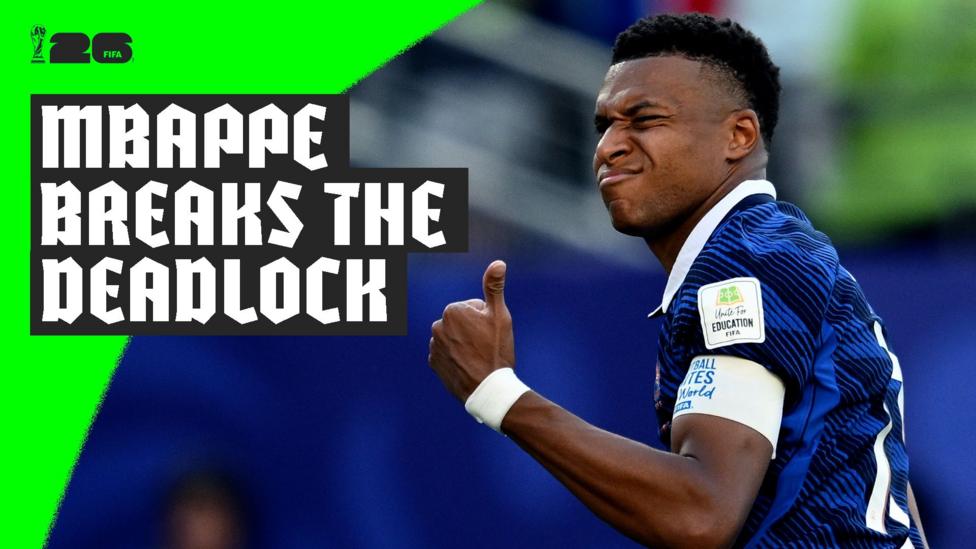
Mbappe Reaches Seven World Cup Goals as France Punish Paraguay
Kylian Mbappe's ice-cold penalty against Paraguay takes him to seven goals at the 2026 World Cup, cementing his status as football's ultimate big-game predator.