Britain's Wimbledon Quarter-Finalists: A Forgotten Roll Call
Ten British players reached a Wimbledon singles quarter-final in the Open era. Most are forgotten. Their stories deserve better.
Centre Court has a peculiar relationship with British tennis players.
For two weeks every summer, it transforms from a cathedral of sport into a pressure cooker of national expectation. The grass plays faster. The air feels heavier. And somewhere in the draws, a British player is trying to survive.
Reaching the quarter-finals at Wimbledon is a specific kind of achievement. It means you have won four matches on the sport's most demanding surface under the gaze of a nation that treats this tournament like a holy pilgrimage.
Since the Open era began in 1968, exactly ten British players have reached a Wimbledon singles quarter-final. Ten. Across more than five decades.
That number tells you everything about the state of British tennis.
The Obvious Names
Three names jump out immediately.
Andy Murray is the titan of this group. A three-time Grand Slam champion, two-time Wimbledon winner, and the man who ended Britain's 77-year wait for a male singles champion in 2013. Murray reached the Wimbledon quarter-finals or better nine times. He was the player who made British tennis credible again.
Tim Henman is the next name on everyone's list. The man who reached four Wimbledon semi-finals but never the final. Henman was the great British hope before Murray arrived, a serve-and-volley artist whose elegant game was built for grass but whose nerve occasionally failed him at the critical moment.
Virginia Wade carries the weight of history. She won Wimbledon in 1977, the last British woman to do so, during the tournament's centenary year. Queen Elizabeth II attended the final. Wade reached the quarter-final stage or better six times at the All England Club.
These three are remembered. Their names are etched into the British sporting consciousness.
But they are only three of the ten.
The Shadow Seven
The others? They exist in a stranger space.
Sue Barker reached the Wimbledon quarter-finals in 1976 before losing to Chris Evert. Barker won the French Open that same year, which rather puts her Wimbledon run in context. She reached a career-high ranking of world No. 3 and later became the face of BBC Wimbledon coverage for decades.
"Sue Barker the player is often forgotten because Sue Barker the broadcaster became so familiar. But she was a genuine Grand Slam champion and a force on grass."
Jo Durie reached two Wimbledon quarter-finals during the 1980s. A player of immense talent whose career was repeatedly disrupted by injuries, Durie reached a career-high of world No. 5 and won two Grand Slam mixed doubles titles.
Roger Taylor reached the Wimbledon quarter-finals four times in the early 1970s. A former British No. 1, Taylor was a classic grass-court player with a ferocious serve and volley game. He reached the semi-finals twice, losing to eventual champions on both occasions.
John Lloyd reached the quarter-finals in 1985, becoming the first British man to reach a Grand Slam singles final at the 1977 Australian Open. His Wimbledon run came later in his career. Lloyd was better known for his doubles prowess and his high-profile marriage to Chris Evert.
Greg Rusedski qualified for the Wimbledon quarter-finals in 1997, the year he reached the US Open final. Born in Canada, Rusedski adopted British citizenship in 1995 and carried the Union Flag with pride. His massive left-handed serve made him dangerous on grass.
Anne Hobbs reached the Wimbledon quarter-finals in 1984. A doubles specialist who won two Grand Slam doubles titles, Hobbs had her best singles run at the All England Club that year.
Karen Hultzer rounds out the list. The least known of the ten, Hultzer reached the Wimbledon quarter-finals in 1968, the very first year of the Open era. Her run came before the full glare of modern television coverage made Wimbledon the global spectacle it is today.
What These Ten Names Reveal
The list tells a troubling story.
Three women and seven men is not the ratio. It is actually four men and six women who have reached the quarter-finals, with Wade, Barker, Durie, Hobbs, Hobbs again, and the more recent additions carrying the female side.
The distinction matters because British tennis has historically produced more women capable of deep runs than men. Wade's 1977 triumph remains the last British women's singles title. Barker's 1976 French Open win was the last British Grand Slam singles title by a woman until Emma Raducanu won the 2021 US Open.
"The gap between Wade's victory and Raducanu's emergence was 44 years. During that time, British women's tennis relied on players like Durie and Hobbs to carry the flag at Wimbledon."
The men's side has been equally barren. Between Fred Perry's 1936 Wimbledon triumph and Andy Murray's 2013 victory, no British man won the singles title. That is a 77-year drought.
During that gap, Henman and Rusedski provided moments of hope. Taylor and Lloyd offered reminders that British men could compete on grass. But nobody could finish the job.
The Grass Court Problem
n
There is a reason Britain produces occasional Wimbledon quarter-finalists rather than consistent champions. The domestic tennis infrastructure has historically failed to develop players across all surfaces.
Wimbledon's grass carpets reward a specific skill set: the serve, the volley, the slice, the ability to take the ball early. These are crafts that the modern game has largely abandoned in favor of baseline power.
"British players who grew up on grass often had games suited to one tournament a year. The global tennis calendar is played on hard courts and clay. That is the structural problem."
Murray was the exception because he developed an all-court game that could win on any surface. He trained in Spain as a teenager, absorbing clay-court movement and hard-court baseline tactics. Then he added the grass-court IQ needed to win at Wimbledon.
Henman was the classic British grass-court player. Beautiful to watch. Vulnerable under pressure.
The others on this list were specialists. Taylor with his serve. Rusedski with his lefty power. Durie with her all-court craft. They could produce magic for a fortnight but lacked the rounded game to sustain deep runs across the season.
The Modern Era and the Missing Names
The Open era list of ten is notable for who is absent.
Emma Raducanu has not yet reached a Wimbledon quarter-final, despite her US Open triumph. Her best Wimbledon run came in 2021 when she reached the fourth round as an 18-year-old wildcard before retiring against Ajla Tomljanovic.
Kyle Edmund reached the Australian Open semi-finals in 2018 but never went beyond the third round at Wimbledon.
Cameron Norrie reached the Wimbledon semi-finals in 2022, beating David Goffin in a five-set quarter-final classic. He is one of the ten.
Johanna Konta reached the Wimbledon semi-finals in 2017, beating Simona Halep in the quarter-finals. She is also one of the ten.
Dan Evans, Laura Robson, Heather Watson, and Jack Draper have all shown flashes without reaching the last eight.
The point is that the list of ten is short. It has only been added to recently by Norrie and Konta. The decade between Lloyd in 1985 and Rusedski in 1997 was particularly bleak. The decade between Daley in 1991 and Henman in 1996 produced no British quarter-finalists at all.
Why This List Matters
Wimbledon is the tournament that British tennis is judged by.
The All England Club is the most prestigious tennis venue on earth. The queue for tickets stretches over a mile. The strawberries are overpriced. The rain delays are inevitable. And every British player who steps onto Centre Court carries the accumulated weight of national longing.
The ten players who reached the quarter-finals knew what that pressure felt like. For most of them, it was the biggest moment of their careers.
For Murray, it was the beginning of a legacy. For Wade, it was the peak of an already brilliant career. For Henman, it was a recurring heartbreak. For the others, it was a brief moment under the sun before the draw moved them aside.
"Ten players in over fifty years. That is the story of British tennis. A few moments of glory surrounded by decades of waiting."
The next British player to reach a Wimbledon quarter-final will become the eleventh name on this list. They will join a club that includes a knight of the realm, a European commentator, a mixed doubles champion, and a man who changed his nationality for a shot at the big time.
The roll call is small. The stories are large. And the search for the twelfth name continues.
Wimbledon never stops asking the question. British tennis has rarely been able to answer.
Tags: Wimbledon, Grand Slams, British Tennis, Open Era
Editorial Integrity
This is an original SportPulse article written by our editorial team. All content is independently researched, written, and reviewed by our writers and editors before publication. We do not publish copied, aggregated, or syndicated content.
SportPulse is committed to original sports journalism. Read our editorial policy or contact us with any questions.
More Like This
All tennis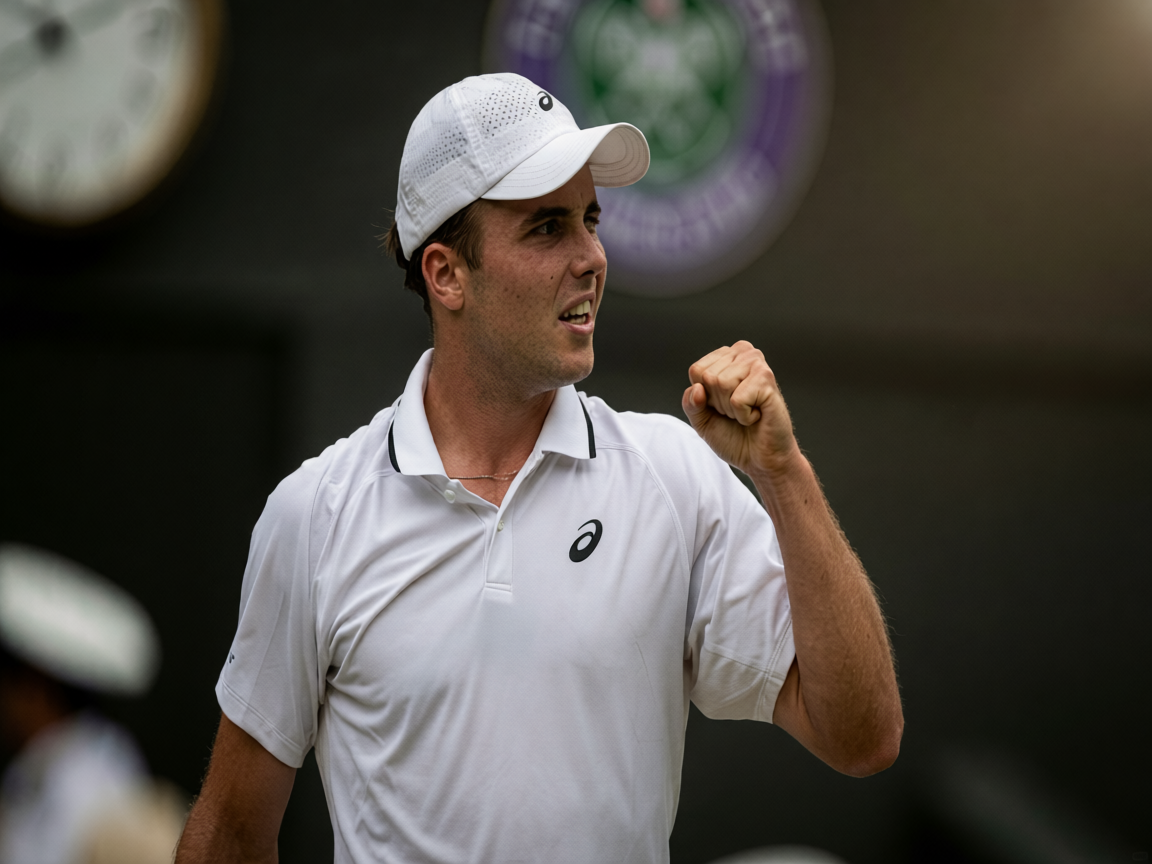
Inside Wimbledon’s Exclusive Last 8 Club Tradition
The Last 8 Club is a unique Wimbledon tradition honoring players who reach the quarterfinals, blending history with modern prestige.
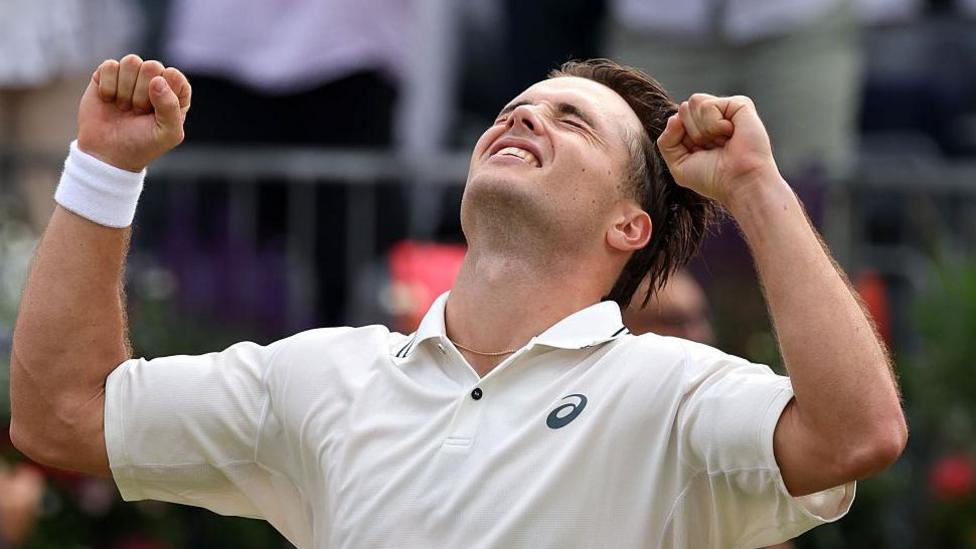
Fery Shocks Mannarino to Reach Queen's Quarters
British wildcard Arthur Fery delivered a career-best performance at Queen's Club, upsetting Adrian Mannarino to keep home hopes alive.
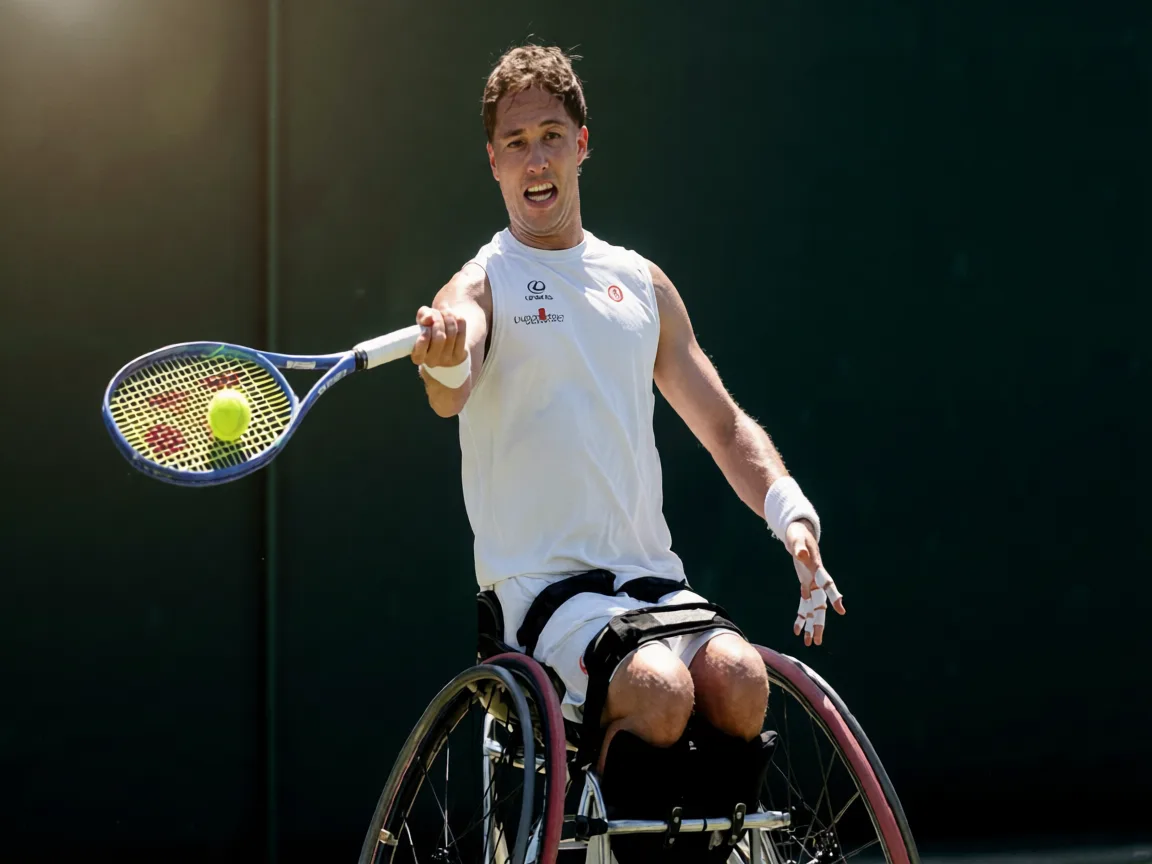
Hewett Marches On as Reid Falls: The Divergent Paths of British Wheelchair Tennis
Alfie Hewett reaches a tenth Wimbledon wheelchair singles quarter-final while Gordon Reid bows out early, encapsulating two very different chapters in British para-sport.