Silverstone Under Siege: New Regulations Threaten to Gut Britain's Crown Jewel
Norris, Hamilton, and Verstappen unite in rare agreement: new rules will fundamentally reshape Silverstone's high-speed DNA.
A Cathedral of Speed, Compromised
There are circuits on the Formula 1 calendar that reward precision. There are circuits that reward bravery. And then there is Silverstone, a venue that has demanded both at over 200 mph for the better part of seven decades. This weekend, the drivers who worship at that altar of speed are sounding an alarm that the sermon has been rewritten.
Reigning world champion Lando Norris and seven-time title holder Lewis Hamilton have now joined Max Verstappen in publicly expressing concern that new regulations will slash straight-line speeds at the British Grand Prix, fundamentally altering the character of a circuit that has defined F1's relationship with raw velocity. Hamilton's assessment was blunt: "It's just a completely different track." When a driver with 104 pole positions and 300-plus starts tells you the place has changed, you listen.
Why Silverstone Was Built for Speed
To understand why this matters, you need to understand what Silverstone actually asks of a Formula 1 car. The circuit sits on a former Royal Air Force bomber station in Northamptonshire, and its layout still carries the ghosts of those runways. The Hangar Straight, the Wellington Straight, and the Farm Straight are not gentle inclines through rolling countryside. They are flat, exposed, and merciless stretches where drag reduction and power unit output are laid bare.
The Maggotts-Becketts-Chapel complex is widely regarded as the finest sequence of high-speed corners on the planet. Drivers arrive at over 200 mph and thread through a series of direction changes that generate up to 6G of lateral force. Copse, Stowe, Abbey: these are not corners you survive by braking early. They are corners you commit to, trusting the aerodynamic platform and the power beneath your right foot.
Silverstone's average lap speed has historically ranked among the highest on the calendar, often hovering around 150 mph in qualifying trim. The circuit rewards low-drag configurations, powerful internal combustion units, and cars that can maintain momentum through medium and high-speed corners. Strip away any of those ingredients and you don't just lose lap time. You lose the essence of what makes Silverstone sacred.
The Regulatory Squeeze
The precise details of the incoming regulation changes remain a subject of paddock speculation, but the effect is already clear in driver telemetry and team simulations. Straight-line speeds are being curtailed, whether through power unit restrictions, aerodynamic rule adjustments, or changes to energy recovery deployment windows.
This is not the first time the FIA has intervened to slow cars for safety or cost reasons. The 2026 power unit regulations, which were finalized years in advance, introduced significant changes to the balance between internal combustion and electrical power. Teams have been adapting their packaging and deployment strategies ever since. But Silverstone, more than almost any other circuit, exposes the consequences of reduced peak power. Monza is the so-called Temple of Speed, but its long straights are punctuated by heavy braking zones. Silverstone's straights bleed into high-speed corners where you cannot afford to arrive slower than expected.
What "Different Track" Actually Means
When Hamilton describes Silverstone as "a completely different track," he is not being dramatic. He is describing a fundamental shift in driving style and setup philosophy. A car that cannot reach the same terminal speeds down the Hangar Straight will carry less energy into Stowe. A car with reduced drag efficiency through the high-speed sweeps will need to compensate with higher downforce, which in turn penalizes straight-line performance further. It becomes a feedback loop that reshapes every sector of the lap.
Norris, who won his maiden world championship last season and carries the weight of British expectation into his home race, has every reason to be vocal. The McLaren package has traditionally been strongest in medium and high-speed corners, and Silverstone has been a venue where the team expects to compete at the front. If the regulations neutralize that strength, the competitive order could shift in ways that significantly impact the championship.
Strategy Breakdown: How Teams Will Adapt
The strategic implications of reduced straight-line speed at Silverstone are substantial. Here is what the engineers on the pit wall will be calculating this weekend:
DRS effectiveness is directly tied to the speed differential between cars. If baseline speeds are lower, the drag reduction system provides a smaller absolute advantage on the straights. Overtaking into Stowe and Brooklands, already difficult at the best of times, becomes even harder. This shifts the strategic emphasis toward undercut and overcut timing in the pit lane rather than on-track position changes.
Tire degradation profiles will change as well. Lower average speeds through the high-speed corners could reduce thermal degradation on the front-left tire, which traditionally suffers the most at Silverstone due to the sustained left-hand loading through Maggotts-Becketts. However, if teams compensate by running higher downforce to maintain corner speed, the rear tires may come under additional stress. Expect tire strategy to become a genuine three-stop possibility rather than the conventional two-stop.
Fuel load sensitivity increases when power is reduced. A heavier car at the start of a stint will be penalized more severely on the straights than in previous years, making early pit stops potentially more attractive. Teams that can manage the undercut window effectively, particularly those with strong out-lap pace, will hold a significant advantage.
The Rare Unanimity
Perhaps the most telling detail from this story is the alignment of voices. Norris drives for McLaren. Hamilton drives for Ferrari. Verstappen drives for Red Bull. In a sport where team PR departments carefully curate every public statement, having three championship protagonists from three rival teams express the same concern is remarkable.
It suggests the issue is not a competitive grievance dressed up as a safety complaint. These are not drivers protecting a performance advantage. They are describing a shared experience: cars that feel constrained at a circuit built to liberate them.
The British Grand Prix is the home race for a significant portion of the grid. Seven of the ten teams are based in the United Kingdom, and the event draws some of the largest crowds of the season. When the drivers who define this era of Formula 1 tell you the spectacle will be diminished, the sport's governing body should be paying close attention.
Championship Implications
The 2026 title fight remains tightly contested, with multiple drivers separated by fewer than 50 points heading into the summer stretch. Silverstone has historically been a pivotal round, not just because of its prestige but because it marks the transition into the European swing that often separates contenders from pretenders.
If the regulation changes reduce the performance gap between the front-runners and the midfield, the British Grand Prix could produce an unexpectedly shuffled order. That benefits drivers who excel in chaotic, attritional races but punishes those who have built their championship campaigns on qualifying pace and clean air. Norris, in particular, will be watching his rearview mirrors more carefully than usual if the DRS zones provide less of an escape.
For Hamilton, the race carries additional emotional weight. At 41 years old, every British Grand Prix could be his last at a circuit where he has won a record eight times. The idea that the track itself has been altered beneath him adds a layer of melancholy to what should be a celebration.
What Comes Next
The opening practice sessions on Friday will provide the first concrete data on how much speed has actually been lost. Expect every engineer in the paddock to be poring over speed trap figures from the Hangar Straight with forensic intensity. If the losses match what the drivers fear, the conversation will shift quickly from adaptation to accountability.
Formula 1 has spent decades earning its reputation as the pinnacle of motorsport. Regulations that compromise the spectacle at the sport's most iconic venues risk undermining the very product that fills grandstands and drives broadcasting deals. Silverstone without speed is not Silverstone. It is just another circuit.
The drivers know it. The teams know it. The question is whether the people who wrote the rules know it too.
Editorial Integrity
This is an original SportPulse article written by our editorial team. All content is independently researched, written, and reviewed by our writers and editors before publication. We do not publish copied, aggregated, or syndicated content.
SportPulse is committed to original sports journalism. Read our editorial policy or contact us with any questions.
More Like This
All f1
Lindblad's Spa P8 Breakthrough: The Technical Symphony Behind It
Arvid Lindblad's career-best P8 at Spa reveals how mechanical grip, aero efficiency, and engine mapping converge at Formula 1's most demanding circuit.

Luke Browning Is Done Waiting — Williams' Next Star Declares He's F1 Ready
Williams junior Luke Browning eyes Barcelona and Austria FP1 sessions as his launchpad to an F1 race seat.
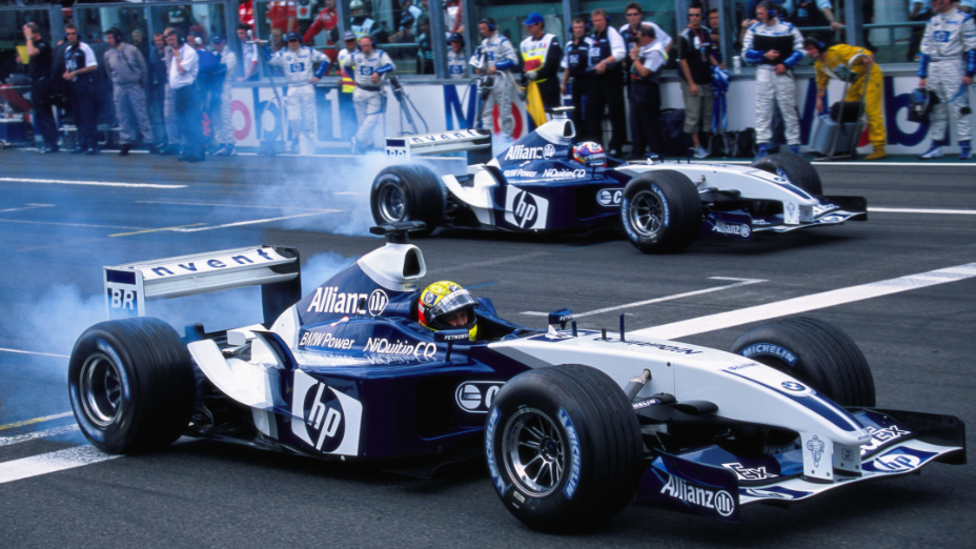
Williams FW25 Returns: 23 Years Later, A Champion Reborn
The 2003 Williams FW25 hits the track again after 23 years, reviving memories of their last great title fight.