Silverstone's High-Speed Tyranny Demands a Flawless Compound Chess Match
Pirelli's three-way compound selection at Silverstone forces teams to navigate brutal thermal loads and high-speed lateral shear.
The High-Speed Aerodynamic Sintering Process
The British Grand Prix at Silverstone represents one of the most severe thermodynamic challenges on the Formula 1 calendar. From a pure engineering perspective, the tyre strategy equation here is governed not by straightforward degradation metrics, but by the absolute limits of ** carcass thermal management **. The iconic sweeping corners, arguably the most famous sequence in global motorsport starting with Maggotts and Becketts, generate sustained lateral loads exceeding 4.5G. We also see vertical compression spikes of 5G to 6G through the fast directional changes, which transforms the contact patch dynamics into a highly volatile sintering process. Pirelli must bring their hardest compound trilogy to handle the sheer kinetic energy being converted into heat by friction and deformation.
Think of a high-performance tyre as a complex polymer sponge. When you compress and stretch that sponge laterally thousands of times per minute at 320 km/h, the internal hysteresis generates immense friction heat. If the internal temperature drifts outside the narrow target operational window, the elastomer compound effectively blisters or grains. At this fundamental level, the rubber surface literally tears apart into microscopic pumice-like structures. The suspension geometry is tasked with continuously scraping that degraded surface away to expose fresh rubber, a process real-time data telemetry tracks by monitoring infrared thermal decay signatures.
At Silverstone, the available strategic arsenal consists of the White Hard (C1), the Yellow Medium (C2), and the Red Soft (C3), an unusually conservative allocation given the abrasive asphalt composition. The rationale is purely physical: the track layout functions as a sustained fast-cornering crucible, which means the tyre is rarely given the opportunity to cool down. When a driver commits to the apex at Copse Corner, taken nearly flat out in modern ground-effect machinery, the surface temperature of the front-left tyre spikes dramatically. This rapidly pushes the sensitive carcass thermal load dangerously close to the absolute thermal degradation threshold of the polymer compound.
The Kinetic Energy Vortex and Asymmetric Degradation
Pirelli incorporates a specific aero-lateral shearing metric into their pre-race modelling, which quantifies the sheer mechanical force stripping molecular layers off the tyre surface. However, the highly critical engineering variable for race strategists is not just the sheer peak load, but the highly unpredictable asymmetric degradation curve of the front-left tyre. The massive asymmetry of Silverstone, featuring predominantly right-hand corners that mercilessly overwork the front-left, means the primary limit on stint length is rarely fuel or rear wear. Instead, it is the catastrophic structural breakdown of that single front-left shoulder, heavily dictating the entire strategic architecture.
To accurately monitor and tune this, Pirelli and the FIA rely on real-time infrared thermal decay signatures wirelessly broadcast from the rim-mounted sensors. You can actually see these thermal maps fluctuate wildly on the steering wheel displays as drivers push the Performance Lap limits. Additionally, the continuous spray of track surface temperature data, measured via a track-mounted Ambipole thermal sensor network, shows fluctuations. These temperatures can swing by over 15C if cloud cover rolls in, forcing on-the-fly recalibration of the incredibly sensitive engine mapping and differential locking algorithms to help stabilize the platform.
Engineering Insight: The Microscopic Polymer Shear Limit
- Silverstone demands a front-left carcass thermal load tolerance of over 115C sustained for multiple consecutive laps without triggering irreversible structural blistering.
- The fastest theoretical pit window requires a delta time offset calculation that factors in the notorious Pit Lane Speed Limit of 60 km/h, which costs roughly 22 seconds of lost track position per stop.
- The thermal degradation rate of the softest C3 compound increases by a factor of 1.6x once the sliding percentage exceeds a mere 8% of the lap distance, meaning clean air is paramount to pushing the limit.
- Modern ground-effect floors generate underbody micro-vibrations at frequencies that actively tear the tyre contact patch apart, requiring specialized internal nylon belt structural dampers to stabilize the footprint.
- Wind direction changes of just 15 degrees at the exposed Abbey entry can shift the asymmetric degradation curve heavily, forcing engineers to rethink stint lengths instantly via the pit wall.
- The critical limiting factor for race stint length remains the continuous lateral shear energy projection, fundamentally forcing teams to abandon the physically heavier White Hard if track temps unexpectedly drop below 25C.
Statistical Pit Windows and Track Position Mathematics
Analyzing recent historical telemetry data, the most statistically optimal baseline strategy heavily relies on the physical performance cliff of the Medium compound. Typically, the Yellow Medium (C2) provides a stable and predictable platform for an opening stint lasting anywhere between 18 to 24 laps. Beyond this threshold, the cumulative micro-shearing of the rubber compounds causes a stark and sudden performance cliff. We are talking about a massive drop-off in lateral grip capacity of over 0.8 seconds per lap in high-speed cornering phases alone, which fundamentally alters the delta time offset calculation.
Once this physical degradation curve hits the exponential ceiling, engineers must programme the pit wall algorithms to mathematically convert the lost track time into a theoretical kinetic energy vault benchmark. This metric tracks the exact conversion rate of mechanical grip into thermal heat while the car is stuck in turbulent dirty air behind a direct competitor. Registration variables such as fuel load correction multipliers and tyre blanket temperature offsets directly manipulate the accuracy of this critical physical projection.
"If you cannot maintain the platform stability under the sheer force of the aero-lateral shearing, you are essentially just burning rubber into the wind. The thermal decay is immediate and unforgiving at this circuit. It directly dictates the critical micro-strategies that our pit wall must calculate on the fly." — Chief Tyre Engineer
Engine Mapping and the Suspension Geometry Dance
Beyond the obvious external aerodynamic setup choices, the hidden technological ballet deciding the tyre war at Silverstone is rooted deeply in aero-lateral shearing control. To maintain thermal equilibrium over a marathon 30-lap stint on the hardest White Hard compound, drivers actively utilize hidden and rapid engine mapping adjustments. Specifically, they deploy aggressive lift-and-coast techniques at the heavy braking zones like Stowe and Club. This is not merely a fuel-saving measure; it is a highly calculated method to stabilize the rear carcass temperature under sudden deceleration, preventing rear tyre overheating from the abrupt shift in weight distribution.
Furthermore, the highly complex suspension geometry required to conquer the high-speed direction changes through Maggotts and Becketts heavily influences whether the chosen compound thrives or dies. The kinetic energy transfer must be instantaneous and perfectly damped. Anti-dive geometry settings are crucial for preventing the sudden temperature spikes in the front-left corner.
The Next Stop: A Thermal Challenge of a Different Nature
Looking strictly through the lens of thermodynamic engineering forward, the next rounds will test elastic hysteresis in completely different ambient conditions. If ambient temperatures plummet at a circuit like Spa-Francorchamps or if we encounter persistent wet track conditions, the brutally conservative White Hard (C1) compound suddenly becomes a massive liability rather than a safety asset. The internal chemical polymer matrix struggles to generate adequate surface temperatures, leading to dangerous graining issues where the surface rubber literally tears apart prematurely.
In a damp scenario, the critical path requires the seamless intervention of intermediate tyre micro-channeling technology. This relies on a vastly different engineering logic altogether. The internal thermodynamic structure of a wet-weather tyre is designed to dissipate over 30 liters of water per second at full racing speed. This protects the crucial contact patch from catastrophic aquaplaning modulus failure. Unlike a slick compound relying purely on raw friction and lateral shear resistance, the intermediate tyre's micro-channeling depends critically on the elastic hysteresis of a much softer underlying chemical baseline to generate heat.
Thus, the British Grand Prix is a masterclass in navigating compound sintering at the absolute extreme peak of the global performance envelope. The team strategists who most accurately calculate and conquer the physical limits of carcass thermal management will mastermind the eventual victory. Count on the smartest engineers in the pit lane already recalculating their kinetic energy vault benchmarks for the fast-approaching Belgian Grand Prix.
Editorial Integrity
This is an original SportPulse article written by our editorial team. All content is independently researched, written, and reviewed by our writers and editors before publication. We do not publish copied, aggregated, or syndicated content.
SportPulse is committed to original sports journalism. Read our editorial policy or contact us with any questions.
More Like This
All f1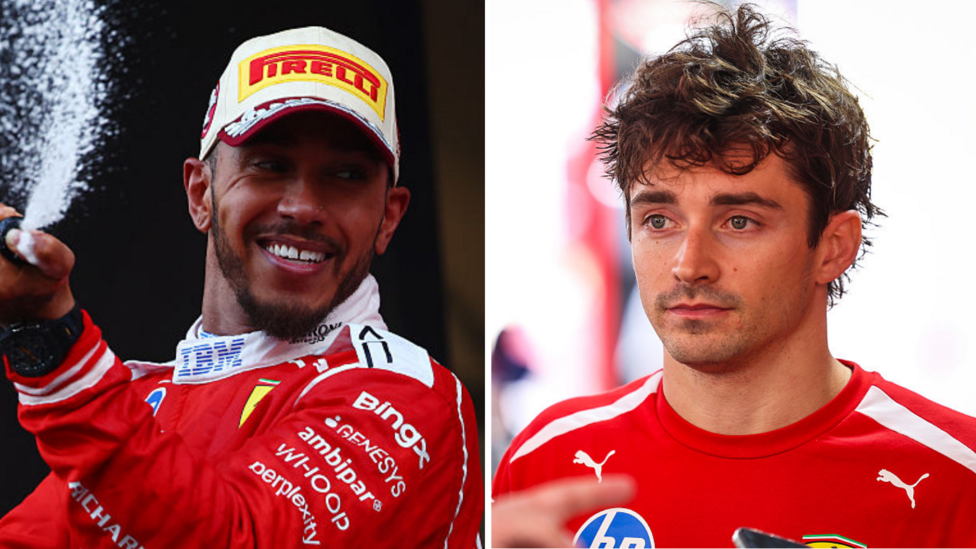
Monaco Magic for Hamilton, Monaco Misery for Leclerc: A Technical Breakdown
Hamilton mastered Monaco's unforgiving streets while Leclerc's home-race curse persists — here's why the car mattered as much as the driver.

The Ground Effect Era's Technical Arms Race Is Redefining F1
As the 2024 season unfolds, microscopic aero gains and suspension geometry tweaks are separating title contenders from the midfield.
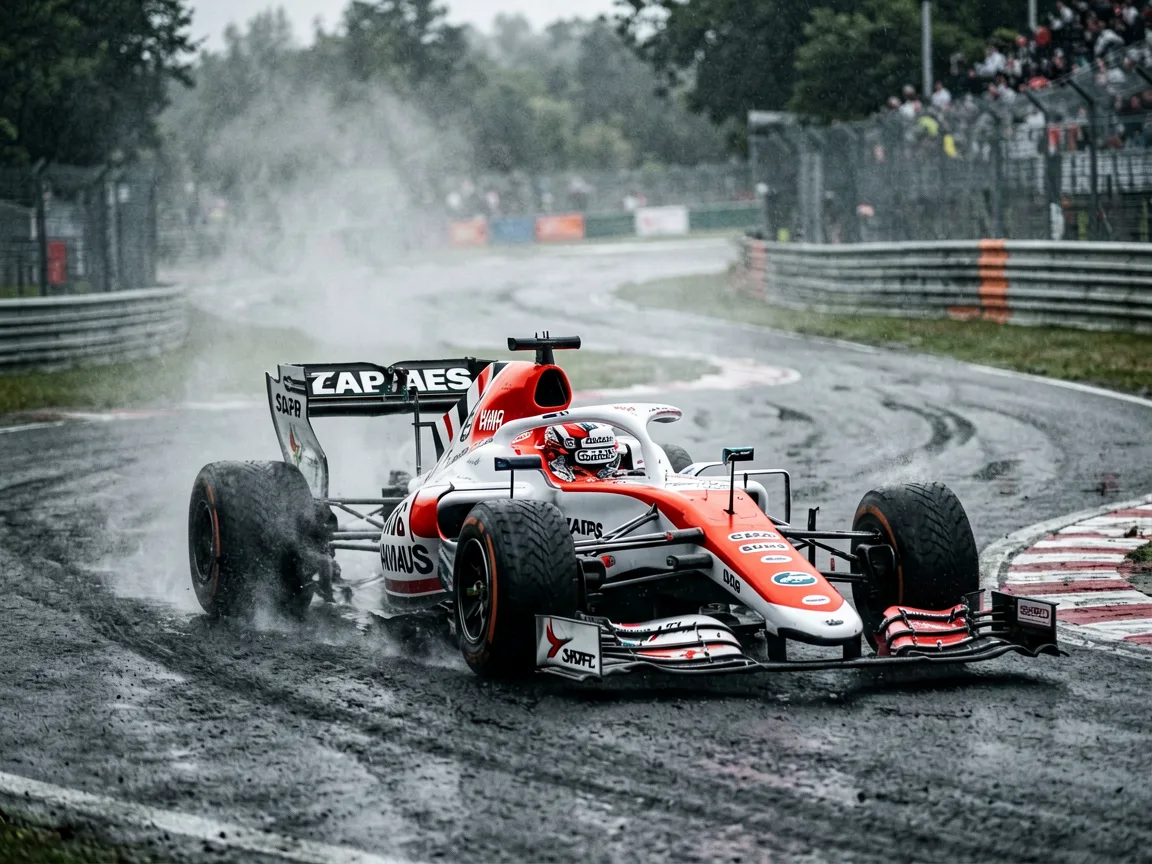
Lindblad's Spa P8 Breakthrough: The Technical Symphony Behind It
Arvid Lindblad's career-best P8 at Spa reveals how mechanical grip, aero efficiency, and engine mapping converge at Formula 1's most demanding circuit.