The Bruno Fernandes Deepfake Exposing Football's Shadow Betting Crisis
AI-generated videos and fake BBC stories are weaponising football stars to lure fans into illegal gambling traps.
A Face He Barely Recognised
Bruno Fernandes has stared down cameras in the most pressurised moments of his career. The Manchester United captain has faced interminable interrogations after derby defeats. He has fronted up when teammates hid. But nothing in his career prepared him for seeing his own face selling something he never endorsed.
Fernandes discovered he had become the unwilling pitchman for an unlicensed betting operation. His image, voice, and reputation were hijacked by a shadow industry that Treats copyright law with open contempt.
The method was chillingly sophisticated.
Illegal online casinos produced fake BBC news stories complete with the broadcaster's familiar red branding. They paired these with AI-generated videos of Fernandes appearing to endorse their gambling platform. The deepfakes were slick, convincing, and utterly fraudulent.
Illegal online casinos are producing fake BBC stories and AI-generated videos in an attempt to deceive customers.
For a player who has built his brand on authenticity and directness, the violation was total. His likeness was being used to lure unsuspecting fans into gambling on platforms with zero regulatory oversight.
Ghosts in the System
Here is what makes this crisis nearly impossible to solve.
Unlicensed sports betting operators do not operate from regulated jurisdictions. They function almost exclusively from offshore havens where anonymity is not a loophole but a guaranteed feature. Their ultimate beneficial owners are protected by local regulations deliberately designed to shield them from scrutiny.
The picture darkens further when you trace the corporate structures. These operators hide behind multiple shell companies that exist only as entries on some registry in a jurisdiction few people can locate. No physical office. No verifiable staff. No accountability.
Cease-and-desist letters will be ignored. Legal action? Against whom? You can't sue ghosts.
This is the core problem facing every football club, every player, and every legitimate brand whose image is stolen. The traditional legal weapons are useless against entities that exist in the shadows.
The operators know this. They exploit it ruthlessly.
The Scale of the Theft
This is not a problem isolated to one player or one club. The crests of famous clubs appear routinely on unlicensed betting platforms. Photographs of star players are deployed in promotional campaigns without a moment's hesitation.
Image rights and trademarks mean nothing to these operators. They understand that enforcement is essentially impossible across international borders when the perpetrators cannot be identified.
The economics of this theft are straightforward and grim.
- A deepfake video costs a few hundred pounds to produce using current AI tools
- A fake BBC article takes under an hour to assemble from templates
- The potential return from deceived customers runs into hundreds of thousands per campaign
- The risk of prosecution hovers near zero
When the profit margin is that grotesque and the legal exposure is that minimal, the calculus for these operators is simple. Steal everything. Worry about nothing.
Why Football Specifically?
Football is the perfect target for this brand of fraud.
The sport commands a global audience of billions with deep emotional investment. Fans trust their heroes. When they see a player they adore apparently endorsing a betting platform, the instinct to verify is often overwhelmed by the desire to participate in something connected to their idol.
Footballers also maintain a high visual profile. Their faces appear on screens constantly across highlights, social media, and broadcasts. This gives AI systems an enormous volume of reference material to construct convincing deepfakes.
A player like Fernandes, who has given countless interviews and press conferences, is an ideal subject. His voice patterns, gestures, and expressions are extensively documented. The AI can replicate him with terrifying accuracy.
The Technology Behind the Deception
The AI tools used in this fraud are not experimental or exclusive. They are commercially available and increasingly accessible to anyone with basic technical literacy.
Voice cloning technology can recreate a person's speech patterns from just three seconds of audio. Given the volume of Fernandes' public statements, creating a convincing vocal replica would require minimal effort.
Face-swap algorithms have improved dramatically. The deepfake videos circulating in this campaign showed Fernandes with lip movements that appeared synchronised to the fabricated dialogue. For a casual viewer scrolling on a phone, the deception would be nearly undetectable.
The fake BBC articles were constructed with equal care. They mimicked the corporation's house style, used recognisable layout elements, and included fabricated quotes attributed to real journalists. The level of detail suggests these are not amateur operations but coordinated campaigns built by people who understand both technology and media.
Respect of copyright law has never ranked highly in the list of priorities for unlicensed sports betting operators.
The Fernandes Case as a Watershed Moment
What happened to Fernandes should serve as a flashing red warning for the entire football industry.
This was not a crude photoshop or an obvious scam email. This was a multilayered disinformation campaign designed to exploit the trust between a player and his supporters. It weaponised the credibility of one of Britain's most respected news organisations to legitimise an illegal gambling operation.
The layers of deception are worth noting.
First, there was the theft of Fernandes' identity. Then the theft of the BBC's credibility. Then the exploitation of football's cultural power. Each layer made the next more convincing.
For Manchester United, the implications are serious. One of their most marketable assets was used to promote an unregulated gambling platform that could harm their own supporters. The commercial and reputational damage is real, even if the legal recourse is not.
What Comes Next
The football industry faces a problem it cannot solve alone.
Player unions, clubs, leagues, and legitimate betting operators all have a stake in this fight. But the enemy is designed to be untouchable. Shell companies behind shell companies in jurisdictions that do not cooperate with international investigations create a nearly impenetrable wall.
The technology will only get better. Deepfakes that are already convincing to a casual viewer will become undetectable to experts within months, not years. The window for developing countermeasures is closing rapidly.
Social media platforms face growing pressure to detect and remove this content. But the volume of uploads and the sophistication of the fakery make moderation a game of whack-a-mole on an industrial scale.
For players like Fernandes, the reality is bleak. Your face can be stolen. Your voice can be cloned. Your reputation can be used to sell a product you have never touched to people who trust you. And the people doing it are invisible.
Football has dealt with many crises, from financial doping to match-fixing. But synthetic media fraud against players is a challenge of a different order entirely. The sport is no longer just competing against rival leagues and other entertainment options. It is fighting an invisible army of digital pirates who have found the perfect looting ground.
The Bruno Fernandes deepfake is not the first case. It will not be the last. But it should be the moment everyone in football realises the rules of engagement have fundamentally changed.
Editorial Integrity
This is an original SportPulse article written by our editorial team. All content is independently researched, written, and reviewed by our writers and editors before publication. We do not publish copied, aggregated, or syndicated content.
SportPulse is committed to original sports journalism. Read our editorial policy or contact us with any questions.
More Like This
All football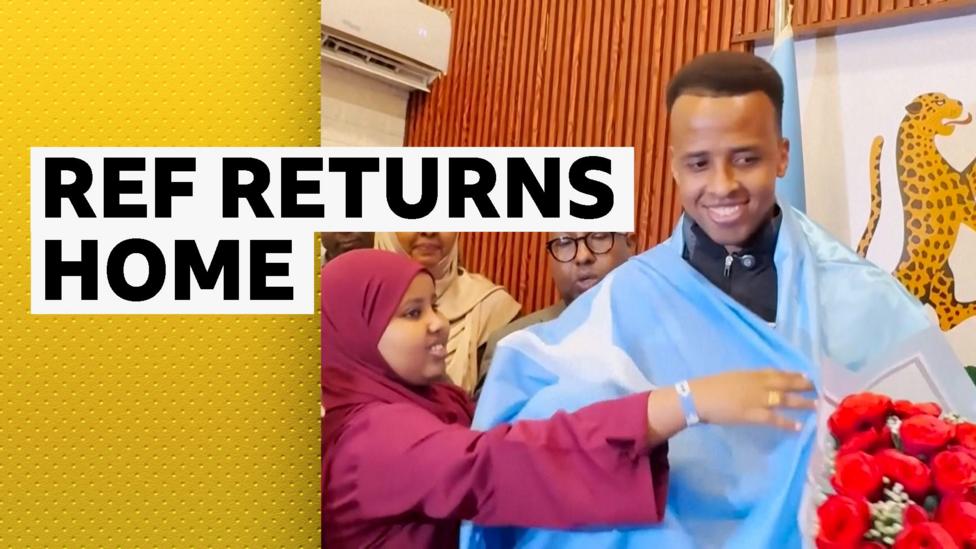
Referee Denied US Entry Over Terror Links Exposes World Cup Host's Contradiction
Somali official Omar Artan barred from the US for World Cup duty over alleged terror associations raises serious questions about FIFA's 2026 host.
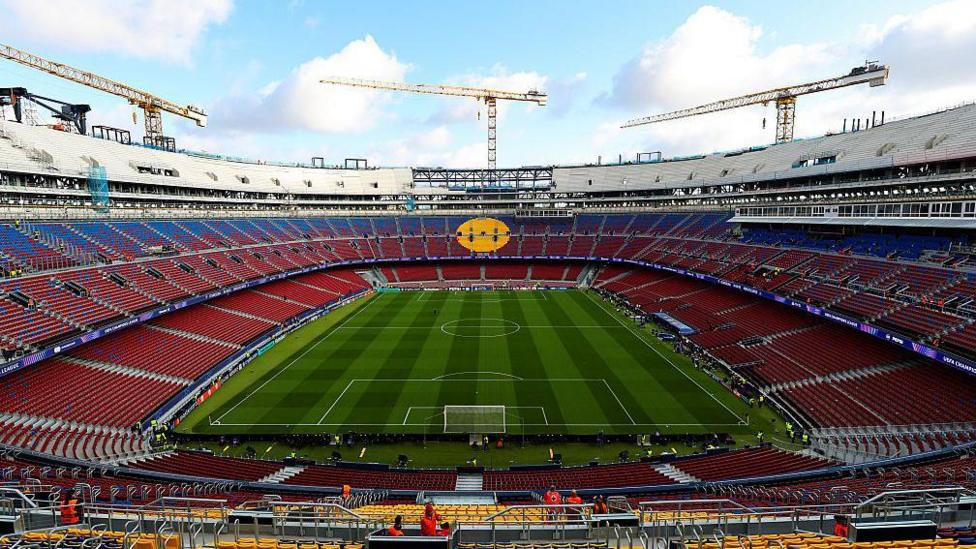
Worker dies at Nou Camp as Barcelona face questions over renovation
A worker's death during Nou Camp renovations exposes the human cost of Barcelona's ambitious stadium rebuild project.

The Beautiful Chaos: Mapping Realistic Paths to 2026 World Cup Glory
With 48 teams, a new knockout format, and three host nations, the 2026 World Cup promises the most unpredictable tournament ever staged.