Cadillac Roll the Dice: Can Austria Upgrades End Their Points Drought?
Cadillac pin their hopes on a substantial upgrade package as the 2026 rookies chase their first world championship point.
A Season of Survival, Now a Bid for Relevance
Cadillac arrived in Formula 1 with the weight of General Motors, years of political wrangling, and a fanbase desperate to see the American giant prove the doubters wrong. Seven rounds into the 2026 season, the scoreboard tells a brutal story: zero points, a best finish lingering outside the top ten, and a gap to the midfield that has stubbornly refused to shrink. Now, heading to the Red Bull Ring for the Austrian Grand Prix, the team is pinning its hopes on what engineers are describing internally as a "substantial" upgrade package. In a season defined by sweeping new regulations and a fiercely competitive midfield, this could be Cadillac's make-or-break moment.
The upgrades arriving in Spielberg are not cosmetic. For a team still building its operational foundations, committing significant development resources mid-season signals a clear intent: Cadillac are done treating 2026 as a learning exercise. They want points, and they want them now.
The Long Road to the Grid
To understand why a single upgrade package carries so much emotional and political weight, you have to trace the path that brought Cadillac to this point. The saga is well documented. What began as Michael Andretti's push to enter an 11th team became a protracted standoff with existing constructors, commercial rights holders, and the FIA. The original Andretti Global bid was publicly rebuffed before being reshaped under the Cadillac banner with full General Motors backing, including plans for a works power unit by 2028.
The revised entry was accepted, and Cadillac partnered with Ferrari for their 2026 power unit supply. That engine deal gave them a proven baseline in a season where the new power unit regulations have upended the competitive order. The 2026 rules slashed the internal combustion component's output while dramatically boosting the electrical energy deployment, shifting the performance equation toward energy recovery, deployment strategy, and electrical efficiency. Every team on the grid is navigating this recalibration. Cadillac, however, are doing it while simultaneously building race operations, hiring staff, and developing the institutional knowledge that established teams have accumulated over decades.
The 2026 Regulation Reset
The 2026 technical regulations represent the most radical overhaul of the Formula 1 car concept in a generation. Active aerodynamics have returned in the form of moveable front and rear wings designed to reduce drag on straights and shift the balance dynamically. The cars produce significantly less downforce from the floor and diffuser compared to the 2022-2025 ground effect era, and the power split between the internal combustion engine and the MGU-K has tilted decisively toward electrical energy. The result is a car that behaves fundamentally differently depending on deployment zones, battery state of charge, and DRS-like active aero activation windows.
For Cadillac, the regulation reset was supposed to be the great equalizer. New rules compress the field. History shows that when Formula 1 introduces a clean-sheet technical package, the gaps between teams shrink dramatically in year one. And they have. The problem is that even in a compressed field, Cadillac have found themselves on the wrong side of the points-paying positions, separated by tenths rather than seconds but separated nonetheless.
What "Substantial" Means at Spielberg
The Red Bull Ring is one of the shortest circuits on the calendar at just 4.318 kilometers, with only 10 corners and a lap time that hovers around 1:05 to 1:07 depending on conditions. It is a power-sensitive track where straight-line speed and traction out of slow corners define performance. The three DRS zones (in their current configuration) reward cars with efficient drag profiles, while the elevation changes and the tight Turn 3-Turn 4 complex demand a car that can ride kerbs and maintain stability under braking.
In the context of the 2026 regulations, Spielberg becomes a fascinating test bed for upgrade packages. Active aero efficiency is paramount here. A car that can shed drag effectively through the activation zones while retaining enough downforce for the uphill braking into Turn 3 and the technical second sector will find lap time everywhere. For Cadillac, a substantial upgrade likely targets one or more of the following areas:
Floor and diffuser refinement. Even though 2026 cars generate less underbody downforce than their predecessors, the floor remains the single largest performance differentiator. For a team still in the early stages of CFD correlation and wind tunnel validation, incremental gains in floor performance can unlock disproportionate lap time.
Active aero calibration. The moveable wing elements require sophisticated control software that synchronizes with the power unit's deployment strategy. Getting this wrong means leaving speed on the table in the zones where it matters most. Cadillac have had seven races to gather data on how their active aero maps perform under race conditions. An upgrade here could be as much about software optimization and control logic as it is about hardware.
Rear suspension geometry and mechanical grip. The Red Bull Ring's kerb-heavy layout punishes cars with stiff, nervous rear ends. If Cadillac have identified a suspension geometry revision that improves rear compliance without sacrificing aerodynamic platform stability, Spielberg is the track to debut it.
None of this is confirmed. Cadillac, like every team, guard their upgrade specifics closely. But the word "substantial" in team communications is not chosen lightly. It signals a package that goes beyond incremental floor edge tweaks or beam wing adjustments.
Driver Verdicts: The "Real Test" Ahead
Valtteri Bottas and Sergio Perez have given their thoughts on Cadillac’s significant upgrade package for the Austrian Grand Prix. Bottas, whose experience with midfield development curves is well documented, predicts that Austria will be the "real test" of the upgrades. The Red Bull Ring's unique demands—a short lap where even minor gains compound, and a layout that exposes any weaknesses in active aero synchronization—make it an unforgiving proving ground. If the new parts work here, they should translate broadly across the calendar.
Perez, equally familiar with the pressures of extracting performance from evolving machinery, echoed the significance of the package while emphasizing that the proof will come in how the car behaves under race conditions, not just on single-lap simulations. Both drivers' assessments underline the stakes: this isn't just a step forward on paper, it's a litmus test for Cadillac's entire development philosophy.
The Points Equation
Scoring points in 2026 is harder than it looks from the outside. The top four constructors have locked out the podium positions in most races, but positions seven through ten have been a knife fight. Haas, Kick Sauber, Alpine, and Williams have all traded points finishes on a circuit-by-circuit basis, and the margins are razor-thin. A two-tenths improvement in qualifying pace could vault Cadillac from the back of the midfield cluster into a legitimate top-ten shootout.
The arithmetic at Spielberg is actually encouraging for a team bringing upgrades. The short lap means that small gains have an outsized impact on grid position. A 0.15-second improvement over a 1:06 lap is proportionally more significant than the same gain on a 1:30 circuit. Track position matters here too, because overtaking, while possible through the DRS zones, is complicated by the short run from the final corner to the finish line. Qualifying well is half the battle.
Strategy Breakdown
Cadillac's strategy wall faces a critical calculation in Austria. The Red Bull Ring's high altitude (approximately 680 meters above sea level) affects both power unit cooling and aerodynamic efficiency. Thinner air reduces drag but also reduces downforce and cooling capacity, which means teams must find the right balance between aggressive cooling solutions and aerodynamic purity.
For a team running a Ferrari power unit, the PU cooling requirements are well understood from the supplier's data. Cadillac's task is to optimize their own cooling package layout to match the altitude conditions without compromising the airflow structures that feed their floor and diffuser. This is where the upgrade package's integration becomes as important as its individual components.
The strategic call on tire management will also be pivotal. The 2026 tire compounds from Pirelli have shown a pronounced thermal degradation cliff at several circuits, and the Red Bull Ring's abrasive surface and high-energy corners through the uphill section amplify this. Cadillac's engineers will need to decide whether to adopt an aggressive qualifying strategy that puts them in the top ten on soft tires but risks a difficult opening stint, or play the long game with a harder compound that preserves race pace at the cost of grid position.
History suggests that for a team chasing their first points, track position is everything. The midfield battle is too tight to recover from a poor qualifying through race pace alone. Expect Cadillac to lean aggressive in Q2 if conditions allow.
What This Means for the Bigger Picture
The Austrian upgrade is not just about one race. For Cadillac, the credibility of their entire project hinges on demonstrating tangible progress. General Motors did not commit resources to an F1 program to be a permanent backmarker. Team principal and senior leadership need data that proves the development trajectory is real, that the factory is producing upgrades that work, and that the team can execute a race weekend with the operational precision required to convert opportunity into results.
A points finish in Austria would not transform Cadillac's season. They would likely remain at or near the bottom of the constructors' standings. But it would validate the development direction, boost morale across an organization still finding its identity, and send a message to the paddock that Cadillac are not here merely to make up the numbers.
The flip side is equally stark. If a substantial upgrade package fails to move the needle at a track that rewards power and efficiency, difficult questions will follow. The 2028 works engine program remains the long-term play, but the team needs to prove in the interim that they can develop a car effectively with customer power unit data and limited institutional knowledge.
Looking Ahead
The triple header that includes Austria, followed by back-to-back races, will provide a rapid-fire test of whether Cadillac's upgrade delivers. Teams that bring packages to Spielberg typically have a clear read on their effectiveness by the end of the weekend, and the subsequent races allow for quick iteration.
For the rest of the midfield, Cadillac's upgrade is worth monitoring. If the American team suddenly appears in Q2 or scrapes into the points, it tightens an already congested battle. Every constructor in the lower half of the grid is fighting for the financial and reputational rewards that come with championship points. A single point can be worth millions in prize money distribution at season's end.
Cadillac have bet on Austria. The upgrades are on the car, the data is in the sim, and the engineers believe the lap time is there. Now the drivers have to deliver it under pressure, in thin air, on one of the most punishing short circuits in Formula 1. The clock is ticking on their 2026 points drought. This weekend, we find out if they have the tools to break it.
Updated: 2026-06-25 — Added Bottas and Perez's specific evaluations of the Cadillac Austria upgrade package
Editorial Integrity
This is an original SportPulse article written by our editorial team. All content is independently researched, written, and reviewed by our writers and editors before publication. We do not publish copied, aggregated, or syndicated content.
SportPulse is committed to original sports journalism. Read our editorial policy or contact us with any questions.
More Like This
All f1
Silverstone Sweep: A Four-Leg Bet Builder Decoded for the British Grand Prix
A technical breakdown of a four-leg British Grand Prix bet builder, examining podium, points, and outright markets through the lens of Silverstone's unique demands.
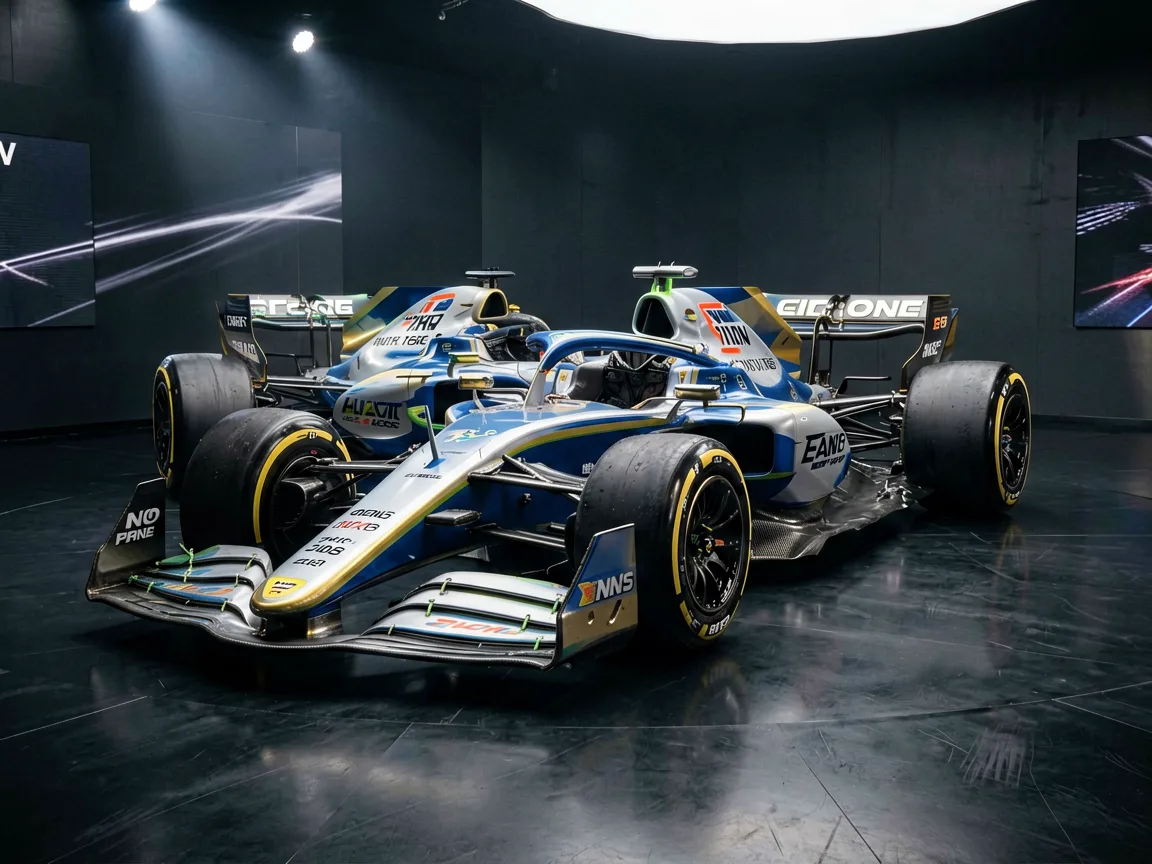
Cadillac's Livery Switch Signals Deeper Identity Crisis Before First Lap
Cadillac ditch their split livery design before turning a wheel, raising questions about branding confidence and competitive readiness.
Spa Carnage: Russell Out as Hamilton Clash Triggers Early Safety Car
Lap 1 chaos at Spa-Francorchamps ends Russell's race after contact with Hamilton, summoning the Safety Car and reshuffling the Grand Prix.