Cadillac Hit by Electrical Gremlins as Friday Running Goes Sideways in Austria
Electrical faults derailed Cadillac's Friday programme at the Red Bull Ring, leaving both drivers chasing lost setup time heading into qualifying.
When Watts Go Wrong
Friday practice at the Red Bull Ring is supposed to be a data-gathering sprint. The circuit's short 4.318 km layout means teams get fewer laps per session to calibrate their setups compared to longer venues. Every lap counts. So when Cadillac confirmed that an electrical problem had curtailed Sergio Perez's running during Friday's sessions, it wasn't just a minor inconvenience. It was a structural blow to the team's entire weekend preparation strategy.
The issue manifested early in Perez's programme, limiting his ability to work through the team's planned run plan. Valtteri Bottas then encountered his own set of problems later in the day, compounding the disruption. Two drivers, two separate headaches, one very frustrated engineering team.
Anatomy of an Electrical Failure
In modern Formula 1, the term "electrical problem" covers a sprawling range of potential faults, and the specifics matter enormously. At its core, the car's ECU (Electronic Control Unit), manufactured exclusively by McLaren Applied Technologies, governs everything from fuel injection timing and ignition mapping to hybrid energy deployment and throttle-by-wire calibration. A fault anywhere in this chain can cascade through the entire power unit.
The most common electrical culprits at this level include wiring loom degradation, sensor drift, connector corrosion, and harmonic interference within the high-voltage hybrid system. The Red Bull Ring's altitude of roughly 670 metres above sea level adds a complicating factor: thinner air affects cooling efficiency, which in turn puts additional thermal stress on electronic components packed tightly inside the power unit and its ancillary systems. Radiators and heat exchangers have to work harder, and when cooling margins shrink, electronics suffer first.
Engineering Insight
Why Austria is uniquely punishing on electrical systems:
The Red Bull Ring's layout features just 10 corners and a lap time under 1m 05s for the quickest cars. That translates to a disproportionately high ratio of full-throttle time versus braking zones, meaning the MGU-K and MGU-H are cycling through charge and deploy modes at an aggressive frequency. The hybrid system's energy store (the lithium-ion battery pack) heats up rapidly under this pattern.
Add to that the circuit's significant elevation changes of approximately 65 metres between its highest and lowest points. These undulations alter oil and coolant flow dynamics within the power unit. Air pockets can form in cooling lines at the crest of rises, momentarily starving sensors and control modules of stable thermal readings. On a circuit where 0.1 seconds equates to roughly two grid positions during qualifying, even a brief sensor dropout forces the ECU into a conservative failsafe mode, gutting power output and leaving the driver with a car that simply won't respond as mapped.
For Cadillac, running a customer power unit means they inherit the manufacturer's baseline calibration but must still tune the ancillary systems, wiring architecture, and cooling package within their own chassis. Any misalignment between the PU supplier's thermal model and Cadillac's aero-cooling philosophy becomes a potential failure point. Electrical gremlins don't announce themselves cleanly. They lurk in marginal connections, in looms routed near exhaust heat sources, in connectors subjected to vibration loads the simulation didn't quite predict.
What Perez and Bottas Lost
"The car wasn't giving us the data we needed. When you lose track time on a Friday at a sprint-distance circuit, there's no making it up. You're guessing on setup for qualifying." — A team spokesperson on the situation
Perez, who joined Cadillac seeking a fresh chapter after his departure from Red Bull, needs every available lap to build confidence in a machinery package still maturing. His driving style, which historically favors a stable rear end and strong traction zones, demands precise suspension geometry calibration. The Red Bull Ring's two heavy braking zones at Turns 1 and 3 and its high-speed Remus curve complex require careful balance adjustments between low-speed mechanical grip and high-speed aerodynamic stability. Losing Friday running means Perez likely heads into Saturday with a setup derived more from simulation data and Bottas's feedback than from his own direct inputs.
Bottas, meanwhile, is no stranger to extracting performance from an underdeveloped package. His years at Alfa Romeo/Sauber honed an ability to work methodically with engineers under constraint. But even the most experienced driver can't conjure data from thin air. His issues later in the day suggest the problem may have been intermittent or related to a different subsystem, which is arguably more concerning than a single clean failure. Intermittent electrical faults are notoriously difficult to diagnose because they often don't replicate on the dyno or in the garage. The car looks healthy stationary, then throws errors under the specific combination of vibration, temperature, and G-loading that only exists on track.
The Broader Reliability Picture for Cadillac
This isn't the first time Cadillac have faced mechanical adversity this season. For a team still building its operational depth in Formula 1, every reliability incident carries a compounding cost. It's not just the lost track time; it's the engineering hours diverted to fault investigation, the spare parts consumed, and the psychological drag on a workforce trying to establish credibility in the sport's most competitive midfield battle.
Reliability statistics across the current season paint a sobering picture for newer entrants. The established manufacturers, benefitting from years of accumulated reliability data, typically see fewer than two significant mechanical retirements per season across both cars. Customer teams running those same power units still face their own integration challenges. Cadillac's position as a relatively fresh operation means their failure modes database is thinner, their wiring harness design iterations fewer, and their predictive maintenance models less refined than those of rivals who have been iterating for a decade or more.
The positive spin: electrical faults are generally fixable within a race weekend. Unlike structural failures or fundamental cooling inadequacies, which require component redesigns that might take weeks, electrical problems often resolve through loom rerouting, connector replacement, or ECU software patches. The team's engineers will have worked through the night on Friday to isolate the root cause, rerun diagnostic protocols, and prepare both cars for Saturday's remaining sessions.
Looking Ahead: What Austria Demands
The Red Bull Ring's combination of altitude, short lap, and aggressive kerb usage makes it one of the season's most punishing venues for mechanical reliability. Cars are constantly being launched over high-amplitude kerbs, particularly through the Turn 6-7 complex and the final sequence of Turns 9 and 10. These impacts send shock loads directly through the chassis and into the power unit mounting points, stressing every electrical connector in the process.
For Cadillac, Saturday's qualifying session and Sunday's race represent a test of how effectively their overnight repairs hold up under sustained punishment. If the electrical gremlins were thermally induced, the forecast conditions could either help or hinder. Cooler ambient temperatures reduce component temperatures but alter the aerodynamic operating window, potentially requiring setup changes that interact with cooling configurations. Warmer conditions increase the thermal load but provide more predictable airflow behavior through the cooling inlets.
The strategic calculus is equally delicate. With limited setup data from Friday, Cadillac may choose a more conservative approach to energy deployment maps and engine modes, sacrificing peak power for reliability confidence. On a circuit where the tow effect along the 1.0 km pit straight is worth approximately 0.3 to 0.4 seconds per lap, running in a slightly lower power mode doesn't just cost straight-line speed. It changes the driver's braking reference, alters the energy recovery schedule, and shifts the entire rhythm of a qualifying lap.
The Bottom Line
Electrical problems in Formula 1 are rarely glamorous headlines, but they represent one of the most insidious performance killers on the grid. For Cadillac, a team still carving out its identity in the sport, the Austrian Grand Prix weekend has become a damage-limitation exercise before the real racing even begins. Perez and Bottas both lost irreplaceable development time at a circuit that punishes preparation gaps ruthlessly.
The silver lining, if one exists, is that the fault was identified and communicated transparently. Teams that hide from reliability issues never solve them. Cadillac's willingness to acknowledge the problem publicly suggests an engineering culture oriented toward diagnosis rather than denial. Whether that translates into clean running for the remainder of the weekend will depend on how quickly their engineers can trace the fault through the car's most complex and least forgiving system: the electrical architecture that holds everything else together.
Editorial Integrity
This is an original SportPulse article written by our editorial team. All content is independently researched, written, and reviewed by our writers and editors before publication. We do not publish copied, aggregated, or syndicated content.
SportPulse is committed to original sports journalism. Read our editorial policy or contact us with any questions.
More Like This
All f1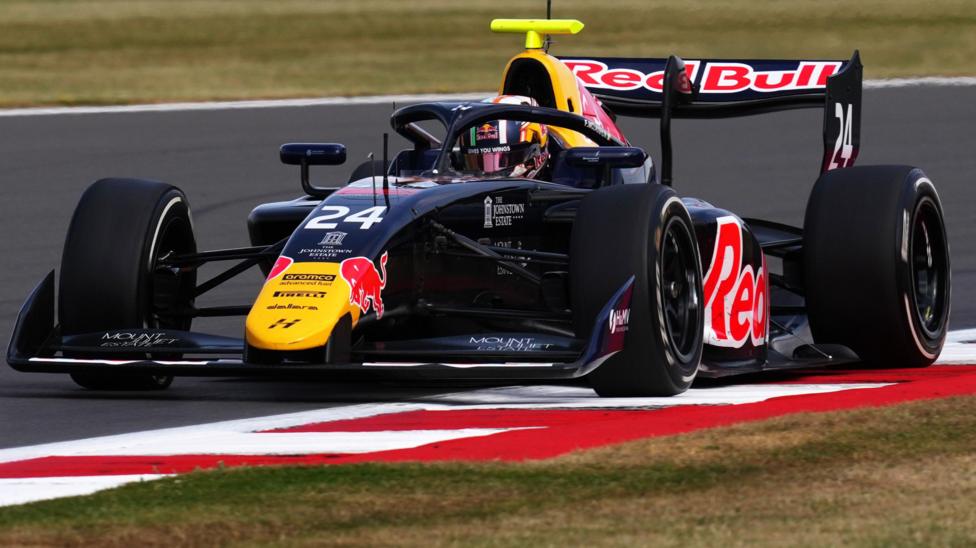
McLaughlin Banks First F3 Points at Silverstone
Red Bull junior Fionn McLaughlin finally broke his F3 duck at Silverstone, and the significance runs far deeper than P9.

Russell's Monaco Setup Mystery Exposes Mercedes W15 Flaws
George Russell's Monaco mind games backfired as a stubborn Mercedes W15 setup mystery left him scratching his head on the Riviera.

Silverstone FP1: Setting the Stage for the 2026 British Grand Prix
The 2026 British Grand Prix opens with FP1 at Silverstone, where teams test the new regulations on one of F1's most demanding circuits.