Cadillac and Mercedes Hit the Track as Bearman Targets Haas Glory
Cadillac and Mercedes accelerate their 2026 programs with on-track running while Ollie Bearman sets his sights on leading Haas.
The 2026 Regulations Are No Longer Theoretical
The 2026 Formula 1 regulation cycle has officially transitioned from the wind tunnel to the asphalt. In a pivotal week for the sport's future, both the incoming Cadillac works outfit and the Mercedes AMG Petronas team have completed initial track runs with their prototype machinery. These first validation laps represent the critical moment where computational fluid dynamics and scale-model data meet the unforgiving realities of tyre degradation, aerodynamic porpoising, and mechanical grip.
For Cadillac, the milestone carries historic weight. The General Motors-backed marque is preparing to become the first new manufacturer to enter Formula 1 as a full works team since Toyota arrived in 2002. Mercedes, meanwhile, is fighting to ensure its 2026 power unit architecture overcomes the massive shift in engine formula that will see the internal combustion component reduced to a 50 percent contribution, with electrical power surging to match it.
Spain provided the backdrop for these crucial shakedowns. Mild temperatures and dry tarmac offered optimal baseline conditions for the engineers to correlate their simulation data against real-world sensor inputs. Clear air, consistent barometric pressure, and a gripped-up track surface allowed the teams to push their initial aero configurations without the interference of variable weather or compromised tyre blankets.
Cadillac Breaks New Ground
The Cadillac program has moved at an aggressive pace since receiving the formal green light from the FIA. Early-season whispers about potential delays have been silenced by the sight of a camouflaged chassis turning meaningful laps. The team's power unit department has reportedly prioritized the harvesting capacity of the new electrical systems, an area where established manufacturers might carry hubris from the current V6 turbo hybrid era.
Cadillac's initial on-track mileage focuses on aero correlation. The 2026 regulations mandate a substantial reduction in downforce, approximately 30 percent less than the current generation of cars, alongside an 18 percent drop in drag. Seeing how the prototype behaves under braking and through high-speed corners provides data that no supercomputer can perfectly simulate.
Overcoming the Expansion Blues
Expanding a Formula 1 operation from a blank slate to a competitive grid entity requires navigating immense logistical hurdles. Cadillac must simultaneously develop a brand-new power unit, design a chassis around an entirely new structural philosophy, and hire a workforce capable of competing against outfits with decades of institutional knowledge.
The on-track debut proves the organization has passed its first major mechanical test. The car completed its scheduled run plan without suffering the catastrophic system failures that often plague brand-new machinery. Reliable data output from the early testing phase is more valuable than setting a fast lap time.
Mercedes Plots Its Comeback Trajectory
While Cadillac fights to establish itself, Mercedes fights to reclaim its dominance. The Silver Arrows have endured a bruising period since the 2022 ground-effect regulations shattered their eight-year championship monopoly. The 2026 reset offers Team Principal Toto Wolff a blank canvas to erase the lingering aerodynamic concept errors that plagued the W13 through W15 chassis lineage.
Mercedes conducted its track running to validate the integration of its new power unit. The 2026 formula eliminates the MGU-H (Motor Generator Unit Heat) and introduces a more powerful MGU-K (Motor Generator Unit Kinetic). This shift fundamentally alters the deployment strategies drivers will use down the straights, drastically changing how DRS zones and overtaking mechanics will function.
Strategy Breakdown: The Power Unit Pivot
The strategy wall in 2026 will deal with a completely different set of variables. Expect the following considerations to dominate team radios.
- Battery Deployment Maps: Drivers will manage electrical energy manually, balancing aggressive overtaking modes against the risk of depleting the battery before the finish line.
- Fuel Flow Restrictions: With a standardized 300kW electrical output limit and strict fuel flow caps, combustion engine efficiency becomes the primary differentiator among manufacturers.
- Aero Purity vs. Tire Wear: Lower downforce means prolonged sliding phases, forcing strategists to calculate tire degradation deltas with extreme precision to avoid aggressive pit windows.
"Getting the power unit mapping right on the test bed is one thing. Seeing the energy recovery systems interact with the drivetrain under dynamic load is where the real engineering begins."
Ollie Bearman Haas Project
Amid the massive manufacturer movements, the driver market continues its relentless churn. Ollie Bearman, the highly touted rookie who delivered an electrifying stand-in performance for Ferrari in Saudi Arabia, is looking to cement his long-term future at Haas. Bearman secured a full-time seat for 2025, but his ambitions clearly stretch far beyond merely making up the numbers.
Bearman faces a unique technical challenge at Haas. The American team has historically operated with one of the smallest budgets on the grid, relying on a close technical partnership with Ferrari for suspension components and gearbox units. As the 2026 regulations demand complete redesigns across the board, Haas risks falling behind better-funded rivals in the critical development race.
The youngster must adapt to the current 2024 machinery while simultaneously feeding data back to the factory for the next-generation car. His feedback on tire degradation and mechanical balance will directly influence the aerodynamic philosophy of the 2026 Haas challenger.
The Technical Burden on Rookie Shoulders
Bearman brings raw pace, but Haas needs technical articulation. The transition from Formula 2 machinery, which relies heavily on a high-downforce environment, to a developed Formula 1 car requires a fundamental shift in driving technique.
- 1.9 seconds: The approximate lap time deficit Bearman must overcome to match the established midfield pace.
- 3.2 kg: The fuel load variance that significantly changes the braking stability of an F1 car compared to junior series.
- 5 races: The time required for a rookie to typically fully adapt to the Pirelli tyre temperature windows.
Championship and Points Implications
While these 2026 developments unfold behind closed doors and on test tracks, the current Constructors Championship battle rages on. Every point scored in the remaining rounds of the current season directly impacts the financial windfall each team receives at year's end.
For Haas, the margin between finishing P7 and P8 in the championship equates to roughly $9 million in prize money, a figure that represents a critical percentage of their operating budget. That capital dictates the scope of their 2026 development program.
For Mercedes, closing the gap to Red Bull Racing in the standings determines whether they maintain the second tier of prize money distribution. A difference of $15 million in revenue hangs in the balance over the final sprint of the season. Every upgraded floor component and front wing specification deployed now serves dual purposes: extracting current performance and informing the aero concepts for the next era.
The 2026 grid will feature a seismic reshuffle of the competitive order. Cadillac has proven its intent by turning wheels on tarmac. Mercedes has fired a warning shot by accelerating its testing timeline. Bearman has the talent to drag Haas forward if the factory delivers him the machinery. The regulations are set, the cars are rolling, and the countdown to the new era has begun in earnest.
Editorial Integrity
This is an original SportPulse article written by our editorial team. All content is independently researched, written, and reviewed by our writers and editors before publication. We do not publish copied, aggregated, or syndicated content.
SportPulse is committed to original sports journalism. Read our editorial policy or contact us with any questions.
More Like This
All f1
Cadillac Hits the Grid: Inside F1's American Invasion
Cadillac opens the factory gates as formula 1's eleventh team prepares to shatter the status quo in 2026.
From Iceman to Honey Badger: The Stories Behind F1's Best Nicknames
Every great F1 driver earns a name beyond their helmet number. Here are the nicknames that stuck and why.
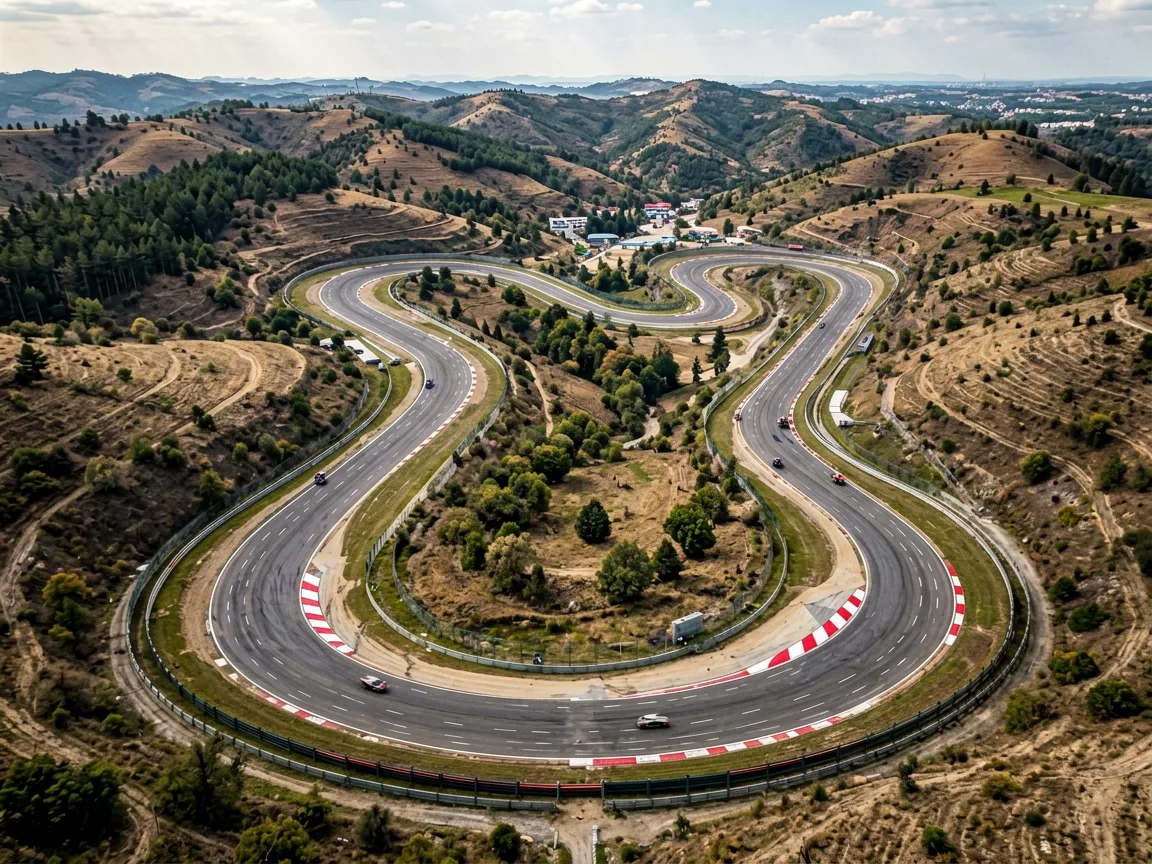
Hungaroring: Why F1's Tightest Purpose-Built Track Punishes Every Setup Compromise
Budapest's 4.381 km circuit demands peak downforce, punishes overheating rear tyres, and narrows the overtaking window to a single braking zone.