30 Years Later, the USMNT Has No Excuse Not to Surpass 1994
The 2026 World Cup on home soil is the defining test for America's most talented generation of players.
The Weight of a Number: Round of 16
Thirty-one years ago, the United States hosted the World Cup and did something no American squad had done in four decades: they won a group-stage match, survived the group, and pushed the eventual champions to the wire before bowing out. That 1-0 loss to Brazil in the Round of 16 at Stanford Stadium became the high-water mark for USMNT World Cup performances on home soil. It also became a ceiling that, somehow, the program has only matched once since — in Qatar 2022, where a familiar Round-of-16 exit at the hands of the Netherlands (3-1) confirmed that the United States remains a team that can reach the knockout stage but cannot break through it.
Now the World Cup is coming back. In the summer of 2026, the USA will co-host the tournament alongside Canada and Mexico, staging matches across 16 venues in three countries. And the question hanging over Gregg Berhalter's successor, Mauricio Pochettino, is deceptively simple: can this generation of American players do what Alexi Lalas, Tab Ramos, and Eric Wynalda could not — and push past the last 16?
The honest answer is that anything less will feel like a failure. Not because the USMNT is entitled to a quarterfinal run, but because the structural advantages of hosting, the depth of talent available, and the expanded format of the tournament have combined to create the most favorable conditions the program has ever had. This is not 1994, when the squad was largely drawn from domestic leagues and a handful of European journeymen. This is a team anchored by Champions League regulars.
The "Golden Generation" — Real or Myth?
American soccer discourse has been debating the legitimacy of the "golden generation" label for the better part of five years. The numbers, to their credit, suggest the talent pipeline is producing at a rate the program has never seen.
Christian Pulisic has rebuilt his career at AC Milan after a bruising Chelsea spell, delivering double-digit goals and assists in Serie A. Weston McKennie has been a consistent presence in Juventus's midfield. Tyler Adams, when fit, has anchored Premier League sides. Folarin Balogun chose the USMNT over France and England, bringing genuine Ligue 1 production. Giovanni Reyna, Yunus Musah, Timothy Weah, Antonee Robinson, and Sergino Dest all play in top-five European leagues.
The raw talent is there. What has been missing is cohesion, consistency, and a tactical identity that can hold up against elite opposition in a knockout setting. Under Berhalter, the USMNT often looked like a team that could press and run but struggled to break down organized defenses or manage game states in high-pressure moments. The Copa America 2024 disaster — eliminated in the group stage on home soil — was the clearest indictment. The squad had the names. It did not have the structure.
What the Numbers Say
Consider the trajectory across the last three major tournaments:
- 2022 World Cup (Qatar): Reached the Round of 16. Lost to Netherlands 3-1. Managed just 1.1 xG in the knockout match while conceding 2.4 xG.
- 2024 Copa America (USA): Eliminated in the group stage with a win over Bolivia but losses to Panama and Uruguay. Created only 0.8 xG per match across the tournament.
- 2026 World Cup (USA/Canada/Mexico): Home soil. Expanded format. Zero margin for excuses.
The Copa America collapse was particularly damning because it exposed the same weaknesses that plagued the 2022 knockout exit: an inability to control midfield tempo against organized opponents, a lack of clinical finishing, and defensive lapses in transition. The talent was there. The tactical framework was not.
The Pochettino Factor
The decision to appoint Mauricio Pochettino in September 2024 was a statement of ambition. This is a coach who reached a Champions League final with Tottenham, won Ligue 1 with PSG, and has managed at the highest echelon of European football for over a decade. He is not a caretaker. He is not a federation insider. He is a coach accustomed to demanding tactical discipline from elite players.
The early returns have been mixed but instructive. Pochettino's system demands high pressing, fluid positional rotations, and quick vertical transitions — principles that suit the athletic profile of this USMNT squad. The challenge, as it was at PSG, is translating tactical ideas into on-pitch execution with limited training time. International coaches get fragments of weeks with their players, not daily sessions on the training ground.
What Pochettino brings that Berhalter lacked is pedigree. When you walk into a dressing room with a coach who has managed Lionel Messi, Neymar, and Kylian Mbappé, the authority is implicit. For a young American squad that has sometimes looked overawed on the biggest stages, that presence matters.
The tactical question is whether Pochettino can solve the midfield problem. The USMNT has athletes in the center of the park — McKennie, Musah, Adams, Luca de la Torre — but has struggled to establish a controlling midfield presence against quality opposition. Pochettino's preferred 4-2-3-1 or 4-3-3 demands a pivot who can dictate tempo and a number 10 who can unlock defenses between the lines. Whether Reyna can fulfill that latter role consistently remains one of the defining unknowns of this World Cup cycle.
The Format Advantage
Here is where the math tilts decisively in the USA's favor. The 2026 World Cup will feature 48 teams for the first time, organized into 12 groups of four. The top two from each group qualify for the knockout stage, along with the eight best third-placed teams, producing a 32-team Round of 32 before the traditional knockout bracket.
The expanded format does two things for the USMNT:
- Group-stage cushion: Even if the USA stumbles in one group match, the likelihood of elimination drops significantly. A team can afford a draw or even a loss and still advance.
- Potentially softer Round-of-32 opponent: As a seeded host, the USA will likely avoid the tournament's heavyweights in the group and the first knockout round. The path to the quarterfinals is structurally more accessible than in a 32-team format.
This is not a trivial advantage. In 1994, the USA faced Colombia, Switzerland, and Romania in the group before meeting Brazil. In 2026, the seeding structure and expanded bracket give Pochettino's side a runway to build momentum before facing a genuine heavyweight. The question is whether they can capitalize.
Home Soil: The Double-Edged Sword
Hosting a World Cup is both a gift and a trap. The 1994 squad thrived under the energy of 90,000-plus at the Rose Bowl and raucous crowds across the country. The 2024 Copa America squad crumbled under the same pressure, wilting when expectations turned hostile.
Pochettino will need to manage the psychology of expectation. This USMNT will open the tournament as the most hyped American soccer team in history. Every group-stage match will be treated as a must-win spectacle. Every missed chance will be dissected on social media within seconds. The players who thrive in that environment — Pulisic, McKennie, Robinson — will need to carry those who might shrink.
The venues matter too. The USA is expected to play group-stage matches in major markets, with potential knockout fixtures in cities like Los Angeles, Dallas, or New York. The home advantage is real: no travel burden, familiar conditions, and a fanbase that has matured significantly since the largely indifferent American public of 1994. Soccer-specific stadiums across the country now regularly sell out for friendlies. The atmosphere will be unlike anything the USMNT has experienced at a World Cup.
The Bottom Line
Can the USMNT surpass their 1994 Round-of-16 run? They should. The talent is deeper, the coaching is more accomplished, the format is more forgiving, and the home advantage is tangible. A quarterfinal appearance — and ideally a semifinal — is the benchmark this program needs to clear to justify the investment, the hype, and the generational talent at its disposal.
But "should" and "will" are different verbs in tournament football. The USMNT has spent decades proving that individual talent does not automatically translate into collective knockout-stage success. Pochettino's job is to close that gap — to take a squad of European-league professionals and forge them into a team that can manage the chaos of a World Cup knockout match under the weight of an entire nation's expectations.
The 1994 team had heart, limited ability, and a favorable bracket. This team has ability, a favorable bracket, and a coach who knows what elite football demands. If they cannot beat that Round-of-16 benchmark with all of these advantages stacked in their favor, the program will have to reckon with a harder truth: that the ceiling is not structural, but cultural.
The stage is set. The excuses are running out.
Editorial Integrity
This is an original SportPulse article written by our editorial team. All content is independently researched, written, and reviewed by our writers and editors before publication. We do not publish copied, aggregated, or syndicated content.
SportPulse is committed to original sports journalism. Read our editorial policy or contact us with any questions.
More Like This
All football
Hossam Hassan Deflects Dallas Storm to Mastermind Egypt's World Cup Run
Egypt's coach turned a Dallas police clash into fuel, beating Australia amid tactical brilliance and political symbolism.
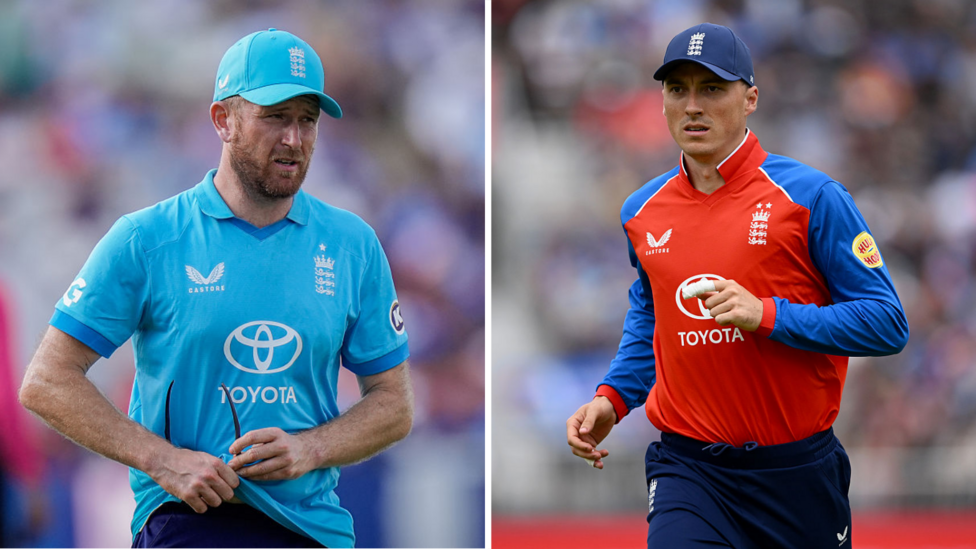
Dawson and Banton Released for T20 Finals Day
England release Liam Dawson and Tom Banton for T20 Finals Day, balancing international duties with domestic cricket's grandest stage.

Villa's Estupinan Gamble Exposes Champions League Squad Gap
Aston Villa eyeing Estupinan signals squad strain while Newcastle draw a hard line on Guimaraes and Inter retreat from Chalobah.