Cash & Glasspool March On: Defending Champions Refuse to Relinquish Crown
Britain's defending doubles champions grind into the Wimbledon quarterfinals, proving their title was no one-off summer romance.
Defending Champions Cash & Glasspool Out of Wimbledon
Julian Cash stiffened his shoulders, took a half-step forward at the net, and watched the ball sail long. The roar that followed was not merely relief. It was the sound of a nation's peculiar doubles obsession finding fresh legs. For the better part of two hours, Cash and Lloyd Glasspool had been dragged into the kind of three-set trench warfare that Wimbledon's grass courts specialise in, a test of nerve as much as skill. They emerged on the right side of it, 6-4, 3-6, 6-4, advancing to the quarter-finals of the men's doubles and keeping alive the defence of the title that has come to define them both.
The narrative around Britain's premier doubles pairing has shifted dramatically over the past twelve months. They are no longer the plucky duo searching for validation. They are the marked men, the team that every opponent on the ATP circuit circles on the calendar. The gravitational pull of Centre Court magnifies that target. Cash and Glasspool have embraced it with the quiet intensity of players who understand there is nothing more dangerous in professional sport than a champion uncomfortable with the weight of their own crown.
Grass demands a specific kind of tennis masochism. The surface rewards the brave and punishes the hesitant. For a doubles pair built on aggressive net play, explosive returning, first-strike mentality and relentless pressure, Wimbledon is not just a tournament. It is a homecoming. Cash, with his 6-foot-5 frame that transforms the centre of the court into a wall of limbs, possesses a serve that skids through the court with vicious efficiency. Glasspool, operating as the more conventional doubles operator, complements that firepower with anticipation that borders on the preternatural.
What sets this pair apart in the modern doubles landscape is their refusal to retreat. In an era where baseline baselining has crept increasingly into the doubles game even on grass, Cash and Glasspool remain doctrinally committed to the net. Against them in the fourth round was an opponent well-versed in disrupting that rhythm, using lobs, angled off-pace returns and soft hands to drag the British pair out of their comfort zone. It was a strategy that worked intermittently, enough to take the second set and silence the crowd momentarily.
Yet the essence of championship tennis lies not in the avoidance of adversity but in the quality of response. Dropping the second set can quickly unravel a team's composure, the psychological damage compounding with each passing baseline exchange. Cash and Glasspool chose defiance. They recalibrated their positions by inches, sharpened their return depth, and made a calculated decision to target the second serve of one opponent with surgical persistence. The third set became a masterclass in controlled aggression, each game carrying the weight of a tiebreak.
"The best part of this is we never stopped believing in the plan. Even when we lost the second set, we trusted the process, trusted each other. On grass, the margins are so fine that one good return, one reflex volley, can flip the entire match.",
The numbers from this run tell a story of quietly devastating efficiency. Cash and Glasspool had won 83% of their first-serve points across the opening fortnight, a figure that placed them among the elite serving pairs in the draw. They had converted 11 of 19 break point opportunities, a rate of nearly 58% that underscored their clinical mentality in the clutch moments that decide tight matches. The serve-and-volley sequences accounted for over 71% of their points won, a testament to their steadfast adherence to a grass-court philosophy that many modern players have abandoned.
Career by Numbers
- 15 ATP doubles titles together since forging their full-time partnership, a haul that places them among the most successful British doubles pairings of the professional era. Had it not been for the dominance of Joe Salisbury and Neal Skupski across overlapping years, that count could have been materially greater still.
- 3 Grand Slam quarterfinal appearances at Wimbledon alone, a sign that their game translates seamlessly to the sport's biggest stages and that their 2023 title run was built on deep-rooted foundation rather than mere fortnightly form.
- Top 10 ATP doubles ranking achieved as a team, cementing their status as genuine elite in a format where consistency is the ultimate metric of class.
- 1 Wimbledon men's doubles title, the crown they defended with every ounce of their professional pride this fortnight.
- Four sets dropped en route to the quarter-finals this year, a statistical reminder that no title defence is ever a linear procession.
The physics of grass-court doubles is a study in controlled violence. The ball stays low, the points are short, and the margin for error is measured in millimetres. Cash and Glasspool have mastered this calculus through repetition and an almost telepathic understanding of each other's movement patterns. At the net, their positioning speaks of hours spent drilling patterns into muscle memory. When Cash poaches across the centre, Glasspool shifts to cover the vacated space with the timing of a centre-back stepping into a defensive line. It is not glamorous, this invisible choreography is what wins championships.
The strategic shift in doubles toward big-serving baseliners has been one of the defining tactical narratives of the past decade. Cash and Glasspool stand as the counter-argument, proof that there remains a place at the summit for players who win points at the net rather than from six feet behind the baseline. Their Wimbledon title last year was a triumph of ideology as much as ability, a validation of the Spezialisierung that shaped the great Australian and American pairs of earlier generations. Defending that title was not merely about holding a trophy for another twelve months. It was about defending a philosophy.
But that defence has come to an end. Cash and Glasspool fell in the quarter-finals, a straight-set defeat that brought their Wimbledon title defence to a close. The air of quiet confidence that had carried them through the opening rounds dissipated against opponents who met their aggression with precision of their own. The pair who had bent so many encounters to their will could not find the same answers when the questions grew sharpest. Three sets, no reply.
"This is what we play for. Centre Court, the crowd behind us. We wouldn't swap this pressure for anything. We know what it takes to win here, and we're ready to go out and do it again. The belief in this team doesn't waver."
Those words, spoken in the afterglow of their fourth-round battle, carried the unshakeable conviction of champions who had been there before. They seemed to presage another deep run, another week of Centre Court heroics. Sport, though, trades in the currency of the present tense, and the quarter-final offered a lesson in how fine the margins truly are at the top of the doubles game.
The broader context of British tennis makes this run significant. For a nation that has long treated doubles as the glamorous younger sibling of the singles game, Cash and Glasspool were redefining the narrative. They were elite performers in their own right, operating at the highest level of a discipline that demands a unique confluence of skill, chemistry, and psychological resilience.
Lloyd Glasspool's journey to this point has its own quiet fascination. A player who once drifted in the singles wilderness before committing fully to doubles, his career is a study in the rewards of self-awareness. Cash, meanwhile, emerged from the American college system that has produced a generation of doubles specialists, bringing with him a technical polish that has been refined on the professional circuit into something genuinely elite. Together, they represent a modern British tennis story rendered through the specific lens of doubles excellence.
The partnership that defines them both was forged not in the glare of Centre Court but in the quieter corners of the Challenger circuit, the satellite tournaments where doubles careers are built on repetition and incremental progress. They learned each other's idiosyncrasies, developed shorthand communication, refined positioning patterns, and absorbed the losses that are the inevitable tuition fees of professional tennis. None of that early struggle is visible now, washed away by titles and rankings and the warm embrace of Centre Court. But it is there, embedded in the trust that allows one player to commit fully to a poach knowing his partner will cover the space he has left behind.
For British tennis, the presence of Cash and Glasspool at the business end of Wimbledon was a welcome story in what has been a mixed championship. The singles campaigns provided a mix of promise and frustration. The doubles, as ever, offered a different kind of satisfaction. There is something deeply appealing about a pair that has built its game on an old-school philosophy, refined to modern purpose. Cash and Glasspool did not play the game the way the analytics departments might design it. They played it the way their instincts and their coaching philosophies dictated, with a commitment to net play that honours the surface and the format.
The title defence is over, and with it the opportunity to take another step toward an achievement that would have ranked among the finest in British doubles history. The challenge proved formidable, the margin for error vanishingly small. Cash and Glasspool had earned the right to believe, earned the right to walk onto that court expecting to win. But on this occasion, against opponents who matched their intensity and outplayed them in the moments that mattered, it was not to be. In a sport that clocks its narratives in decades and its statistics in cold numbers, this British pair have still written a story that stands apart from the rest.
Updated: 2026-07-08 — Cash & Glasspool's Wimbledon title defence ended in a straight-set quarter-final defeat.
Editorial Integrity
This is an original SportPulse article written by our editorial team. All content is independently researched, written, and reviewed by our writers and editors before publication. We do not publish copied, aggregated, or syndicated content.
SportPulse is committed to original sports journalism. Read our editorial policy or contact us with any questions.
More Like This
All tennis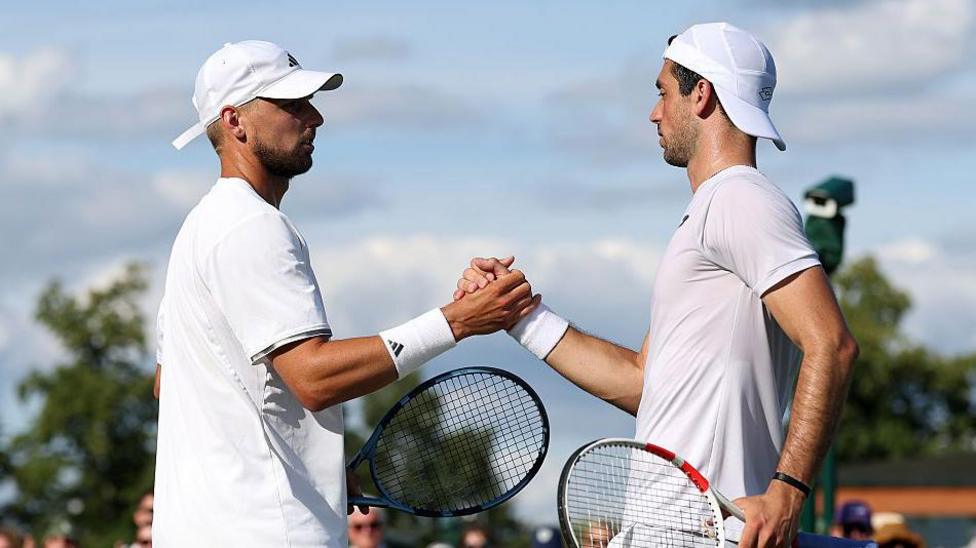
Cash & Glasspool Chase Wimbledon Doubles History
Britain's Julian Cash and Lloyd Glasspool march into Wimbledon's third round, chasing a historic doubles title defence on home soil.
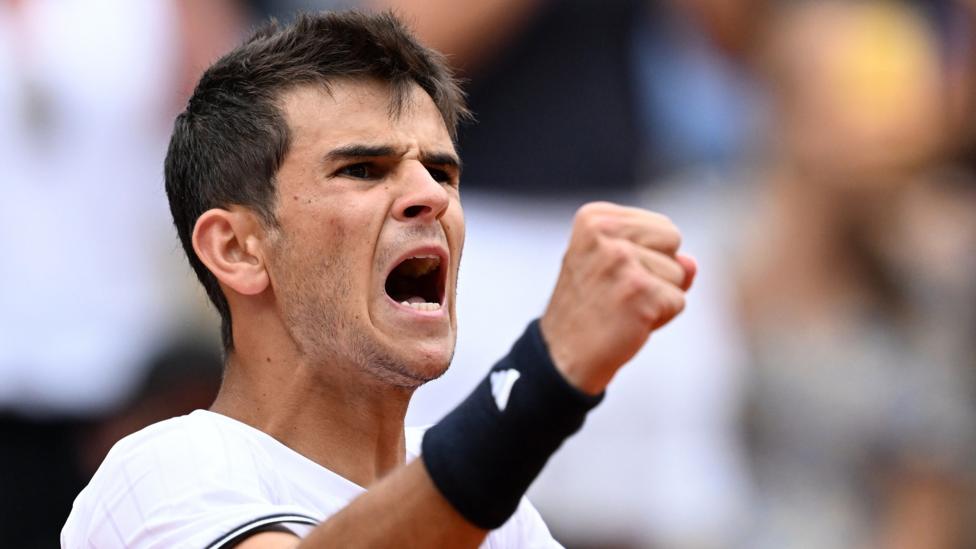
Spain's New Rafa Eyes Grass-Court Conquest
Teenage sensation Rafael Jodar carries the weight of a nation's tennis rebirth into his Wimbledon debut.
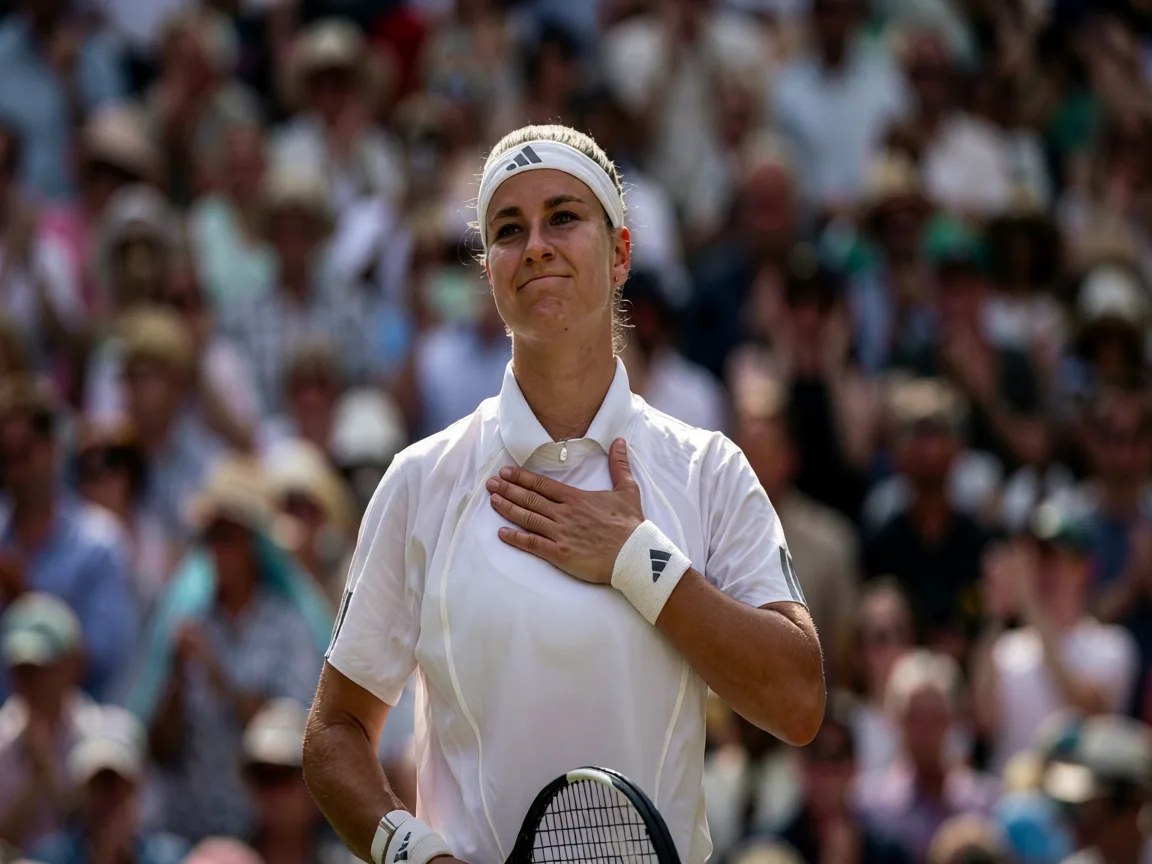
Muchova's Latest Setback: A Career Defined by Brilliance and Fragility
Karolina Muchova's post-Wimbledon surgery underscores a cruel pattern haunting one of tennis's most gifted talents.