Ceferin's Empty Seat: The Nuclear Escalation of UEFA's FIFA War
UEFA's president boycotting a World Cup final signals a governance crisis football's power brokers can no longer hide.
The most powerful man in European football looked at his calendar, looked at the stakes, and decided he had somewhere better to be.
Aleksander Ceferin did not attend the World Cup final between Argentina and Spain. The UEFA president's empty seat in the VIP section was not an oversight. It was a calculated act of defiance.
When the president of UEFA refuses to show up for football's showpiece event, the Cold War engulfing the sport's governance can no longer be hidden behind closed doors.
This was a protest aimed squarely at FIFA. The target was Gianni Infantino. The message was unmistakable.
The Snub Heard Around the World
Presidents of continental confederations do not skip World Cup finals. The optics are catastrophic. The political cost is enormous. Every predecessor in Ceferin's position would have gritted their teeth, worn the diplomatic smile, and taken their designated seat.
Ceferin chose differently.
The final between Argentina and Spain — a clash heavy with subplots and geopolitical resonance — became the backdrop for the most visible act of confederation rebellion in modern football history. The Slovenian lawyer, who has led UEFA since 2016, decided the moment demanded theater.
He delivered it.
What Triggered the Boycott
The roots of this rupture run deep, tangled in years of accumulated grievances over FIFA's direction, its financial machinations, and Infantino's leadership style. Ceferin's anger has been building with quiet, deliberate intensity.
Key friction points include:
- FIFA's push for an expanded Club World Cup format that threatens the established European calendar
- Persistent accusations of financial opacity at the highest levels of FIFA governance
- Infantino's close alignment with political figures and regimes that have drawn scrutiny
- What UEFA perceives as FIFA's systematic erosion of European football's institutional influence
- The growing financial competition between FIFA's properties and UEFA's flagship tournaments
The relationship between Ceferin and Infantino collapsed long before this public boycott. What the world witnessed at the final was simply the moment the facade fell away.
The Infantino Problem
Gianni Infantino has built his FIFA presidency on relentless expansion, sweeping promises, and a worldview that prioritizes globalization of the sport's commercial footprint above all else. The Swiss administrator has positioned himself as football's ultimate dealmaker.
UEFA sees something different.
From Nyon, FIFA's strategic direction looks like a direct assault on European football's historical primacy. Every new tournament FIFA champions, every calendar reform proposed, every commercial partnership struck feels designed to squeeze the European game.
Ceferin has had enough.
The boycott of a final featuring Argentina — a nation with deep, fraught ties to FIFA's current leadership circle — against Spain — the heartland of European football — carried layers of meaning that extended far beyond one man's travel itinerary.
Behind the Power Play
This was never just about one football match. It was a declaration of institutional war.
Ceferin's calculation rests on a fundamental reality: UEFA controls the most valuable, most watched, most commercially powerful football properties on the planet. The Champions League. The European Championship. The continent's domestic leagues and their broadcasting empires.
FIFA needs UEFA more than UEFA needs FIFA. That asymmetry is Ceferin's leverage.
The Commercial Stakes
The financial dimensions of this conflict dwarf most geopolitical disputes in sport:
- The Champions League final draws a global viewership that routinely exceeds 380 million viewers across linear and digital platforms
- UEFA's revenue for the 2024-27 commercial cycle is projected to surpass €5.7 billion, driven primarily by the Champions League's revamped format
- FIFA's Club World Cup represents the organization's most aggressive attempt to carve revenue territory directly from European football's domain
- European clubs generate roughly 70% of global football's total club revenue, making them the economic engine FIFA cannot ignore
By withholding his presence, Ceferin signaled to every UEFA member association — all 55 of them — that open hostility toward FIFA is now not just acceptable. It is the official position of European football's governing body.
The financial pressure points work both ways. FIFA's commercial partners, broadcasters, and sponsors crave the legitimacy of European football's biggest institutions. A fractured relationship threatens the entire revenue model.
The Historical Echo
Football governance has experienced convulsions before. The turbulence of the 2015 FIFA corruption crisis that brought down Sepp Blatter and reshaped the organization's leadership created temporary reform momentum. Infantino rose from that wreckage, promising transparency and a new era of governance.
A decade later, UEFA's president is treating FIFA with the kind of open contempt that was previously unthinkable between confederation leaders.
The irony is thick. Infantino himself was a UEFA insider before ascending to FIFA's throne in 2016. He knows the European power structure intimately. He understands precisely how damaging Ceferin's public rebellion is.
That knowledge makes the rupture worse, not better.
The Super League Shadow
Ceferin built his political capital by crushing the European Super League in April 2021. He positioned himself as the defender of football's established order against rapacious club owners. The victory defined his presidency.
Now he turns that defensive energy outward.
The same institutional instinct that protected the Champions League from breakaway clubs now drives his resistance to FIFA's expansion. Ceferin has discovered that threats to European football's primacy come from multiple directions, and FIFA has become one of them.
What This Changes
The immediate damage is reputational. A World Cup final without UEFA's president present creates images that global media cannot ignore. The VIP section told its own story — the seat empty, the statement implicit.
The longer-term consequences are more profound.
Member associations across Europe now face a choice about alignment. The traditional solidarity promised by football's hierarchy — FIFA at the summit, confederations below, nations beneath — has fractured. Every vote at FIFA Congress, every commercial negotiation, every calendar discussion now carries the weight of an active Cold War.
Expect retaliation. FIFA does not absorb public humiliation without responding. The question is whether Infantino escalates through financial pressure, tournament manipulation, or direct political countermeasures against UEFA.
The next FIFA Council meeting becomes a minefield. The next World Cup bidding process becomes a proxy battlefield. Every interaction between the two organizations now carries the toxicity of open conflict.
The Road Ahead
Ceferin has crossed a line from which retreat would mean humiliation. Having made visible his contempt for FIFA's leadership by boycotting football's most prestigious stage, he owns this position permanently.
Infantino must respond. Silence looks like weakness. Collision looks like chaos.
European football's stakeholders — the clubs, the leagues, the fans who simply want the sport to function — are caught in the crossfire of a governance war that serves everyone except the people who matter most. The institutional ambition of two men and their organizations now threatens to poison the calendar, the economics, and the political stability of global football.
The final between Argentina and Spain will be remembered. But the empty seat may echo louder than any result.
Football's governing structures were designed to prevent exactly this kind of institutional warfare. They have failed. And the consequences will reverberate through every UEFA meeting in Nyon and every FIFA gathering in Zurich for years to come.
Ceferin's boycott reveals what the sport's administrators have spent decades concealing: that the fight for control of football has never really been about the game itself. It has always been about power — naked, unrelenting, and now impossible to disguise.
Editorial Integrity
This is an original SportPulse article written by our editorial team. All content is independently researched, written, and reviewed by our writers and editors before publication. We do not publish copied, aggregated, or syndicated content.
SportPulse is committed to original sports journalism. Read our editorial policy or contact us with any questions.
More Like This
All football
The Socceroos' Tactical Identity Is Finally Catching Up to Their Ambition
Australia stand on the brink of knockout qualification at the 2026 World Cup, with a defining USA clash looming.
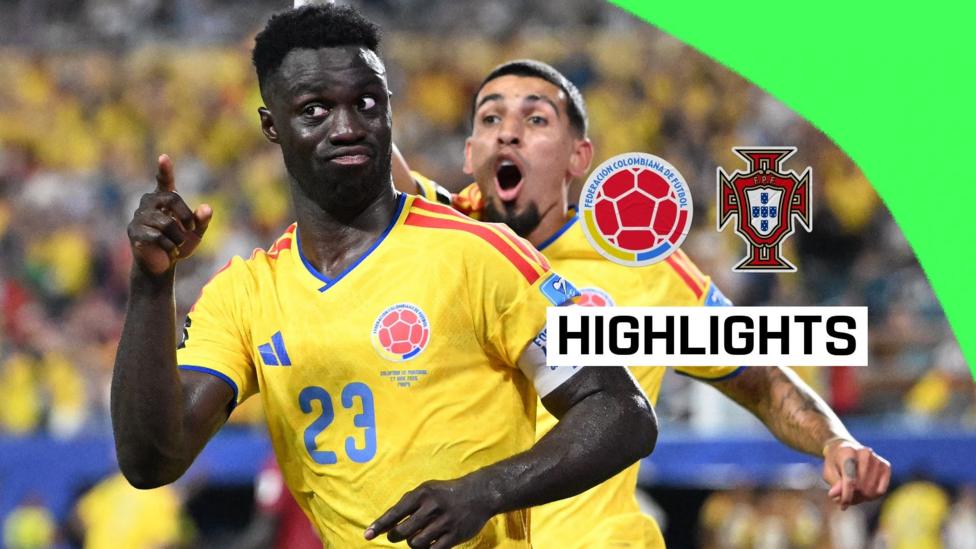
Colombia Denied Late Winner as Thrilling Draw Sends Both Sides Through
A gripping 0-0 between Colombia and Portugal delivers drama, controversy, and mutual passage to the last 32.
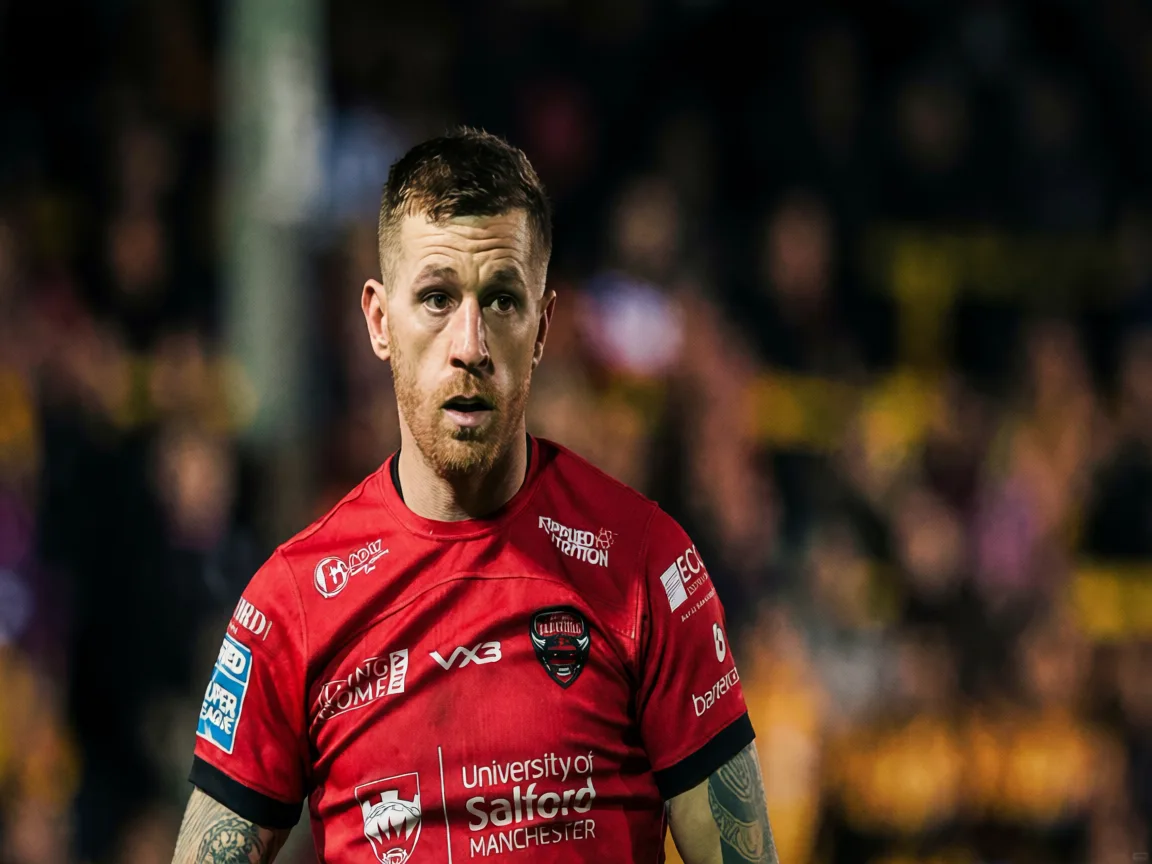
Sneyd Returns to Salford: Homecoming or Last Stand
Marc Sneyd's Salford return is romantic nostalgia meets cold pragmatism for a half-back entering his twilight years.