Celtics Trade Finals MVP Jaylen Brown to 76ers for Paul George, Draft Haul
Boston ships its championship hero to Philly for aging star and draft capital, reshaping two Eastern Conference rivals.
The Finals MVP Is Gone
The Boston Celtics just detonated their own championship core.
In the most seismic trade of a frenzied offseason, Boston is sending 2024 NBA Finals MVP Jaylen Brown to the Philadelphia 76ers in exchange for Paul George, two first-round picks, and two second-round picks. The deal, which had been simmering behind the scenes for weeks amid reports of Brown's growing dissatisfaction with the organization, finally crossed the finish line this week.
This is not a marginal tweak. This is a franchise-altering pivot for both sides of a deal that reshapes the Eastern Conference hierarchy overnight.
What Prompted the Breakup
The writing had been on the wall since the Celtics lifted Banner 18 in June. Brown, who averaged 20.8 points, 5.4 rebounds, and 3.2 assists during the Finals run and earned series MVP honors with a dominant Game 5 closeout performance, had reportedly grown frustrated with what he perceived as the organization treating him as a secondary star behind Jayson Tatum.
Sources close to the situation described a relationship that had been strained for months. Brown's camp felt the Celtics' front office consistently deferred to Tatum in contract negotiations, marketing initiatives, and public messaging. The tension reached a boiling point during the offseason when extension talks stalled.
"Jaylen felt like he gave everything to that franchise and still wasn't valued equally. At some point, you have to protect your own legacy." — Source close to Brown's camp
For a player who just delivered a Finals MVP trophy to Boston, being made to feel like a second option was a non-starter. The Celtics, for their part, appear to have calculated that the relationship was beyond repair and moved to extract maximum value before Brown's leverage eroded further.
The Return: What Boston Gets
Paul George
Let's address the elephant in the room. Paul George is 34 years old. He arrives in Boston on the back end of a career that has featured nine All-Star selections, six All-NBA nods, and a reputation as one of the most versatile two-way wings of his generation.
Last season in Philadelphia, George posted 16.4 points, 4.9 rebounds, and 4.1 assists per game while shooting 36.8% from three on solid volume. Those are respectable numbers, but they represent a clear decline from his peak years in Oklahoma City and the early Clippers tenure.
The fit alongside Tatum, however, is intriguing on paper. George's ability to guard positions 1 through 4 and space the floor gives Boston a plug-and-play veteran who won't need the ball to be effective. The question is whether his body can hold up through a full playoff grind.
The Draft Capital
This is where the real long-term value lives.
- Two first-round picks from Philadelphia's future war chest
- Two second-round picks to round out the package
Boston now holds a significantly expanded draft portfolio that gives president Brad Stevens multiple pathways:
- Package picks to acquire a younger star who better fits Tatum's timeline
- Use the selections to draft high-upside talent and maintain a competitive window through organic development
- Flip picks at the deadline if the Celtics remain in contention and need reinforcements
The flexibility is real. The question is whether Stevens can convert this capital into something that keeps Boston in championship contention rather than triggering a slow decline.
What Philadelphia Is Getting
Jaylen Brown's Fit With Joel Embiid
This is where the deal gets genuinely exciting for the Sixers.
Brown, 27 years old, is entering the prime years of his career with a skill set that translates perfectly to what Philadelphia has been missing: a secondary creator who can take over games, defend elite wings, and operate as a closer in crunch time.
Fit Check: Brown + Embiid
Offensive Synergy: Brown's ability to attack off the dribble and finish through contact creates a devastating two-man game with Embiid. Imagine pick-and-roll actions where defenses must choose between leaving the Finals MVP in isolation or allowing Embiid to operate in the post against single coverage. The spacing math works.
Defensive Versatility: Brown's 6'6" frame and elite lateral quickness let him guard the opponent's best perimeter player, freeing Embiid to protect the rim without having to scramble on switches. Philadelphia's defense, which ranked 14th last season, could vault into the top 10 with this addition.
Clutch Factor: Brown shot 52.3% in the fourth quarter during the 2024 playoffs. That is the profile of a player who thrives under pressure, exactly what Embiid has lacked in his playoff career.
Concerns: Brown's ball-dominant style could create friction with Tyrese Maxey, who also needs touches to be effective. Coach Nick Nurse will need to stagger minutes and design sets that maximize both players' strengths without redundancy.
Salary Cap Implications
Boston's Books
George's contract is more team-friendly in the short term than Brown's max deal, freeing up approximately $8-10 million in cap space depending on the final numbers. That breathing room allows Boston to:
- Pursue a mid-level exception target for a needed big man
- Retain key role players like Derrick White without luxury tax concerns
- Build financial flexibility for future moves
Philadelphia's Commitment
Brown's max contract, which runs through 2028, represents a significant long-term financial commitment. The Sixers are betting that pairing Brown with Embiid and Maxey creates a three-year championship window before potential cap crunches force difficult decisions.
The financial calculus is straightforward: pay the luxury tax now while your franchise center is healthy, or risk wasting another prime Embiid year with a roster that can't get over the hump.
Historical Context
Trading a reigning Finals MVP is almost unheard of in NBA history. The last comparable move was when the Milwaukee Bucks traded Kareem Abdul-Jabbar in 1975, though that situation involved a player demanding out rather than organizational dysfunction.
More recently, the Toronto Raptors moved on from Kawhi Leonard after his 2019 Finals MVP run, though Leonard left in free agency rather than being traded. The Celtics are attempting something different: extracting significant value while the asset is at peak valuation.
Whether that calculation proves wise depends entirely on what Stevens does with the draft capital and how quickly the post-Brown Celtics can regroup.
Ranked: Biggest Offseason Blockbusters This Summer
- Jaylen Brown to Philadelphia — Franchise-defining move for two Eastern Conference contenders
- Paul George to Boston plus picks — Veteran replacement with future flexibility
- Other reported deals in the pipeline that now pale in comparison
The Brown trade sits atop the offseason leaderboard because it involves a 27-year-old Finals MVP moving between conference rivals. That combination of youth, production, and competitive stakes makes this the most consequential trade since the Kevin Durant to Brooklyn deal in 2019.
What Comes Next
For Philadelphia
The Sixers are all-in. Brown's arrival signals that the front office believes this is the roster construction that finally gets Embiid past the second round and into legitimate title contention. Training camp chemistry will be critical.
For Boston
The Celtics are pivoting. Stevens has made a calculated bet that the Brown-Tatum partnership had run its course and that accumulating assets now is smarter than forcing an unhappy star to stay. The George acquisition provides a bridge while the draft picks develop into future contributors.
The pressure shifts to Tatum. Without Brown as his co-star, this becomes unmistakably Tatum's team. Every playoff failure, every fourth-quarter collapse, every coaching decision will now circle back to one question: can Jayson Tatum carry a franchise to a championship as the unquestioned alpha?
"Brad Stevens doesn't make moves for the sake of making moves. If he's doing this, he already has the next three steps mapped out." — League executive familiar with Boston's front office
The Bottom Line
Boston chose flexibility over familiarity, and Philadelphia chose star power over caution. Both franchises just made franchise-defining bets, and only one of them is going to be right.
Editorial Integrity
This is an original SportPulse article written by our editorial team. All content is independently researched, written, and reviewed by our writers and editors before publication. We do not publish copied, aggregated, or syndicated content.
SportPulse is committed to original sports journalism. Read our editorial policy or contact us with any questions.
More Like This
All basketball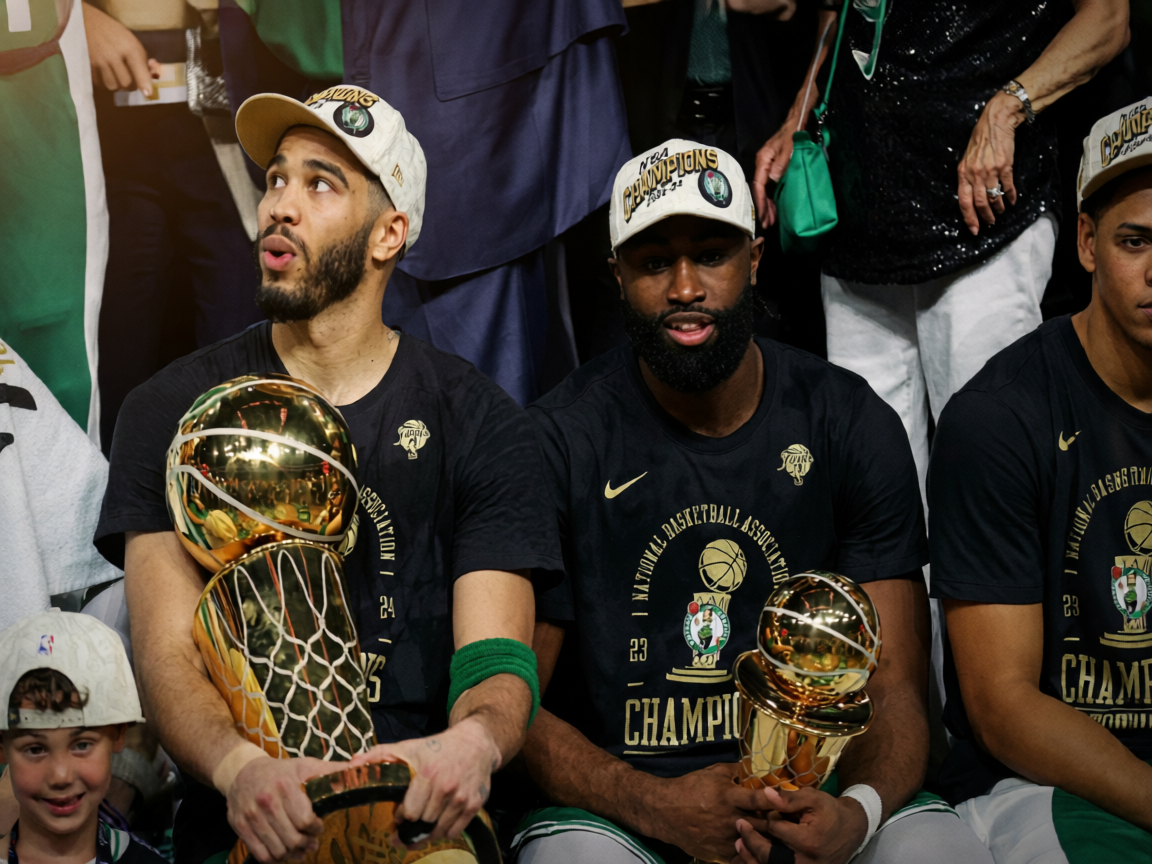
Tatum Reacts to Brown Trade: Celtics Enter Uncharted Era
Jayson Tatum calls Jaylen Brown's trade to Philadelphia weird, signaling a massive cultural and tactical pivot for the Celtics' roster rebuild.
The Reckoning: Ja Morant's Memphis Chapter Closes as Portland Rolls the Dice
Memphis parts with its franchise star for Jerami Grant and Kris Murray, betting on culture over chaos.
From Boos to the Blue Room: Dolan Takes Knicks to Trump's White House
James Dolan accepted a White House invitation while Knicks fans booed Trump at Madison Square Garden — a fracture that cuts deep.