Champions Cup Bonus Point Overhaul Reshapes Tactical Landscape
EPCR's new bonus-point threshold demands three more tries than opponents, fundamentally altering pool-stage tactics.
The European Champions Cup pool stage has long been a theater of conflicting philosophies, where the pragmatism of knockout survival meets the chaos of bonus-point arithmetic. Next season, that delicate equilibrium faces a seismic shift. Tournament organizers have restructured the try-bonus point framework, mandating that a team must score at least three more tries than their opponent to secure the additional point. This is not a mere administrative tweak. It is a fundamental rewiring of the strategic DNA of European rugby's premier club competition, one that will force coaches to recalibrate their Pressing systems and territorial approach from the opening whistle.
Since the inception of the bonus-point format in European competition, the magic number has been four. Scoring four tries in a pool match earned an attacking bonus point, creating a parallel economy where a dominant 5-0 try count in a losing effort could yield the same bonus reward as an 8-3 victory. That paradigm incentivized a certain type of late-game management. Teams trailing on the scoreboard but sitting on three tries would often unspool their tactical shape entirely, abandoning structured Phase play in favor of manic, lateral offloading gambles to chase the fourth try. It rewarded volume over supremacy, artificially inflating scoring sequences that lacked genuine structural dominance.
By imposing a differential of +3 tries, the new rule obliterates the concept of the consolation bonus point. A team scoring three tries against an opponent who crosses twice leaves empty-handed. The implications for Spatial utilization and game state management are profound. Coaches can no longer justify abandoning defensive shape to chase a solitary try when the deficit requires a three-score differential. The risk-reward calculus has been entirely rewritten. Pushing passes in the Wide channels when trailing by two tries now carries the threat of a counter-attack that could widen the opponent's tally, extinguishing any mathematical path to the bonus point in a single turnover.
Tactical Shift: From Volume to Dominance
Historically, the architecture of a European pool campaign was built on accumulating points in un-winnable away fixtures. A traveling side facing a daunting home atmosphere would often compress their tactical ambitions into a narrow window: stay within striking distance of the bonus point by hunting four tries. This frequently produced disjointed, frantic rugby where teams operated outside their prescribed Shape, forcing ill-advised offloads inside their own half. The new regulation renders that strategy obsolete.
The Death of the Artificial Chase
The elimination of the absolute four-try target forces a return to dominance-based rugby. Under the previous regime, a team leading comfortably could concede a late, meaningless try without significant consequence, provided they had already secured their own bonus. Now, defensive integrity extends to the final minute. AHL coaches must maintain their Pressure coverage even in victory, as allowing a consolation score could shrink the try differential below the crucial +3 threshold. This demands sustained tactical discipline across the full 80 minutes.
- Old Requirement: Score 4 tries regardless of opponent's total.
- New Requirement: Outscore the opponent by a differential of +3 tries.
- Tactical Consequence: Defensive integrity is paramount even in leading game states.
Consider a typical scenario under the old law: a side leading 38-17 with four tries to one would routinely empty the bench, shift to a conservative Field position game, and accept a late concession. Under the new law, if that opponent crosses the line twice in the final quarter to make the try count 4-3, the bonus point vanishes. The leading coach must now retain structural integrity in the D-line, ensuring the defensive width holds firm to protect the differential. It transforms garbage time into high-stakes tactical execution.
The Strategic Recalibration of Pool Campaigns
The ripple effects of this regulatory shift extend far beyond single-match dynamics. The pool stage of the Champions Cup is fundamentally an exercise in accumulation. Advancing to the knockout rounds often hinges on the fine margins of bonus points collected across four grueling pool fixtures. With the threshold for acquiring that extra point raised so dramatically, the era of freewheeling, unstructured attacking gambles is effectively over. We will witness a return to the continental baseline: territorial suffocation, supreme set-piece accuracy, and ruthless cutting edges when Transition opportunities present themselves.
Coaches with a preference for structured Phase play and suffocating defense suddenly possess a systemic advantage. The incentive to play expansive, high-risk rugby has been drastically reduced unless a team possesses the overwhelming quality to consistently breach the opposition three additional times. For groups featuring closely matched sides, matches will inevitably tighten. Teams will protect possession, utilize the Touchfinder, and force the opponent to play from deep rather than risking a broken-field scenario that could distort the try count. The Maul and the Scrum as penalty-generating weapons become even more critical, allowing teams to build insurmountable scoreboards without running the risk of a wild, high-try shootout.
"We have a responsibility to ensure the competition rewards genuine superiority, not just volume of effort in a losing cause. This adjustment brings the tournament in line with the elite strategic standards of the game."
While EPCR has not formally released statements detailing the philosophical motivation, the structural message is clear. The governing body is incentivizing comprehensive victories over chaotic indulgence. For the French heavyweights and English giants who build their campaigns on remorseless forward packs and territorial kicking, this is a welcome validation. For sides that relied on sparks of individual brilliance to nab losing bonus points on the road, the mountain has become significantly steeper.
What's Next: The Opening Round Cursor
The immediate impact of this rule change will be visible in the opening rounds of next season's pool stage. Historically, teams used early fixtures to build a buffer of bonus points against perceived weaker opposition. Under the new system, racking up a +3 try differential requires a level of clinical finishing and defensive wall-building that neutralizes any complacency. A favored team leading by three tries to zero at the hour mark cannot afford to drift. They must sustain their Attacking shape and relentless Pressing to secure the fourth score while maintaining a clean sheet.
The upcoming fixture list will demand flawless tactical execution. Coaches will spend the preseason drilling defensive conditioning to maintain line speed deep into the second half of dominant victories. Simultaneously, they must prepare their strike runners to convert Half-space opportunities ruthlessly. The luxury of a gradual buildup is gone. Every entered zone must end in points, or the opponent is gifted the time to erode the differential. When the pools are drawn and the campaigns commence, watch the sidelines closely. The coaches who adapt fastest to this new arithmetic, balancing the ironclad defense of their try-line with the surgical precision required to build a +3 gap, will dictate the new European order.
Editorial Integrity
This is an original SportPulse article written by our editorial team. All content is independently researched, written, and reviewed by our writers and editors before publication. We do not publish copied, aggregated, or syndicated content.
SportPulse is committed to original sports journalism. Read our editorial policy or contact us with any questions.
More Like This
All football
Maradona vs England: The Day One Man Rewrote Football History
Four years after the Falklands War, Diego Maradona single-handedly dismantled England in a match soaked in politics, brilliance, and controversy.

Wigan's Gritty Comeback Sends Them Third in Super League
Wigan Warriors' resilient second-half fightback against Hull propels them to third in a tight Super League title race.
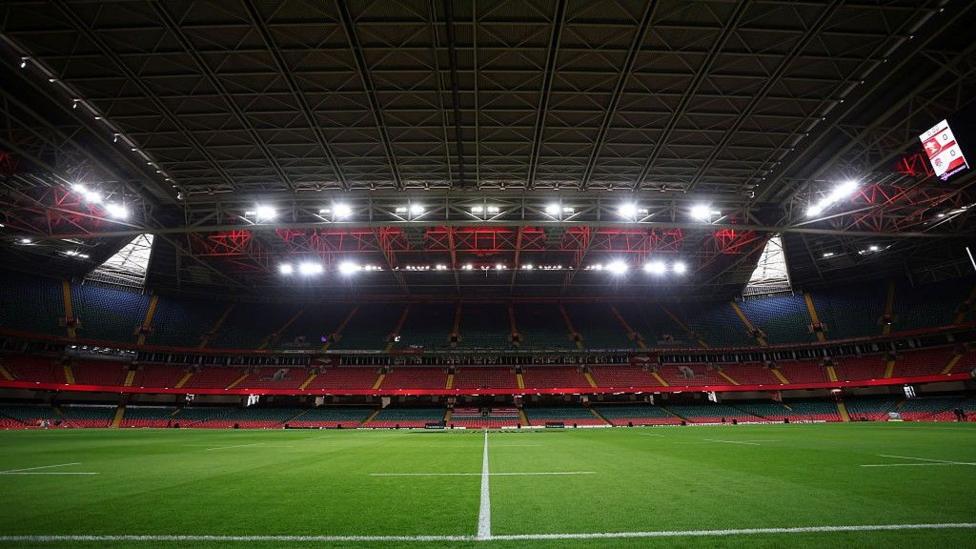
Why the 2026 Community Shield Is Headed to the Millennium Stadium
Wembley's scheduled modernisation forces English football's traditional curtain-raiser across the Severn in a logistical and commercial curveball.