The Chaos Principle: Coaching Football's Unruly Talent and the Illusion of Control
Managing volatile genius on a football pitch mirrors a universal truth: control is always negotiated, never absolute.
There is a particular species of panic that only those who have tried to command something fundamentally ungovernable will recognise. It lives in the gap between what you believe authority should accomplish and what it actually does when confronted with raw, unmediated energy. Dog owners know it intimately. So do football managers.
The comparison might seem frivolous, but strip away the specifics and the structural problem is identical: you are responsible for a creature that possesses extraordinary physical capability, no intrinsic understanding of your tactical framework, and absolutely zero interest in your reputation. Your job is to make it behave in a way that produces results. The question that haunts every coach who has ever inherited a gifted but chaotic player is the same one that haunts every owner of an exuberant young dog: if the being in front of you has no internalised sense of what "good" means, how do you teach it to perform goodness convincingly enough to win?
The Anatomy of a Chaotic Walk
Anyone who has walked a powerful, undertrained dog through a populated park will recognise the emotional trajectory described by countless owners in those dark, confessional forums that litter the internet. The outing begins with optimism. The lead is removed. For a few glorious seconds, the animal trots beside you, and you think: we have cracked this. Then something triggers prey drive, or social exuberance, or whatever neurological impulse it is that overrides every prior instruction, and suddenly you are lunging across wet grass with no dignity and diminishing options.
The football equivalent happens every weekend somewhere across Europe's top divisions. A manager sets up in a disciplined 4-4-2 mid-block, drills the pressing triggers all week, and watches his most talented attacker drift into positions that bear no resemblance to the tactical plan. The player is not being deliberately insubordinate. He is simply responding to stimuli with the tools nature gave him, and those tools are spectacular. The problem is that spectacle and structure exist in tension, and the manager stands on the touchline experiencing that same toxic cocktail: guilt that he cannot control his own system, regret that he did not sign someone more compliant, and a creeping powerlessness that gnaws at his authority.
The Myth of Total Authority
Modern football coaching is built on an implicit promise: give a sufficiently intelligent manager enough time and resources, and he will impose order. The Guardiola model. The Sacchi blueprint. The idea that a pitch is a board and eleven pieces can be arranged, rearranged, and instructed into coherent movement patterns that neutralise chaos and produce repeatable outcomes.
This works, up to a point. But every system eventually collides with the irreducible unpredictability of its human components. José Mourinho understood this with a clarity that made him both brilliant and exhausting. His career-long obsession with discipline was not pedantry; it was a philosophical position. He believed, fundamentally, that talent without obedience was a liability, and he constructed squads accordingly. When he encountered a player who could not or would not subordinate instinct to system, the confrontation was existential.
His relationship with Mario Balotelli at Inter Milan remains the canonical case study. Balotelli possessed a physical and technical ceiling that placed him among the most gifted forwards of his generation. He also possessed a temperament that treated tactical instructions as suggestions and match situations as personal improvisation sessions. Mourinho did not lack the tactical vocabulary to accommodate brilliance. He lacked the willingness to tolerate the space between what he demanded and what Balotelli would deliver on any given afternoon.
"I told Mario, if you play one minute, you play with your brain. If you play with your ego, you sit next to me." — José Mourinho, speaking during his Inter tenure
The quote captures something essential about the coaching dilemma. The instruction is clear. The consequence is clear. But the underlying assumption is that the player can choose to override his nature, that cognition can suppress instinct the way a handbrake suppresses momentum. For some players, this is possible. For others, the instinct is too strong, the stimuli too compelling, and the walk ends in chaos regardless.
Pressing Triggers and Prey Drive
Tactically, the most interesting parallel between animal behaviour and football lies in the concept of pressing triggers. Modern coaches do not simply tell players to press. They identify specific stimuli, opponent actions, or spatial configurations that initiate the press. A heavy touch. A backward pass to the centre-back. A switch of play to a weak-footed fullback. The press is reactive, stimulus-driven, and requires extraordinary discipline: you do not chase everything, only the right thing at the right moment.
This is, in essence, the same behavioural architecture that animal trainers work with. The concept of a recall command is a pressing trigger in reverse. The dog receives a cue (the whistle, the voice command) that overrides whatever stimulus it is currently responding to and redirects behaviour toward the handler. The difficulty, as any trainer will attest, is that the competing stimulus must be less rewarding than the reward history associated with compliance. If chasing a squirrel has produced dopamine responses hundreds of times without consequence, a single treat offered at arm's length is fighting neurochemistry uphill.
Jürgen Klopp built his Liverpool dynasty partly on an understanding of this principle. His gegenpressing system was not merely a tactical instruction; it was a behavioural conditioning programme. Players were drilled so relentlessly in the immediate-press-after-loss-of-possession response that it became automatic, bypassing the cognitive deliberation that might otherwise slow the reaction. The 6-second rule was not a suggestion. It was an instinct, installed through repetition until it functioned like a neurological reflex.
But Klopp also understood that you cannot press everything. The discipline lies as much in what you don't do as in what you do. A player who chases every loose ball is as tactically useless as one who chases nothing. The counterpress requires a collective reading of the moment, a shared understanding that this stimulus is worth responding to and that one is a trap. Installing that collective intelligence across eleven minds is the closest a coach comes to the trainer's ultimate goal: creating a being that makes the right decision independently, in real time, without waiting for the command.
The Emotional Cost of Chaos
What the dog-walking analogy reveals most honestly is the emotional toll of managing something you cannot fully control. Football managers rarely speak about this in public. The press conference format rewards either confidence or deflection, never vulnerability. But the private accounts of coaches who have dealt with genuinely disruptive talent suggest a psychological burden that mirrors, in intensity if not in specifics, the despair of the owner standing in a park watching his dog terrorise strangers.
Thomas Tuchel at Paris Saint-Germain navigated a squad that contained several players whose tactical compliance fluctuated based on mood, motivation, and contract status. The challenge was not devising a system capable of winning. Any competent coach with that personnel could construct a functional 4-3-3 or 3-4-2-1 that generated chances. The challenge was sustaining that system's integrity across ninety minutes when one or two of its components might, at any moment, decide to freelance.
Tuchel's tactical flexibility was partly a survival mechanism. By switching between shapes and roles, he gave volatile players the feeling of freedom within a structure tight enough to contain their worst impulses. It was not unlike the approach experienced trainers recommend for high-energy breeds: provide enough structured stimulation that the animal's need for novelty and intensity is met within boundaries, rather than against them.
Obedience Versus Intelligence
The deepest question embedded in both dog training and football coaching is whether obedience and intelligence are complementary or antagonistic. A perfectly obedient dog is easy to manage but incapable of independent problem-solving. A perfectly intelligent dog will solve problems you never anticipated, often in ways you would not have chosen. The same tension exists between a player who follows tactical instructions to the letter and one who reads the game with a creativity that occasionally disregards the plan.
Carlo Ancelotti has built a career on resolving this tension in favour of intelligence. His coaching philosophy, to the extent he articulates one, privileges player autonomy within broad structural guidelines. He does not install rigid pressing triggers or demand specific positional coordinates. He trusts that senior, experienced players will read the game correctly most of the time and accepts that the remainder is the cost of doing business with human beings rather than robots.
This approach requires a particular kind of squad: mature, self-motivating, tactically literate players who do not need external structure to perform. It also requires a coach willing to tolerate the anxiety of not knowing, at any given moment, exactly what his team is doing. For managers with a lower tolerance for uncertainty, the temptation to over-control is irresistible, and the result is often the very rigidity that makes a team brittle under pressure.
The Tactical Shift
Every football match contains a moment where the gap between plan and execution becomes visible, where a player's individual instincts override the collective framework and the outcome pivots. These moments are not failures of coaching. They are features of a system that must accommodate human agency.
The 2005 Champions League final in Istanbul remains the supreme example. Rafael Benítez's tactical adjustments at halftime were masterful, shifting from a 4-4-1-1 to a more aggressive pressing shape that exploited AC Milan's complacency. But the comeback was not purely schematic. Steven Gerrard's header in the 54th minute was the product of a player reading a spatial opportunity and committing to it with an intensity that no tactical board could prescribe. The goal was instinct, not instruction. It was also, in the context of the match, the most tactically intelligent act imaginable.
The lesson for coaches is uncomfortable: the moments that define careers are often the moments where control breaks down and something unplanned takes its place. The manager's job is not to eliminate chaos but to create conditions where chaos, when it arrives, tends to produce outcomes aligned with the team's objectives. This is a statistical endeavour, not an absolute one. You are managing probabilities, not certainties.
What This Really Means
The dog eventually came back. They always do, eventually, though not always on your timeline and rarely because of the reason you think. The owner in the park was right to be frustrated. The dog's owner was right that the animal was not aggressive. Both observations could be simultaneously true because the situation was never about morality. It was about management, and management failed.
Football is the same. The gifted player who ignores a pressing trigger is not morally deficient. He is responding to stimuli with the toolkit he has, and that toolkit is extraordinary. The coach's task is not to impose goodness, whatever that means in a tactical context, but to install enough reward history that compliance becomes more attractive than rebellion most of the time.
This is not a satisfying answer. It does not lend itself to rigid systems or beautiful tactical diagrams or the comforting illusion that a sufficiently brilliant manager can make eleven human beings move as one. But it is honest, and honesty about the limits of control is the first step toward building systems that accommodate reality rather than denying it.
Looking Ahead
As the new European season approaches, the managers who will succeed are not those with the most elaborate tactical blueprints. They are those who understand that their primary task is behavioural, not schematic: installing enough structure to contain chaos while leaving enough space for intelligence to operate.
The next time you watch a manager lose composure on the touchline because his star player has wandered out of position for the third time in fifteen minutes, look closely at his face. That expression is not anger. It is the recognition of a problem that has no clean solution, a problem that every dog owner in every park in every city knows by heart: you can train the behaviour, but you cannot rewrite the nature. And the walk always ends the way the animal decides it will.
Editorial Integrity
This is an original SportPulse article written by our editorial team. All content is independently researched, written, and reviewed by our writers and editors before publication. We do not publish copied, aggregated, or syndicated content.
SportPulse is committed to original sports journalism. Read our editorial policy or contact us with any questions.
More Like This
All long-reads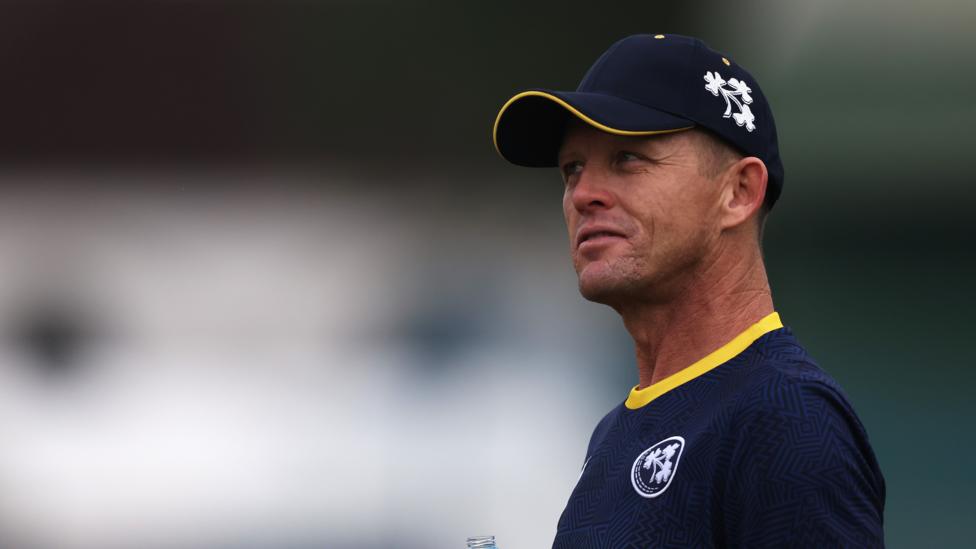
Malan Exits Ireland Job Days After Stunning India
Heinrich Malan steps down as Ireland cricket coach just 24 hours after masterminding a historic T20 series win over world champions India.
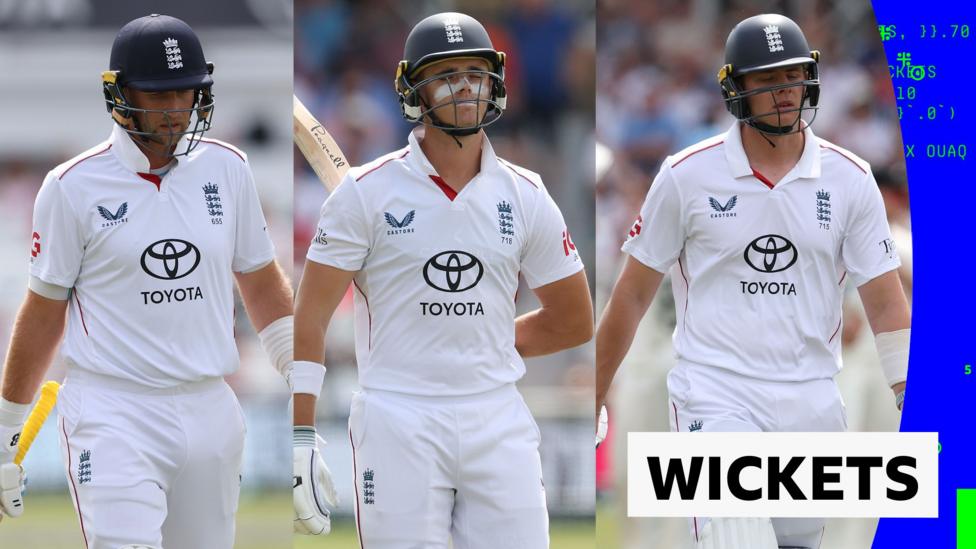
Trent Bridge Stunned: England's Top Order Crumbles in Devastating Early Collapse
England lose three wickets for just 11 runs as New Zealand seamers rip through the top order on day three.
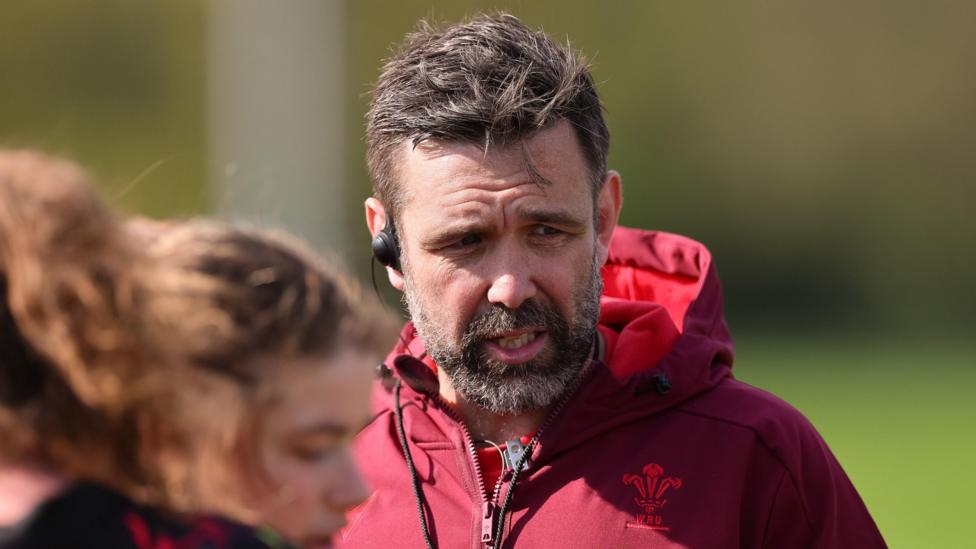
Wales Reinforce Coaching Ranks With Salvin Capture From Exeter
Wales land Exeter's Steve Salvin as full-time forwards coach ahead of WXV campaign.