Cipenga's Stunning Strike Rocks England as DR Congo Dream Big in Atlanta
Brian Cipenga's early wonder goal gave DR Congo a shock lead over England in a World Cup knockout stunner.
The Goal That Silenced Atlanta
Nobody inside Mercedes-Benz Stadium saw this coming. Not the England supporters draped in white, not the pundits who had penciled the Three Lions into the quarterfinals before a ball was kicked, and certainly not the defensive unit that was supposed to be the backbone of a deep tournament run. Brian Cipenga stepped into the spotlight with a finish so clean, so audacious, that it instantly became one of the defining moments of the 2026 FIFA World Cup knockout rounds.
DR Congo, the Leopards, a team that many casual observers couldn't place on a tactical board, arrived in Atlanta with nothing to lose and everything to prove. Within the opening exchanges, Cipenga delivered a statement that reverberated far beyond the retractable roof of this 71,000-seat arena. The description from the ground was simple and devastating: a wonderful finish that gave his nation a shock lead against one of the tournament's pre-ordained contenders.
The early concession raises an uncomfortable question for England. This is a squad built on years of tournament progression under successive managers, a side that reached a World Cup semifinal in 2018, a European Championship final in 2021, and another Euro final in 2024. They arrived in North America with a generation of players forged in the Premier League's relentless crucible. And yet, here they were, chasing the game before the ink on the team sheets had dried.
DR Congo: From Afterthought to Authentic Threat
To understand the magnitude of Cipenga's strike, you have to understand where DR Congo football has been. The Leopards have a proud Africa Cup of Nations pedigree, lifting the trophy twice (1968 and 1974, the latter as Zaire), but their World Cup history has been sparse and painful. Their sole previous World Cup appearance came in 1974, when they were hammered in all three group games, conceding 14 goals and scoring none. For over five decades, the tournament stage eluded them entirely.
The 2026 expansion to 48 teams opened the door, and DR Congo walked through it with genuine conviction during qualifying. This is not a team happy to be here. The Leopards arrived in the United States with a tactical identity built on compact defensive organization and devastating transitional speed. Against England's high defensive line, that profile was always going to be dangerous. Cipenga's early goal was not an accident. It was the manifestation of a game plan executed to perfection in the opening minutes.
What makes this moment so significant for Congolese football is the symbolism. DR Congo's domestic league has long been overshadowed by the larger West and North African football economies. The national team has relied on diaspora talent, players developed in Belgian, French, and Portuguese academies, stitching together a squad that blends European tactical discipline with raw Congolese athleticism. Cipenga's finish, described as wonderful by those who witnessed it, is the payoff for a footballing infrastructure that has quietly been building toward this.
England's Defensive Fracture and Response
For England, the early concession in a knockout match is a scenario that has haunted this generation. Think back to the Euro 2024 final against Spain, where an early deficit forced a tactical recalibration that never quite clicked. Think back to the 2022 World Cup quarterfinal against France, where England dominated stretches but couldn't overturn an early setback. The pattern is becoming a defining flaw: when England go behind in high-stakes matches, their response has too often been sterile possession without penetration.
The tactical setup England deployed in Atlanta will face intense scrutiny in the aftermath. The defensive line's positioning in the buildup to Cipenga's goal will be dissected frame by frame. Was it a failure of the center-backs to hold their shape? A midfield screen that didn't track the runner? A fullback caught too high? Without replays and detailed data, the specifics remain unclear, but the outcome speaks for itself: a Leopards forward found space, time, and the quality to convert against one of the tournament's most expensive defensive units.
England's starting eleven represents a squad value measured in the hundreds of millions of pounds. Their defensive personnel play weekly in the Champions League knockout rounds, in the cauldron of the Premier League's biggest derbies. That they were breached early by a team ranked significantly below them in the FIFA standings is an indictment, not of talent, but of concentration and preparation.
To compound England's frustration, their appeals for a penalty were waved away after DR Congo goalkeeper Lionel Mpasi appeared to bring down Harry Kane inside the area. The incident added another layer to the narrative of a match where the Three Lions were struggling to find their rhythm and a crucial decision did not go their way.
However, the turning point for England came via their captain. Harry Kane met a cross from Anthony Gordon with a powerful header to level the score, providing a vital lifeline for his side. The goal, a testament to Kane's aerial threat, shifted the momentum and answered the immediate question of how England would respond to falling behind.
The momentum was clearly with England after the equaliser, and they came agonisingly close to taking the lead when Marcus Rashford fired a shot goalward, only for Aaron Wan-Bissaka to produce a stunning goal-line clearance to deny him. The block, a moment of desperate, last-ditch defending, kept DR Congo level and underlined just how finely balanced the contest remained. England poured forward in waves, but the Leopards' back line held firm when it mattered most.
What the Leopards Saw
DR Congo's tactical approach to this match was always going to lean on one principle: punish England's predictability. The Three Lions have become remarkably consistent in their buildup patterns under recent management, favoring a structured progression through the thirds that prioritizes control over chaos. That control, however, comes at a cost. When the passing sequences break down, the transitional spaces behind England's advanced midfield can be enormous.
Cipenga's goal likely exploited exactly this vulnerability. DR Congo's scouting would have identified the moments when England's midfield pivots commit to forward positions, leaving gaps between the lines. A quick vertical pass, a sharp movement into the channel, and suddenly the Leopards were in behind. The wonderful finish was the final act of a well-rehearsed play, not a moment of individual improvisation alone.
The Bottom Line: DR Congo did not stumble into this lead. They identified a structural weakness in England's setup and executed with ruthless precision. That is tournament football at its most unforgiving.
The Bigger Picture: What This Means for the Round of 32
The expanded 48-team World Cup format was designed to deliver exactly these kinds of moments. Critics argued that bloating the tournament would dilute quality and produce lopsided mismatches. Cipenga's opener against England is the counterargument in one emphatic swing of a boot. The round of 32 exists to create jeopardy for the established powers, to force them to earn every inch of progress rather than coast through group-stage formalities.
For the tournament narrative, DR Congo's early lead added a layer of unpredictability that neutral fans crave. Kane's equaliser restored a degree of order, but the Leopards' initial statement remains a seismic shock. An England exit at this stage would have been seismic, not just for the Three Lions' campaign but for the broader competitive balance of the knockout bracket. It would have signaled that the gap between traditional powers and emerging football nations has genuinely narrowed, a trend that qualifying results across Africa and Asia have been hinting at for cycles.
DR Congo's presence in the knockout rounds was already a story. Their performance against England, regardless of the final scoreline, cements the Leopards as one of the genuine narratives of this World Cup. African football has been waiting for a breakthrough moment in a tournament hosted on North American soil, with the 2010 World Cup in South Africa and 2022 in Qatar providing contrasting case studies of host-continent energy. The Leopards carrying African hopes deep into the bracket would electrify a continent that has produced generations of individual brilliance without a corresponding team achievement at this level.
Verdict
Cipenga's strike was more than an early goal in a knockout match. It was a marker, a declaration that DR Congo belong on this stage. Kane's equalising header ensures the game remains finely poised, while Wan-Bissaka's remarkable goal-line clearance from Rashford's effort underlines just how close England came to seizing control. The resilience of the favourite and the initial audacity of the underdog have combined to produce a knockout tie on a knife's edge. How DR Congo responds to the sustained pressure and whether England can convert their dominance into goals will now define the remainder of this contest.
What Comes Next
England now face a tactical crossroads that demands immediate resolution. Do they commit bodies forward and risk being exposed on the counter by DR Congo's pace, or do they try to build patiently through a defensive block that has already proven it can absorb and punish? History suggests the Three Lions will dominate possession from this point. The question is whether that possession translates into genuine chances.
For DR Congo, the blueprint is clear: stay compact, stay disciplined, and wait for the moments when England's frustration breeds carelessness. Knockout football rewards the team that manages the game's emotional temperature, not just the one with the superior squad on paper. Cipenga has given his teammates a gift. How they use it will define Congolese football for a generation.
The roar that greeted the opening goal in Atlanta told the entire story. This was not a fluke. This was a nation that has waited 52 years for a moment like this, seizing it with both hands.
Updated: 2026-07-01 — Added Marcus Rashford's shot cleared off the line by Aaron Wan-Bissaka, a key moment as England pushed for a second goal.
Editorial Integrity
This is an original SportPulse article written by our editorial team. All content is independently researched, written, and reviewed by our writers and editors before publication. We do not publish copied, aggregated, or syndicated content.
SportPulse is committed to original sports journalism. Read our editorial policy or contact us with any questions.
More Like This
All football
Cold War Steve Collages Haaland's Norway Invasion of England
Satirist Cold War Steve reimagines Erling Haaland terrorizing England's defense in a World Cup 2026 collage series.
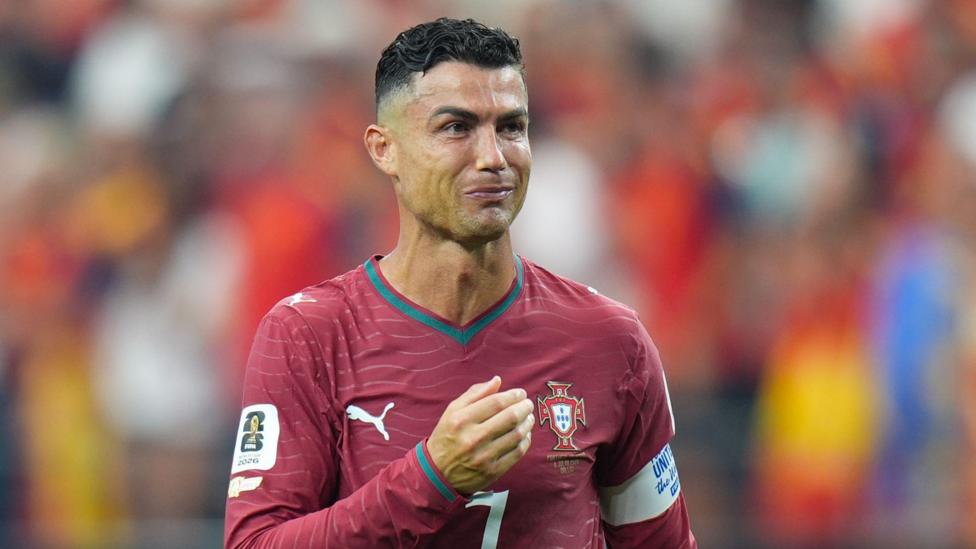
Ronaldo's World Cup Dream Dies as Martinez's System Collapses
Cristiano Ronaldo's World Cup career ends not with triumph but with the tactical bankruptcy of Roberto Martinez's Portugal.

City Pinch Monga From Under Arsenal's Nose
Manchester City beat Arsenal to Leicester's Jeremy Monga, landing the most electric English teenage winger since Bukayo Saka.