Craig Gordon's Relentless Comebacks End With Scotland World Cup Dream
From a near-fatal injury to Scotland's World Cup squad at 43, Craig Gordon's career defied every logical expectation.
A Career That Refused to End
Craig Gordon has retired from professional football at 43 years old, closing a chapter that reads like a medical drama crossed with a sporting fairytale. His inclusion in Scotland's World Cup qualifying setup seemed utterly impossible just months ago. That he made it this far at all is a testament to a body and mind that simply refused to quit.
The goalkeeper's career was never a straightforward arc. It was punctuated by devastating setbacks, each one severe enough to end a normal player's career. Gordon survived them all, returning at every level and outlasting an entire generation of successors.
His final act was somehow willing himself into contention for a World Cup with Scotland. That pursuit, coming after everything his body endured, represents the most improbable milestone in a career defined by the improbable.
The Horror Injury That Nearly Killed Him
The defining moment of Gordon's late career came on December 24, 2022, a night that changed everything. Playing for Heart of Midlothian against Dundee United, he collided violently with Steven Fletcher while rushing off his line. The impact shattered his leg in three places.
This was not a standard football injury. Surgeons later confirmed the break was so severe that Gordon faced the genuine possibility of losing his leg. Infection set in during the early stages of recovery, and the medical team fought to keep the limb viable.
Doctors told him he would be lucky to walk normally again, let alone play competitive football. For a man then aged 39, the logical outcome was immediate retirement. Instead, the injury became the starting point for what would become the most remarkable chapter of his career.
The Long Road Back
Rehabilitation lasted over 18 months, spanned multiple surgeries, and tested every ounce of Gordon's resolve. He documented the grind privately, sharing only fragments with the public as months turned into a year and then more. The silence from his camp led many to assume he had quietly retired.
He returned to training with Hearts in the summer of 2024, gradually working his way back into contention. No goalkeeper in Scottish football history had returned from an injury of this magnitude at this age. The medical literature on such comebacks is sparse because almost nobody attempts them.
Gordon made his competitive return for Hearts in the 2024-25 season, looking as sharp as he had before the nightmare. His shot-stopping reflexes remained intact, as did his command of the penalty area and his distribution under pressure. He was not merely making up the numbers; he was performing at a level that demanded attention from the national team setup once again.
Steve Clarke's Impossible Decision
Scotland manager Steve Clarke faced a genuine selection dilemma as World Cup qualifying approached. The goalkeeping position had been a rotating cast during Gordon's absence, with Angus Gunn, Zander Clark, and Liam Kelly all taking turns without anyone truly seizing the role.
Gordon's form for Hearts forced the conversation. His experience across 75 international caps brought a dimension no other Scottish goalkeeper could match. He had played in major tournament environments, understood the pressure of must-win qualifiers, and possessed the kind of composure that only comes from surviving a career's worth of chaos.
Clarke has always valued reliability and institutional knowledge, and Gordon offered both in abundance. The call to include a 43-year-old who had nearly lost his leg two years earlier defied conventional football logic. But little about Gordon's career ever followed conventional logic.
A Career Built on Comebacks
Long before the leg break, Gordon's career was already a study in resilience. He broke through at Hearts as a teenager in the early 2000s, establishing himself as the most promising goalkeeper Scotland had produced in a generation.
A £9 million transfer to Sunderland in 2007 made him the most expensive goalkeeper in British football history at the time. That record alone underscored the level of belief English football had in his abilities. The fee was astronomical for a goalkeeper then, and it reflected the genuine scarcity of top-tier goalkeeping talent in the British market.
But the Premier League years were repeatedly disrupted by knee injuries that eventually required surgery and long layoffs. Sunderland released him in 2012, and Gordon spent nearly two full years out of the game, training alone and considering whether his career was already over at 29.
Celtic offered him a lifeline in 2014, a move many viewed as a gamble on a damaged player. Gordon repaid that faith with four league titles, two Scottish Cups, and a period as the undisputed first-choice goalkeeper at Parkhead. His performances in the Champions League reminded audiences that the talent which commanded that record fee had never truly disappeared.
He returned to Hearts in 2020, initially on a two-year deal that evolved into something far more permanent. He reclaimed the number one spot for club and country, playing some of the best football of his life well into his 40s.
The Dressing Room Reaction
Inside the Scotland camp, Gordon's presence carried a weight that went beyond his goalkeeping. Younger players who had grown up watching him were now sharing a dressing room with him. The atmosphere when he reported for international duty was a mixture of reverence and disbelief.
Players who had been through their own injury battles sought him out for guidance. The medical staff who had monitored his recovery from afar watched his daily routine with quiet admiration. Gordon trained with the intensity of a player half his age, leaving nothing to chance in a comeback that had already exceeded every medical expectation.
His teammates understood they were witnessing something unprecedented. A 43-year-old goalkeeper contending for a World Cup spot after nearly losing his leg was not in any coaching manual or sporting script.
"I never came back to be a story. I came back to play, to contribute, to give everything I had left. Everything else is just noise." — Craig Gordon, reflecting on his return
The Numbers Behind a Stubborn Career
- 75 senior international caps for Scotland across more than two decades of service
- £9 million transfer fee in 2007, a British record for a goalkeeper at the time
- Nearly two years out of professional football between 2012 and 2014 before his Celtic revival
- Returned to competitive action at Hearts approximately 20 months after the career-threatening leg break
What It Means
Gordon's retirement marks the end of one of Scottish football's most extraordinary careers, and its closing chapter was somehow its most unbelievable. A player who faced death, career-ending injury, and years of isolation still found his way to the edge of a World Cup squad at 43.
For Scottish football, his story will serve as a reference point for generations of players facing their own career-threatening setbacks. Hearts lose a dressing room leader whose influence extended far beyond his performances on the pitch.
For Steve Clarke and the national team, Gordon's final incarnation offered a brief solution to a persistent problem. More importantly, it provided a living lesson in perseverance that no coach can deliver from a tactics board.
The goalkeeper who was once told he might never walk properly again finished his career chasing a World Cup. That single sentence captures everything you need to know about Craig Gordon.
Editorial Integrity
This is an original SportPulse article written by our editorial team. All content is independently researched, written, and reviewed by our writers and editors before publication. We do not publish copied, aggregated, or syndicated content.
SportPulse is committed to original sports journalism. Read our editorial policy or contact us with any questions.
More Like This
All football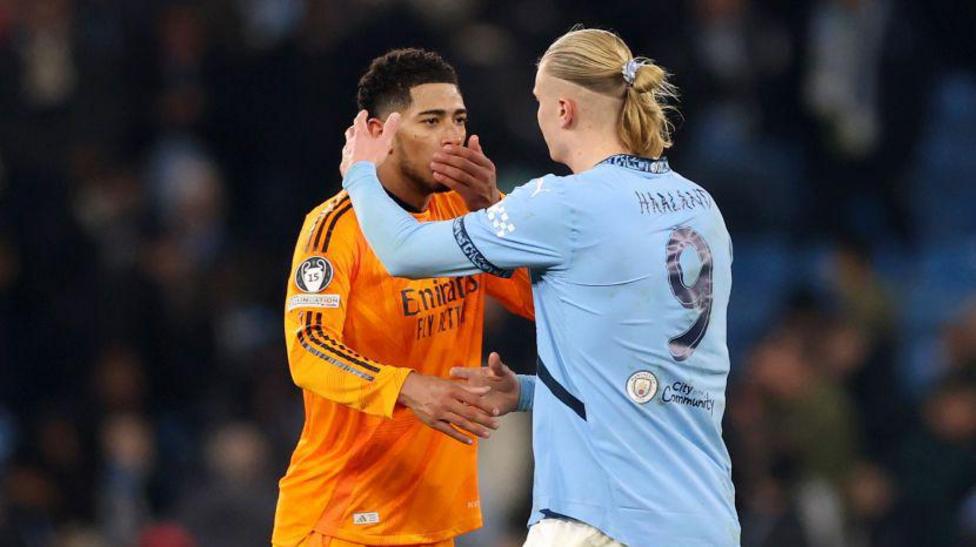
How Bellingham and Haaland Rewrote Football's Friendship Playbook
Real Madrid and Manchester City superstars prove modern football relationships can thrive beyond PR scripts and club rivalries.
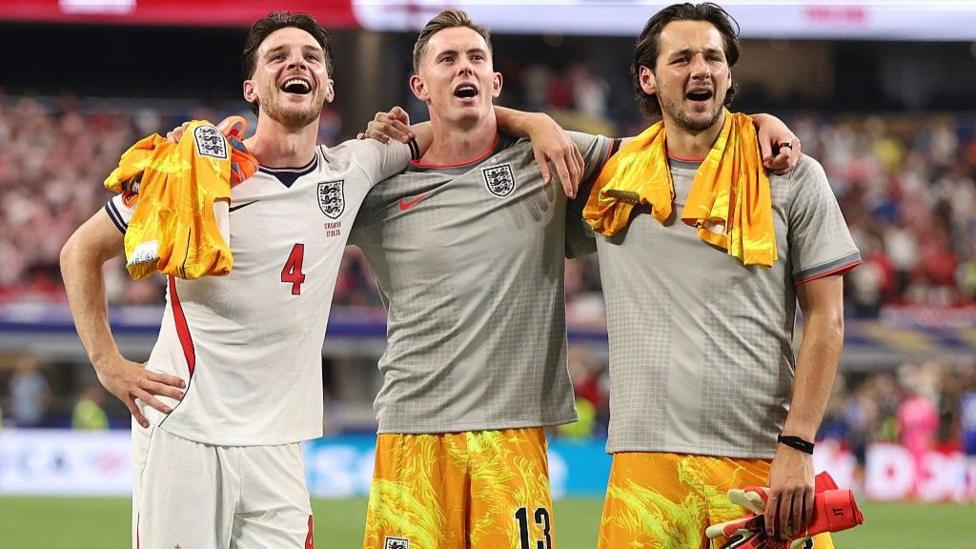
How Sweet Caroline Became England's Unofficial Anthem of Joy
From baseball stadiums to Wembley, the unlikely journey of Neil Diamond's classic into the heart of English football culture.

Who Am I? The World Cup Star No 35 Guessing Game
Test your World Cup knowledge with five cryptic clues to identify mystery player No 35 before the reveal.