Cyborg's Last Stand: A Legend Bows Out Against Viera
Cris Cyborg's storied MMA career concludes on August 22 in a PFL title defense against Ketlen Viera.
The most dominant force in women's featherweight history is stepping into the cage one final time. Cris Cyborg will defend her PFL featherweight world title against Ketlen Viera on August 22, officially closing the book on an era-defining career. It is not a quiet exit. It is a desperate, violent exclamation point at the summit of the sport she helped build.
Cyborg does not dofarewell tours. She issues ultimatums. By putting her title on the line against the division's most dangerous contender, she guarantees her retirement fight will be a bloody, high-stakes affair rather than a ceremonial victory lap.
The End of an Era
The announcement strips the upcoming PFL card of its routine promotional gloss and replaces it with genuine historical weight. Cyborg's career spans the entirety of mainstream women's MMA. She was the terrifying enigma of Strikeforce, the undisputed queen of Invicta FC, and the concurrent conqueror of the UFC and Bellator. Now, under the PFL banner, she is determined to exit on her terms, with gold around her waist.
The numbers differentiating Cyborg from her peers are staggering. She holds a professional record of 27-2-0 with 1 No Contest, but the sheer volume of finishes tells the true story of her reign. Of her 27 victories, an absurd 21 have come by way of knockout. That translates to a career finishing rate of roughly 77.7%, a statistic that belongs in a different statistical universe entirely.
When Cyborg debuted in 2005, women's MMA was treated as a niche curiosity. When she fights Viera, she exits a landscape where female fighters headline global events and drive massive pay-per-view revenue. Her legacy is the sport's current commercial reality.
The Statistical Dominance
- 27-2-0 professional record with 1 NC
- 21 knockouts in 27 wins (a 77.7% finish rate)
- Held titles simultaneously across Strikeforce, Invicta FC, UFC, Bellator, and PFL
- Only fighter in MMA history, male or female, to become a Grand Slam Champion across four major promotions
- 4.2 significant strikes landed per minute with a +2.1 striking differential across her prime
"I have given my life to this sport. I want to leave exactly how I came in, swinging and winning." — Cris Cyborg
The Challenger: Ketlen Viera
Ketlen Viera is the worst possible opponent for a sentimental retirement night. The Brazilian contender is not a hand-picked walkover. She is a brutal, grinding specialist who has spent the last two years violently inserting herself into title contention. Viera earned this shot by systematically dismantling the division's upper echelon.
Viera's path to the title eliminator has been defined by suffocating grappling and destructive ground-and-pound. In her recent wins over former champions, she averaged 4.8 takedowns per 15 minutes, completely neutralizing elite striking outputs. Her style is the exact tactical antithesis to Cyborg's aggressive, forward-marching Muay Thai.
This is a clash of fighting identities. Cyborg operates at a pace designed to break opponents within the first eight minutes. Viera operates at a pace designed to exhaust them into the championship rounds where her grappling advantages multiply. If Cyborg cannot find the early finish, Viera's chest-to-chest pressure becomes an increasingly dangerous variable.
Viera's Path to the Title
- First-round submission over Sara McMann, exploiting a defensive wrestling lapse
- Split decision victory against Holly Holm, neutralizing Holm's volume striking with cage control
- Dominant unanimous decision over Pam Sorenson, landing 127 significant strikes and 5 takedowns
The Bottom Line: Viera is not fighting for a trophy. She is fighting to ruin a legend's farewell. Motivation edges cut both ways, but a desperate contender often provides a sharper edge than a satisfied champion.
Tactical Breakdown: The Collision of Styles
The fundamental question of this fight centers on distance management. Cyborg has spent her career fighting on the inside, using raw power and technical clinch elbows to shatter guards. Her preferred distance is phone-booth range, where her 85% clinch striking accuracy becomes the dominant variable.
Viera cannot win at that distance. Her path to victory runs strictly through the takedown. When Viera converts takedowns at rates above 60%, her control time frequently eclipses six minutes per round. Against a striker like Cyborg, even a single wasted exchange on the feet risks a sudden, consciousness-altering finish.
Cyborg's takedown defense has historically hovered near 78%, an elite metric that has kept fights exactly where she wants them: standing and bloody. However, recent film shows slight mechanical delays in her sprawl timing, particularly against level changes that follow feinted overhand rights. Viera's best moments have come from chaining strikes intoograpple sequences without pausing for mechanical resets.
Expect Viera to test Cyborg's defensive reactions early with cautious, stiff jabs. If those jabs force Cyborg to shell up, the level change follows immediately. If Cyborg walks through Viera's jab with looping hooks, Viera risks taking clean power shots to close the distance.
Verdict: The first round will be a high-stakes feeling-out process, but it will dictate the entire trajectory of the fight. If Cyborg hurts Viera early, the finish will follow with brutal certainty inside two rounds. If Viera secures an early takedown and drains Cyborg's gas tank, the championship rounds will become entirely unavoidable.
The Weight of Legacy
Cyborg exiting the sport as an active defending champion is a crucial psychological and historical detail. Many greats stay too long, chasing diminishing returns until the sport finally ejects them. By scheduling her retirement on the front end of a title defense, Cyborg controls the narrative framework entirely.
She leaves as the undisputed queen of 145 pounds, a division she has practically owned for nearly two decades. Her Grand Slam of titles across four major promotions remains unmatched. No other fighter has conquered the fragmented landscape of women's MMA so comprehensively.
This fight also carries massive implications for the PFL. The promotion absorbs the credibility of hosting Cyborg's farewell. It validates their recent acquisitions and signals to the market that the PFL platform can deliver career-defining moments. If the fight delivers the expected violence, the replay value and promotional clips alone will serve as enduring marketing assets.
Verdict: Legacy preservation demands a dominant performance. A loss does not erase Cyborg's historical standing, but a definitive, brutal victory ensures her mythos remains untouched as the sport evolves beyond her active participation.
What Comes Next
Once Cyborg vacates the title, the PFL featherweight division immediately plunges into a power vacuum. The winner of this bout likely becomes the cornerstone of the division's next promotional cycle. If Viera wins, she captures the crown and the scalp simultaneously, instantly becoming the face of the division. If Cyborg wins, the PFL must orchestrate a new title fight to fill the massive void left by her departure.
For Cyborg, life after August 22 pivots toward boxing and promotional ventures. She has long expressed interest in competing under traditional boxing rules, where her raw power translates effectively. Her departure from MMA does not mean her departure from combat sports entirely.
For the sport she leaves behind, the loss is inglorious but inevitable. Champions age. Styles evolve. New athletes arrive to claim the throne. What remains is the blueprint Cyborg authored: an aggressive, finish-heavy, fearless approach that turned a niche sport into a global spectacle.
On August 22, the most dominant featherweight in MMA history steps into the cage for the last time. Win or lose, the era of Cyborg ends the way it began. Violently, unapologetically, and entirely on her own terms.
Editorial Integrity
This is an original SportPulse article written by our editorial team. All content is independently researched, written, and reviewed by our writers and editors before publication. We do not publish copied, aggregated, or syndicated content.
SportPulse is committed to original sports journalism. Read our editorial policy or contact us with any questions.
More Like This
All long-reads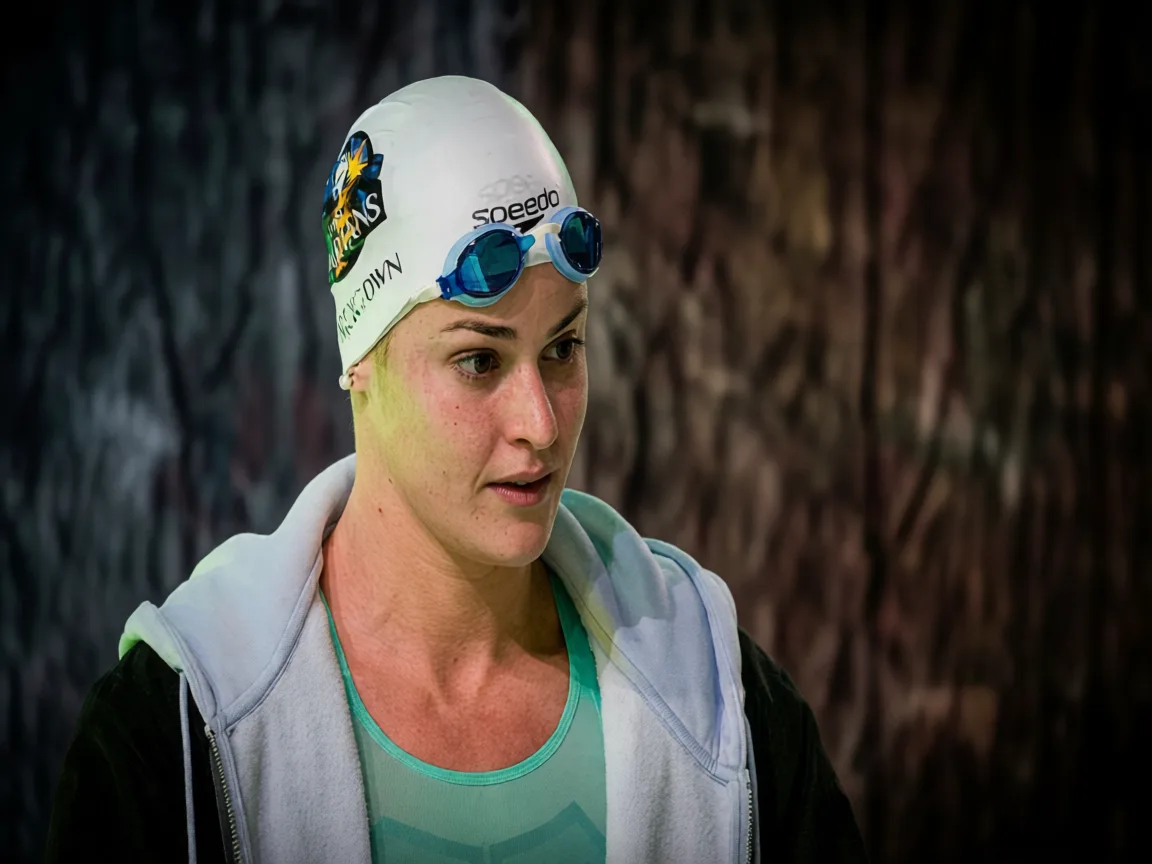
McKeown's Glasgow Withdrawal Rocks Commonwealth Games
Olympic backstroke queen Kaylee McKeown pulls out of Glasgow 2026 with glandular fever, leaving aquatics without its brightest star.

Prisoner 804: The Slow Erasure of Pakistan's Greatest Sporting Icon
From World Cup glory to a prison cell, Imran Khan's story exposes the dangerous entanglement of sport and state power in Pakistan.
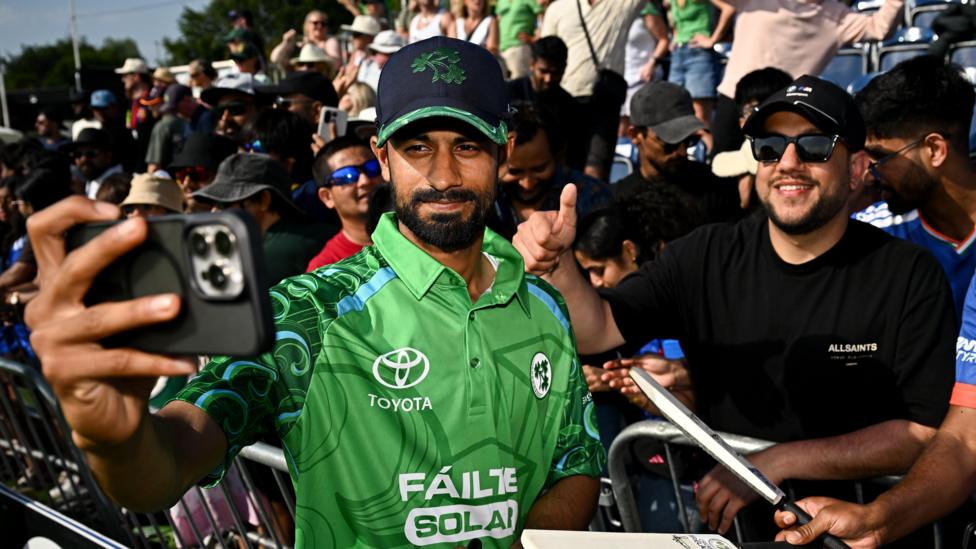
Moondra's Dream Delivery Powers Ireland's Seismic T20 Upset
India-born bowler Jai Moondra's heroics powered Ireland to a seismic T20 upset over cricket's reigning kings.