MetLife's World Cup Illusion: Why Cycling Exposes a Infrastructure Crisis
A Brooklyn-to-New Jersey bike ride to MetLife Stadium reveals the deep transportation flaws lurking beneath the 2026 World Cup spectacle.
The rhetoric surrounding modern mega-events frequently prioritizes aesthetic grandeur over functional logistics. When FIFA rebranded MetLife Stadium as the New York New Jersey Stadium for the 2026 World Cup, it applied a glossy, binational veneer to a venue fundamentally disconnected from the urban core it purports to represent. Yet beneath the architectural renderings lies a fractured transit reality. A simple experiment, cycling from Brooklyn to the stadium, exposes the spatial contradictions of hosting a metropolitan tournament in a location engineered exclusively for the automobile.
The Car-Centric Blueprint
MetLife Stadium sits in the Meadowlands Sports Complex, a spatial construct born of 20th-century American urban planning. It was designed around highways, vast parking lots, and the assumption that every attendee operates a private vehicle. This layout is fundamentally anathema to the pedestrian-friendly, transit-oriented culture characteristic of European football. Stadiums on the continent increasingly integrate into the urban fabric. MetLife remains isolated, an island of concrete reachable primarily by承受ing the infamously congested New Jersey Turnpike.
This infrastructure deficit becomes glaring when subjected to the practical demands of a World Cup. The tournament will draw hundreds of thousands of international visitors accustomed to robust public transit. The local transit Authority's Metro-North and NJ Transit lines offer limited connections, primarily via the Secaucus Junction. However, testing the viability of non-vehicular access from the greater New York area reveals the depth of the problem.
Navigating the Meadowlands
- Distance from Brooklyn: A gruelling 20-plus mile journey traversing multiple jurisdictions.
- Infrastructure gaps: A route heavily reliant on navigating bridge crossings not built with cyclists in mind.
- Final approach: An inhospitable final stretch devoid of bike lanes, dominated by highway ramps and stadium-service roads.
The fundamental tactical error in the stadium's integration is the complete absence of a protected active transit corridor. Municipal planning between New York and New Jersey failed to bridge the infrastructure gap between the five boroughs and the Meadowlands complex.
The Tactical Shift: Reimagining Stadium Accessibility
Tactical Shift
The traditional paradigm of American stadium accessibility operates on a singular axis: the private vehicle. To successfully host a global tournament, planners must urgently execute a tactical shift toward multimodal integration. This demands a conceptual pivot from spacious but simplistic to dense and interconnected. Local authorities need to treat the stadium as an urban node rather than a suburban outpost. Translating European accessibility models to the American context means establishing effective emergency transit lines and implementing comprehensive bicycle infrastructure along the entire route to the venue.
This seamless integration is the core of European matchday culture. Clubs ensure that a stadium is woven into the metropolitan network, reducing the matchday commute to a manageable component of the fan experience. MetLife currently lacks this tactical fluidity in its transit approach.
A critical adjustment requires secure, protected bicycle infrastructure along the entire route, specifically addressing the bottlenecks at major crossings. The plan must also incorporate active mode share into its transit blueprint. This means not merely accepting cyclists, but actively engineering for them.
What the Numbers Say
- 82,500 is the stated seating capacity for World Cup matches.
- 0 dedicated bike lanes currently lead to the stadium perimeter.
- $2 billion was spent on stadium construction without integrating a mass transit hub.
- Transit redundancy is practically non-existent, making any systemic failure catastrophic.
The Urbanist Critique
From a European continental perspective, the reliance on the automobile is a glaring structural failure. European stadiums often have multiple transit modalities overlapping. This includes suburban rail, urban metro lines, trams, and increasingly, protected cycling networks. The Tactical Shift required for MetLife is not merely logistical, but philosophical. Planning must shift from a monolithic reliance on vehicular traffic to a diverse, fluid transit ecosystem that prioritizes active and public transportation.
This is a crucial test for the organizing committee. The spatial confines of the area dictate a rigorous need for integrated planning. A heavy reliance on bus rapid transit along dedicated highway corridors is a stopgap. True infrastructure equity requires establishing permanent, functional active transit routes.
The journey from Brooklyn underscores a broader issue within American stadium construction. Venues are frequently treated as islands. They are spatial centers disconnected from the daily life of the city. By cycling the route, the stark reality of these infrastructure choices becomes immediately apparent. The New York New Jersey Stadium is a name that implies proximity and connection. The asphalt reality reveals a disjointed geography.
"The true measure of a stadium's integration is not how quickly a private vehicle can access its parking lot, but how seamlessly a citizen on a bicycle or a commuter on a train can arrive at its turnstiles."
The Bigger Picture
FIFA demands host cities provide elaborate transit plans, but the reality often falls short during execution. For the 2026 World Cup, the organizing committee must address these infrastructural shortcomings before the tournament begins. The inherent risk is a fan experience defined by logistical frustration rather than sporting celebration.
The logistical model currently relies on massive park-and-ride systems. These systems will funnel fans into an already overwhelmed local transit network. This framework is untenable for a tournament expecting concurrent waves of global visitors. The Tactical Shift demanded here is a complete reimagining of stadium accessibility. The focus must pivot from highways to multimodal transit corridors. If MetLife Stadium is to successfully host the World Cup Final, it requires more than a name change.
The experiment of cycling to the stadium is therefore less an extreme individual test and more a diagnostic tool. It highlights the urgent need for systemic infrastructural reform. The 2026 World Cup offers a spark to ignite this necessary evolution in American urban planning. The question is whether local authorities will seize this opportunity or simply revert to the car-centric status quo once the tournament concludes.
Looking Ahead
The upcoming tournament will serve as a stress test for regional infrastructure. The tactical functionality of the transit network will be exposed under the immense pressure of global demand. The Brooklyn-to-MetLife route is a microcosm of the broader challenge. It reveals the fragmented geography of the region. It also highlights the inequity of a system that privileges the private vehicle above all other modes of transit.
The local organizing committee must implement comprehensive multimodal solutions. These solutions must transcend temporary tournament fixes. They should establish lasting infrastructure legacies. The next steps involve rigorous planning and investment in active transit networks. The focus must be on connecting the stadium to the urban core it represents. The cycling distance may be ambitious, but the infrastructure must exist to support those attempting it.
The true legacy of the 2026 World Cup should not merely be architectural. It must be fundamentally infrastructural. The region needs a permanent evolution in how its most prominent venues connect to the people they serve. The tactical matchups on the pitch must not be overshadowed by the logistical failures off it. A successful World Cup requires a venue fully integrated into the metropolitan entity it claims to call home.
Editorial Integrity
This is an original SportPulse article written by our editorial team. All content is independently researched, written, and reviewed by our writers and editors before publication. We do not publish copied, aggregated, or syndicated content.
SportPulse is committed to original sports journalism. Read our editorial policy or contact us with any questions.
More Like This
All football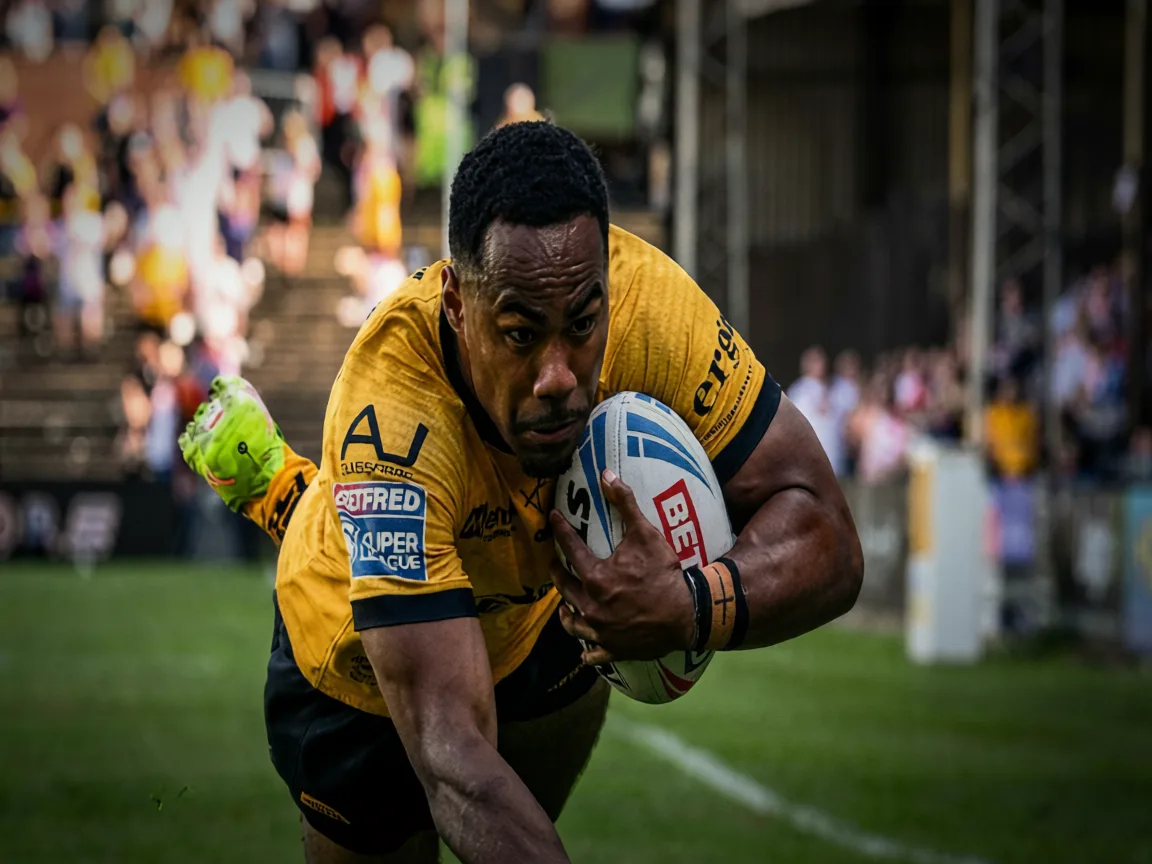
Castleford's 16-Point Comeback Exposes Leeds' Soft Underbelly
Castleford Tigers overturned a 16-point deficit to beat Super League leaders Leeds Rhinos 36-34 in a West Yorkshire derby for the ages.

Wigglesworth Backs Janse van Rensburg to Transform England Midfield
England's senior assistant hails Benhard Janse van Rensburg as an all-court midfield weapon capable of reshaping the backline.

Wilson Returns to Premier League With Leeds After Fulham Exit
Harry Wilson swaps Craven Cottage for Elland Road on a free transfer, betting big on himself in the top flight.