The Czech Republic's Grass Court Dynasty Continues
Muchova versus Noskova is the first all-Czech Wimbledon final, extending a dynasty born on grass and forged in resilience.
A Cathedral of Grass and the Czech Soul
There is a particular silence that descends upon Centre Court just before a serve. It is a heavy, expectant quiet, pregnant with over a century of history. On Saturday, that silence will shatter into breathless tension as Karolina Muchova and Linda Noskova step onto the pristine turf. It will be the first all-Czech Wimbledon final in history, a statistic so rich in sporting poetry that it feels absolute. Yet this match is not merely a quirk of the draw. It is the inevitable blossoming of a lineage that has shaped the very DNA of women’s tennis.
The Czech relationship with grass is alchemical, a blend of effortless power and delicate touch that defies the surface’s notoriously low bounce. At the end of what has been one of the most open women’s singles events in recent memory, it feels somehow fitting that two Czech players will duel for the biggest title in the game.
The Lineage of Champions
Martina Navratilova, perhaps the greatest of all time, started the ball rolling when she won the first of her record nine Wimbledon singles titles in 1978. The generational relay baton has barely paused since. Jana Novotna’s tearful, triumphant ascent in 1998 gave way to the thunderous left-handed artillery of Petra Kvitova, who conquered SW19 twice, in 2011 and 2014. The modern era only deepened the dynasty. Marketa Vondrousova lifted the Venus Rosewater Dish in 2023, with Barbora Krejcikova following up in 2024.
This means that by the close of play on Saturday, Czechia will boast a third Wimbledon champion in four years and the sixth of the Open Era. Even by the standards of a nation synonymous with tennis excellence, this is a staggering hegemony.
Muchova’s Canvas of Chaos and Grace
If the trajectory of Czech tennis is a grand river, Muchova has often navigated its most turbulent currents. She arrives at this final carrying the weight and the wisdom of having already contested a major final. In 2023, she pushed Aryna Sabalenka to the absolute brink at the US Open, showcasing a brand of tennis that is equal parts ballet and bar fight. Muchova does not merely hit the ball; she sculpts it.
Muchova is a player who understands geometry on a molecular level. She uses the slice to carve time away from her opponents, dragging them forward into awkward low volleys before passing them with a flick of the wrist. Her serve is not a blunt instrument but a scalpel, targeting the corners with surgical precision. At 27 years old, she has endured injuries that would have retired lesser spirits, making each deep run feel like a triumph over her own physical limits.
Her path to the final has been a display of survival and tactical brilliance. Grass rewards the cerebral, and no one reads a rally’s geometry quite like Muchova. She disrupts rhythm, draws errors, and turns matches into claustrophobic chess matches.
"I always believed the grass suited my game, but believing and actually doing it at Wimbledon are two very different things."
Noskova and the Audacity of Youth
Across the net stands a player unburdened by the agonies of the past. Linda Noskova wields her own youth like a weapon. She brings to Centre Court a fearlessness that is both terrifying and utterly transfixing.
While Muchova constructs points like a master architect, Noskova simply tears down the walls. Her game is built on raw aggression, flat groundstrokes, and an explosive return that neutralizes the biggest serves. She represents a new wave that has no respect for established hierarchies. Grass, with its fast courts and low bounces, perfectly amplifies her power.
At just 20 years old, Noskova is the antithesis of the grinder. She plays with a freedom born of having nothing to lose. Her fairy-tale run to the final has been characterized by a willingness to hit through the court, refusing to engage in lengthy baseline attrition. Against established veterans, she has simply blown them off the court with sheer velocity.
The Contrast of Styles
The matchup is a study in stark contrasts. Muchova’s varied palette—topspin, slice, lobs, drop shots—against Noskova’s relentless, flat power. It is the experienced tactician against the fearless youth. Muchova will try to turn the match into a maze. Noskova will try to smash through the walls.
The Grass Court Genesis of a Nation
To understand why a Central European nation of roughly 10.8 million people has produced such a relentless assembly line of grass-court champions requires understanding a deep cultural reverence for racket sports. From the days of communism, when tennis offered a rare avenue for international travel and expression, the sport embedded itself in the national consciousness.
Czech coaches emphasize all-court games from a young age. They teach the transition from baseline to net in a way that has been lost in the modern baseline-dominated game. Grass, the most demanding surface, rewards this versatility. It punishes one-dimensional hitting and elevates the slice, the volley, and the tactical serve.
Navratilova set the standard, but she also established a template. The Czech player does not just play on grass; they commune with it. They understand that the surface is alive, changing with each match, and they adjust in real time. This tactical flexibility is why Czech players so often peak in the second week of Wimbledon, when the courts turn to worn dirt and the bounce becomes increasingly erratic.
What Saturday Means
When Muchova and Noskova walk out onto the Centre Court for the first all-Czech final, they will carry the weight of Navratilova, Novotna, Kvitova, Vondrousova, and Krejcikova with them. The future is guaranteed in Czech hands, but the transformation is not yet complete.
For Muchova, a victory would be the ultimate validation of a career often interrupted but never abandoned. It would cement her status as one of the most complete players of her generation. For Noskova, it would announce the violent, brilliant arrival of tennis’s next superstar, proving that her game translates to the highest pressure the sport can offer.
But beyond the individual narratives, Saturday is a celebration of a system, a philosophy, and a culture. It is the day the Central European nation that adopted grass as its own finally gets to watch two of its daughters fight for its most cherished crown. The silence before the first serve will not last long, but its echo will resonate for generations.
Editorial Integrity
This is an original SportPulse article written by our editorial team. All content is independently researched, written, and reviewed by our writers and editors before publication. We do not publish copied, aggregated, or syndicated content.
SportPulse is committed to original sports journalism. Read our editorial policy or contact us with any questions.
More Like This
All tennis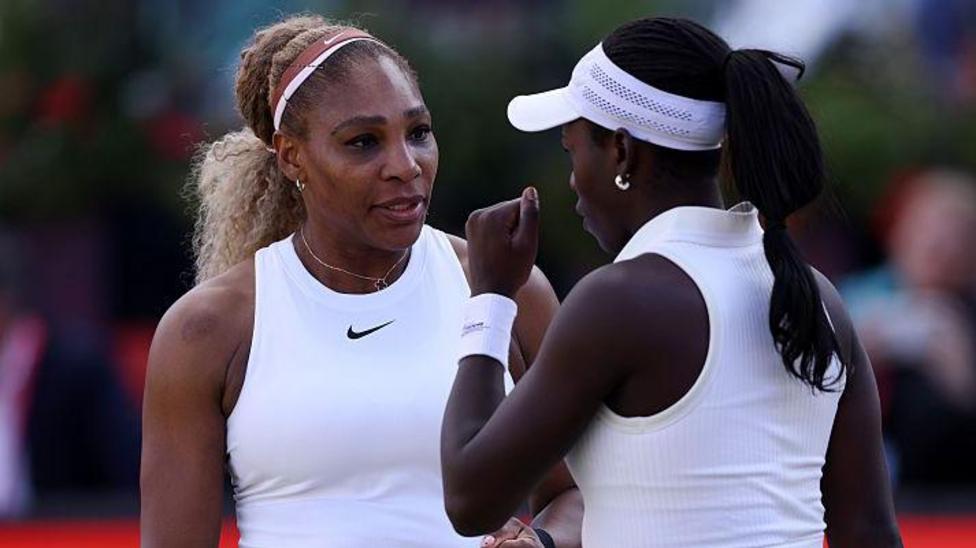
Williams' Queen's Doubles Dream Cut Short by Mboko's Knee Injury
Serena Williams' doubles partnership with rising star Victoria Mboko at Queen's ends before it truly begins.
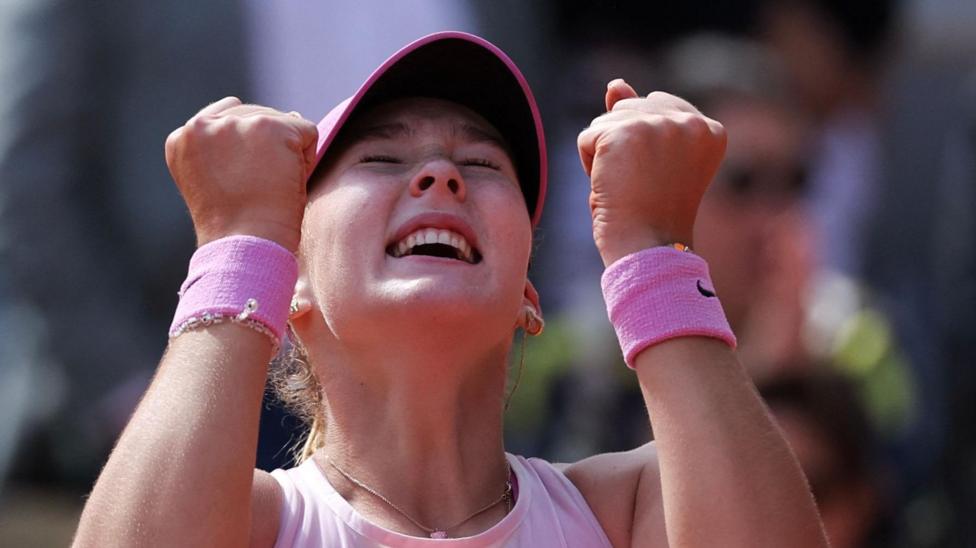
Five Reasons This French Open Will Echo Through Tennis History
Shocks, dramas, and fairytale runs at Roland Garros delivered a Grand Slam classic for the ages.
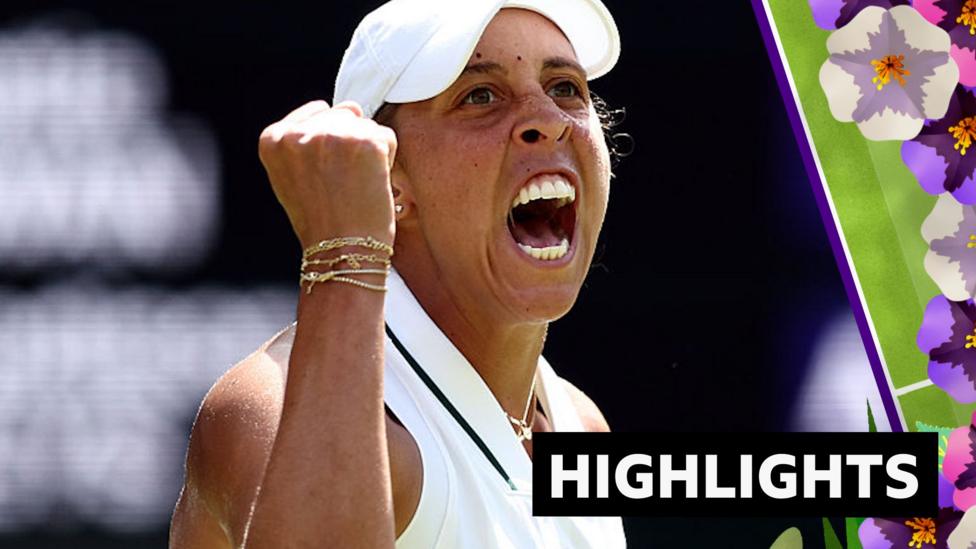
Keys Powers Past Swan to End British Women's Singles Dream
Madison Keys dismantled Katie Swan in straight sets, extinguishing Britain's last hope in the women's draw.