The Last Slice: Dan Evans Says Goodbye on His Own Terms
Dan Evans walked off Wimbledon's grass one final time — a career of defiance, talent, and redemption complete.
A Farewell Written in Grass
There was no roaring comeback, no fairy-tale final act scripted for Centre Court. Dan Evans and his young doubles partner Henry Searle bowed out of Wimbledon in a straight-sets defeat, and just like that, the curtain came down on one of the most complicated, frustrating, and ultimately endearing careers British tennis has ever produced.
Evans stood at the net, eyes glistening, and told the crowd that everything was worth it. In a sport that increasingly rewards physical machines and baseline power brokers, Evans carved out a living with guile, touch, and a stubborn refusal to play by anyone else's rules. His farewell felt exactly like the man himself — unscripted, a little rough around the edges, and deeply honest.
Born in Birmingham, Built Different
Daniel Evans grew up in Solihull, a suburb of Birmingham where tennis courts exist but tennis culture does not. There was no academy pipeline funneling him toward greatness. No wealthy family bankrolling a junior circuit across Europe. Evans was a product of British Tennis's development system at a time when that system was still figuring out how to produce Grand Slam contenders.
What the system could not teach, Evans possessed instinctively. His backhand slice became his signature — a low, skidding weapon that disrupted opponents' rhythm and turned matches into tactical puzzles. Where others bludgeoned forehands with modern rackets and polyester strings, Evans played chess. His game was anachronistic, almost rebellious, and it made him appointment viewing for anyone who appreciated tennis as an art form rather than a power contest.
He turned professional in 2006, and for years floated in the netherworld outside the top 100. The talent was obvious. The results were not. Evans became one of those players opponents dreaded facing in early rounds, the kind of draw nobody wanted because he could beat anyone on his day. The problem was that his day did not come often enough.
The Fall and the Wilderness
Every career has a crisis point, and for Evans, it arrived in devastating fashion in 2017. He tested positive for cocaine, a recreational substance that carried a mandatory suspension under anti-doping rules. The ban lasted 12 months, and during that period, Evans lost his ranking, his income, and — for a time — any realistic hope of returning to the top level of professional tennis.
The British press was unforgiving. Here was a player who had shown flashes of brilliance — a run to the fourth round of the US Open in 2013, victories over top-10 opponents, the raw ability to compete at the sport's highest table — and he had thrown it all away. Critics wrote him off. The tennis world moved on.
But Evans did not disappear. He trained quietly, rebuilt his body, and returned to the tour with something he had lacked before: purpose.
"I had to earn everything back. Every ranking point, every wild card, every bit of respect. Nobody was going to hand it to me." — Evans on his comeback
The Second Act
What followed was, by any measure, one of the great redemption arcs in modern British sport. Evans clawed his way back through Futures events and Challengers, the unglamorous back roads of professional tennis where prize money barely covers hotel bills. He won matches he was supposed to lose. He beat players a decade younger with superior athleticism but inferior tennis IQ.
By 2019, Evans had broken back into the top 50. By 2021, he reached a career-high singles ranking of No. 21 in the world, a staggering achievement for a player who had been unranked just three years earlier. That season, he captured his first ATP title at the Murray River Open in Melbourne and posted wins over some of the game's elite.
His Davis Cup contributions were equally significant. Evans was a cornerstone of Great Britain's Davis Cup campaigns, bringing a fiery competitiveness to team competition that elevated his individual performances. In the navy blue of his country, Evans played with an edge that suggested tennis was not just his profession but his identity.
Career by the Numbers
Career by the Numbers
- Career-high singles ranking: No. 21 (2021)
- ATP singles titles: 3
- Davis Cup ties played: Over 25 appearances for Great Britain
- Grand Slam best result: Fourth round — US Open (2013), Australian Open (2017, 2021)
- Wins over top-10 opponents: Multiple, including victories over top-five ranked players
- Professional career span: Nearly two decades (2006–2025)
- Months lost to suspension: 12 (2017–2018)
The Craft of a Throwback
To understand why Evans' farewell resonates, you have to understand what he represented. Modern tennis is trending toward homogeneity: big servers, heavy topspin, explosive movement. Evans offered something different. His slice backhand was not a defensive tool but a weapon of disruption. He could knife it low to the net, float it deep to buy time, or use it to drag opponents into the forecourt where his deft volleying took over.
He played with an economy of movement that frustrated coaches and delighted purists. While contemporaries sprinted corner to corner, Evans read the game two shots ahead. His serve was never a powerhouse, but his placement and variation kept returners guessing. He was the kind of player whose matches were more interesting than his results, which is both a compliment and a gentle criticism.
The question that haunted Evans' career was always the same: what if? What if the talent had been matched by discipline from the start? What if the cocaine ban had never happened? What if he had possessed a top-five serve to complement his top-five brain? These are unanswerable questions, and Evans himself seems to have made peace with that.
The Final Bow
Wimbledon was the only fitting stage for this goodbye. Evans had hoped for one last singles appearance, but the All England Club refused him a wildcard. The Lawn Tennis Association's refusal to explain the decision drew sharp criticism from the retiring Briton, who accused the governing body of "lacking the minerals" to tell him why he was denied the farewell he sought.
Instead, Evans ended his career on the lowly settings of Court 15 on Wednesday. Partnering Henry Searle, a teenager representing the next generation of British tennis, added a poignant symmetry. Evans' career began as a young hopeful waiting for his chance. It ended alongside one. The torch was not so much passed as gently set down.
The match itself was a swift, straight-sets affair. Evans and Searle were defeated 6-2, 6-4 by the ninth seeds, Hugo Nys and Édouard Roger-Vasselin. The defeat itself was secondary. What mattered was the ovation, the wave, the tears. Evans had spent his entire career proving people wrong — proving he could come back, proving he belonged, proving that talent does not expire just because the world stops paying attention. His final act on a tennis court proved something else entirely: that vulnerability and gratitude are not weaknesses.
What He Leaves Behind
Evans will not be remembered as a Grand Slam champion. He will not feature in Hall of Fame debates or greatest-of-all-time conversations. But his legacy in British tennis is secure, carved not in trophies but in stubbornness and heart.
He showed an entire generation of British juniors that there is more than one way to win a tennis match. He proved that a doping ban does not have to be a death sentence for a career. He demonstrated that the road back from rock bottom, while punishing, is navigable.
For the All England Club, for British Tennis, and for anyone who ever watched Evans conjure a drop shot from nothing and thought that was beautiful, the farewell was not just emotional. It was earned.
Everything was worth it, Dan. Every single point.
Updated: 2026-07-01 — Added Evans' criticism of Wimbledon organizers for refusing a singles wildcard and the specific details of his final doubles match (Court 15, 6-2, 6-4 loss to Nys/Roger-Vasselin).
Editorial Integrity
This is an original SportPulse article written by our editorial team. All content is independently researched, written, and reviewed by our writers and editors before publication. We do not publish copied, aggregated, or syndicated content.
SportPulse is committed to original sports journalism. Read our editorial policy or contact us with any questions.
More Like This
All tennis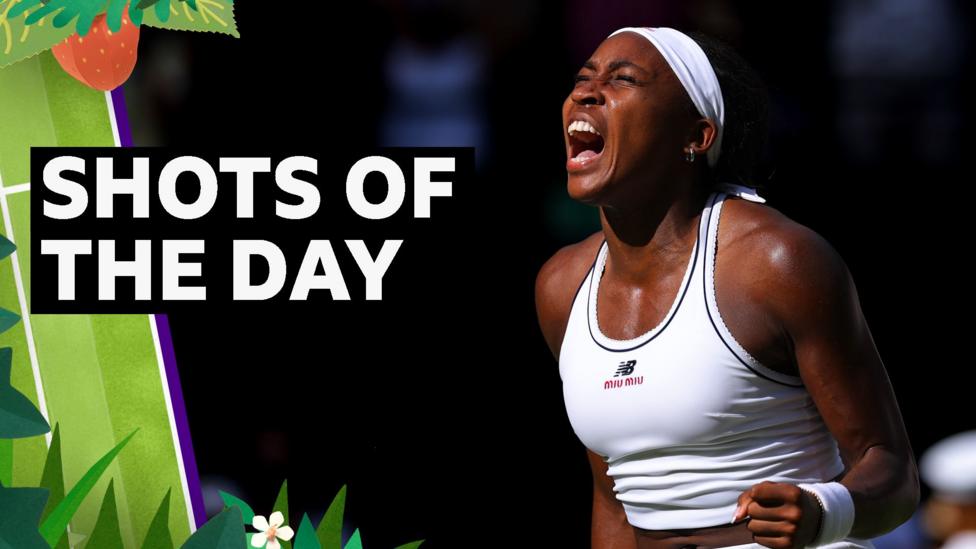
A New Era Arrives on Grass: Gauff and Andreeva Light Up Wimbledon
Coco Gauff and newly crowned French Open champion Mirra Andreeva delivered day three's most dazzling moments at Wimbledon 2026.
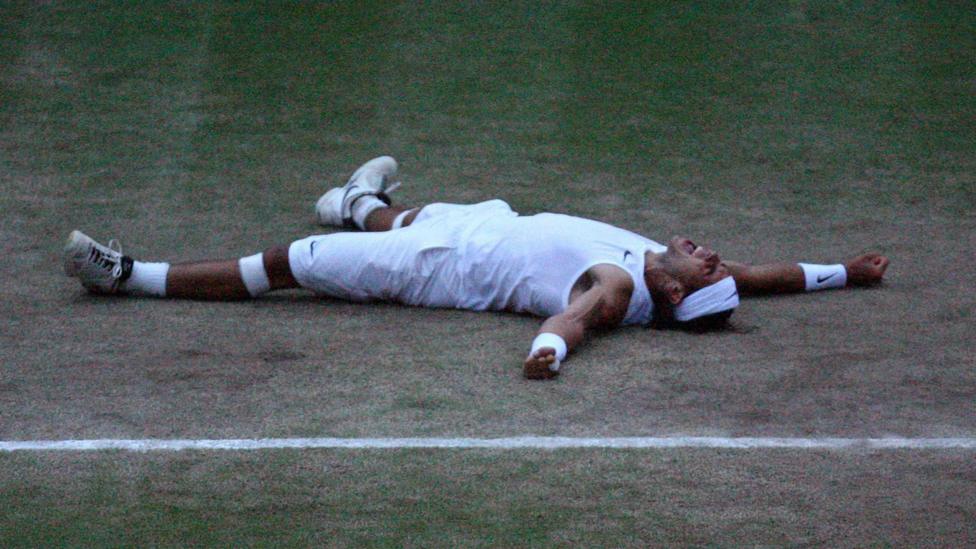
Nadal Reflects on the Match That Shattered Gravity
Rafael Nadal revisits his seismic 2008 Wimbledon triumph over Roger Federer, a five-set epic that redefined tennis history.
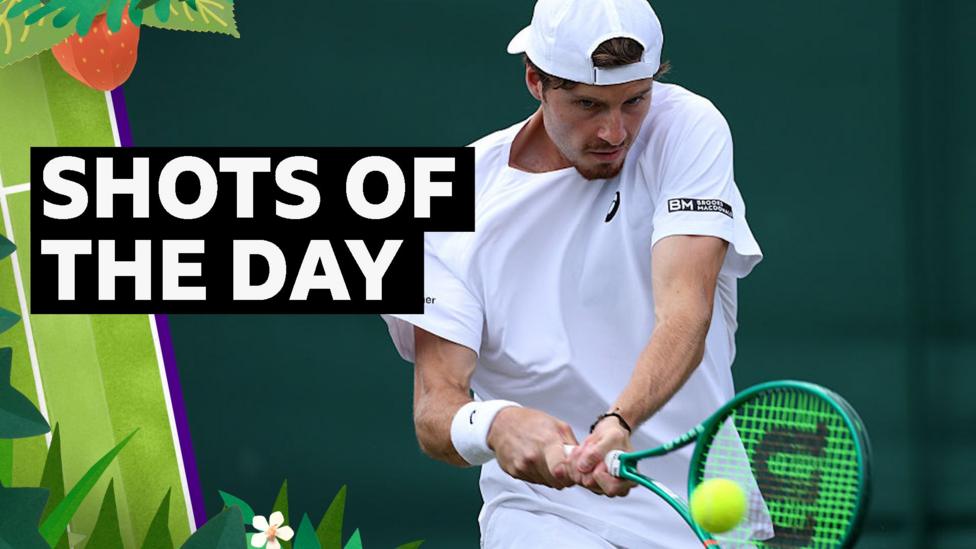
Wimbledon Day Two: Grass-Court Magic and British Hopes Ignite SW19
Day two of Wimbledon 2026 delivered jaw-dropping rallies and fearless shot-making, with British hope Toby Samuel lighting up the lawns.