Dembélé Crowned: How a Tactical Chameleon Conquered the World
Ousmane Dembélé's coronation as the world's best footballer reflects a game increasingly defined by tactical versatility over raw output.
What makes a good player great, and a great player the best? This question has been occupying me since 2014, when the Guardian first asked me to contribute to its inaugural Next Generation feature. My job was to look for a France-based talent born in 1997 who could go on to have a stellar career.
After a great deal of research, I narrowed it down from my shortlist of five by asking questions not about the players’ football ability, but about other attributes: resilience, adaptability, decision-making, creativity, work ethic, response to feedback and willingness to learn. Qualities we cannot see, and are harder to measure. Ousmane Dembélé emerged as the standout choice, his potential rooted in these intangible traits that would later define his journey to the top.
This personal history sheds light on Dembélé’s quiet rise to becoming the world’s best, a path that has been shaped by PSG’s emphasis on collective strength over individual stardom.
A New King Reflects a New Game
Ousmane Dembélé sits atop The Guardian's 2025 ranking of the 100 best male footballers in the world, becoming the seventh different player to claim the honour in the poll's history. Lamine Yamal, still a teenager operating with the composure of a decade-long veteran, finishes second. Vitinha, the metronome driving PSG's midfield engine, rounds out the podium in third.
The result is striking not for who won, but for what the winner represents. Dembélé's coronation is a statement about the modern footballer: not a pure goalscorer, not an out-and-out creator, but a tactical chameleon capable of manipulating space, tempo, and defensive structures from virtually any attacking position. The era of the specialist is not dead, but the throne now belongs to the adaptable.
The Dembélé Renaissance
To understand Dembélé's rise to the summit, one must first reckon with the depth of the valleys he has climbed through. Injuries, inconsistency, and questions about his decision-making plagued his years at Barcelona. The talent was never in doubt; the reliability always was. Those early assessments of his resilience and adaptability have proven prophetic, as he has steadily turned potential into performance.
Since arriving at PSG, Dembélé has undergone what can only be described as a tactical metamorphosis. Operating within Luis Enrique's fluid positional framework, he has been liberated from the rigid wing play that often constrained him in Catalonia. Enrique's system asks attackers to interchange constantly, to drift between the half-spaces and the touchline, to press as a collective unit and then explode into transition. Dembélé's skillset, once seen as chaotic and wasteful, now reads as the perfect blueprint for this style.
His ability to receive the ball in tight pockets, turn under pressure, and accelerate past the first line of pressing has become PSG's primary mechanism for progressing the ball into the final third. More importantly, his defensive contribution, once an afterthought, has sharpened dramatically. Enrique demands that his wide forwards function as the first line of defence, and Dembélé has answered with a work rate that would have seemed improbable three years ago. This evolution reflects PSG's team-first philosophy, which has allowed him to thrive without the burden of being the sole star.
Yamal: The Generational Talent Already Here
Lamine Yamal finishing second at 17 years old is not a consolation prize. It is a declaration that generational talent does not wait for permission.
Barcelona's academy graduate has torn through every tactical challenge Hansi Flick has placed before him. Deployed primarily on the right wing in Flick's aggressive 4-3-3 press, Yamal has shown an ability to operate in the narrow channel between full-back and centre-back that defies his age. His understanding of when to hold width and when to dart inside is already elite. Defenders cannot commit to showing him inside because his left foot can punish from distance; they cannot force him wide because his close control in congestion is suffocating.
The tactical significance of Yamal's rise extends beyond individual brilliance. Flick has built Barcelona's attacking phase around the principle of overloading the right side through Yamal, Jules Koundé's overlapping runs, and the interior midfielder's diagonal support. The left side, often occupied by Raphinha, stretches the defensive block horizontally, creating the space that Yamal exploits. It is a system designed to maximise a teenager's extraordinary talent, and the results have been devastating.
Vitinha and the PSG Midfield Revolution
Vitinha's placement at third is perhaps the most telling selection on the entire list. It signals a growing appreciation for the players who make systems function rather than those who merely produce highlight moments.
Under Luis Enrique, PSG have abandoned the Galáctico model of assembling individual stars and instead built a coherent tactical machine. Vitinha is the heartbeat of that machine. His positional discipline in the single pivot or as the deepest midfielder in a double pivot allows the front players, Dembélé included, to take risks knowing that the structural integrity behind them is secure.
His passing range is not the kind that generates viral clips, but it is the kind that generates league titles. Vitinha's ability to circulate possession at tempo, to break lines with a vertical pass when the opponent's shape commits forward, and to recover possession through intelligent pressing angles makes him the connective tissue of everything PSG attempt in possession.
The Premier League Question
The Guardian's methodology reveals that the Premier League dominates the overall list in terms of representation. This is not a surprise; the financial disparity between England's top flight and the rest of Europe ensures that the talent concentration remains unmatched. But the fact that the top three spots belong to a Ligue 1 player and a La Liga player (Vitinha plays in Ligue 1 as well, but the broader point holds) raises an interesting tactical question.
Is the Premier League's dominance a product of depth rather than peak quality? The English game's relentless physicality, the compressed schedule, and the tactical sophistication of its mid-table sides demand a baseline of quality from every squad member. But the absolute ceiling, the player capable of bending a Champions League knockout tie to his will through sheer individual brilliance, may increasingly reside outside England.
The Tactical Shift: What This Ranking Tells Us About Modern Football
The composition of the top 10 reveals a philosophical convergence in how the game's best teams structure their attacks. The dominance of versatile wide forwards and technically gifted central midfielders over traditional strikers is not coincidental.
Modern pressing systems, particularly those deployed by Enrique at PSG, Flick at Barcelona, and Arne Slot at Liverpool, require every outfield player to contribute in multiple phases of play. A pure number nine who occupies the centre-back but contributes nothing in the build-up or the press is a luxury few elite coaches can afford. Instead, the best teams funnel their attacking production through players who can receive in multiple zones, combine in tight spaces, and then recover defensively.
Dembélé, Yamal, and Vitinha embody this principle perfectly. None of them is a traditional goalscorer, yet all three are irreplaceable in their respective systems. The ranking reflects a broader consensus among judges that the modern game values role fluidity over statistical output.
This does not mean goals are irrelevant. But it does mean that a player's value is increasingly measured by how many tactical problems he solves for his team, not just how many times he puts the ball in the net.
Historical Context and the Weight of the Crown
Dembélé joins an exclusive club of winners that includes Lionel Messi, Cristiano Ronaldo, and Kevin De Bruyne. The company is flattering, but the context is different. Messi and Ronaldo dominated these polls for over a decade through sheer statistical supremacy. Dembélé's victory is rooted in something less quantifiable: the idea that a player can be the best in the world by making everyone around him function better.
This shift mirrors the broader evolution of elite football. The era of the individual carrying a team through individual brilliance has not ended, but it is being challenged by a coaching philosophy that prizes collective intelligence and positional interchange. Dembélé is the first winner whose claim rests as much on what he does without the ball as with it.
What Comes Next
The Champions League knockout rounds in early 2026 will provide the definitive test for all three players. Dembélé and Vitinha will carry PSG's ambitions of finally converting domestic dominance into European glory. Yamal will attempt to lead Barcelona back to the summit of continental football under Flick's increasingly confident tactical framework.
The margins at that level are vanishingly small. A single pressing trigger missed, a single pass delayed by half a second, a single positional rotation left unexecuted. These are the moments where the world's best players separate themselves from the merely excellent.
Dembélé has spent his career being told what he could not be. In 2025, the game's most prestigious individual ranking has told him what he is: the best on the planet. The challenge now is proving that the coronation was not premature.
Updated: 2025-12-20 — Added details on Dembélé's early scouting attributes and PSG's team-focused strategy to complement tactical analysis.
Editorial Integrity
This is an original SportPulse article written by our editorial team. All content is independently researched, written, and reviewed by our writers and editors before publication. We do not publish copied, aggregated, or syndicated content.
SportPulse is committed to original sports journalism. Read our editorial policy or contact us with any questions.
More Like This
All football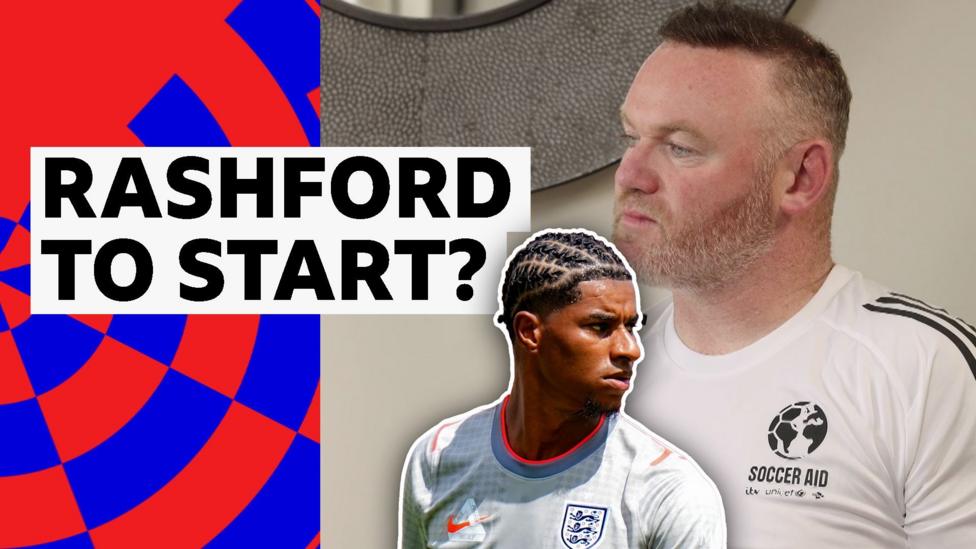
Rashford the Dead Cert: Solving England's Wing Puzzle
Wayne Rooney brands Marcus Rashford a dead cert, but England's wide positions remain a tactical minefield ahead of the World Cup.

Uzbekistan's Brave 3-4-3 Gamble Crumbles Against Colombia's Class
Cannavaro's tactical boldness met a harsh reality as Colombia exposed Uzbekistan's talent deficit in a dominant World Cup victory.
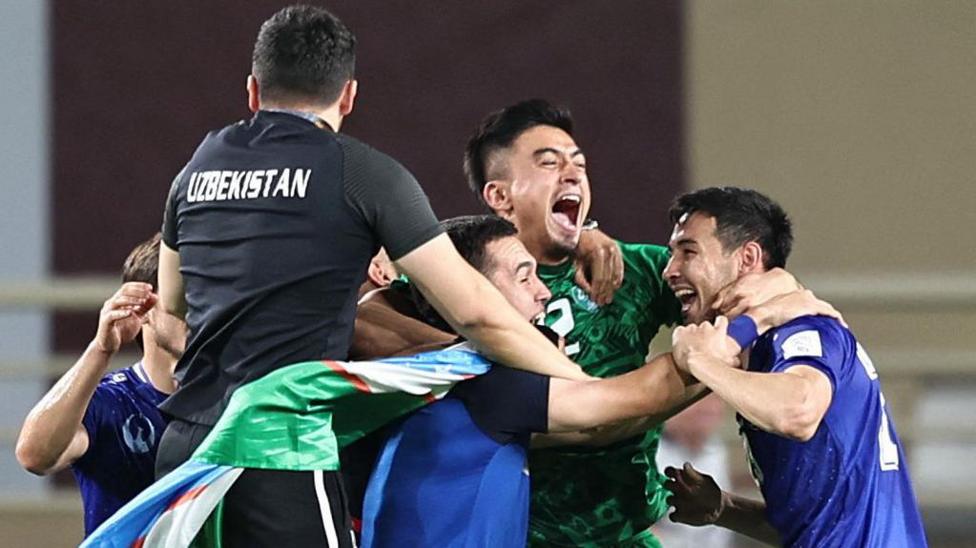
No More 'Nearly Men': Uzbekistan Finally Break Through to the World Cup
Central Asia's football giants end decades of heartbreak with a historic World Cup berth for 2026.