McInnes to Rangers: Why the Hearts Boss Could Be Ibrox's Smartest Hire in Years
Derek McInnes checks every box Rangers need right now — and his old assistant knows exactly why.
The Move Nobody Expected — But Everyone Should Have
When Rangers sacked their manager earlier this season, the Ibrox boardroom drew up a shortlist heavy on continental glamour and light on domestic pragmatism. Names from the Netherlands, Belgium, and Scandinavia floated through the Scottish press like speculative transfer bids. Now, with Derek McInnes confirmed as Rangers manager on a three-year contract after Danny Röhl departed for RB Salzburg by mutual agreement, the narrative has pivoted sharply — and the logic is hard to argue with.
McInnes is not a name that sells replica shirts in the Ibrox megastore. He is not a tactical revolutionary with a Champions League pedigree. What he is, according to those who have worked closest with him, is precisely the profile Rangers need to restore order to a club that has lost its way.
Tony Docherty, McInnes's former assistant at Aberdeen and now a manager in his own right, put it bluntly when he described the appointment as a "perfect fit." That endorsement carries weight — not because Docherty is a friend offering a soundbite, but because he spent years in the trenches with McInnes and understands the architecture of how the man works.
The McInnes Dossier: What Rangers Are Actually Getting
Strip away the chatter about "ambition" and "statement signings" and look at what Derek McInnes has actually delivered in Scottish football. His record speaks in cold, hard numbers — and those numbers tell a story of consistent overperformance.
At Aberdeen, McInnes managed over 350 matches across nearly a decade, transforming a mid-table club into the most credible challengers Celtic faced during their early dominance under Brendan Rodgers. He delivered a League Cup triumph in 2014, finished second in the Premiership multiple times, and qualified Aberdeen for European competition on a regular basis — a feat that seemed unthinkable before his arrival.
His Aberdeen sides were built on defensive organization and clinical transitions. During the 2017-18 season, the Dons conceded just 35 league goals — a figure that would have been respectable in the English Championship, let alone a Scottish Premiership side operating on a fraction of Celtic's budget. McInnes's teams rarely beat themselves. They pressed intelligently, maintained shape without the ball, and punished mistakes.
Hearts and the Current Chapter
His tenure at Hearts was a different kind of test. Arriving at a club with genuine infrastructure and a passionate fanbase but inconsistent results, McInnes applied the same principles he honed at Pittodrie. Hearts under his stewardship showed improved defensive discipline and a clearer tactical identity — even if the results didn't always match the performances.
The question Rangers fans will ask is simple: can a manager who never quite toppled Celtic at Aberdeen do it now at Ibrox?
Why Docherty Believes It Works
Tony Docherty's advocacy is rooted in something more specific than friendship. He has seen McInnes manage in the cauldron of Old Firm atmospheres, seen him handle the pressure of expectation at Aberdeen where anything less than second place was treated as failure.
The "perfect fit" argument rests on three pillars:
-
Man-management at scale. Rangers' dressing room has been fractured by underperformance and institutional instability. McInnes is known as a disciplinarian who earns trust through honesty rather than charisma. Players at Aberdeen consistently spoke about his directness — he told you where you stood, and he backed it up with tactical clarity.
-
Domestic dominance experience. Unlike foreign appointments who require months to understand the rhythms of Scottish football — the Old Firm derbies, the physical intensity of away trips to Ross County and St. Johnstone, the relentless fixture congestion — McInnes knows this landscape intimately. He has managed hundreds of matches in the Scottish Premiership. There is no learning curve.
-
European know-how. McInnes took Aberdeen into Europa League qualifying rounds year after year, navigating two-legged ties against continental opposition with limited squad depth. Rangers need that pragmatism. The club's European revenue model depends on reaching the group stages, and McInnes has a track record of achieving exactly that with fewer resources.
"Derek understands the pressure of managing at the top end of Scottish football. He's been doing it for years. The move to Rangers is a natural progression." — Tony Docherty
The Tactical Fit at Ibrox
This is where the appointment gets genuinely interesting. Rangers' recent struggles have not been primarily about talent — the squad contains players capable of competing with Celtic on any given afternoon. The problem has been structural. Defensive lapses, inconsistent pressing triggers, and a lack of identity in the final third have plagued the team.
McInnes's tactical framework addresses all three concerns. His preferred system — a compact 4-2-3-1 that transitions into a 4-4-2 out of possession — is simple enough to implement quickly but flexible enough to adapt to different opposition shapes. At Aberdeen, his sides ranked consistently among the top three in the league for defensive actions per 90 minutes while maintaining respectable attacking output.
The pressing structure is methodical rather than aggressive. McInnes does not ask his forwards to harry goalkeepers and centre-backs into oblivion. Instead, he sets triggers — a poor first touch, a sideways pass under pressure, a goalkeeper going long — and his teams pounce selectively. It conserves energy, reduces the risk of being caught out of shape, and creates high-quality turnovers in dangerous areas.
For Rangers, this could be transformative. The squad has the athletic profiles to execute this system. What they have lacked is the discipline and the repetition. McInnes will provide both.
The Risks No One Is Discussing
It would be dishonest to frame this as a risk-free appointment. McInnes has never managed a club with the budget, the expectations, and the scrutiny that Rangers command. Aberdeen and Hearts are significant posts in Scottish football, but they operate in a different universe from Ibrox.
The daily pressure at Rangers is relentless. Every dropped point is a crisis. Every tactical defeat is an existential event. McInnes's temperament suggests he can handle this — his composure under pressure at Aberdeen was notable — but temperament and experience are different things. He has never walked into a boardroom where the margin for error is effectively zero.
There is also the question of recruitment influence. At Aberdeen, McInnes operated with significant autonomy over transfers. At Rangers, the sporting director model means he will need to collaborate — and occasionally compromise — with executives who have their own vision for the squad. How he navigates that dynamic will determine whether the appointment succeeds or stagnates.
What This Changes for Hearts
Hearts now face a managerial vacancy after losing McInnes. The timing disrupts any momentum the club had built, and the Tynecastle board will need to move quickly. Names will circulate — they always do — but Hearts cannot afford a prolonged search. The Scottish Premiership's mid-table is tightly compressed, and a stumble without leadership could see them slide into a relegation conversation no one at Tynecastle wants.
The timing is brutal. But that is football's transactional reality. Managers are assets, and assets get traded.
The Bottom Line
Derek McInnes to Rangers is not a glamorous appointment. It did not trend globally or generate breathless coverage from the continental press. But glamour is not what Rangers need right now. They need competence, structure, and someone who understands the specific pressures of managing in Scottish football at the highest level.
McInnes delivers all three. He is battle-tested domestically, proven in Europe, and respected by peers who have seen his work up close. Tony Docherty's endorsement is not idle praise — it is a professional judgment from someone who knows exactly what the job demands.
The real question is not whether McInnes is a good manager. The evidence confirms that he is. The question is whether Ibrox will give him the time, the trust, and the tools to prove it. In a job where patience is measured in weeks rather than seasons, that is the variable no tactical blueprint can control.
Verdict: A smart, grounded appointment that prioritizes stability over spectacle. Whether it ultimately succeeds depends less on McInnes and more on the club's willingness to let a good manager actually manage.
Updated: 2026-06-29 — Article updated to reflect official confirmation of Derek McInnes's appointment as Rangers manager on a three-year contract and Danny Röhl's departure by mutual consent.
Editorial Integrity
This is an original SportPulse article written by our editorial team. All content is independently researched, written, and reviewed by our writers and editors before publication. We do not publish copied, aggregated, or syndicated content.
SportPulse is committed to original sports journalism. Read our editorial policy or contact us with any questions.
More Like This
All football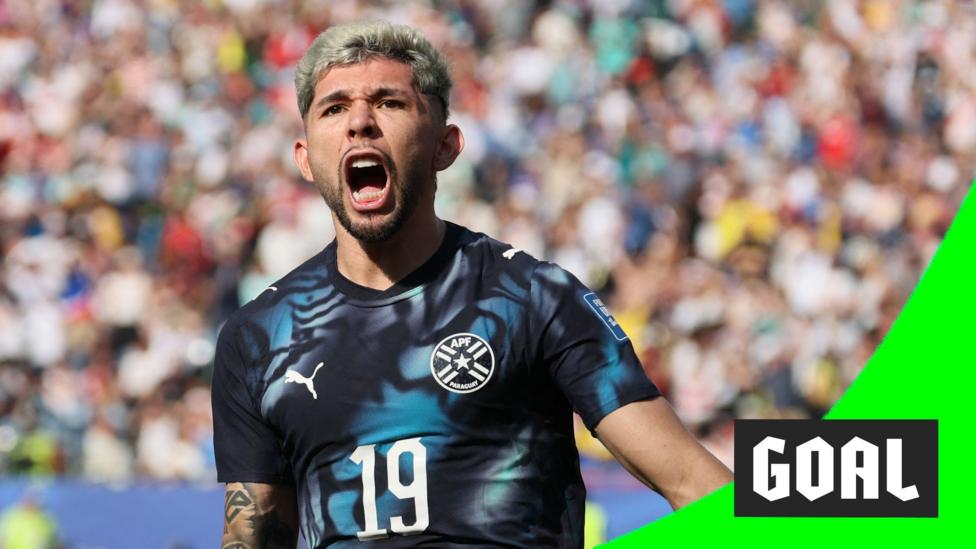
Enciso Stuns Germany as Paraguay Grab Shock Round-of-32 Lead
Julio Enciso's strike sends shockwaves through the tournament as underdog Paraguay lead mighty Germany in a knockout thriller.

The Invisible Architect: How Havertz Rewrites the Striker Blueprint for Germany
Kai Havertz's selfless movement is redefining what a modern number nine does without the ball at the World Cup.
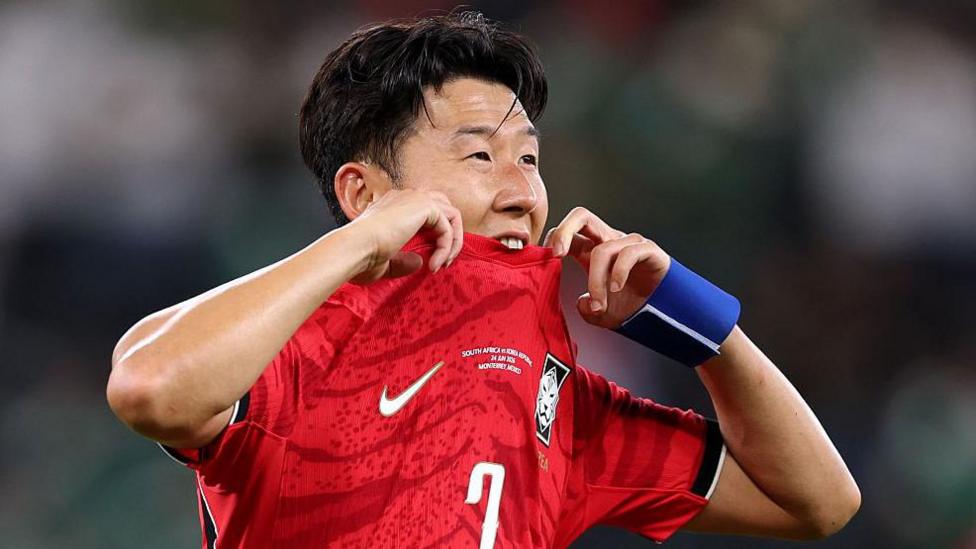
Son's Apology Masks South Korea's Tactical Void
Son Heung-min's emotional apology cannot conceal the systemic and tactical failures that defined South Korea's premature World Cup exit.