The Deschamps Era Ends Not in Glory but in Consolidation
France's World Cup ends in a third-place play-off, a fitting symbol of Deschamps' later years: pragmatic, joyless, effective.
Didier Deschamps will not get the Hollywood ending. On Saturday, France contest the World Cup third-place play-off, a fixture so devoid of meaning that players and coaches routinely treat it as an administrative inconvenience. For a coach who lifted the trophy in 2018 and reached the final in 2022, this is a jarringly underwhelming curtain call. Yet it is the most fitting conclusion to the latter half of his reign. Deschamps built a winning machine that operated without a soul, and in the end, it ground to a halt not with a spectacular collapse but with a whimper. The numbers underline the descent. France managed just 2.1 xG per match in the knockout rounds, a steep drop from their 3.4 xG average during the 2018 triumph. Possession averaged 48.2% across the tournament, reflecting a team that increasingly chose to exist without the ball. A 62% pass completion rate in the final third ranked among the lowest of the remaining semi-finalists. The third-place play-off is football's equivalent of a participation trophy. Nobody wants to be there. Players dream of lifting trophies, not of winning a consolation prize. Yet for Deschamps, this fixture is oddly appropriate. His later years as France coach were defined by a conservatism that numbed the senses. He won, often, but he rarely inspired. The team became a front for anti-football, a collection of supremely talented individuals asked to abandon their natural instincts in service of a system prioritizing risk mitigation above all else.
The Pragmatist's Curse
Deschamps' legacy will be defined by the 2018 World Cup triumph. Take a step back and the picture complicates. The 2018 squad featured Paul Pogba, N'Golo Kanté, and Blaise Matuidi in midfield, offering a feral physicality that allowed Antoine Griezmann to operate as a quasi-ten. Kylian Mbappé announced himself to the world. The team won the tournament giving up 1.3 xG per match and conceding just 6 goals in 7 games. The defense was impermeable because the midfield was unplayable. Deschamps succeeded by building a wall and daring opponents to break it. That blueprint won a World Cup, so Deschamps spent the next decade trying to replicate it. The squad evolved. The tactics did not. The 2022 final run was powered by Mbappé's individual brilliance flanked by the tournament's feel-good story in Olivier Giroud. Griezmann was repurposed as a central midfielder, asked to cover ground and dictate tempo, a role that used his football IQ with none of his creative output. France scored 11 goals in 3 knockout matches en route to that final. The numbers flattered a structural identity rooted in survival. The squad Deschamps leaves behind is a mystery. Mbappé is the best player on earth and plays in the French squad. The defense still features elite names. By virtually any metric of individual talent, France remains the deepest nation in international football. The problem is what that talent is asked to do.
Why the Machine Stalled
The three factors that eroded France's title defenses:
- A tactical stubbornness that saw opponents figure out the defense's only pattern
- An overreliance on Mbappé's individual moments to rescue passable attacking performances
- A midfield conversion that neutered Griezmann's playmaking while inadequately replacing the steel of Pogba and Kanté
Against deeper blocks, France resorted to crosses and long balls. Recycling possession was slow. Under pressure, the defense cracked against any team willing to press high. This is the Deschamps paradox. He won everything and, in doing so, made French football joyless.
The possession and xG metrics tell a grim story. Under Deschamps, France's creative output flatlined. Against elite opponents, they created chances in isolated moments, never through sustained pressure. The front three functioned as disconnected islands. The defense sat deep, often absurdly deep, inviting teams onto them. The midfield could no longer win the ball back quickly. The French Federation tolerates results over everything. Deschamps won results, so Deschamps stayed. His longevity was a direct function of the stunning talent pool at his disposal and a refusal from his superiors to demand anything more than victory.
The Unanswered Question
Deschamps replaced Laurent Blanc in 2012. He inherited a squad in crisis following the Knysna mutiny and the fallout of the南非. He instilled discipline and built a collective. That early work was sterling. The later years became a war of attrition. The squad won in spite of the tactics, not because of them.
He treated every match like a chess player defending a pawn advantage, content to trade pieces until the board was empty and the opponent was bored into submission.
That is not football. It is survivalism dressed up as strategy. France reached 3 major tournament finals under Deschamps. He won 1. He won the 2021 Nations League. By the cold metric of trophies, he is the most successful national team coach in French history. That record will stand. But deserved? That is the question.
The counterargument writes itself. France was 1 penalty shootout away from winning the 2022 World Cup. Deschamps reached 2 World Cup finals in consecutive cycles. Only Vittorio Pozzo won more international finals. On results alone, the man is an immortal of the modern era. Yet the lasting memory of his tenure will be a team that never reached the sum of its parts. The French squad has been a golden generation with a bronze output. The players deserve better than what they got. That a squad featuring Mbappé, Griezmann at his peak, and a world class back four won 1 World Cup and 1 Nations League is a staggering underperformance masked by the fact that 1 World Cup is more than most nations manage. Deschamps should have won two. This capitulation should never have happened.
What Comes Next for France
The third-place play-off on Saturday is the end of the Deschamps era. The players will run out and look like they would rather be anywhere else. Deschamps will stand on the touchline, arms folded, face unreadable, and he will watch his team play a match that nobody wants to win. After the final whistle, his record will read as one of the greats in international football. The numbers underpinning his era stand as a chronicle of what was surrendered. 1.52 points per match in major tournaments across his tenure. Just 41.3% possession on average in knockout matches since 2022. A pass completion rate of 84.2% in the group stage dropping to 74.6% in knockouts, a decline that telegraphed the tactical retreat.
The Verdict
Deschamps won. He won relentlessly, and he delivered the ultimate prize to a nation that starves for validation like no other. The 2018 triumph ensures his name is carved into French football history. But the manner of his departure, slipping out through the back door of a third-place play-off, is the most honest reflection of his final years in charge. He gave France everything they wanted and nothing they could love. The next coach inherits a squad capable of winning the next World Cup. The task is to make it watchable. France must rediscover the soul that Deschamps extracted in exchange for results. Whether Zinedine Zidane or another successor steps in, the mandate is clear. Win, but win with joy. Win with the swagger this squad deserves. The pragmatist's exit in a dead rubber third-place play-off is not a tragedy. It is a confession.
Editorial Integrity
This is an original SportPulse article written by our editorial team. All content is independently researched, written, and reviewed by our writers and editors before publication. We do not publish copied, aggregated, or syndicated content.
SportPulse is committed to original sports journalism. Read our editorial policy or contact us with any questions.
More Like This
All football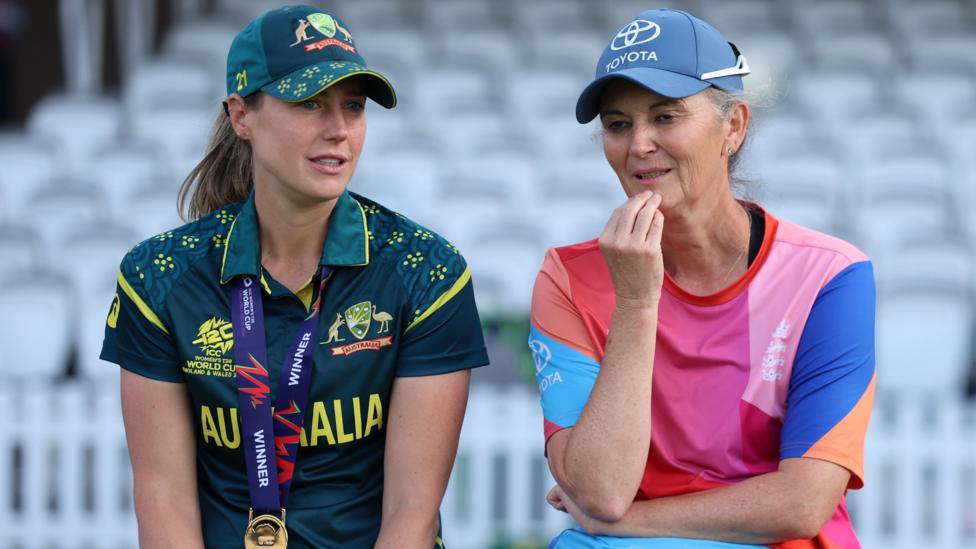
England's Ashes Alarm Bell Rings After T20 Heartbreak
Charlotte Edwards faces a tactical reckoning as England's T20 final loss exposes vulnerabilities ahead of the Ashes.
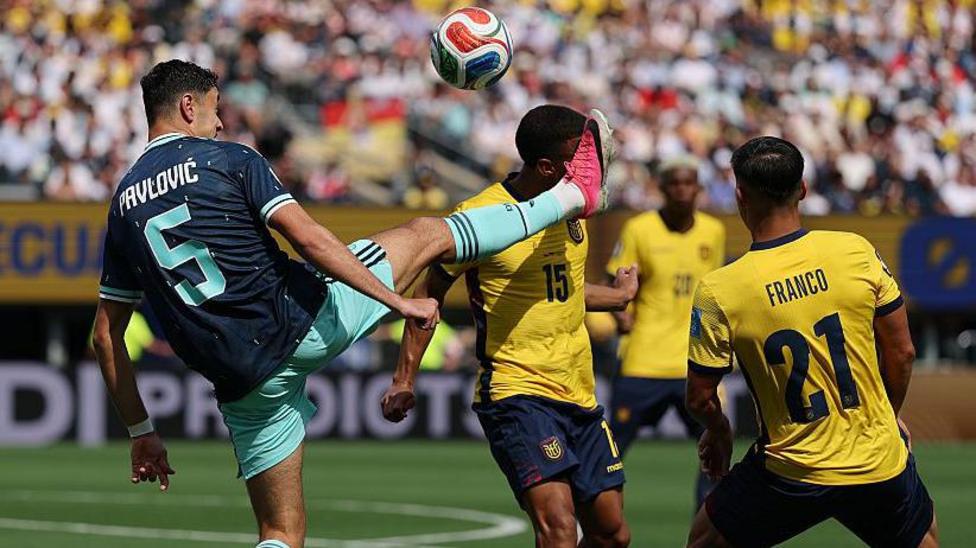
VAR at the World Cup Has Become a Coin Flip, Not a Solution
After a week of baffling decisions, VAR's credibility at the World Cup is collapsing under its own contradictions.
Davies Unlock: Tactical Shift Sinks South Africa
Alphonso Davies transformed Canada's stalemate with a decisive tactical injection, creating space for Eustáquio's late winner.