Deschamps' Final Dance: The Tactical Soul Behind France's Winning Machine
Didier Deschamps prepares for one last World Cup with a legacy no French coach can rival — and a tactical identity that has evolved more than critics admit.
The Weight of Two Stars
Walk the tree-lined avenue toward the Château de Clairefontaine and the symbolism is impossible to miss. A three-metre replica of the World Cup trophy sits under two golden stars — each one a testament to a French triumph that bears the fingerprints of Didier Deschamps. He lifted the real thing as captain in 1998. Twenty years later, he raised it again as head coach. Now, with the 2026 World Cup in North America looming as his final act, the 55-year-old is chasing something only one other man in football history has achieved: a third World Cup across two different roles.
The backdrop matters. France have featured in four of the last seven World Cup finals, and Deschamps has been present for three of them — as a player in 2006's heartbreaking loss to Italy, then as the orchestrator of victories in 2018 and a runners-up finish in 2022. His 14-year tenure as Les Bleus manager is the longest in French football history, surpassing even the celebrated Michel Hidalgo. These are not abstract records. They are the scaffolding of a dynasty that, despite periodic grumbling from the French public, remains the most consistent force in international football.
"We're among the favourites. It isn't a taboo word for me. If we have this status today, which seems logical and legitimate to me, it's because of everything that we have done, the results we achieved."
Tactical Pragmatism as Philosophy
Deschamps has never been the coach who seduces the neutral with breathless attacking football. His 4-2-3-1 base shape, the foundation of nearly every tournament campaign since 2014, is built on compactness, transition speed, and an almost obsessive respect for defensive structure. The double pivot — long anchored by N'Golo Kanté and Paul Pogba, now increasingly the domain of Aurélien Tchouaméni and Adrien Rabiot — exists to compress the space between the lines. Width comes from the fullbacks only when the defensive block is secure.
Critics have called it conservative. Deschamps calls it intelligent. And the numbers have always backed him. In the 2018 World Cup, France conceded just six goals in seven matches, and four of those came in the group-stage dead rubber against Denmark and the wild round-of-16 clash with Argentina. Their expected goals against (xGA) across the knockout rounds was the lowest of any champion since the metric began being tracked at major tournaments.
But the accusation that Deschamps is a purely reactive tactician ignores the subtle shifts he has made across his tenure. Between 2012 and 2016, France operated in a more rigid low block, content to surrender territory and strike on the counter. The 2016 Euro run — culminating in that heartbreaking extra-time loss to Portugal in Paris — leaned heavily on Olivier Giroud as a target man and Griezmann as the creative fulcrum in the half-spaces.
By 2018, the system had evolved. Mbappé's explosive arrival changed the geometry of France's attacking transitions. Deschamps restructured the front line to give the teenager licence to drift wide left, pulling centre-backs out of shape while Griezmann dropped into the number 10 pocket. The interplay between those two — one sprinting into vacated channels, the other receiving between the lines — was the tactical heartbeat of that tournament.
The 2022 Adjustment
The 2022 World Cup in Qatar revealed another layer of Deschamps' adaptability. Forced to navigate a crippling injury crisis that ruled out Karim Benzema, Presnel Kimpembe, Nkunku, and others, he shifted to a more fluid 4-4-2 in possession that effectively became a 4-2-4 when France pressed high. Olivier Giroud, recalled and seemingly finished at international level, became the target-man fulcrum again. Mbappé, now the undisputed talisman, was given even greater freedom — operating as a hybrid left winger-striker who could drift centrally and attack the box with devastating pace.
France scored 16 goals in Qatar, the most by any team in a single World Cup since Brazil in 2002. Mbappé alone contributed eight, including that astonishing hat-trick in the final against Argentina. The defensive structure was less convincing — eight goals conceded, including three in that final — but Deschamps had proven he could unlock a gear that many believed didn't exist in his managerial DNA.
Mbappé and the Leadership Question
The relationship between Deschamps and Kylian Mbappé has become the defining axis of French football. When Deschamps notes that "Mbappé knows that when he speaks, he speaks for all the players," he is not offering a platitude. He is acknowledging a transfer of authority that has been years in the making.
Mbappé's appointment as captain in March 2023, replacing the long-serving Hugo Lloris, was both a football decision and a political one. The armband signalled that France's future — and its present — belonged to the Parisian who had outgrown his prodigy status. But it also placed Mbappé inside Deschamps' hierarchy in a way that formalised what had already been apparent: the two share a mutual understanding about how France should operate.
Both men are pragmatists. Both trust structure over spontaneity. And both have demonstrated a willingness to subordinate personal expression to collective function — Mbappé when he has tracked back to cover his fullback in tournament knockout rounds, Deschamps when he has dropped star names for players who better fit the system's demands. The exclusion of Benzema for years before the 2022 reconciliation, the sidelining of certain creative midfielders who didn't press with enough discipline — these decisions carried reputational risk. Deschamps made them anyway.
The Departing Coach's Edge
There is a particular psychology to a manager's final tournament. The baggage of future appointments is gone. There is no contract to negotiate, no federation politics to manage beyond the immediate horizon. Deschamps has confirmed that 2026 will be his last act, and that knowledge can be either liberating or destabilising.
History suggests liberating. Sir Alex Ferguson's final Champions League campaign with Manchester United was his most tactically bold in years. Vicente del Bosque, managing his final major tournament with Spain at Euro 2016, made selection choices he had long avoided. Deschamps, freed from the question of succession, may feel emboldened to take risks in the knockout stages that he previously would have overruled — whether that means committing to a higher defensive line, trusting younger attackers in pressure moments, or abandoning the double pivot for a more aggressive midfield trio.
The talent pool certainly allows it. France's current squad depth is staggering. Beyond the established core of Mbappé, Tchouaméni, Dayot Upamecano, and Theo Hernandez, a new generation is emerging — players like Warren Zaïre-Emery, Bradley Barcola, and Leny Yoro who combine technical quality with the physical profile Deschamps has always valued. The midfield options alone could sustain two competitive international sides.
What North America Demands
The 2026 World Cup presents unique challenges that will test Deschamps' adaptability once more. The expanded 48-team format means more matches, deeper squads, and a less predictable knockout path. Three group games followed by a potential seven knockout rounds creates an unprecedented physical and tactical marathon.
Climate and travel add further complexity. Matches spread across the United States, Mexico, and Canada mean significant time-zone shifts, varied playing surfaces, and humidity levels that European-based players rarely encounter in competitive football. Deschamps will need his medical and performance staff at their sharpest, and his rotation strategy will be more important than it has ever been at a major tournament.
Then there is the tactical landscape. International football has shifted markedly since 2022. The rise of aggressive high pressing as a default approach — seen from England under Southgate's successor, from Germany's rejuvenated side, from Spain's Euro 2024 winners — means France can no longer rely on opponents sitting deep and allowing them to counter into space. Deschamps will face teams that press high, compress the pitch, and force his defenders into uncomfortable build-up situations.
His answer may lie in the evolution of the 4-2-3-1 into something more positionally fluid in the build-up phase. If Tchouaméni can operate as a single pivot, dropping between the centre-backs to create a back three in possession, it would free the fullbacks to push higher and give Mbappé more central positioning without sacrificing defensive security. It is not a revolution. It is a Deschamps adjustment — incremental, practical, and designed to exploit the specific attributes of the players at his disposal.
Legacy in Full View
Whatever happens in North America, Deschamps' place in football history is secure. Two World Cup victories across two different roles is an achievement matched only by Mário Zagallo with Brazil. Three finals in four tournaments as manager places him alongside the most decorated international coaches the sport has produced. His win percentage as France manager exceeds 60%, with a record that includes a European Championship final, a Nations League title, and consistent top-tier FIFA rankings.
But legacy is not only about trophies. Deschamps has built a culture within the French national team that outlasts individual players. The transition from the Griezmann-Lloris era to the Mbappé-Tchouaméni generation happened without the kind of identity crisis that has plagued other major nations during generational change. The values — defensive discipline, collective sacrifice, clinical transition — have remained constant even as the personnel have turned over.
The final chapter begins now. And if there is one thing Deschamps has proven across nearly three decades at the summit of international football, it is that he should never be underestimated when the stakes are highest.
Editorial Integrity
This is an original SportPulse article written by our editorial team. All content is independently researched, written, and reviewed by our writers and editors before publication. We do not publish copied, aggregated, or syndicated content.
SportPulse is committed to original sports journalism. Read our editorial policy or contact us with any questions.
More Like This
All football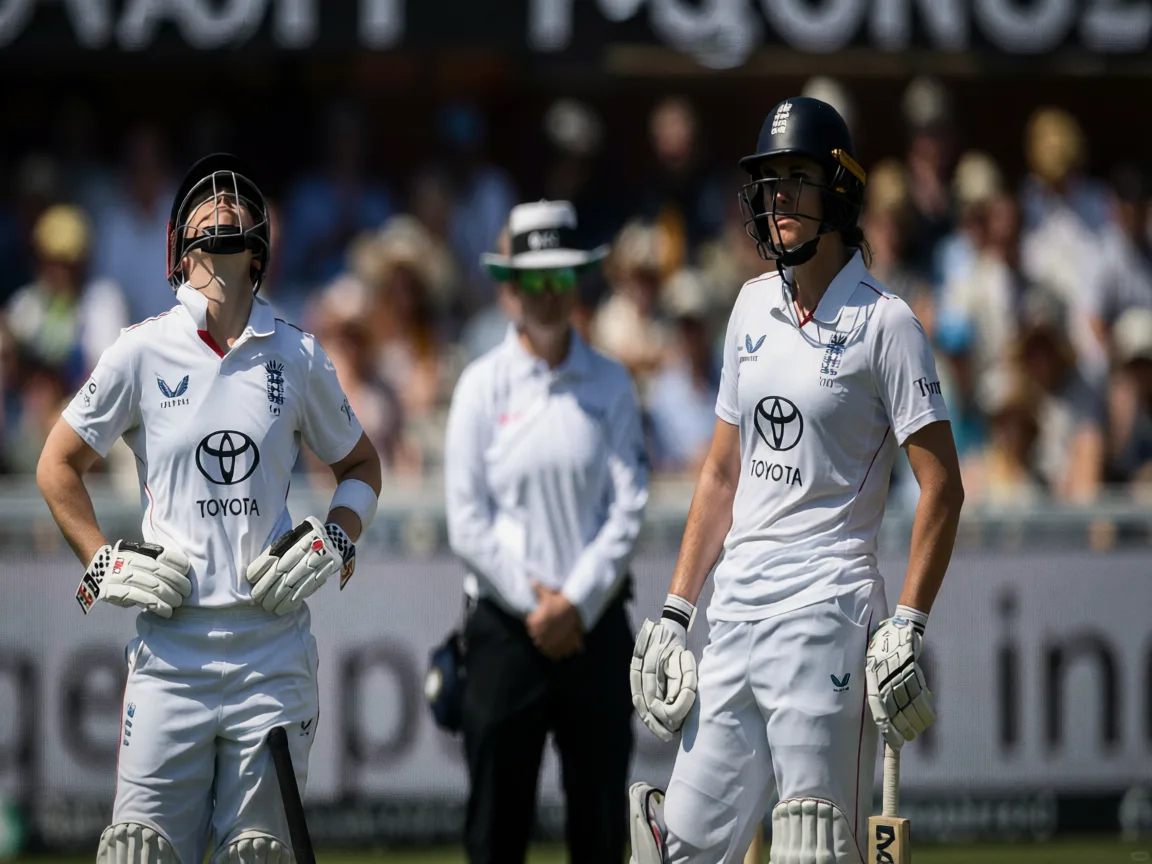
Lord's Collapse: England's Top Order Crumbles Under India's Sustained Pressure
England fell from 31-1 to 32-3 in four balls as India's disciplined seam attack exposed the hosts' technical frailties on day two at Lord's.
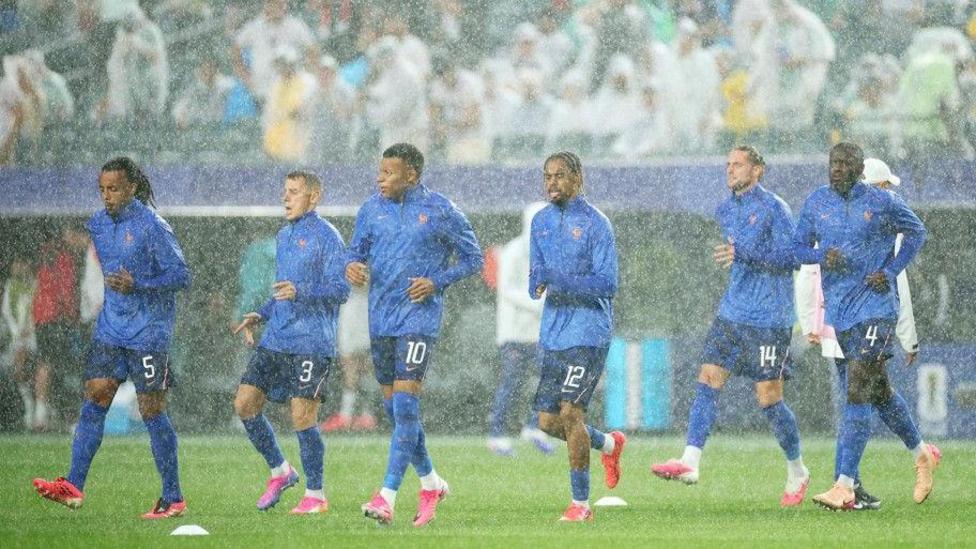
The Two-Hour Freeze: How Weather Delay Tested Tactical Patience
Weather delays in football force tactical recalibrations and test mental fortitude, as seen in the France-Iraq World Cup match.
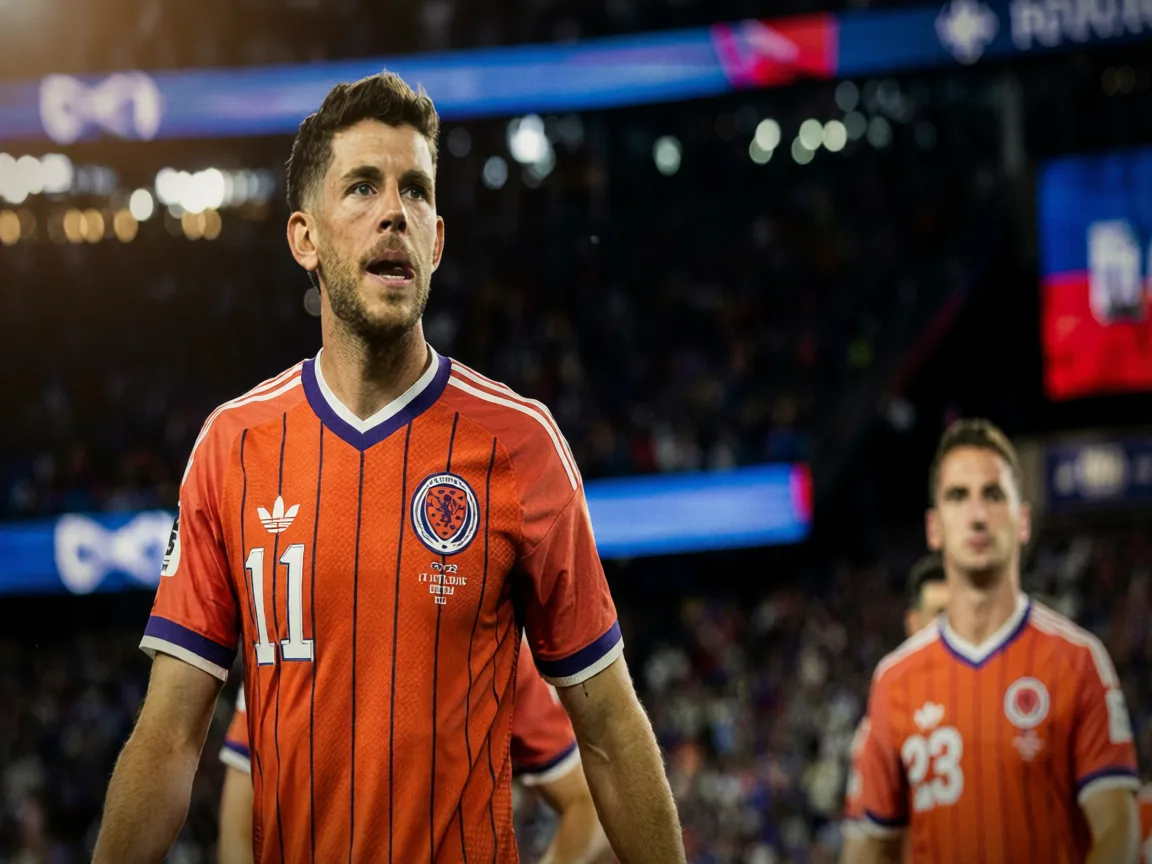
Christie's World Cup Agony Fuels Scotland Mission
At 31, Ryan Christie channels World Cup devastation into a relentless drive to deliver Scotland more major tournament moments.