Desmond Armstrong: The Forgotten Pioneer of US Soccer
Before the glamour of 1994, Desmond Armstrong broke barriers as the first US-born Black man to play in a World Cup.
A Quiet Trailblazer on the World Stage
Desmond Armstrong made history in 1990 without a camera flash in sight. He became the first US-born Black men's player to represent the United States at a World Cup. This was not the neon-lit, commercialized American soccer explosion of 1994. This was the gritty, underfunded reality of Italy, where the USMNT had not appeared on the world stage for 40 years.
Armstrong's achievement carved a path through solid rock. Born in Washington D.C., he navigated a domestic soccer landscape that was practically invisible. He fought through systemic barriers that barely acknowledged the existence of Black American players in a sport dominated by white suburban demographics. His presence in Italy was a testament to sheer talent and relentless willpower.
The Long Desert Before Italy
To understand Armstrong's impact, you must grasp the absolute void of American soccer in the 1980s. The North American Soccer League was collapsing. The USMNT was a disparate collection of semi-pros and college kids, lacking a professional domestic league to sharpen their skills. Making the national team was a bureaucratic struggle, not a celebrated milestone.
Armstrong fought through that void. He emerged from the American college system, a pipeline that practically funnelled talent away from the global game. He possessed a defensive tenacity and raw athletic profile that forced coaches to take notice. He earned his caps the hard way, grinding through CONCACAF qualifiers where away matches felt like hostile wars rather than sporting events.
The 1989 qualifying campaign against Trinidad and Tobago remains a sacred text in US soccer lore. Paul Caligiuri's goal gets the headlines, but Armstrong was the defensive anchor that made it possible. He suffocated opposing wingers for 90 minutes in Port-au-Prince and Trinidad, absorbing physical punishment that would have broken lesser players.
Walking Into the Azteca Cauldron
Armstrong's defining performance came in a 1-0 defeat to Costa Rica in the qualifiers. He played through immense pressure, providing the defensive spine that kept American survival hopes alive. Coach Bob Gansler relied heavily on Armstrong's pace and physical dominance on the flanks. He trusted him to neutralize the most dangerous attackers in the region.
Inside the locker room at the Azteca Stadium, the atmosphere was pure survival. The concrete walls seemed to vibrate with the noise of 100,000 fans baying for American blood. Armstrong sat quietly in the corner, re-taping his bruised ankle, his eyes locked on the tunnel entrance. There was no fear in that room, just a hardened realization that they had to fight for every inch of grass.
"We knew nobody gave us a chance. We didn't care. We were there to prove that American players belonged on that field, no matter where we came from."
The locker room was a sanctuary of quiet defiance. Sweat soaked the thin cotton training shirts, and the smell of deep heat liniment hung heavy in the humid air. Gansler paced the narrow space between the benches, his voice low but firm, laying out tactical instructions Armstrong absorbed like a sponge. When the kit man handed him his jersey, Armstrong gripped it tightly, feeling the weight of a nation that barely knew his name.
Carrying an Invisible Burden
Armstrong's historical significance extends far beyond his defensive contributions. As the first US-born Black men's player to play in a World Cup, he carried a dual burden. He represented a country that was still grappling with deep racial divisions, while simultaneously trying to legitimize a sport that many Americans dismissed entirely.
The racial dynamics of American soccer in the late 1980s were stark. The sport was overwhelmingly white and suburban, gated by economic barriers and club pay-to-play structures that excluded minority communities. Armstrong's ascent challenged that homogeneous reality. He proved that Black American athletes could excel in the world's game without waiting for permission or access to elite youth academies.
His visibility mattered, even if mainstream media ignored it. Young Black kids watching the tournament saw a reflection of themselves on the biggest stage. Armstrong's quiet dignity and professional consistency stood in stark contrast to the loud, commercialized personalities that would later dominate the American sports landscape.
The Foundation for 1994
Armstrong's performances in Italy laid the ideological foundation for the 1994 World Cup revolution. Without the grit of the 1990 squad, the massive investment and cultural shift that followed would have been impossible. He was the bridge between the dark ages of American soccer and its commercial renaissance.
The contrast between the two eras is staggering. In 1990, Armstrong and his teammates were amateurs playing against seasoned professionals. By 1994, the USMNT featured established stars and captured national attention. Armstrong's generation endured the hardship so the next could enjoy the spotlight.
His legacy is a study in delayed recognition. While players from the 1994 squad became household names, Armstrong's pioneering role faded into obscurity. The systemic barriers he overcame are rarely discussed in modern retrospectives of American soccer history.
What It Means
Desmond Armstrong's story is not just a historical footnote. It is a foundational truth about American soccer that the modern era conveniently forgets. The sport's current diversity, from the emergence of talents like Christian Pulisic to the meteoric rise of players like Folarin Balogun, traces its lineage back to pioneers like Armstrong. They broke the soil before the modern infrastructure ever existed.
The fight for equitable access in American soccer continues today. The pay-to-play youth model still systematically excludes talented minority athletes from lower socioeconomic backgrounds. Armstrong's journey serves as a reminder that talent exists everywhere, but opportunity does not.
His legacy demands a rewrite of the USMNT history books. The narrative must start before the glamour of the 1990s commercial boom. It must acknowledge the pioneers who fought and bled on obscure qualifying pitches across Central America. Armstrong was a Black man who represented his country on the world's biggest sporting stage at a time when simply being seen was a radical act. Every pass, tackle, and clearance he made in Italy was a blow against the assumption of who gets to play this game.
Editorial Integrity
This is an original SportPulse article written by our editorial team. All content is independently researched, written, and reviewed by our writers and editors before publication. We do not publish copied, aggregated, or syndicated content.
SportPulse is committed to original sports journalism. Read our editorial policy or contact us with any questions.
More Like This
All long-reads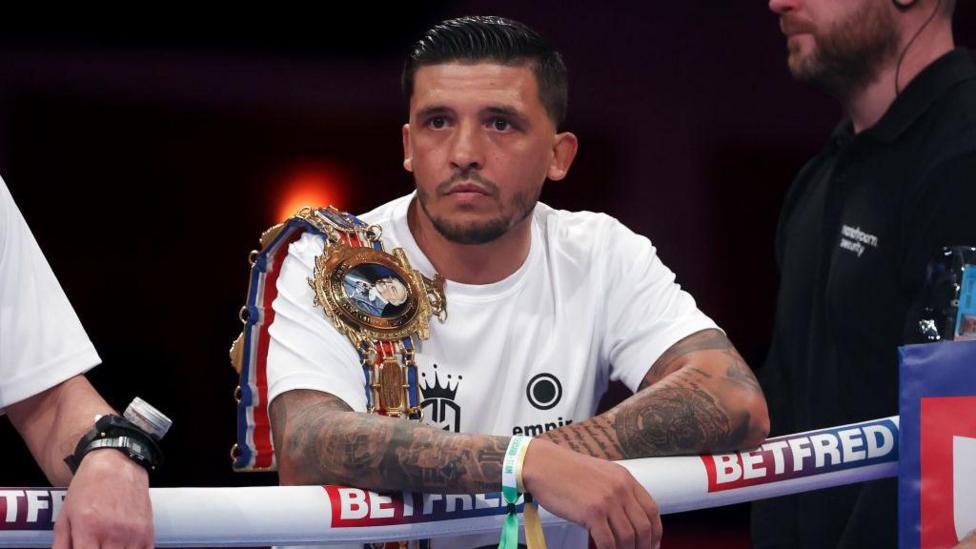
From World Champion to Bare Knuckles: Why Lee Selby Walked Into the Fire
Former IBF featherweight king Lee Selby explains his shocking leap into bareknuckle boxing's unforgiving arena.

Six Forgotten World Cup Goals That Defy Time
From Ogris's Florentine charge to Quagliarella's Ellis Park chip, World Cup history hides spectacular moments we forgot.

Inside Team NI: 65 Athletes and the Competitive Blueprint
Northern Ireland sends 65 athletes to the Commonwealth Games with a structured plan across multiple disciplines.