Dingley's Milestone Exposes Football's Coaching Glass Ceiling
Hannah Dingley broke barriers as England's first female professional men's team manager, but systemic change remains painfully slow.
A Historic Touchline Moment That Should Have Come Sooner
When Hannah Dingley stepped into the dugout at Forest Green Rovers in 2023, she did something no woman had done before in English professional men's football: she managed. Not as an assistant. Not as a caretaker running sessions in the background while a male figurehead took the press conferences. As the manager. The name on the teamsheet, the voice in the dressing room, the figure making tactical decisions under the floodlights.
It was a landmark. It was also, by her own admission, insufficient.
Dingley has been clear that the moment, while significant as symbolism, should not obscure the deeper problem. One woman reaching the top of men's professional coaching in over 150 years of English football is not a pipeline working. It is a pipeline barely dripping. The question is not whether Dingley proved women can coach men's football. She answered that definitively. The question is why the structures around her make that possibility almost vanishingly rare.
The Architecture of Exclusion
The coaching pathway in professional football is not a neutral system. It is shaped by decades of gatekeeping, informal networks, and institutional inertia that systematically disadvantage women at every stage.
Start with the entry point. To manage in the professional game, a coach needs a UEFA Pro Licence. Across Europe, women hold a vanishingly small percentage of these qualifications. The courses themselves are expensive, time-intensive, and heavily dependent on existing connections within the professional game. A coach who has not already worked within a club's academy or first-team setup faces enormous barriers to even enrolling.
This creates a self-reinforcing cycle. Women are underrepresented in coaching roles at youth and academy level, which means fewer progress to the advanced licences, which means fewer are visible to club owners and sporting directors when vacancies arise, which means fewer role models exist for the next generation of aspiring coaches. The loop is not accidental. It is structural.
The numbers at the grassroots and academy level tell the story. While women's football has boomed in participation and visibility at the player level, the coaching ranks have not kept pace. Men still overwhelmingly dominate academy coaching staffs across the EFL and Premier League. When women do enter these spaces, they frequently report being isolated, questioned more aggressively on their credentials, and given shorter leashes when results falter.
"More needs to be done to help women advance in coaching roles." — Hannah Dingley
The Credibility Trap
There is a particular cruelty in how women coaches are evaluated. Male coaches with limited experience are routinely given second chances, rotated through different clubs, and afforded the luxury of learning on the job. The managerial merry-go-round in English football is a well-oiled machine designed to recycle the same pool of candidates regardless of outcomes.
Women, by contrast, face what might be called the credibility trap. A single appointment is treated as a test case for an entire gender. If Dingley's tenure at Forest Green Rovers had produced a relegation, the narrative would not have been "a coach who struggled with a difficult brief." It would have been proof, in the minds of many decision-makers, that women cannot manage men's football. The stakes for any individual woman in a coaching role are absurdly inflated because she is made to carry the representational weight of half the world's population.
This asymmetry has a chilling effect. Talented women coaches who might consider pursuing roles in men's football are acutely aware that failure carries different consequences. A male coach who gets sacked can dust himself off and take another lower-league job within months. A woman in the same position may find the door permanently closed, the experiment declared a failure.
Tactical Intelligence Has No Gender
From a purely football perspective, the argument against women in men's coaching has always been intellectually bankrupt. Modern football management is not a physical contest. It is an exercise in spatial analysis, psychological management, opponent reading, and system design. The best managers of this era are defined by their cognitive and communicative abilities, not their playing careers or physical presence.
Thomas Tuchel won the Champions League with a tactical system that relied on fluid positional rotations and pressing triggers. Roberto De Zerbi built one of the most aesthetically pleasing sides in the Premier League through an obsessive commitment to positional play principles. These achievements have nothing to do with gender and everything to do with analytical rigour, preparation, and the ability to transmit ideas to players.
The notion that a woman could not command a dressing room of male professionals collapses under even minimal scrutiny. Players respect competence. They respond to clarity, preparation, and tactical acuity. A coach who walks into a team meeting with a detailed analysis of the opponent's pressing traps, a clear plan for exploiting the half-spaces, and a session plan that translates theory into muscle memory will earn respect regardless of gender. The dressing room is not the medieval court some imagine it to be.
Dingley herself demonstrated this at Forest Green. Her work did not require gendered qualification. It required football knowledge, man-management skill, and the ability to make decisions under pressure. Those qualities are not distributed along gendered lines.
Systemic Reform: What Would Real Change Look Like?
Dingley's call for more to be done is not a vague platitude. It points toward specific structural interventions that governing bodies, clubs, and football associations need to implement.
First, coaching pathway access. The FA and UEFA need to actively sponsor and fund women coaches through advanced licence programmes. This means not just opening the door but removing the financial and logistical barriers that keep qualified women from entering the pipeline. Targeted scholarships, mentoring programmes paired with experienced Pro Licence holders, and guaranteed placement opportunities at professional clubs during the coursework period would all make a tangible difference.
Second, accountability in hiring. Clubs should be required, at minimum, to demonstrate that their recruitment processes for coaching roles actively consider diverse candidates. The Rooney Rule, adopted from American football, has been discussed in English football before but never meaningfully implemented. Extending it beyond boardroom positions to include coaching staffs would create friction against the lazy habit of recycling the same familiar names.
Third, visibility at academy level. If the next generation of women coaches never sees someone who looks like them in a professional coaching environment, the aspiration never forms. Clubs should be incentivised, through FA funding mechanisms, to appoint women coaches within their academy structures. Not as token hires but as developmental coaches embedded within the system, building the experience and credentials needed to eventually step into senior roles.
Fourth, culture change. This is the hardest and most important element. The culture of professional football remains deeply patriarchal in its coaching hierarchies. Banter, dismissal of women's tactical knowledge, and the persistent assumption that coaching men's football requires masculine authority are not abstract problems. They are daily realities that women in the game navigate constantly. Governing bodies need to enforce anti-discrimination standards within coaching environments with the same rigour they apply to other areas of the game.
The Bigger Picture
The growth of women's football at the elite level has created a parallel coaching ecosystem. Sarina Wiegman leading England to European Championship glory and a World Cup final proved that women coaches can operate at the highest tactical and strategic levels of the sport. Yet even this success has been siloed. Wiegman's achievements are celebrated within the women's game but have not meaningfully shifted perceptions about women's capacity to coach men's football.
This separation is itself part of the problem. Football is football. The tactical principles that govern a 4-3-3 press in the WSL are identical to those in the Premier League. The offside rule does not change based on the gender of the players on the pitch. By treating men's and women's coaching as fundamentally different disciplines, the sport perpetuates the idea that managing male players requires some innate quality that women cannot possess.
Dingley's presence on the touchline in 2023 cracked a door open. But doors, once cracked, can easily swing shut again if the structures behind them are not rebuilt. Without sustained, systemic reform, her milestone risks becoming a historical footnote rather than the beginning of a genuine shift.
What Comes Next
The challenge now falls to football's governing bodies. The FA has spoken about diversity in coaching for years. The EFL has made inclusion a stated priority. Words without structural follow-through are meaningless.
The true measure of progress will not be the next woman appointed to a men's coaching role, though that matters. It will be the point at which such an appointment is unremarkable. When a club hires a woman as its first-team manager and the headline reads about her tactical approach rather than her gender, football will have arrived somewhere meaningful.
Until then, Dingley's question hangs in the air. More needs to be done. The only question is whether the sport has the institutional will to do it.
Elena Rossi is a senior football writer for SportPulse covering tactical analysis, coaching culture, and the game's institutional landscape.
Editorial Integrity
This is an original SportPulse article written by our editorial team. All content is independently researched, written, and reviewed by our writers and editors before publication. We do not publish copied, aggregated, or syndicated content.
SportPulse is committed to original sports journalism. Read our editorial policy or contact us with any questions.
More Like This
All football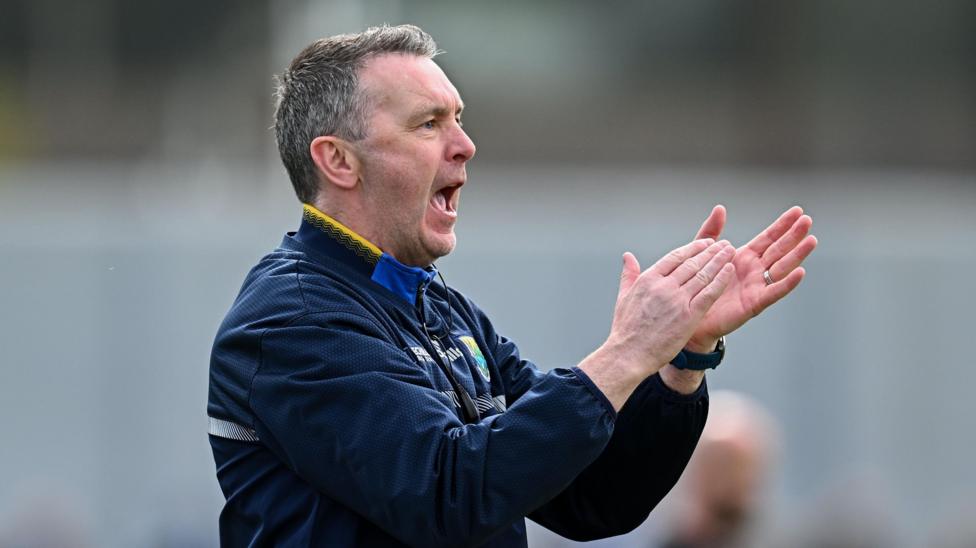
McConville Urges Wicklow to Seize Tailteann Cup Final Moment
Oisin McConville wants Wicklow's Tailteann Cup final against Down to launch a new era for the county.
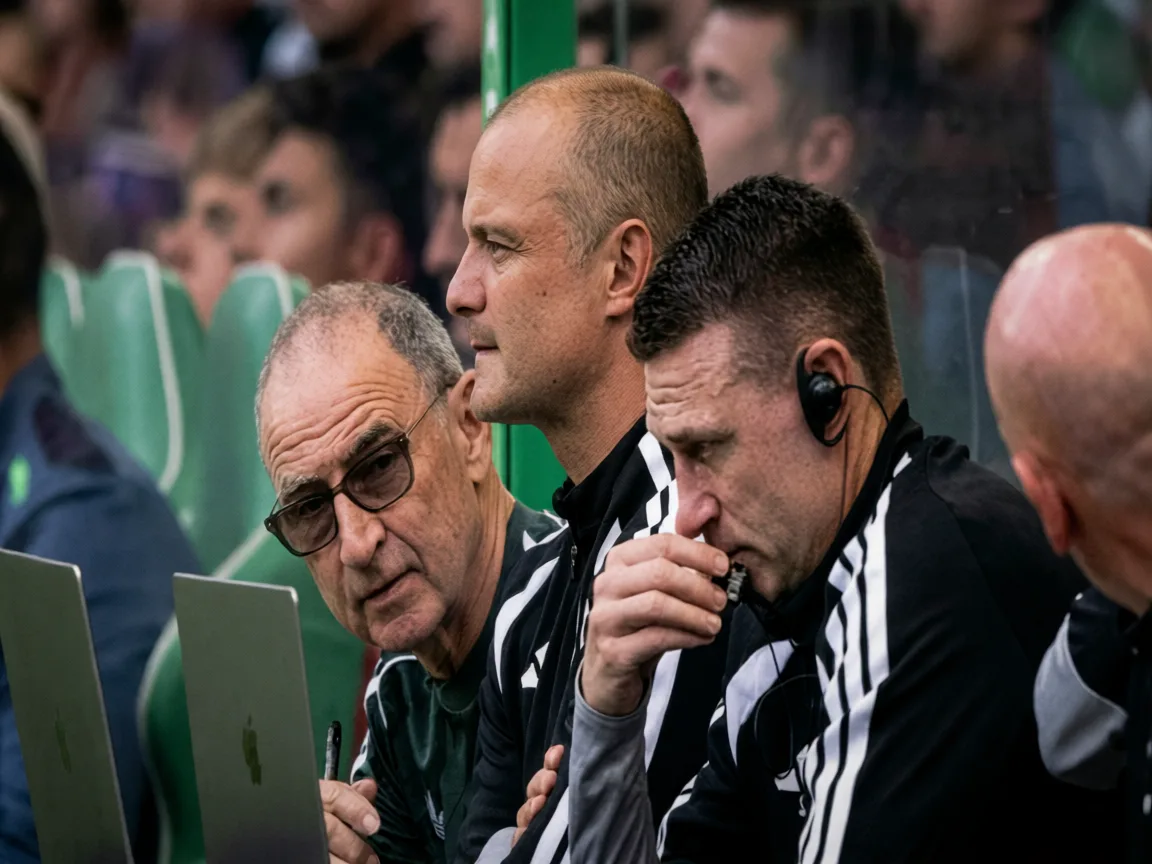
O'Neill's Celtic Rebuild Hits Turbulence in Transfer Window
Martin O'Neill admits Celtic are pushing for new signings after missing out on Iheanacho and Saracich exposed squad depth concerns.
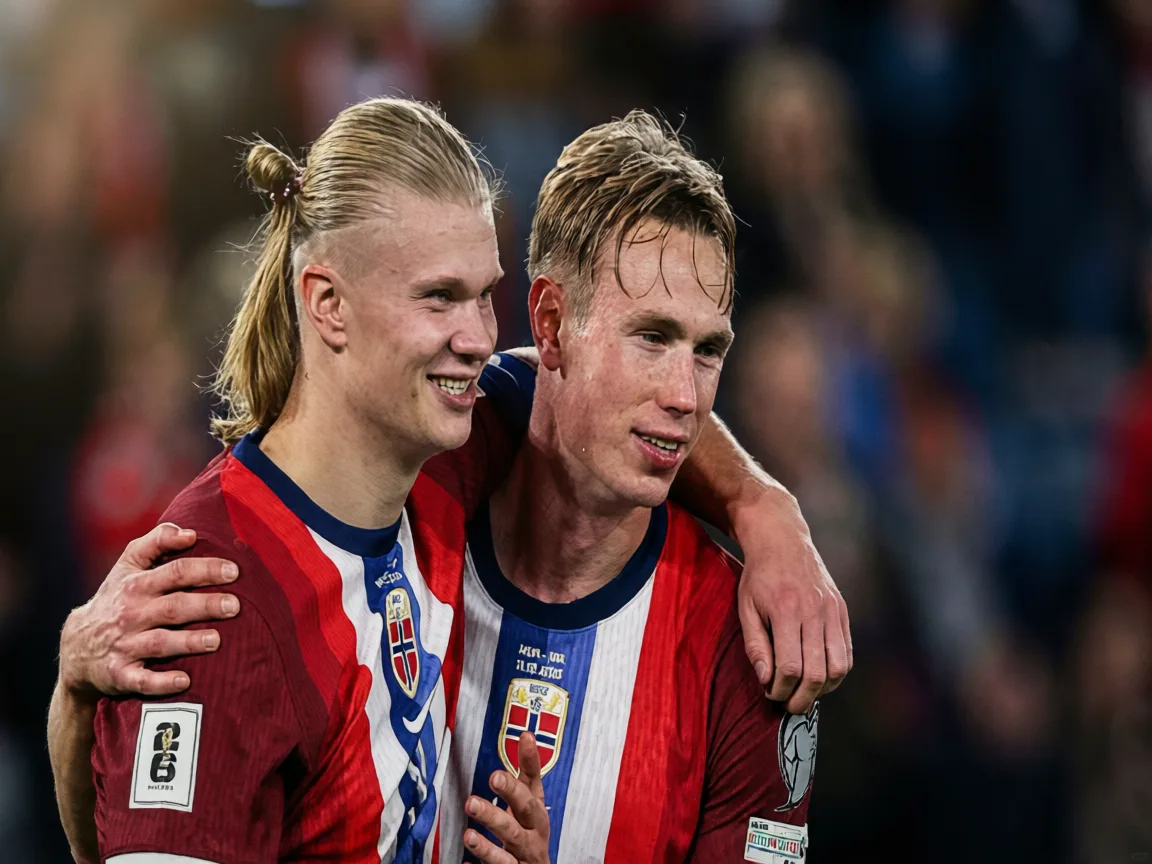
Heggebo Channels Haaland and Heggem Inspiration at West Brom
Aune Heggebo draws tactical and psychological fuel from Norway's World Cup duo as she redefines her role at The Hawthorns.