Djokovic Vows One More Wimbledon Despite Sinner Semi-Final Defeat
Beaten in straight sets by Jannik Sinner, Novak Djokovic insists his Wimbledon story is not finished yet.
The Last Walk Off Centre Court — For Now
The towel draped over his shoulders, the slow amble toward the exit, the polite applause washing down from a Centre Court crowd that has watched him conquer this place ten times. For a flickering moment, it looked like a farewell. Novak Djokovic had just been dismantled 6-4, 6-4, 6-4 by Jannik Sinner in a Wimbledon semi-final that felt less like a contest and more like a coronation of the new order.
But was it the goodbye? Not even close.
In the quiet aftermath of one of the most deflating afternoons of his late career, the 24-time Grand Slam champion dispelled any notion of a slow fade into retirement. Speaking with the measured defiance of a man who has buried obituaries before, Djokovic made his position unequivocally clear. He will be back at the All England Club next summer, even if he will be doing it in his forties.
A Defeat That Asked Uncomfortable Questions
Three sets. Three identical scorelines. A clinical dismantling that stripped away the mystique.
For two weeks, Djokovic had navigated the draw with a pragmatic efficiency, grinding through gears when required. But against Sinner, the world No. 1, the Serbian looked second best in every meaningful metric.
The Italian was sharper, faster, and ruthless from the baseline.
This was not the Djokovic of legend, the player who turned Centre Court into his personal theatre of resilience. The serve lacked its usual bite. The return position felt a half-step behind the trajectory. For perhaps the first time against Sinner on grass, the gap in physicality felt insurmountable.
Proving a Point Across the Fortnight
Yet Djokovic's post-match assessment stubbornly refused to dwell only on the disappointment. Instead, he chose to frame the past two weeks as revelation rather than ruin. The run to the semi-finals, achieved while the tennis world was busy writing his competitive obituary, was proof in his eyes that the narrative of his immediate decline is premature.
"I'm still able to compete at the highest level."
It is a statement backed not by delusion but by an awkward truth for his rivals: a diminished Djokovic remains one of the most dangerous players on the planet. He reached the final four at the sport's most demanding event, on the surface that historically required the most nuanced adaptation, while operating at a fraction of his historical peak.
That tournament reality, rather than the semi-final scoreboard, is what fuels his insistence on returning.
'Good But Not Good Enough'
Most players would be satisfied with reaching a Wimbledon semi-final and the Australian Open final in the space of six months. Not Novak Djokovic.
In his reflecting on both campaigns, Djokovic offered a self-assessment that cut to the core of what makes him who he is. The runs were, in his own words, "good but not good enough." It is a phrase that reads as paradox — what player would dismiss a Grand Slam final and a Wimbledon semi-final as insufficient? — but it encapsulates the mentality that has separated him from every other player of his generation.
He calls himself "blessed and cursed" by the standards he has set. Blessed, because the relentless hunger has driven him to 24 Grand Slam titles and a place among the greatest to ever hold a racket. Cursed, because those same standards make anything short of a trophy feel like a failure. A Wimbledon semi-final and an Australian Open final, collected within six months, would constitute a career highlight for nearly anyone on tour. For Djokovic, they are evidence of a gap that still needs closing.
The Athletic Reality of the Fourth Decade
The physical landscape is shifting beneath his feet. Where Djokovic once preyed on the movement and conditioning of his rivals, he now confronts the reality of a body that has logged over two decades of brutal professional miles.
Recovery cycles lengthen. Minor strains linger. And the profit margins shrink.
The Sinner Wall and the Youth Vanguard
Sinner did not merely defeat Djokovic on Friday; he issued a statement of structural authority. The scoreline of 6-4, 6-4, 6-4 was notable for its relentless consistency, a match where Sinner never lost his own serve. It was not drama. It was a procession.
The Italian's baseline weight of shot, his first-strike aggression, and his calm under pressure suggest a player who has figured out the matchup in a way that previous contenders could not manage. Roger Federer transcended it with shot-making. Rafael Nadal overpowered it with lefty topspin. Andy Murray out-tacticed it in his prime. But Sinner appears to be simply out-hitting Djokovic in the zones where the Serbian once made his living.
For the younger generation, watching a dominant Sinner erase the Djokovic aura on grass validates their own ambitions. The wall has cracked. And the barbarians are pouring through.
Career by Numbers
- 24 Grand Slam singles titles, the all-time men's record
- 10 Wimbledon finals reached between 2013 and 2024
- 7 Wimbledon championship trophies lifted on Centre Court
- 37 years old when the next Championships begin in July 2025
The Philosophy of Refusal
To understand Djokovic's insistence on returning, one must trace the roots of a career built not just on talent but on a cussed refusal to accept the natural order. This is a young man from a country with no tennis tradition, who survived NATO bombs falling on Belgrade, who trained in abandoned swimming pools, and who watched the established powers close ranks against him for a decade.
Every milestone earned from 2011 onward was taken against the headwind of a sport that desperately wanted Federer to remain its aesthetic ruler.
"I still feel I have the chance to go deep in tournaments and get my hands on Grand Slam trophies."
The mental framework that survived those early years does not switch off because a semi-final went badly. The lizard brain of his tennis psychology still believes a solution exists. Give him another winter of training, another pre-season block, and he will return to the All England Club convinced the equation can be rebalanced.
He frames it not as denial but as professional obligation. If he believes the level is there, walking away would be the greater failure.
What 'At Least One More' Really Means
The phrase "at least one more" is fascinating for its ambiguity. At its simplest, it promises a single return to the All England Club in 2025. But the phrasing suggests no hard stop, no firm date marked on the calendar for a press conference with tears and a packed house. It leaves the door open for a more protracted farewell tour, one that could extend well into his 40s if the body cooperates and the motivation endures.
There is also the unspoken matter of the 25th Grand Slam. Djokovic remains marooned on 24 major titles, a record that once seemed unreachable but has now settled into a plateau. The hunger to push that number to 25 or beyond gnaws at him. A Wimbledon without the trophy is not a failure for most players. For Djokovic, it is an incomplete mission.
Return of the King or One Last Dance?
There is a certain poetry in the notion of Djokovic returning to Wimbledon as a 38-year-old, chasing a storybook ending on the lawns where he became immortal. But there is also a danger that poetry curdles into pastiche, that the champion who once defined the sport's standards becomes a nostalgia act playing for crowd affection rather than titles.
Next July, Novak Djokovic will walk back onto Centre Court with the towel, the stretches, and the interval boxes. The crowd will rise. The old magic will flirt with returning. Whether this becomes one final chapter or the start of an extended epilogue remains unwritten.
But for now, the message is clear. The king refuses to abdicate. Wimbledon has not seen the last of Novak Djokovic.
Updated: 2026-07-11 — Added Djokovic's self-assessment that his Wimbledon semi-final and Australian Open final runs were "good but not good enough," highlighting the never-satisfied mentality driving his vow to continue competing.
Editorial Integrity
This is an original SportPulse article written by our editorial team. All content is independently researched, written, and reviewed by our writers and editors before publication. We do not publish copied, aggregated, or syndicated content.
SportPulse is committed to original sports journalism. Read our editorial policy or contact us with any questions.
More Like This
All tennis
Championship Sunday: Wimbledon Day Seven Preview
Djokovic, Sabalenka, Sinner, and Gauff headline Championship Sunday at SW19 after Swiatek and Rybakina crashed out.
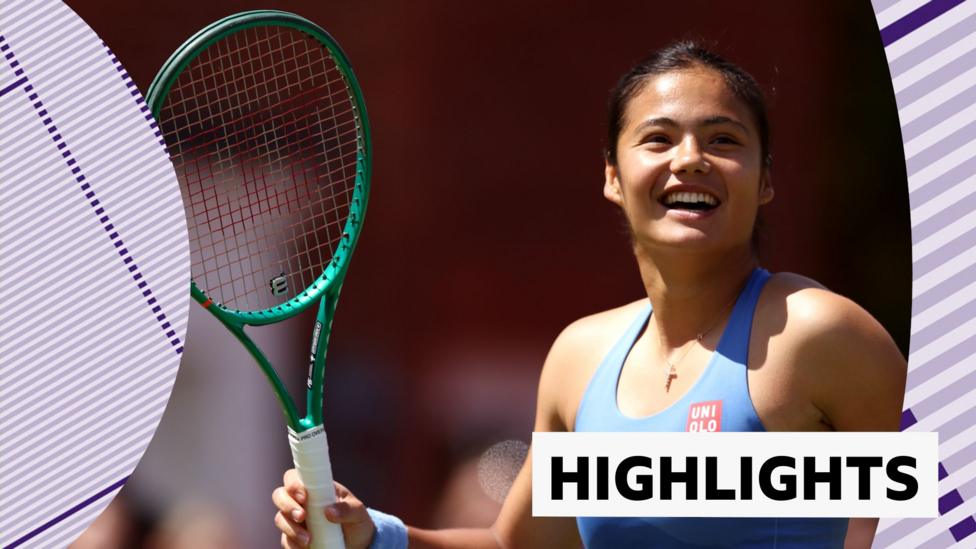
Raducanu Delivers Merciless Queen's Club Debut
Emma Raducanu announced her grass-court return with a ruthless 6-0 6-3 demolition of Anna Blinkova at Queen's Club.
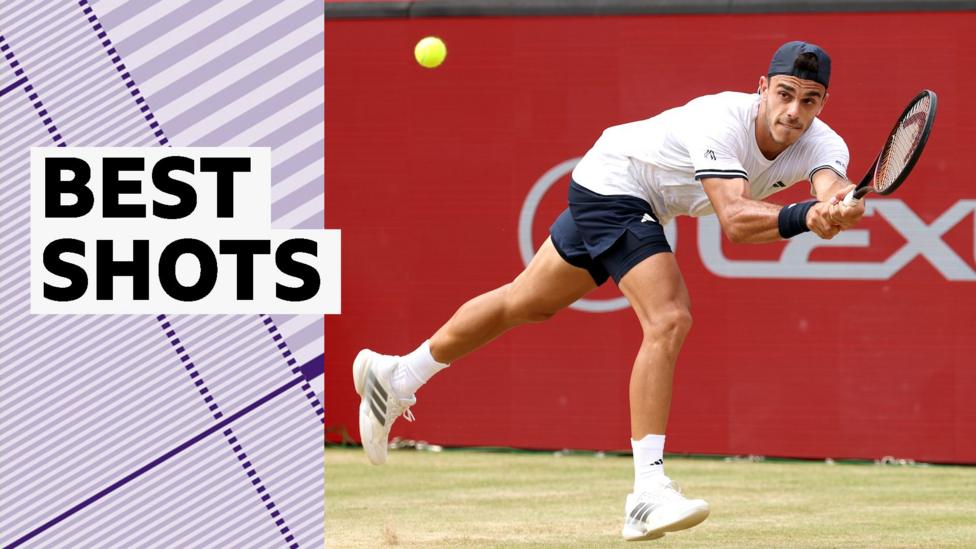
The Argentine Who Learned to Fly on Grass
Francisco Cerundolo's stunning Queen's Club run is rewriting what an Argentine can do on a lawn.