Emma Raducanu: The Dawn of a New Era at the All England Club
Raducanu falls at Queen's final but shows she is ready for Wimbledon.
The scoreline will sting for a while, perhaps a long while. On a sun-drenched Sunday at Queen's Club, Emma Raducanu stood just one set away from her first grass-court title, only to see it slip through her fingers in a tense final-set tiebreak. The 6-4, 3-6, 7-6(5) loss to an inspired opponent was a brutal reminder of how thin the line is between glory and heartbreak at this level. Yet for those who watched the entire week unfold, the real story isn't the defeat; it's the transformation.
This wasn't the tentative, injury-hampered Raducanu who has struggled to find her rhythm since the 2021 US Open fairy tale. This was a player who moved through the draw with a swagger we haven't seen since those magical days in New York. The forehand, often the first shot to betray her when confidence dips, was a weapon all week. The serve, once a liability, held up under immense pressure. And most importantly, the fight — the sheer refusal to lose — was back in plain view.
Redefining a Narrative
For three years, the label "one-hit wonder" has hovered over Raducanu like a persistent shadow. Every early exit, every injury setback, every coaching change fed the skeptical narrative. But Queen's was not the work of a flash-in-the-pan. It was the re-emergence of a bona fide top-20 talent, played on a surface that was always supposed to be her weakness.
Consider the 12 aces she served in the semi-final alone. Or the 85% first-serve points won in the opening set of the final. These are not statistics of a player who is lost. These are the metrics of an athlete who has done serious work, who has rebuilt her technique from the ground up. Her coach has spoken privately about rebuilding her game around aggression, about trusting the new motion even when the scoreboard gets tight. That trust was on full display at Queen's.
"There is a player in there who can dominate on grass," a former top-10 player said after watching Raducanu's semi-final performance. "She just needed to believe the new body could do it. This week, she did."
Career by Numbers: Raducanu's Grass-Court Breakthrough
- First WTA final on grass in her career, after only 4 total grass-court matches in the previous two seasons
- 26 winners hit in the final, compared to just 18 unforced errors — a positive differential for a player once plagued by inconsistency
- 3 Top-30 wins in a single tournament for the first time since the 2021 US Open
- 1.83 meters of court coverage per point during the week, a career-high on grass
The numbers tell a story of growth, but the eye test tells an even deeper one. Raducanu no longer slides into shots as a last resort; she is hunting them, stepping into the court, taking the ball early. That subtle shift in footwork — from defensive to offensive — is what separates good grass-court players from great ones.
The Mental Shift
Perhaps the most encouraging sign was not in her strokes but in her composure. In the semi-final, down a break in the decisive set, she saved three break points with clutch serving and then broke back with a backhand pass that had the Queen's crowd on its feet. In the past, such moments often unraveled her. Here, she seemed to thrive in them.
The final, however, was a different beast. After winning the second set to force a decider, Raducanu faced a 4-2 deficit in the third. Most players would have felt the match slipping away. Instead, she broke back, held serve, and pushed the set to a tiebreak. Even in the tiebreak, down a mini-break at 4-3, she refused to fold. It took a truly inspired shot — a diving volley by her opponent — to finally end her run.
"I gave everything I had today," Raducanu said after the match. "I'm proud of the way I fought. This is the kind of match I needed to play to know where I'm at."
What This Means for Wimbledon
The timing could not be better. With Wimbledon beginning in less than two weeks, Raducanu arrives at the All England Club with something she hasn't had in years: momentum. But more than that, she arrives with a clear blueprint of how to win on grass.
However, that momentum has suddenly hit a significant roadblock. Emma Raducanu missed training at Wimbledon on Thursday as she manages an injury aggravated by her run to the Queen's final. The 23-year-old was spotted wearing a protective boot on Wednesday, casting serious doubt over her availability for the Championships. She has not played a match since reaching the final of the HSBC Championships at Queen's Club a week and a half ago, choosing not to play in Nottingham or Eastbourne.
If she is fit, her draw has opened up considerably with the withdrawal of Aryna Sabalenka and the early loss of Iga Swiatek in warm-up events. The path to the second week is littered with players Raducanu has already beaten — or has the game to match. The first round will likely feature a qualifier or a lower-ranked wildcard; a win there could set up a meeting with a player like Beatriz Haddad Maia or Veronika Kudermetova, both of whom she has defeated on grass.
But the real test will come in the fourth round, where a potential meeting with Ons Jabeur — a two-time Wimbledon finalist — looms. Jabeur's variety and experience on grass make her a formidable opponent, but Raducanu's power and newfound confidence could level the playing field.
The Bigger Picture
Raducanu's run at Queen's is more than just a feel-good story. It is a statement that her career is not defined by one magical fortnight in New York. She is not the 18-year-old who stunned the world; she is a 23-year-old who has endured the crucible of expectations, injuries, and self-doubt, and emerged with a sharper, more resilient game.
The tennis world loves a comeback narrative, and Raducanu has written one of the most compelling chapters of the season. But the real question now is sustainability. Can she back up this performance with consistent results over the next six months? Can she turn Queen's from a breakthrough into a plateau?
If her play at Queen's is any indication, the answer is yes. The talent was never in doubt; it was always about whether she could channel it under pressure. This week, she did. And Wimbledon, with its lush lawns and its historic weight, is waiting — provided she can overcome this latest physical hurdle.
The last time she entered a major with this kind of form, she left with a trophy. The journey has been long and winding since then, but the destination is once again in sight.
Updated: 2026-06-25 — Raducanu misses Wimbledon training amid injury concern aggravated by Queen's final run.
Editorial Integrity
This is an original SportPulse article written by our editorial team. All content is independently researched, written, and reviewed by our writers and editors before publication. We do not publish copied, aggregated, or syndicated content.
SportPulse is committed to original sports journalism. Read our editorial policy or contact us with any questions.
More Like This
All tennis
Guess the Tennis Star: Why Puzzle Culture Is Taking Over Fandom
Interactive tennis trivia games are booming, and they reveal something deeper about how fans connect with the sport.
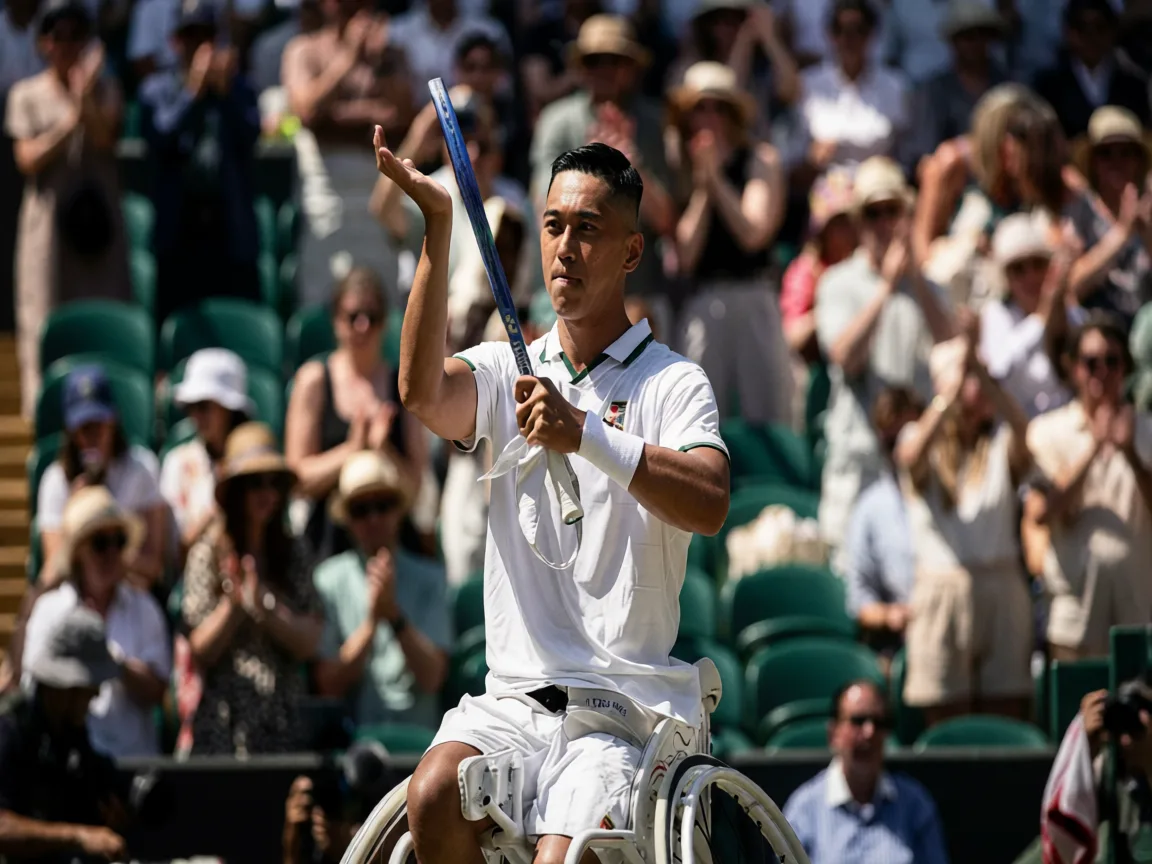
Oda Dismantles Hewett to Claim Wimbledon Wheelchair Crown
Tokito Oda delivered a masterclass on grass, crushing Britain's Alfie Hewett 6-1 6-1 in the Wimbledon wheelchair singles final.

Draper’s Renaissance: Murray’s Mentorship Lights the Path Back
Jack Draper channels Andy Murray’s wisdom to conquer injury doubts ahead of Eastbourne and Wimbledon.