Sinfield Bets on Science as England Tackle Altitude
England's coaching staff insists scientific preparation will neutralise Johannesburg's thin air against the Springboks.
The Thin Air Advantage
Sir Kevin Sinfield does not deal in vague optimism. When England's defense coach declares his squad will be "ideally prepared" for the bruising, breath-sapping challenge of playing South Africa at altitude, he is not leaning on motivational platitudes. He is leaning on protocols, data, and the hard lessons of past failures.
Playing the Springboks at Emirates Airline Park in Johannesburg, perched at 1,753 metres above sea level, is widely considered the most physically demanding assignment in international rugby. The atmospheric pressure drops, oxygen uptake plummets, and lactic acid floods the muscles at a rate sea-level dwellers simply cannot replicate in a single week. Yet Sinfield's confidence suggests a paradigm shift in how northern hemisphere teams approach this specific, suffocating disadvantage.
The Physiology of the Highveld
The science behind altitude performance is unforgiving. At 1,753 metres, the partial pressure of oxygen is roughly 17% lower than at sea level. For an elite athlete performing at maximal intensity, this translates to a measurable decline in aerobic power. VO2 max, the gold standard of cardiovascular fitness, drops by approximately 10-15% upon immediate arrival at this elevation.
The immediate casualty is the repeated sprint ability. Rugby union is an intermittent高强度 sport, relying on anaerobic bursts followed by aerobic recovery. At altitude, that recovery window elongates. Players find themselves running on fumes by the 50-minute mark, their explosive power reduced to a sluggish grind. Peripheral vision narrows. Decision-making slows. The lungs burn for air that simply is not dense enough to clear the metabolic debt.
Historically, sea-level teams have treated the Highveld as a boogeyman. They arrive, they gasp, and they fade. But Sinfield’s assertion that England will be ready implies a disruption to that historical narrative.
The Historical Toll
- 2001: England lost 44-21 at Ellis Park, collapsing in the final quarter.
- 2004: A touring side conceded 52-11, thoroughly outpaced in the second half.
- 2012: England led at halftime before fading to a 36-27 defeat.
- 2016: A 42-39 thriller where England’s defensive shape evaporated in the closing stages.
The pattern is glaring: teams survive the initial exchanges but are progressively suffocated as the game moves past the 50th minute.
England's Simulation Strategy
Sinfield's confidence is not born of arrogance but of meticulous preparation. The modern England setup under Steve Borthwick has quietly invested heavily in environmental simulation. While the specifics of their altitude protocols remain closely guarded, the foundational methods of sports science are well established.
The most common approach for a short tour is intermittent hypoxic exposure (IHE). This involves players sleeping in or resting near altitude tents that simulate the thin air of Johannesburg. By exposing the body to reduced oxygen levels for 8-12 hours a day in the weeks leading up to the tour, the kidneys are triggered to produce erythropoietin (EPO). This stimulates red blood cell production, thickening the blood's oxygen-carrying capacity before the plane even leaves the tarmac.
"We know the demands. We know what the altitude brings. We've prepared accordingly, and the boys are in a great place to handle it physically." — Kevin Sinfield
Furthermore, England have likely manipulated their training environments. Training with snorkel-restrictive masks, while scientifically imperfect, creates a subjective feeling of respiratory distress. It conditions the psychological response to oxygen debt. When a player's chest tightens in the 60th minute at Emirates Airline Park, the brain needs a reference point. Panic accelerates fatigue; familiarity delays it.
The goal is never to perfectly replicate the Springboks' lifelong acclimatization. That is a physiological impossibility for a visiting squad. The goal is to narrow the biological gap from a chasm to a manageable crack.
The Bottom Line
England are not trying to become a Highveld team in seven days. They are trying to ensure their players do not experience physiological shock in the opening 20 minutes, which has historically led to catastrophic tactical breakdowns.
The Tactical Shift: Managing the Drop Zone
If the physiology is managed, the tactics must follow. Playing at altitude demands a fundamental restructuring of game management. The air is thinner, meaning the flight of the ball is faster and travels further. This dramatically impacts kicking strategy.
A standard 50-metre punt from a sea-level stadium might carry 55 to 58 metres in Johannesburg. For a team like England, who rely heavily on territorial dominance and kicking pressure, this is a double-edged sword. An overcooked exit kick results in a 50-22 or a scrum deep in their own territory. An undercooked kick hands the Springboks a counter-attacking platform.
Furthermore, the physical toll demands a ruthless approach to possession. Playing extensive phases of rugby inside your own half at altitude is a death sentence. The energy cost of defending is high, but the energy cost of attacking from deep is catastrophic. Expect England to deploy a hyper-direct approach: win the ball, kick long, chase hard, and force the Springboks to play from deep rather than building pressure in the middle third.
Set-piece efficiency becomes paramount. Lineouts and scrums are the only moments of guaranteed rest. If England's lineout operates at below 85% accuracy, they will expend precious energy scrambling in transition. Borthwick, a former lock and lineout specialist, knows this intimately. The set-piece is not just an attacking weapon here; it is an oxygen-saving device.
Verdict
Tactics at altitude are ultimately an exercise in energy accounting. Every phase, every ruck, and every kick must be weighed against the oxygen cost. Survival belongs to the team that spends its energy most ruthlessly.
South Africa's Unspoken Chink
While England navigate the altitude, the Springboks face their own invisible pressures. The burden of expectation at home is immense. Furthermore, the Springbok squad, while composed of many Highveld-trained players, is not entirely insulated. Squad members based in Europe or at coastal franchises like the Stormers face a mini-adjustment upon returning to Johannesburg.
The real danger for South Africa is complacency. Knowing you have the altitude advantage can lead to a subconscious easing off the throttle, trusting the environment to do the heavy lifting in the final quarter. If England’s preparation holds and the visitors remain within striking distance entering the final 15 minutes, the psychological weight shifts entirely to the home side.
Rassie Erasmus is too shrewd a coach to allow complacency, but the dynamics of the match dictate that the Springboks must front-load their intensity. If they treat the altitude as an automatic closer, they risk England stealing the late initiative.
The Coastal vs. Highveld Divide
It is worth noting that not all Springboks are altitude natives. The South African system is vast, and its player pool draws from diverse climates.
- Coastal Natives: Players from the Sharks (Durban) or Western Province (Cape Town) must still adapt when returning to Johannesburg.
- European-Based: The Springboks' large contingent of overseas-based players actually experience a more severe adjustment when returning to Highveld conditions after years at sea level.
- Highveld Advantage: Only the Bulls contingent genuinely operates at baseline advantage, having trained at altitude consistently.
This nuance is critical. South Africa as a monolith does not possess equal altitude resistance. The Springboks' second-half fade in certain recent matches is occasionally misattributed to tactics when fatigue in returning overseas stars is just as viable a culprit.
What This Means for England's Trajectory
A credible performance in Johannesburg, regardless of the final score, fundamentally alters the narrative around this England regime. The Borthwick era has been characterised by gritty, incremental progress. They have tightened a leaky defense under Sinfield’s guidance, reducing the average points conceded per game from 21.4 to 16.8 in the current cycle.
However, the enduring criticism is that they remain a team that loses to tier-one opposition away from home. Conquering the altitude, or at minimum refusing to be conquered by it, signals a shift from a team relying on grit to one empowered by sports-science intelligence.
Sinfield’s public confidence is a calculated move. It reassures the squad that the staff has anticipated the worst the environment can throw at them. It reframes the altitude from an insurmountable obstacle to a managed variable. In a sport where margins are razor-thin, belief in the preparation is often the difference between a missed tackle in the 72nd minute and a match-saving turnover.
The Bottom Line
England’s technical staff are treating physiology as a tactical weapon. If their simulation protocols work, the Springboks lose their invisible 16th man. If they fail, the same old story writes itself in the thin Johannesburg air.
Editorial Integrity
This is an original SportPulse article written by our editorial team. All content is independently researched, written, and reviewed by our writers and editors before publication. We do not publish copied, aggregated, or syndicated content.
SportPulse is committed to original sports journalism. Read our editorial policy or contact us with any questions.
More Like This
All long-reads
Breaking the Count: Amy Pu Shatters Boxing's Glass Ceiling
Amy Pu became the first woman to referee a professional boxing fight in British history, confronting prejudice at every turn.
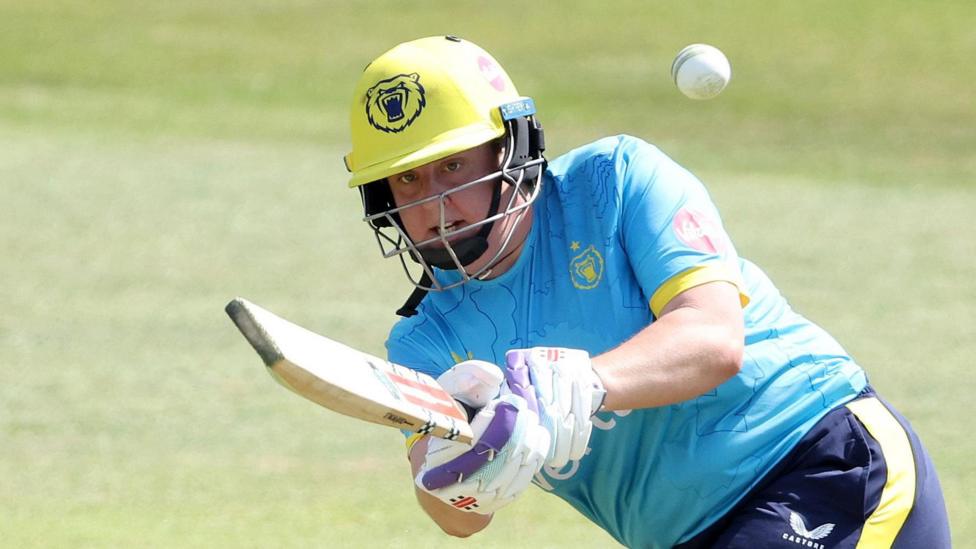
Warwickshire Pull Off Season-Defining Upset Over High-Flying Surrey
Bottom-dwellers Warwickshire shock Surrey in Women's T20 Blast, reshaping the title race as Hampshire surge to the summit.

Merlier Conquers Stage Seven Sprint As Pogacar Holds Firm
Tim Merlier storms to a bunch sprint victory on stage seven while Tadej Pogacar keeps his grip on the yellow jersey.