Tuchel's England Crash Out In Atlanta To Late Argentina Double
England's World Cup dream dies again as Argentina's late turnaround in Atlanta inflicts another chapter of tournament torment on Tuchel's side.
England's relationship with major tournaments has long resembled a Greek tragedy scripted by someone with a particular fondness for cruelty. But what unfolded in Atlanta's Mercedes-Benz Stadium plumbed depths that even by the Three Lions' tortured standards felt genuinely unprecedented. Thomas Tuchel's side were minutes from a first World Cup final appearance since 1966. They departed Georgia with nothing but another entry in football's most extensive catalogue of anguish.
The mechanics of this collapse warrant forensic examination. Anthony Gordon's goal shortly after half-time had shifted the entire gravitational pull of the semi-final. England had absorbed Argentina's first-half physical barrage, countered with precision, and positioned themselves within touching distance of football's ultimate stage. Then the drought broke. Twice in quick succession. An Argentine turnaround that arrived with the suddenness of a thunderclap left Tuchel's players hollowed out on the turf and a nation scrambling to process yet another variant of the same old agony.
A First Half Forged In Fire
The opening 45 minutes bore no resemblance to a tactical chess match. This was trench warfare conducted on an immaculate pitch, two heavyweights trading blows rather than subtleties. The ferocity of the contest reflected the stakes and the respective philosophies of two coaches uninterested in feinting their intentions.
Argentina set the tempestuous tone early, pressing with the kind of coordinated aggression that has become their tournament signature under Lionel Scaloni. England's buildup play was harried, rushed, frequently disrupted before patterns could crystallise. The first half was a physical fight in every meaningful sense and gripping precisely because of that edge. Tuchel, who has built his managerial career on structural pragmatism and defensive resilience, had encouraged his side to fight fire with fire. They obliged.
Key first-half metrics underscore the attrition:
- 14 committed fouls across both sides before the interval
- England managed just 2 shots on target against Argentina's 3
- Possession split nearly even at 51%-49% favouring the South Americans
- Expected goals for the half registered a remarkably low combined 0.72 xG
The numbers capture a half where caution and courage wrestled for supremacy. Neither side blinked. Neither side yielded the strategic ground that would hand the other an initiatve. It was gripping precisely because every blade of grass was contested.
Gordon's Moment And The Dream Ignited
Whatever Tuchel delivered at the interval recalibrated England's attacking intent. Gordon's breakthrough goal early in the second half represented far more than a statistical advantage on the scoresheet. It was psychological liberation of a squad that has carried the suffocating weight of English football history for weeks, months, years, decades.
The goal invited England's most comfortable spell of the entire tournament. They retreated into the mid-block structure that Tuchel had honed across qualifying, content to funnel Argentina into wide corridors before springing transition opportunities through Gordon's pace and the intelligent movement of those around him. A first World Cup final appearance since the halcyon summer of 1966 was not merely visible. It felt inevitable.
The Anatomy Of An Implosion
Football's cruelty lies in its capacity to invert inevitability within moments.
Argentina's late double transformed a controlled English performance into something unrecognisable in the space of minutes. The first goal fundamentally reset every assumption. The second plunged a dagger into a psyche already wobbling under the pressure of chasing a final whistle that never seemed closer. For a squad that had spoken openly about ending decades of hurt, the manner of the late collapse will raise uncomfortable questions about mental fragility when the finish line is within reach.
England have now suffered tournament elimination through late goals on multiple occasions since their last major final appearance. The pattern is no longer coincidental but systemic a recurring inability to manage the closing stages of high-stakes matches when the prize is most vivid and most attainable.
The late collapse in numbers:
- Argentina scored twice within barely 6 minutes of the Gordon opener
- England's xG for the final 20 minutes plummeted to just 0.34
- Tuchel's side conceded 5 corners in the closing period alone
- Possession dominance shifted dramatically to 62% in Argentina's favour late
- The South Americans generated an accumulated 1.4 xG after falling behind
The strange psychology of English football: when the winning post appears, the English instinct turns not toward crossing it but toward contemplating all the ways they might fall short.
Tuchel's Tactical Inquest
The German coach arrived with a reputation forged in the cauldrons of Champions League knockout football, a man who navigated Chelsea to European glory in 2021 through sheer tactical acumen and an unyielding commitment to defensive structure. His appointment was designed to provide what Gareth Southgate could not, the clinical edge of an elite operator.
That Tuchel committed his side to fight fire with fire speaks volumes about Argentina's quality and England's recognition that matching them would be impossible. But the tactical inquest will inevitably focus on whether England's retreat into consolidating their lead invited precisely the kind of sustained pressure that eventually broke their resistance.
Tuchel now faces the invidious task of rebuilding collective belief for the next cycle. The FA's investment in his methodology was predicated on progress precisely in these moments. Instead, the narrative remains maddeningly familiar.
The Scaloni Masterclass
Conversely, Scaloni's bench management and in-game adjustments reaffirmed his standing as the preeminent international coach of this era. Argentina's capacity to adapt mid-contest and find a route through the most organised of defences has become their tournament signature.
The late double underscored a squad deeply attuned to the rhythms of knockout football. They trusted possession, probed patiently andcapitalised when England's defensive concentration flickered. This was not luck or fortune. It was the byproduct of systematised belief and a tournament pedigree that England simply cannot currently match.
What Atlanta Means For English Football
For English football, Atlanta joins a pantheon of geographical heartbreak landmarks. The city now sits alongside Turin, Munich and Wembley itself as coordinates on the atlas of English tournament pain. The Football Association must now decide whether Tuchel represents the right vehicle for the 2026 cycle or whether the setback demands more radical intervention.
The cycle of optimism and despair is by now familiar to every England supporter. A golden generation yields limited results and structural change is demanded. A new coach arrives with fresh ideas, Qualifying passes without alarm, the tournament begins with cautious promise, a defining moment comes and England fail it with metronomic predictability.
The Bottom Line
England will return home with a tactical blueprint that almost worked and a psychological profile that remains stubbornly unchanged. The harder questions about mental fortitude, coaching decisions and systemic development will dominate the weeks ahead. For Tuchel, the summer offers only the cold comfort of a defeated coach reviewing a thousand decisions that felt right until they became catastrophically, irreversibly wrong.
1. England's wait for a World Cup final appearance extends beyond 59 years
2. Argentina advance to another final under Scaloni's tournament-tested stewardship
3. Tuchel's future will dominate immediate headlines despite contractual continuity
4. Atlanta stands as the latest English football landmark of despair
The inevitable inquest will scrutinise every late tactical decision, every substitution, every moment of pressure management. But those searching for villainy will find nothing more substantial than the familiar story of a team that could not hold what it had won. And that is perhaps the cruelest realisation of all.
Argentina were better when it mattered. England were themselves.
Editorial Integrity
This is an original SportPulse article written by our editorial team. All content is independently researched, written, and reviewed by our writers and editors before publication. We do not publish copied, aggregated, or syndicated content.
SportPulse is committed to original sports journalism. Read our editorial policy or contact us with any questions.
More Like This
All football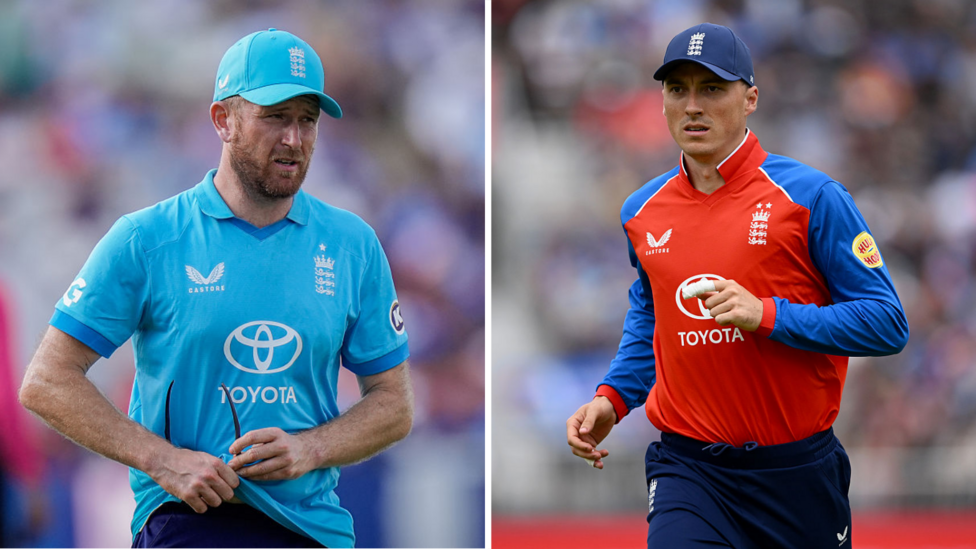
Dawson and Banton Released for T20 Finals Day
England release Liam Dawson and Tom Banton for T20 Finals Day, balancing international duties with domestic cricket's grandest stage.

African Football's 2026 World Cup Renaissance Is Real
South Africa, Morocco, and Côte d'Ivoire are spearheading Africa's deepest World Cup push in decades at the 2026 tournament.

Tactical Implications Behind Premier League Transfer Whisper Circuit
Scott's versatility, Trossard's imminent exit, and Mainoo's Madrid links reveal deeper tactical recalibrations across Premier League elite.